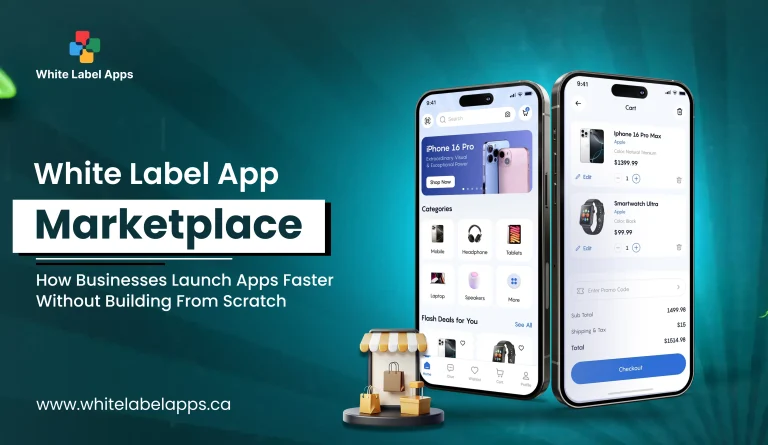
Building a mobile app no longer has to feel slow, expensive, or tied to long development cycles. Businesses today want speed, control, and a way to test ideas without burning time or money. That is where the white label app marketplace quietly changes the game. Instead of starting from zero, ready-made app frameworks let brands launch faster while still keeping their identity front and center.
This approach works because it removes unnecessary friction. Features are already tested. Core functions already work. Businesses can focus on growth, users, and real problems instead of code delays. The white label app marketplace fits teams that want flexibility without complexity, making app launches feel practical rather than overwhelming.
That is why our team at White Label Apps, a leading white label app development company, has put together this guide around the white label app marketplace, shaped by real experience helping businesses launch apps without building from scratch. To keep things clear and useful, we have broken everything into simple, practical sections so ideas stay easy to follow and act on.
TL;DR
- A white label app marketplace lets businesses launch branded apps fast without deep development stress or long delays.
- Pre-built app frameworks reduce cost, effort, and confusion while keeping control in the business’s hands.
- Customization exists, but it follows structure, not chaos, which saves teams from endless edits.
- Speed matters, and this approach helps businesses move while competitors are still planning.
- Choosing the right provider decides whether the experience feels smooth or frustrating later.
Key Points
- White label app marketplace solutions reduce app launch timelines from months to weeks or even days.
- Businesses keep branding control while skipping the technical build phase entirely.
- Not all platforms offer the same flexibility, so feature depth should be reviewed carefully.
- Scaling and customization limits can appear later if the provider is chosen poorly.
- The right platform feels like a partner, not just a software vendor selling access.
What is a White-Label App Marketplace?
A white label app marketplace is a platform offering ready-built mobile apps that businesses can rebrand, customize, and sell or use as their own. It removes development complexity while keeping ownership, control, and faster launch timelines intact.
- Pre-Built App Frameworks Ready to Use: A white label app marketplace offers apps that already exist in working form. The logic, layout, and flow are done. Businesses step in at the branding level with colors, logos, features, and content. This saves months of work. It also removes guesswork. You know what you are launching because it already works in real-world use.
- Branding Without Coding Knowledge: One big relief is not needing technical skills. A white label app marketplace allows full branding without touching code. Dashboards are visual. Settings are simple. This opens doors for founders, marketers, and agencies who think in design and growth, not scripts and servers. Control feels real, not rented.
- Ownership That Feels Personal: Unlike generic templates, apps from a white-label app marketplace are launched under your name. Your brand. Your store listings. Customers never see the platform behind it. That feeling of ownership builds confidence. It also helps when pitching to investors or selling services. The app looks like it was built in-house.
- Multiple App Types in One Place: Most white-label app marketplace platforms offer more than one app category. Food delivery, e-commerce, booking, education, and more. This variety helps agencies or businesses experiment. You can launch different apps for different needs without switching tools. Everything stays under one system, which reduces chaos.
- Faster Go-To-Market Advantage: Speed is the quiet hero here. A white-label app marketplace cuts launch time drastically. While competitors are still planning, your app is live. That timing can change everything. Early feedback arrives sooner. Revenue starts earlier. Momentum builds before doubt creeps in.
A white label app marketplace removes fear from app creation. It replaces confusion with clarity and helps ideas move before excitement fades.
Also Read: White Label Delivery App Development Guide 2026
How a White Label App Marketplace Works for Businesses?
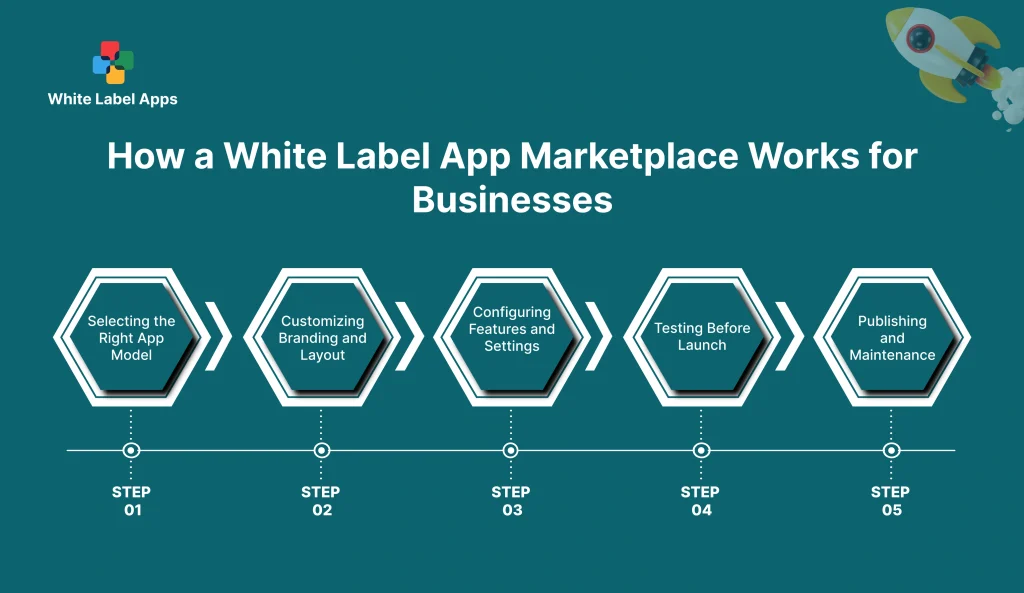
It works like assembling rather than inventing. Businesses select, customize, launch, and manage apps through a structured system designed to remove technical confusion and delays.
Step 1 – Selecting the Right App Model
The process starts by choosing an app type like e-commerce delivery services or content, which quietly defines structure, features, and user flow and prevents early mistakes that slow teams down later.
Once selected, businesses view previews and demos that create clarity, helping teams commit faster, avoid endless internal debates, and keep momentum alive instead of stalling during planning stages unnecessarily long.
Step 2 – Customizing Branding and Layout
After selection, branding begins with logos, colors, icons, and text updates, making the work feel creative, not technical, so teams relax, enjoy decisions, and stop fearing the build process entirely.
Most white-label app marketplace platforms show live previews where changes appear instantly, helping teams decide faster, reduce second-guessing, and move forward confidently without waiting days for revision approval.
Step 3 – Configuring Features and Settings
Features are switched on or off based on real business needs, like payments, notifications, location tracking, or bookings, using simple toggles that make sense without any coding stress required.
This setup lets businesses start small test ideas safely, then add more features later without rebuilding the app or disrupting users who already rely on it daily for work needs.
Step 4 – Testing Before Launch
Before publishing, apps go through internal testing where teams check flows, fix content mistakes, and confirm everything feels smooth, predictable, and ready for real users across different devices, scenarios, and environments.
This stage builds quiet confidence because teams have already walked through the app, spotted weak points early, and approach launch day calmly instead of nervously and in rushed last-minute panic moments.
Step 5 – Publishing and Maintenance
The platform guides businesses through app store submission, explaining rules, asset approvals, and small details, making the process feel manageable even for first-time founders launching mobile products independently today.
After launch, maintenance stays simple with updates, fixes, and improvements handled centrally, so businesses focus on customer growth and daily operations without technical distractions slowing momentum or increasing stress levels.
The process feels less like software development and more like setting up a digital storefront that actually works.
Key Features to Look for in a White Label App Marketplace
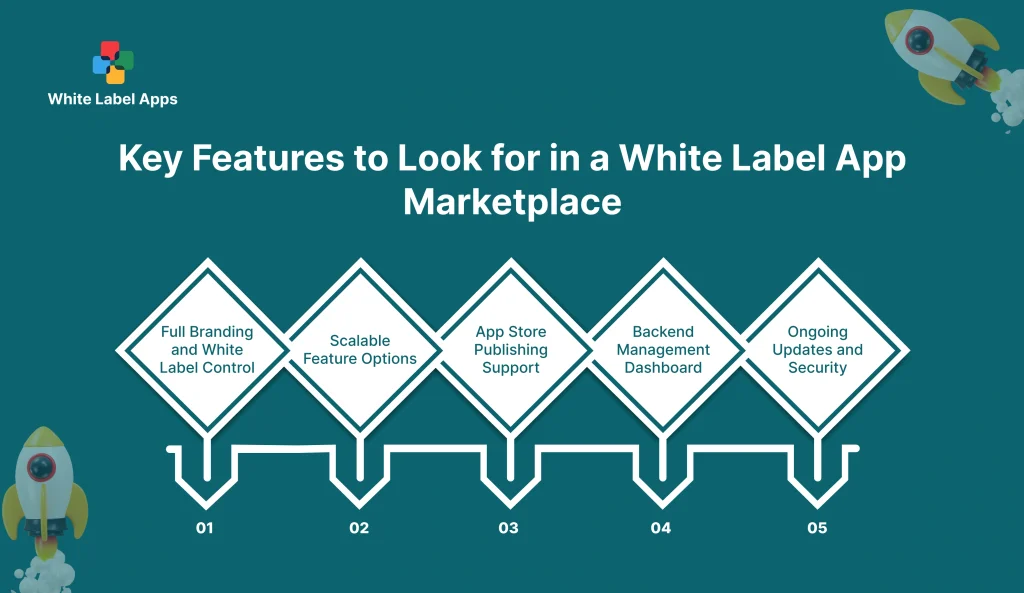
Not all platforms are equal. A strong white label app marketplace should balance flexibility, ease, and long-term reliability. The right features protect you from future frustration and limit unexpected roadblocks later.
-
Full Branding and White Label Control
Full branding means the app carries only your name, colors, and voice, with no platform traces hiding underneath. This builds trust instantly. Some providers quietly limit control through emails, dashboards, or store listings. Always confirm everything visible to users, and customers stay fully branded long after launch, not just during demos or early sales conversations that matter more than promises.
-
Scalable Feature Options
Scalable feature options allow your app to grow without painful rebuilds as user needs change. Early flexibility prevents future limits that block expansion. Platforms’ locking features too soon create frustration later. Choose systems that let you add tools, integrations, and workflows gradually, so growth feels natural instead of forced or expensive upgrades over time for real businesses everywhere today.
-
App Store Publishing Support
App store publishing support saves teams from confusion, delays, and costly rejections during launch. Guidelines change often and feel overwhelmed alone. Strong platforms guide screenshots, descriptions, approvals, and fixes patiently. Without this help, launches stall and confidence drops. Reliable support turns publishing into a clear checklist instead of a stressful guessing game for growing brands and first-time founders everywhere.
-
Backend Management Dashboard
A backend management dashboard becomes part of daily work, so clarity matters deeply. Teams manage users, content, orders, and updates constantly. If screens feel crowded or slow, usage drops fast. A clean, responsive dashboard keeps teams engaged, confident, and willing to manage operations regularly without avoiding tasks or creating manual workarounds during busy growth phases and scaling periods ahead calmly.
-
Ongoing Updates and Security
Ongoing updates and security protect apps long after launch, even when teams are busy elsewhere. Rules change, threats appear, and systems age quietly. A dependable platform handles updates automatically. When maintenance requires manual effort, costs rise fast. Strong white label app marketplace providers take responsibility seriously, keeping apps stable without constant attention from internal teams or founders’ daily stress cycles.
Strong features protect momentum, keeping teams confident and users engaged, while weak features slowly drain energy, delay decisions, frustrate customers, and stall growth until progress feels heavy, confusing, and exhausting.
Benefits of Using a White Label App Marketplace
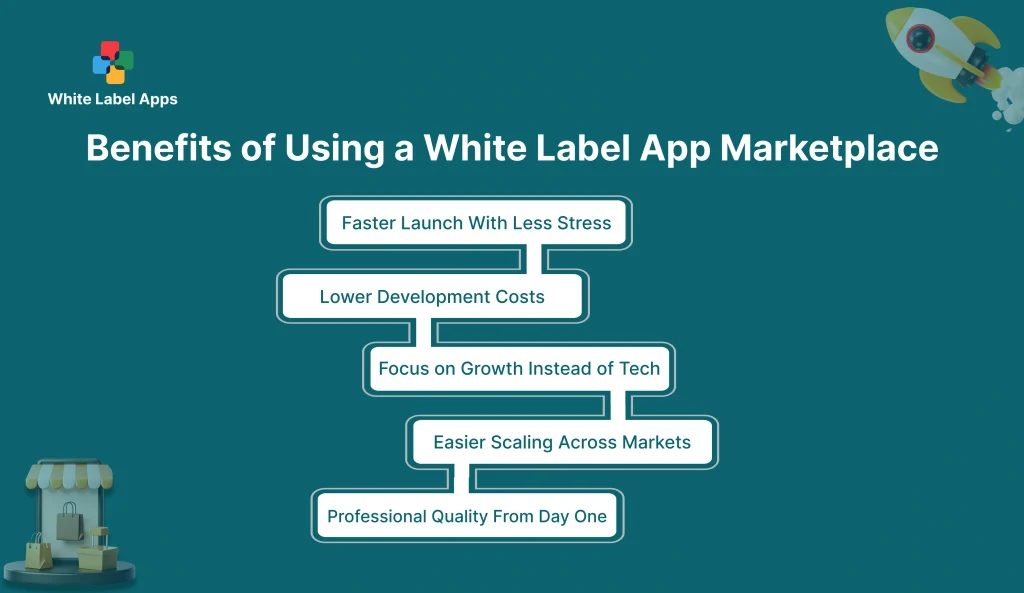
The real value shows after launch. A white-label app marketplace saves time, money, and emotional energy while helping businesses focus on users, not technical fires.
-
Faster Launch With Less Stress
Using a white label app marketplace shortens development time drastically, allowing businesses to launch within weeks instead of months, while avoiding delays caused by coding issues, approvals, or repeated revisions.
This speed helps teams capture early demand test ideas faster, collect feedback sooner, and adjust strategy before competitors even finish planning their first app version for growth wins today quickly.
-
Lower Development Costs
Building custom apps often drains budgets quickly, whereas a white-label app marketplace spreads costs, making pricing predictable and manageable for startups, small teams, and growing businesses everywhere today.
Lower costs also reduce pressure on decision-making teams, making them feel safer experimenting and improving features gradually without fear of wasting massive investments early in uncertain markets and changing business climates today.
-
Focus on Growth Instead of Tech
By removing technical headaches, businesses shift focus toward marketing, customer support, partnerships, and user experience instead of chasing bugs, server updates, and developer availability issues that occur daily during growth phases.
This mental space improves decision quality; teams listen better to users, respond faster, and build meaningful relationships that directly influence retention, loyalty, and long-term revenue stability for modern brands.
-
Easier Scaling Across Markets
A white-label app marketplace makes expansion easier by reusing systems and launching multiple apps or regions without rebuilding everything again, saving time, coordination effort, and internal confusion during scaling phases.
Agencies especially benefit because they can serve different clients’ industries or locations using one stable platform while maintaining consistency, quality, and faster delivery expectations across projects, timelines, budgets, and teams globally.
-
Professional Quality From Day One
First impressions shape trust, and professionally designed apps from a white-label app marketplace feel polished, reliable, and familiar, helping users engage confidently from their first interaction with brands instantly.
Strong visual quality, smooth performance, and predictable behavior reduce friction, making users more likely to return, recommend the app, and build habits around regular usage over time, naturally without effort.
The benefits grow quietly over time, starting as simple convenience, then slowly shaping confidence, speed, and control until businesses realize they gained a real competitive edge without noticing the shift.
Also Read: What Is a White-Label Restaurant Ordering System and Why Restaurants Are Switching
Common Challenges and Limitations to Consider
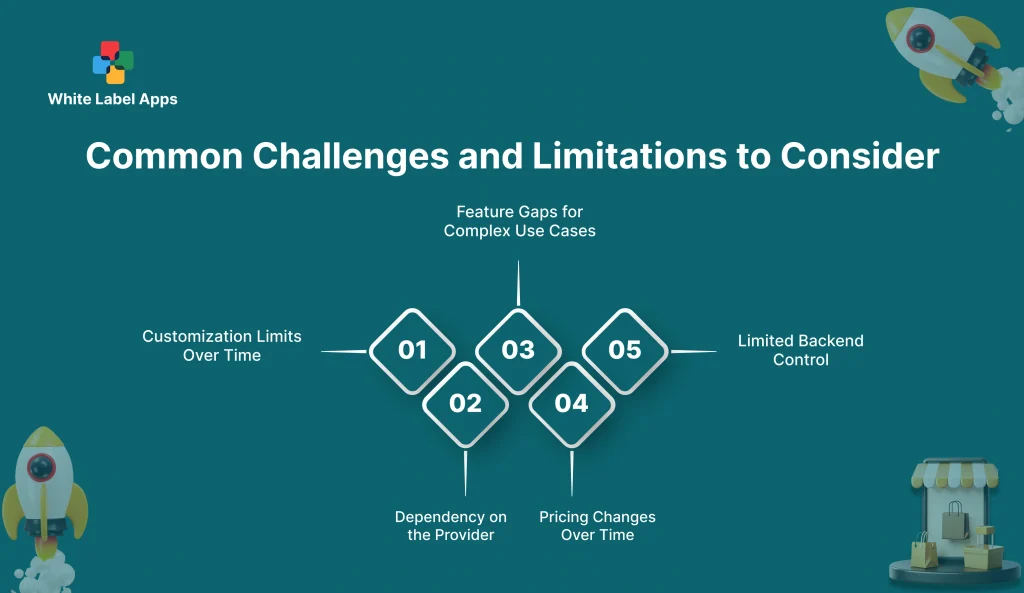
Even with advantages, a white-label app marketplace is not perfect. Understanding limits early prevents disappointment later and helps set realistic expectations.
-
Customization Limits Over Time
Many platforms feel flexible at first, but as businesses grow, customization slowly tightens. Teams hit walls with layouts, workflows, or features that no longer fit changing needs. This gap creates frustration and forces compromises. Reviewing limits early, testing edge cases, and choosing platforms built for gradual flexibility helps growth feel smoother, more confident, and far less draining emotionally or financially.
-
Dependency on the Provider
Relying on one provider means their uptime, updates, and decisions directly shape your daily operations. When delays or outages happen, customers feel it immediately, and trust drops fast. Choosing providers with a stable history, clear communication, and realistic roadmaps reduces anxiety. Strong partners keep apps reliable, support teams calmly, and protect long-term growth even when unexpected problems appear suddenly, often.
-
Feature Gaps for Complex Use Cases
Many white-label platforms work well for common ideas but struggle with complex or niche use cases. As workflows grow more detailed, features collide or stop fitting real processes. This mismatch slows teams down. Testing real scenarios early, not just demos, helps uncover gaps so businesses can adapt ideas or choose platforms that truly support complexity without painful rework later on.
-
Pricing Changes Over Time
Pricing often looks friendly at the start, but costs can quietly rise as usage grows and success follows. What felt affordable becomes stressful fast. These shifts disrupt planning and trust. Carefully reviewing pricing tiers, upgrade paths, and long-term costs upfront keeps expectations realistic and protects businesses from sudden shocks that damage confidence during important growth phases ahead for teams.
-
Limited Backend Control
Limited backend control can frustrate teams needing advanced rules, integrations, or automation as products mature. When logic cannot be adjusted, innovation slows, and workarounds pile up. This tension grows quietly. Understanding control boundaries early helps teams choose platforms matching their comfort level, balancing simplicity with flexibility, and keeping collaboration smooth as apps scale and expectations rise steadily over longer periods.
Limits are not deal breakers; they act like quiet signals pushing teams to think ahead, ask better questions early, choose smarter tools, and plan growth calmly without panic late and confidently.
How to Choose the Right White Label App Marketplace Provider?
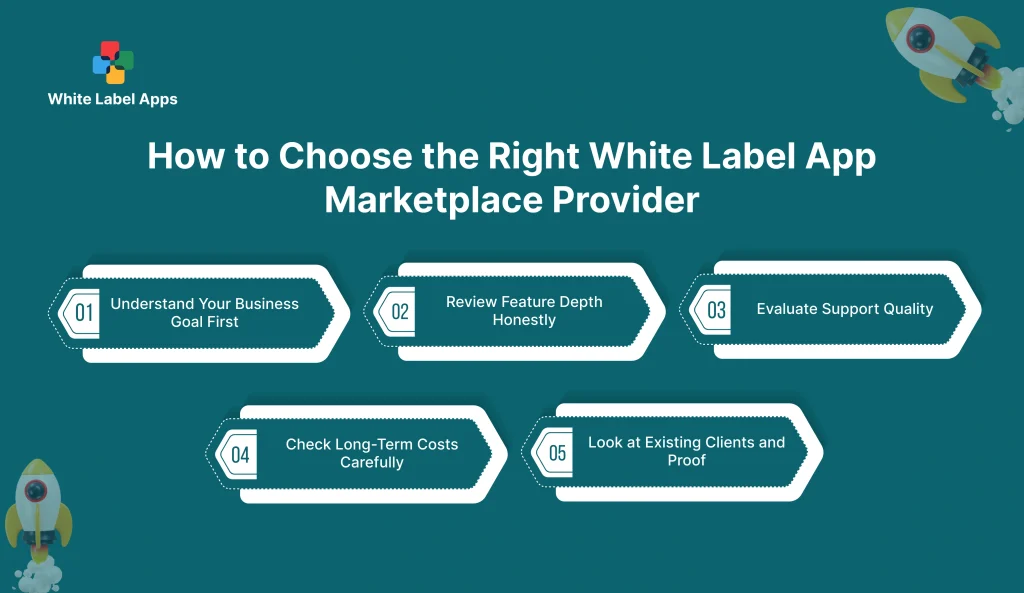
Choosing the right provider shapes your entire experience. The best white-label app marketplace feels supportive, stable, and aligned with your long-term goals.
-
Understand Your Business Goal First
Many businesses rush into platforms without knowing why they need an app, leading to mismatched features, wasted money, and frustration when expectations do not align with actual outcomes later.
Clearly defining goals like sales loyalty expansion or service delivery helps narrow choices quickly, ensuring the white-label app marketplace supports real priorities instead of shiny extras that never get used.
-
Review Feature Depth Honestly
Platforms often look powerful on landing pages, but real limitations appear after launch when teams try advanced workflows and discover missing controls or shallow features blocking progress.
Exploring dashboard demos and real use cases early reveals true depth, helping teams choose solutions that handle growth smoothly rather than collapsing under everyday operational demands.
-
Evaluate Support Quality
Poor support turns small issues into major delays, especially during launch or updates, when fast answers matter, and teams feel pressure from users and deadlines simultaneously.
Testing response times, asking real questions, and observing tone show whether support feels human, reliable, and invested rather than scripted, slow, or unavailable when problems arise.
-
Check Long-Term Costs Carefully
Many platforms appear affordable initially but introduce higher fees later through upgrades, add-ons, or usage limits that quietly strain budgets as success grows over time.
Studying pricing tiers, future costs, and scalability early helps businesses plan confidently, avoiding sudden financial stress that damages trust and slows momentum during critical growth phases.
-
Look at Existing Clients and Proof
Marketing claims sound convincing until real users reveal daily experiences, including issues, reliability, and long-term satisfaction that sales pages rarely mention openly.
Reviewing case studies, testimonials, and public feedback builds realistic expectations, helping teams choose providers with proven stability instead of untested promises and risky experiments.
Conclusion
A white-label app marketplace changes how businesses think about app creation. It removes fear, shortens timelines, and replaces complexity with momentum. Instead of waiting months, brands move in weeks. That speed matters more than ever today.
This approach is not about cutting corners. It is about using smarter tools. When chosen carefully, a white label app marketplace becomes a foundation, not a shortcut. One that grows with your idea, supports your users, and protects your time.
The key is clarity. Know your goals. Know your limits. Then choose a platform that feels like a partner, not a cage. When that fit is right, launching an app stops feeling impossible and starts feeling exciting again. Visit the white label to get your white label app.
FAQ
1. What types of businesses benefit most from a white label app marketplace?
A white label app marketplace works best for startups, agencies, restaurants, service providers, and e-commerce brands. These businesses need speed and reliability without managing developers. It helps teams focus on customers instead of code while still launching professional, branded apps that feel custom-built.
2. Is a white-label app marketplace suitable for long-term growth?
Yes, a white-label app marketplace can support long-term growth if chosen wisely. Platforms with scalable features, regular updates, and transparent pricing allow apps to evolve. The key is selecting a provider that supports expansion without locking you into early limitations.
3. How customizable are apps from a white-label app marketplace?
Customization depends on the platform. Most white-label app marketplace solutions allow strong branding, feature toggles, and layout control. However, deep backend logic changes may be limited. Understanding these limits early helps avoid frustration as your app grows.
4. Are white-label apps accepted by app stores?
Yes, apps from a white-label app market are commonplace by using app shops when tips are followed. Many systems aid with submission, compliance, and updates. This aid reduces rejection dangers and helps first-time publishers feel assured in the course of launch.
5. Does using a white-label app marketplace reduce app quality?
No, quality often improves. A white-label app marketplace uses tested frameworks refined across many users. This results in stable performance, a smoother user experience, and fewer bugs compared to rushed custom builds. Quality depends more on the provider than the model itself.