
Running online orders should feel simple, but for many businesses, it slowly turns confusing. Orders pass through too many hands. Branding gets diluted. Customer data sits on platforms you do not control. Over time, that loss of ownership starts to hurt growth and decision-making. This is where a white-label ordering platform starts to make real sense, not as a trend, but as a practical shift.
Instead of relying on third-party systems, businesses regain control over how orders move, how their brand appears, and how customer information is handled. Everything feels more direct. More personal. The process becomes easier to manage, without adding extra tech stress or long setup cycles.
We have put this blog together to break down how a white-label ordering platform works, why businesses are choosing it, and what changes it brings to daily operations. Read this blog to learn more about taking back control of orders, strengthening your brand, and owning your customer data with confidence.
TL;DR
- A white-label ordering platform helps businesses own orders, customer data, and branding without sharing control with third-party platforms anymore.
- Businesses use a white-label ordering platform to cut commission fees and build direct customer relationships that feel personal again.
- The platform works behind the scenes while customers experience a smooth, branded ordering journey from start to finish.
- White-label ordering platforms fit restaurants, retail, services, and growing brands needing ownership over digital sales channels.
- Switching to a white-label ordering platform brings clarity, confidence, and long-term control instead of short-term convenience traps.
Key Points
- A white-label ordering platform puts businesses back in charge of how orders, payments, and customer data are handled daily.
- Branding stays consistent because the platform carries the business name, colors, and voice instead of another company’s identity.
- Customer data stays private, helping businesses understand behavior, repeat patterns, and loyalty without guessing anymore.
- Fees feel predictable, which makes planning easier and removes the anxiety of sudden commission changes later.
- Control over updates and features means businesses grow at their own pace, not someone else’s roadmap.
What Is a White-Label Ordering Platform?
A white-label ordering platform is a ready-to-use ordering system that businesses brand as their own. Customers place orders directly through a branded app or website without seeing third-party names. This gives businesses full control over pricing, customer data, and communication. Instead of borrowing space on crowded apps, brands create a familiar ordering flow that feels natural. Over time, this direct setup builds trust, improves margins, and keeps customer relationships close.
That clarity sets the tone for how businesses think about control, growth, and daily decision-making. Once the idea clicks, the benefits feel easier to spot.
- A white-label ordering platform keeps the business name visible at every step of ordering
- Orders reach businesses directly without passing through outside platforms
- Customer data stays owned, organized, and usable for future decisions
- Branding remains consistent across apps, websites, and order confirmations
- Long-term costs drop as commission fees disappear from each order
How a White-Label Ordering Platform Works?
A white-label ordering platform works behind the scenes, connecting customers, businesses, and payments through a single branded system.
- Customer Places an Order Directly: Customers open a branded app or website powered by the white-label ordering platform. They browse menus, customize items, and place orders easily. The flow feels smooth. No account switching. No confusing redirects. Everything happens under one familiar brand environment.
- Orders Reach the Business Instantly: Once placed, orders move straight into the business dashboard. Staff see details clearly. Preparation begins faster. A white-label ordering platform reduces delays caused by third-party routing. That speed improves service quality and lowers order errors during busy hours.
- Payments Process Securely: Payments move through integrated gateways within the white-label ordering platform. Customers choose cards, wallets, or other supported methods. Funds land directly with the business, minus unnecessary commission cuts. That transparency builds confidence on both sides of the transaction.
- Real-Time Order Tracking: Customers receive updates automatically. Order accepted. Being prepared. Ready for pickup or delivery. A white-label ordering platform keeps communication clear without manual follow-ups. That reduces customer anxiety and support calls during peak periods.
- Data Gets Stored Centrally: Every action feeds data back into the system. Order history. Preferences. Timing patterns. A white-label ordering platform turns everyday orders into usable insights that guide future menu updates, promotions, and staffing decisions.
Once the process feels clear, businesses realize how much friction disappears. Smooth workflows create calmer teams and happier customers without adding more tools or steps.
Also Read: White Label App Marketplace: How Businesses Launch Apps Faster Without Building From Scratch
Key Features to Look for in a White-Label Ordering Platform
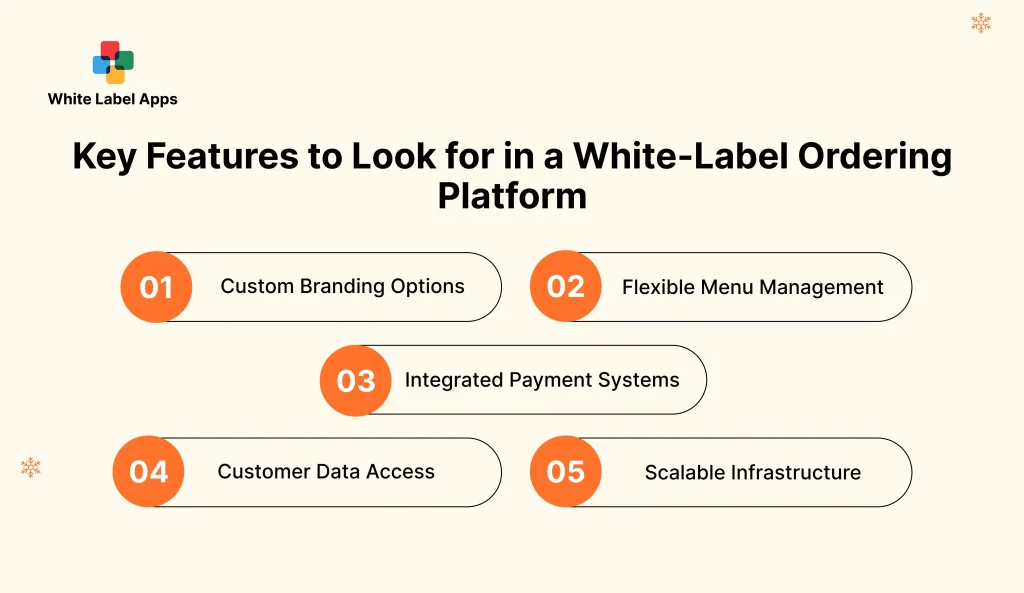
Choosing the right features decides whether a white-label ordering platform truly supports growth or quietly creates friction. These elements shape daily work, customer trust, and long-term flexibility far more than surface-level design promises over time for growing teams everywhere today.
-
Custom Branding Options:
Strong branding tools let businesses control how customers see them at every step. Colors, logos, and layouts stay familiar, helping orders feel safe, personal, and tied to one trusted brand.
Without branding control, customers feel disconnected and unsure. A white-label ordering platform fixes this by keeping the business identity visible, steady, and memorable across repeat visits and everyday ordering moments.
-
Flexible Menu Management
Menus change often due to pricing shifts, stock limits, or seasons. Flexible management lets teams update items fast, avoid customer confusion, and keep orders accurate without delays or technical support.
When updates are slow, mistakes grow quickly. A responsive system helps staff stay confident, reduces wrong orders, and ensures customers always see what is actually available right now, today, online.
-
Integrated Payment Systems
Smooth payments decide whether orders finish or fail. Integrated systems accept multiple methods, process transactions securely, and reduce checkout frustration that causes customers to abandon carts mid-order too often, sadly.
When payments work reliably, trust builds quietly. Customers return more often, recommend the brand freely, and stop worrying about failed charges or confusing refunds during busy ordering moments each time.
-
Customer Data Access
Access to customer data turns orders into insight. Businesses see patterns, preferences, and timing, helping them make smarter decisions instead of guessing what customers want next over time, repeatedly, confidently.
With direct data ownership, marketing feels personal. Offers arrive at the right moment, loyalty grows naturally, and customers feel recognized rather than treated like anonymous transactions every single day online.
-
Scalable Infrastructure
Growth brings pressure from higher traffic and more orders. Scalable infrastructure keeps systems stable, preventing crashes during promotions, weekends, or sudden demand spikes that hurt sales and frustrate teams badly.
A platform that scales smoothly supports expansion without fear. New locations, features, and customers arrive without breaking workflows or forcing expensive rebuilds later as business demand grows steadily over time.
Features shape daily experiences more than promises. Choosing carefully saves future stress and keeps the platform helpful instead of restrictive as the business grows.
Benefits of Using a White-Label Ordering Platform for Businesses
Using a white-label ordering platform helps businesses cut fees, stay visible, own customer data, and feel more in control of daily orders without depending on outside apps.
- Lower Long-Term Costs: Commission fees drain profits quietly. A white-label ordering platform removes that leak. Businesses keep more from every order. Over time, savings stack up. That extra margin supports marketing, staff pay, or upgrades instead of disappearing into platform fees.
- Stronger Brand Recall: Repeated exposure builds memory. When customers order through a white-label ordering platform, they see the same brand each time. That familiarity increases repeat orders. People remember what feels simple and consistent, not what feels rented.
- Direct Marketing Opportunities: With customer data available, marketing becomes smarter. A white-label ordering platform allows targeted offers based on past behavior. Messages feel timely, not spammy. That relevance increases open rates and actual orders, not just clicks.
- Operational Simplicity: Managing orders from one system reduces confusion. A white-label ordering platform replaces scattered tablets and apps. Staff training becomes easier. Errors drop. Workdays feel calmer even when volume stays high.
- Better Customer Trust: Customers trust brands that feel direct. A white-label ordering platform removes middlemen from the experience. Payments, support, and communication feel personal. That trust grows slowly but stays strong once built.
Benefits like these rarely feel dramatic at first. They settle in quietly, improving daily operations and finances without demanding constant attention or effort.
White-Label Ordering Platform vs Third-Party Ordering Apps
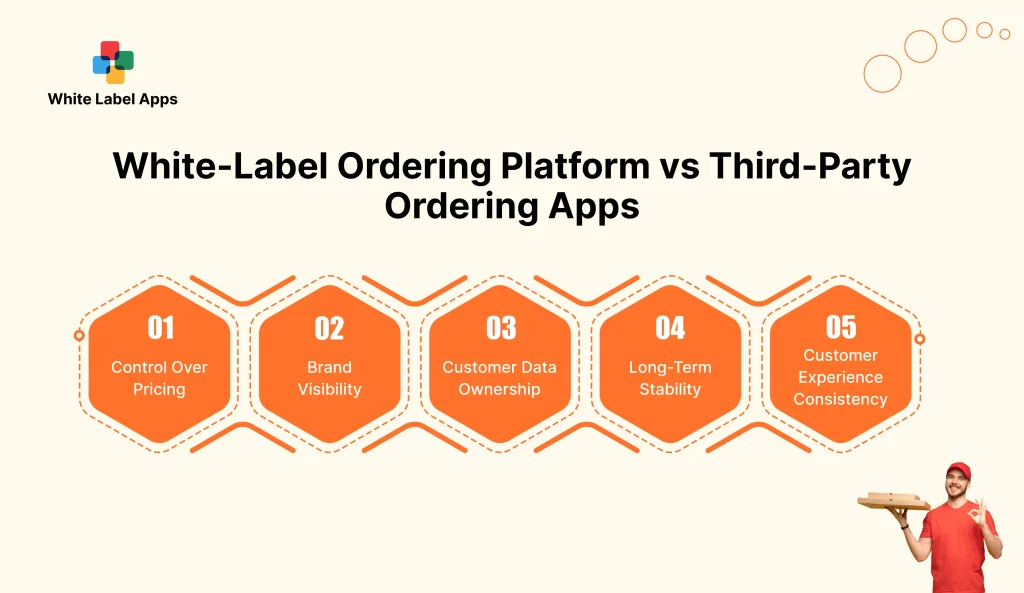
This comparison shows why some businesses choose ownership over convenience, trading crowded marketplaces for direct control, clearer branding, and stronger customer relationships built through everyday ordering experiences.
-
Control Over Pricing
Pricing feels simple until commissions start eating into it. Third-party apps quietly push businesses to raise menu prices just to survive. A white-label ordering platform removes that pressure completely. You decide what customers pay, not an outside company chasing its own margins. Discounts can be thoughtful instead of forced. Bundles can make sense and not feel rushed. Over time, pricing feels honest again. Customers stop asking why prices differ across platforms, and businesses stop adjusting numbers just to break even.
-
Brand Visibility
On third-party apps, your brand often sits beside ten others, all shouting for attention. A white-label ordering platform removes that noise. Customers see only you. Your colors. Your tone. Your story. There are no competing banners pulling eyes away mid-order. That focus matters more than it sounds. Familiarity builds slowly, order by order. When customers think about reordering, they remember the brand itself, not the app they used. That recall leads to loyalty without aggressive promotions.
-
Customer Data Ownership
Customer data is power, yet third-party platforms rarely share it fully. A white-label ordering platform changes that dynamic. Every order teaches something useful. What people buy. When they return. What they skip. That information helps businesses act with confidence instead of guessing. Marketing becomes warmer and more relevant. Messages feel timely, not random. Over time, customers notice the difference. They feel understood. Data stops being numbers on a screen and starts shaping better everyday decisions naturally.
-
Long-Term Stability
Marketplaces change rules often, sometimes overnight. Fees rise. Visibility drops. Businesses are left adjusting plans constantly. A white-label ordering platform offers breathing room. You control timelines, updates, and priorities. That stability supports smarter planning. Marketing campaigns feel safer. Expansion feels possible. Investments stop feeling risky. When systems stay steady, teams work with less stress. Decisions feel grounded. Growth becomes something you guide instead of something you chase while reacting to sudden platform changes.
-
Customer Experience Consistency
Customers notice inconsistency quickly. Different layouts, tones, and flows confuse people, even if they never say it out loud. A white-label ordering platform keeps the experience familiar every time. The same look. The same steps. The same voice. That comfort builds trust quietly. Customers know where they are and who they are ordering from. Fewer questions get asked. Fewer mistakes happen. Ordering feels easy, almost automatic, which is exactly what keeps people coming back again.
Comparisons reveal a simple truth about growth and survival. When businesses control the experience, decisions feel clearer, margins stay healthier, customers trust more deeply, and results stop feeling accidental, becoming outcomes shaped by intent, consistency, and daily ownership over time.
Also Read: Top Benefits of White Label Mobile App for Restaurants
Industries That Benefit Most From a White-Label Ordering Platform
Some industries feel the impact faster because frequent orders, repeat customers, and brand trust matter more, making a white-label ordering platform especially useful for daily operations and long-term growth success.
- Restaurants and Cafes: Food businesses rely on speed and repeat customers. A white-label ordering platform supports direct orders, custom menus, and loyalty offers. Restaurants regain control over customer relationships lost to delivery marketplaces over time.
- Retail and Local Stores: Local retailers use white-label ordering platforms for pickup and delivery. Customers browse products easily. Stock updates stay accurate. The brand feels modern without relying on large marketplaces that dilute local identity.
- Grocery and Specialty Stores: Frequent orders make data valuable. A white-label ordering platform helps track buying patterns. Stores adjust inventory smarter. Regular customers appreciate easy reorders without searching through crowded third-party apps.
- Service-Based Businesses: Salons, repair services, and rental businesses use white-label ordering platforms for bookings and payments. Scheduling feels smoother. Communication improves. Customers trust systems that feel direct and clear.
- Multi-Location Brands: Chains benefit from centralized control. A white-label ordering platform manages multiple locations under one system. Branding stays consistent while allowing local adjustments where needed.
Different industries apply it differently, but the core advantage stays the same. Direct ownership creates clarity, no matter the business type.
Conclusion
Choosing a white-label ordering platform is less about technology and more about mindset. It signals a shift toward ownership. Orders feel direct. Branding stays visible. Customer data becomes useful instead of distant. Over time, small improvements add up. Fewer fees. Better insights. Stronger relationships. Businesses stop reacting and start deciding. For those ready to step away from crowded marketplaces, solutions like those available through trusted providers quietly support that move. If you explore options that focus on control, branding, and growth, platforms similar to what whitelabelapps offers can align naturally with that goal. The change does not feel loud. It feels steady. And steady often wins.
FAQs
1. What makes a white-label ordering platform different from custom-built systems?
A white-label ordering platform offers a faster start than custom builds. Businesses skip long development cycles and heavy costs. The system arrives tested and ready. Customization still exists, but without rebuilding everything from scratch. That balance helps businesses launch quickly while keeping control over branding, orders, and customer data from day one.
2. Is a white-label ordering platform suitable for small businesses?
Yes, in particular for small businesses. A white-label ordering platform eliminates fee strain and simplifies operations. Small groups manipulate orders, payments, and clients from one place. Over time, the platform grows with the business, making it a sensible preference besides overwhelming complexity or giant upfront investments.
3. How secure is customer data on a white-label ordering platform?
Security depends on the provider, but strong white-label ordering platforms use encrypted payments and protected databases. Businesses control who accesses data. That transparency builds customer trust. When data stays internal instead of being shared with third parties, risks reduce and accountability improves naturally.
4. Can a white-label ordering platform support multiple locations?
Most modern white-label ordering platforms handle multiple locations easily. Businesses manage menus, pricing, and orders from one dashboard. Location-specific settings remain possible. This setup simplifies expansion and keeps brand consistency across regions without juggling separate systems.
5. Does switching to a white-label ordering platform affect existing customers?
Switching can feel smooth when communicated well. Customers usually appreciate direct ordering. A white-label ordering platform feels familiar quickly. Clear messaging, small incentives, and consistent branding help customers transition without confusion or frustration during the change.