Building a mobile app always feels exciting at the start. Ideas flow quickly. Plans sound simple. Then reality settles in. Timelines stretch longer than expected. Budgets feel tighter each week. Decisions slow down because every step costs something. Many businesses reach this point and pause. They still want an app, just not the exhausting road that comes with building everything from the ground up.
That is where white label mobile apps quietly make sense. They come with a working base already tested in real situations. Instead of guessing and fixing early mistakes, teams begin with something stable. The focus shifts toward users, branding, and growth. Launching no longer feels stressful or overwhelming. It feels possible again.
According to one study, 28% of users uninstall a mobile app in the first 30 days after download. This is exactly where we step in to save you from this problem. We work with businesses that want speed without losing control. Our approach helps shape white-label apps around real needs, not fancy promises. We handle the heavy lifting so teams can stay focused on ideas, customers, and momentum without tech pressure slowing them down.
At Whitelabelapps, we guide businesses through every step with clarity and care. Our goal is simple. Make app launches feel lighter, smarter, and more confident. When the process feels right, growth follows naturally, and teams finally enjoy building something that works the way they imagined it would.
TL;DR
- White-label mobile apps help businesses launch faster without starting from scratch or spending months in planning meetings.
- These apps keep branding fully in your control while removing most technical stress from development teams.
- Businesses use white-label mobile apps to test ideas quickly before investing in large custom builds.
- Costs stay predictable, making budgeting easier for startups and growing companies alike.
- White-label mobile apps work best when speed, control, and simplicity matter more than custom features.
Key Points
- White-label mobile apps reduce development time by offering ready-made app structures.
- Branding stays flexible, allowing businesses to customize visuals and messaging easily.
- Maintenance and updates are handled without heavy internal tech involvement.
- These apps suit agencies, startups, and brands wanting faster launches.
- White-label mobile apps balance cost, speed, and ownership practically.
Understanding White-Label Mobile Apps
White-label mobile apps are pre-built app solutions that businesses customize with their branding, features, and content, avoiding full development while keeping ownership and control intact.
- Ready-Made Foundations: White-label mobile apps come with a working base that already feels solid. Core features are tested, user flows make sense, and early bugs are mostly gone. Businesses skip painful starting steps and spend time shaping the app instead of fixing the basics.
- Full Branding Control: Even with a ready structure, branding stays flexible. Logos, colors, layouts, and content match your voice. Users never see the framework behind it. The app feels yours, helping customers trust the brand, not a shared platform.
- Faster Launch Cycles: Speed is a major reason businesses choose white-label mobile apps. Instead of waiting months, launches happen in weeks. This helps teams test ideas while markets are still warm. Quick launches also allow faster feedback. Adjustments happen early, not after heavy investment.
- Lower Technical Stress: Technical complexity often scares non-tech teams. White-label mobile apps remove much of that fear. Most heavy lifting is already handled. Updates, fixes, and performance issues feel lighter. Teams stay focused on growth instead of backend problems that slow momentum.
- Scalable Structures: These apps are built to grow. As users increase, systems adjust without breaking. New features can be added gradually. Businesses do not feel locked in or limited. This flexibility supports long-term plans without forcing a rebuild later.
Together, these strengths make white-label mobile apps a smart, calm choice for businesses wanting speed, control, and room to grow without heavy risk or constant technical stress over the long term.
Also Read: White-Label Ordering Platform: How Businesses Take Control of Orders, Branding, & Customer Data
Benefits Of White-Label Mobile Apps
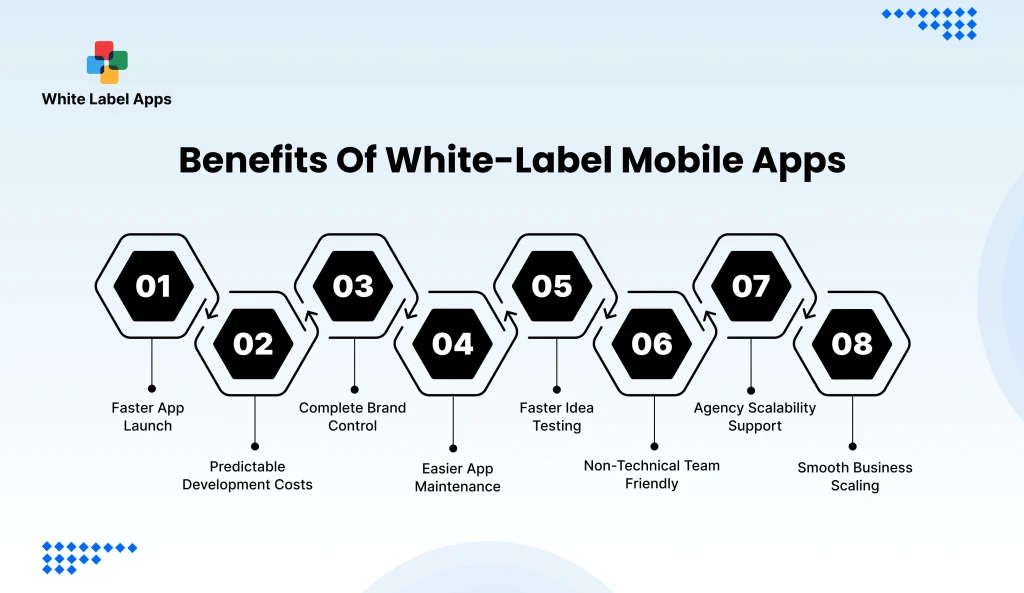
The main benefit of white-label mobile apps is balance. Businesses gain speed, control, and cost clarity without sacrificing quality or user experience. Following are some more benefits of white-label mobile apps:
-
Faster App Launch
White-label mobile apps cut long development cycles by using ready frameworks that already work well. Teams skip early testing pain, move faster, and launch products while ideas are still fresh, relevant, and exciting for modern competitive markets today.
They assist groups in replying rapidly to trends, client feedback, or market shifts, barring a few months. Speed builds confidence, keeps momentum alive, and allows groups to analyze early, regulate calmly, and keep away from highly priced errors later for the duration of product development phases, regularly and naturally.
-
Predictable Development Costs
Costs stay predictable with white-label mobile apps because pricing is usually clear upfront. Businesses avoid surprise expenses, endless revisions, and budget stress that often appear during custom builds with unclear scopes and shifting technical requirements over long project timelines.
This readability helps groups diagram marketing, staffing, and boom, except for the steady concern of overruns. Financial peace improves focus, permitting higher decisions, calmer discussions, and extra self-belief when offering thoughts to companions or traders throughout early enlargement levels for developing companies.
-
Complete Brand Control
White-label mobile apps give full control over branding, design, and voice. Logos, colors, layouts, and messaging reflect the business personality, helping users feel trust, familiarity, and comfort instead of seeing generic shared platforms used by multiple brands online today.
When users connect emotionally with branding, loyalty grows naturally. Strong identity improves recognition, encourages repeat use, and supports long-term growth without spending heavily on constant promotions or attention-grabbing campaigns across digital touchpoints over time for sustainable brand-building efforts.
-
Easier App Maintenance
Maintenance becomes easier because most technical work is handled by the provider. Updates, security fixes, and performance improvements arrive smoothly, reducing downtime and removing pressure from internal teams who may lack deep development resources or technical leadership experience internally today.
This reliability builds trust with users who expect apps to work consistently. Fewer crashes and delays mean better reviews, stronger retention, and calmer operations for businesses managing daily demands across growing user bases over longer usage periods online today consistently.
-
Faster Idea Testing
White-label mobile apps allow faster testing of ideas before major investment. Businesses can launch, observe behavior, gather feedback, and refine features early without risking large budgets or long-term commitments that slow innovation cycles significantly for many growing teams today.
This approach encourages experimentation and learning. Teams feel safer trying new features, pricing models, or user flows, knowing adjustments are possible without rebuilding everything from the ground up after real-world user responses arrive and insights shape better decisions overall quickly.
-
Non-Technical Team Friendly
Non-technical teams benefit greatly from white-label mobile apps. They manage content, updates, and features without deep coding knowledge, reducing dependency on developers for every small change that could delay daily operations often and slow business responsiveness overall significantly internally.
This independence speeds decision-making and keeps momentum steady. Teams act quickly, respond to feedback, and stay aligned with goals without waiting for long technical backlogs to clear during critical growth periods for modern digital businesses today, competing actively everywhere.
-
Agency Scalability Support
Agencies use white-label mobile apps to serve multiple clients efficiently. A repeatable base saves time, ensures quality, and allows customization per client without restarting development each time for every new project engagement, while maintaining healthy delivery timelines consistently.
This model supports growth without burning teams out. Agencies scale services, maintain margins, and deliver reliable results while focusing energy on relationships, strategy, and creative problem-solving for long-term business stability and sustainable client partnerships naturally built together over time.
-
Smooth Business Scaling
White-label mobile apps support scaling as user demand grows. Infrastructure handles higher traffic smoothly, helping businesses expand features, regions, or audiences without rebuilding systems from scratch when growth accelerates unexpectedly fast for ambitious companies entering competitive markets globally today.
This flexibility protects long-term plans. Businesses avoid painful migrations later, maintain performance, and keep users satisfied while growing steadily instead of rushing into risky rebuilds that disrupt operations and user trust during major expansion phases over the coming years ahead confidently.
Together, these benefits show why white-label mobile apps feel practical, flexible, and safe, helping businesses grow steadily, test ideas confidently, and build apps without unnecessary stress slowing real progress forward.
Also Read: Top 10 Best White Label Food Delivery App Providers
Key Features Found in White Label Mobile Apps
White-label mobile apps include essential features that support smooth operation, user engagement, and easy customization across different industries and business sizes.
- Custom Dashboards: Dashboards give businesses control. Analytics, user data, and activity tracking sit in one place. Teams see what works and what does not. This visibility helps make smarter decisions without complex tools or extra software.
- User Management Tools: Managing users becomes simple. Profiles, access levels, and activity tracking feel organized. White-label mobile apps support the secure handling of user information. This matters for trust and compliance, especially as user bases grow.
- Payment Integration: Many white-label mobile apps support built-in payment systems. Businesses accept payments smoothly without a heavy setup. This feature supports subscriptions, purchases, or upgrades. Reliable payments protect revenue flow and user confidence.
- Push Notifications: Push notifications keep users engaged. Updates, offers, and reminders reach users instantly. Used wisely, they improve retention. White-label mobile apps make this tool easy to manage without complex rules or coding.
- App Store Readiness: Apps built on white-label frameworks are designed to meet store guidelines. This reduces rejection risk. Publishing feels smoother. Businesses avoid long approval cycles caused by technical issues or missing requirements.
These features work quietly in the background, keeping apps stable and easy to manage. Businesses move faster, users feel supported, and growth happens without constant fixes or technical headaches slowing progress down.
Who Offers White-Label Mobile Apps Today?
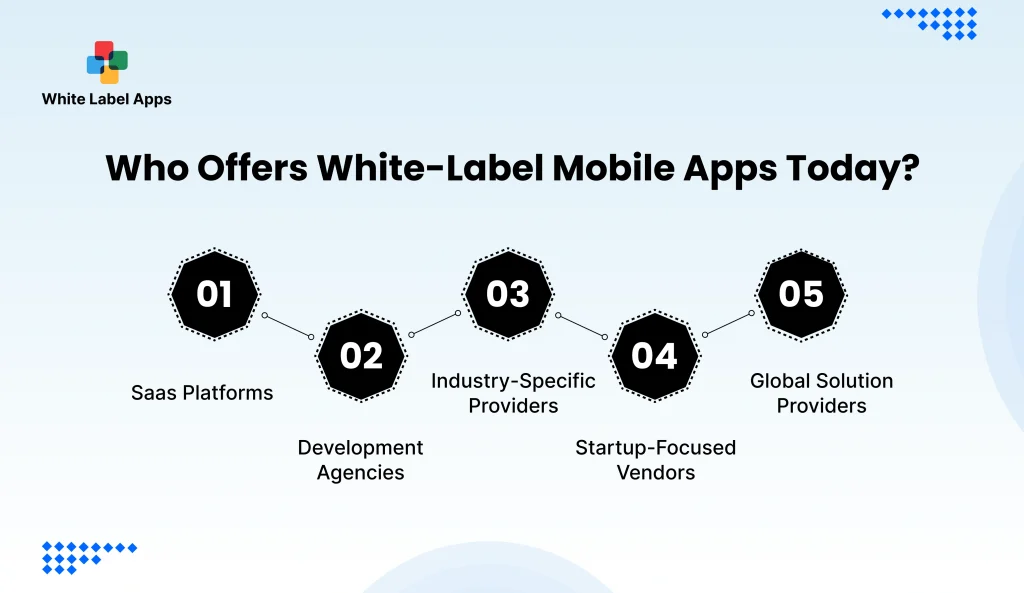
White label mobile apps are offered by specialized platforms, development agencies, and SaaS providers focused on helping businesses launch faster without building from scratch.
-
Saas Platforms
Many SaaS platforms provide white-label mobile apps as part of their core offering. These solutions are built for stability, frequent updates, and smooth performance. Businesses benefit because improvements happen automatically. There is less internal workload, fewer technical worries, and more time to focus on users, marketing, and growth without managing complex systems daily across modern digital business environments today.
-
Development Agencies
Development agencies rely on white-label mobile apps to handle multiple client projects efficiently. Instead of rebuilding every app, they reuse proven structures. This saves time, maintains consistency, and reduces group burnout. Agencies can focus on design, strategy, and consumer relationships while handing over quicker launches, without sacrificing reliability for long-term growth and predictable transport schedules throughout numerous industries.
-
Industry-Specific Providers
Industry-specific providers build white-label mobile apps for focused markets like fitness, education, or retail. Their features match real workflows, reducing setup effort. Businesses adopt these apps faster because the tools already fit their daily operations. Less customization means quicker launches, fewer errors, and smoother onboarding for teams unfamiliar with complex technology systems used in specialized business environments today that are widely adopted today.
-
Startup-Focused Vendors
Startup-focused vendors understand limited budgets, small teams, and constant uncertainty. Their white-label mobile apps offer flexible pricing and room to grow. Startups test ideas quickly, learn from users, and adjust direction early. This reduces risk, preserves cash, and builds confidence before committing to expensive custom development paths during early-stage growth cycles without heavy pressure or long delays.
-
Global Solution Providers
Global solution providers deliver white-label mobile apps built for scale, security, and long-term use. These firms support large user bases, multiple regions, and compliance needs. Businesses planning expansion trust these providers for reliability. Strong infrastructure helps apps operate nicely whilst dealing with growth, updates, and consumer expectations internationally, with regular performance and steady support structures in place.
With so many issuer preferences available, organizations can select companions that suit their goals, timelines, and budgets, making white-label cellular apps a flexible direction ahead for contemporary developing businesses.
Also Read: White Label Restaurant App Explained: Benefits, Features, & Why It Works
When White Label Mobile Apps Make Sense?
White label mobile apps make sense when businesses need speed, cost control, and flexibility without deep technical investment or long development cycles.
- Early-Stage Testing: Testing an idea fast matters. White-label mobile apps allow quick launches. Businesses gather feedback early. Adjustments happen before heavy spending. This approach reduces failure risk.
- Limited Budgets: Smaller budgets benefit from predictable pricing. White-label mobile apps avoid unexpected costs. Businesses stay within limits while still delivering quality apps to users.
- Tight Timelines: Some launches cannot wait. Marketing campaigns, events, or partnerships need apps ready fast. White-label mobile apps meet these deadlines without cutting corners.
- Non-Technical Teams: Teams without deep tech skills still need apps. White-label mobile apps remove complexity. Businesses focus on strategy and content instead of code management.
- Multi-Client Delivery: Agencies handling many clients need efficiency. White-label mobile apps support repeatable success. Each client gets a customized app without starting over every time.
White label cellular apps suit moments when velocity matters, budgets are tight, and readability is needed. They assist groups in crossing ahead confidently, barring overthinking or getting caught in technical loops.
Cost Breakdown Of White-Label Mobile Apps
White-label cellular apps provide obvious value structures, supporting organizations that sketch prices without a doubt throughout setup, customization, maintenance, and scaling phases.
| Stage | Cost | Typical Duration |
| Setup | $2,000 to $6,000 (one-time) | 1 to 2 weeks |
| Customization | $3,000 to $15,000 (one-time or phased) | 2 to 6 weeks |
| Licensing | $1,000 to $5,000 per year | Ongoing (monthly or yearly) |
| Maintenance | $500 to $2,000 per month | Ongoing |
| Scaling | $500 to $5,000+ per month | Ongoing as usage grows |
-
Setup Costs – $2,000 to $6,000 (one-time)
Setup costs include platform access, basic configuration, and initial onboarding support for teams. These expenses stay lower than custom development, helping businesses begin faster without heavy planning delays today.
Clear setup pricing helps teams plan budgets calmly from day one. Knowing exact starting costs reduces stress, improves trust with providers, and avoids uncomfortable financial surprises during early project discussions.
-
Customization Fees – $3,000 to $15,000 (one-time or phased)
Customization fees cover branding updates, feature tweaks, and layout adjustments requested by businesses. Costs change based on complexity but remain more affordable than rebuilding entire applications from scratch, usually today.
These fees allow flexibility without full commitment. Teams choose only what they need, control spending better, and shape apps gradually while learning from real user behavior over time through insights collected.
-
Licensing Charges – $1,000 to $5,000 per year
Licensing expenses are regularly month-to-month or yearly, covering software program access, updates, and technical support. This shape continues to possess clarity and ensures apps remain cutting-edge, barring greater negotiations or hidden fees.
Regular licensing makes budgeting predictable for developing businesses. Instead of shock invoices, groups design costs confidently, align price range with boom goals, and keep away from unexpected pressure throughout necessary scaling periods.
-
Maintenance Expenses – $500 to $2,000 per month
Maintenance expenses include bug fixes, performance improvements, and routine updates handled by providers. Costs remain steady, helping businesses avoid constant troubleshooting and focus on daily operations without extra technical pressure.
Stable maintenance reduces downtime and protects user experience. Apps run smoother, reviews stay positive, and internal teams feel less pressure managing technical issues during busy operational periods every single day.
-
Scaling Costs – $500 to $5,000+ per month (as usage grows)
Scaling costs appear as user numbers grow and features expand. White-label mobile apps support this growth smoothly, allowing systems to adjust without sudden performance drops or service quality loss.
Expenses make bigger steps step-by-step, rather than sharply, giving agencies time to prepare. This predictable scaling protects money flow, helps long-term planning, and reduces danger at some point of enlargement ranges for developing brands.
Overall, this clear value shape gets rid of guesswork, keeps spending under control, and helps groups develop confidently, understanding their white-label cellular app funding stays manageable at each and every stage for long-term success.
Conclusion
White-label mobile apps quietly change how businesses approach app building. The fear fades. Long timelines stop feeling normal. Costs stop creeping up without warning. Teams move with more confidence because the path feels clearer. Speed improves, but control never slips away. Branding still feels personal, not borrowed or generic. That balance matters a lot in markets where attention shifts fast and patience runs thin.
These apps work best for businesses that prefer progress over perfection. They leave room to test ideas, learn from users, and grow without heavy pressure sitting on every decision. Agencies, startups, and even mature brands find comfort in that flexibility.
If you are planning to launch or scale an app without burning energy or focus, choosing the right partner really helps. Teams at Whitelabelapps specialize in shaping white-label mobile apps around real goals, not just features. The right support turns a smart move into steady, long-term growth.
FAQ
1. What are white-label mobile apps?
White-label mobile apps are ready-built applications that businesses can rebrand and customize as their own. Instead of coding everything from scratch, companies start with a working structure. This saves time, reduces cost pressure, and speeds launches. Businesses still control branding, data, and user experience, making the app feel fully owned, personal, and aligned with long-term goals for modern teams.
2. Are white-label mobile apps customizable?
Yes, white-label mobile apps are highly customizable across design, layout, features, and content. Businesses can adjust colors, logos, flows, and functionality to match their brand voice. Users never see shared frameworks behind the app. This flexibility helps companies create unique experiences while saving time, avoiding rebuilds, and staying focused on growth instead of constant development work for busy teams.
3. Do white-label mobile apps support scaling?
White label mobile apps are built with scaling in mind from the start. As users increase, the system handles traffic smoothly without breaking. Businesses can add features, users, and regions gradually. This avoids painful rebuilds later. Scaling feels controlled, predictable, and calm, helping teams grow without stressing infrastructure or disrupting existing user experiences during expansion phases for modern growing businesses.
4. Who should use white-label mobile apps?
White label mobile apps work best for startups, agencies, and growing businesses needing speed. Teams with limited budgets or technical skills benefit the most. They launch faster, test ideas safely, and stay flexible. These apps suit businesses that value control and clarity while avoiding long development cycles, high costs, and technical stress during early and mid-growth stages for teams.
5. How much do white-label mobile apps cost?
White label mobile apps cost less than custom development, but pricing varies by provider and features. Most include setup, licensing, and maintenance fees. This structure keeps budgets predictable. Businesses avoid surprise expenses and plan better. Clear pricing helps teams balance growth, marketing, and operations without worrying about sudden development costs disrupting cash flow planning during critical business expansion phases ahead.