People are not ordering any less food than in previous years. In 2025, customers need fast apps with a good user experience. Restaurants understand this thing, but they also struggle with high fees and too many platforms. The pressure keeps rising as the global online food delivery market is expected to cross $505 billion by 2030. Growth sounds exciting, but losing control over customers and margins does not. That gap keeps getting wider.
This is where a white-label multi-restaurant delivery app fits naturally. It gives food businesses a way to run their own delivery space without building everything from scratch. One platform. Many restaurants. Full brand control. It feels practical, especially for businesses tired of depending on big marketplaces for visibility and orders.
So in this blog, we will break things down without heavy tech talk or confusion. We will explain what a white-label multi-restaurant delivery app actually is, how it works behind the scenes, and why so many food businesses are choosing this route now.
We will also walk through key features, real benefits, pricing models, and how to choose the right provider. By the end, you will have a clear picture of whether this solution fits your goals and how it can support long-term growth.
TL;DR
- A white-label multi-restaurant delivery app lets businesses launch branded platforms fast, control commissions, and manage multiple restaurants smoothly.
- It helps food startups and restaurant groups avoid heavy development, keep customer data, and grow without relying on big marketplaces.
- The system supports flexible pricing models, smoother operations, and better margins while keeping ordering simple for customers every day online.
- With faster launches and built-in scalability, businesses can expand into new areas without rebuilding their delivery technology again later.
- Overall, this approach creates long-term control, stronger restaurant relationships, and a delivery brand that customers actually remember and trust.
Key Points
- Full brand control helps businesses own customer relationships, reduce platform dependence, and build trust through a consistent ordering experience online.
- Ready-built technology allows faster launches, lower costs, and quicker market testing without long development cycles slowing growth for today’s businesses.
- Flexible commission and subscription models improve profit margins while keeping restaurants comfortable, supported, and more willing to stay onboard longer.
- Centralized management makes handling multiple restaurants easier, giving owners clear visibility into orders, payments, performance, and daily operations without confusion.
- Built-in scalability supports expansion into new cities, restaurants, and delivery teams without breaking systems or creating constant technical stress.
What Is a White Label Multi-Restaurant Delivery App?
A white-label multi-restaurant delivery app is a ready-made food delivery platform that businesses can launch under their own brand. Instead of building technology from scratch, they get a tested system where multiple restaurants can list menus, accept orders, and manage deliveries. Customers order through one app, while the business controls branding, pricing, and the overall experience fully.
What makes this model appealing is its flexibility and ownership. Restaurants keep their identity, and platform owners keep customer data and revenue control. The app connects customers, restaurants, and delivery partners in one place. It works well for food startups, local delivery services, and restaurant groups looking to grow steadily without heavy tech stress.
Also Read: Why Becoming a White Label Restaurant Ordering Software Reseller Makes Sense
How Do White Label Multi-Restaurant Delivery Apps Work?
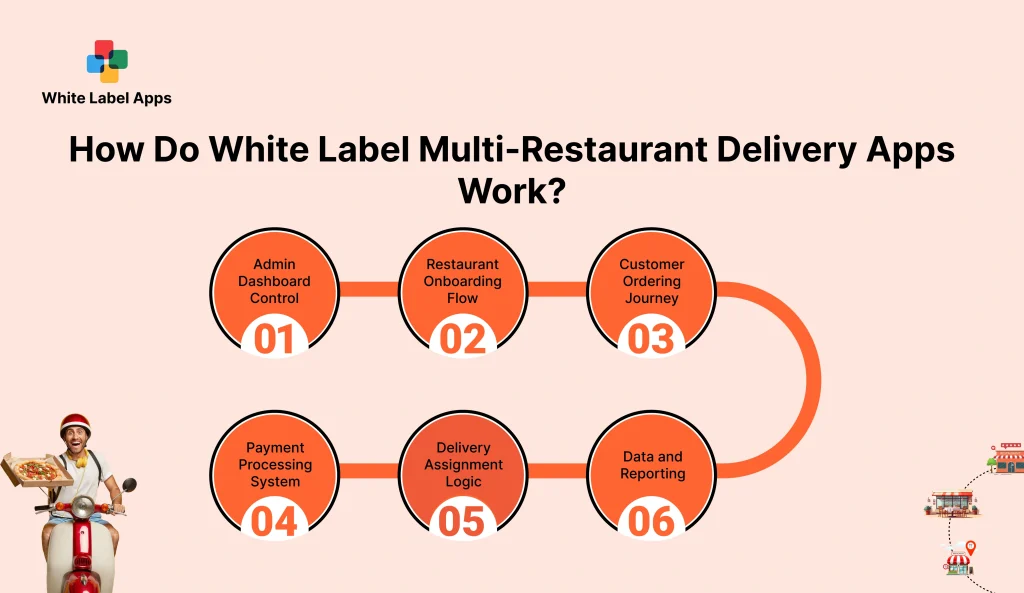
These apps operate through a central admin panel that connects restaurants, customers, and delivery teams under one branded platform.
-
Admin Dashboard Control
The admin dashboard acts like the brain of the system. From here, businesses manage restaurants, users, payments, and reports. A white-label multi-restaurant delivery app keeps this dashboard simple but powerful. You see what sells, what slows down, and where issues appear. This visibility helps make better decisions without guessing or relying on outside platforms for data.
-
Restaurant Onboarding Flow
Adding restaurants should feel smooth, not stressful. Restaurants get their own login, menu tools, and order notifications. A white-label multi-restaurant delivery app makes onboarding easy, even for non-technical owners. That ease matters because slower onboarding means lost opportunities. When restaurants feel comfortable early, they stay active longer and promote the platform themselves.
-
Customer Ordering Journey
From search to checkout, the journey stays short and clear. Customers browse nearby restaurants, view menus, customize items, and place orders quickly. A white-label multi-restaurant delivery app reduces friction by keeping steps minimal. Fewer clicks mean fewer drop-offs. That small detail improves overall order volume without expensive marketing pushes.
-
Payment Processing System
Payments run quietly in the background. Customers pay through cards, wallets, or cash options, depending on the setup. The system splits payouts automatically between restaurants and platform owners. A white-label multi-restaurant delivery app ensures accuracy here, which builds trust. No restaurant wants payment confusion. Clean transactions protect relationships.
-
Delivery Assignment Logic
Orders move to drivers based on location, availability, or priority rules. Whether manual or automated, the delivery assignment stays flexible. A white-label multi-restaurant delivery app supports both approaches. This adaptability helps during busy hours when quick decisions matter. Late deliveries hurt trust, so this feature plays a bigger role than it seems.
-
Data and Reporting
Data shows patterns people often miss. Sales peaks, slow days, popular items, and delivery delays. A white-label multi-restaurant delivery app collects and presents this clearly. These insights help restaurants adjust menus and pricing. Platform owners plan expansion smarter. Decisions feel grounded instead of reactive.
Together, these connected systems keep everything running smoothly behind the scenes, helping businesses stay organized, restaurants stay confident, and customers enjoy a simple, reliable delivery experience every single day.
Key Features to Look for in a White Label Multi-Restaurant Delivery App
The right features decide whether the platform feels helpful or frustrating for both restaurants and customers.
- Custom Branding Options: Strong branding tools allow full visual control. Logos, colors, app icons, and even notification styles should match your identity. A white-label multi-restaurant delivery app without branding flexibility feels generic. Custom branding helps your app stand out and feel familiar. Over time, customers associate smooth ordering with your name, not just convenience.
- Real-Time Order Tracking: Customers like knowing where their food is. Real-time tracking builds trust and reduces support calls. A white-label multi-restaurant delivery app should show order status clearly, from preparation to delivery. That transparency eases anxiety during long waits. Even delays feel more acceptable when people stay informed.
- Menu and Pricing Control: Restaurants need freedom to update menus anytime. Item availability, pricing changes, and offers should be quick to adjust. A white-label multi-restaurant delivery app supports this without approvals or delays. This flexibility helps restaurants react to stock changes and seasonal demand, keeping customers satisfied instead of disappointed.
- Multi-Payment Support: Different customers prefer different payment methods. Cards, wallets, cash, or local options all matter. A white-label multi-restaurant delivery app that supports multiple payment types reduces checkout friction. When payment feels easy, customers complete orders instead of abandoning carts halfway through.
- Push Notifications: Notifications keep users engaged without being annoying. Order updates, offers, and reminders work best when timed well. A white-label multi-restaurant delivery app allows smart notification control. Restaurants promote deals. Customers stay informed. The platform stays visible without overwhelming people.
- Security and Stability: Security often gets ignored until something breaks. Strong encryption, secure logins, and stable servers matter daily. A white-label multi-restaurant delivery app must handle traffic spikes without crashing. Reliability builds confidence quietly. When apps work smoothly, users rarely notice. When they fail, they never forget.
Together, these features shape daily experience, keeping restaurants confident, customers relaxed, and the platform dependable, familiar, and easy to trust as orders grow and expectations quietly rise over time.
Also Read: Top 10 Best White Label Food Delivery App Providers
Benefits of Using a White Label Multi-Restaurant Delivery App
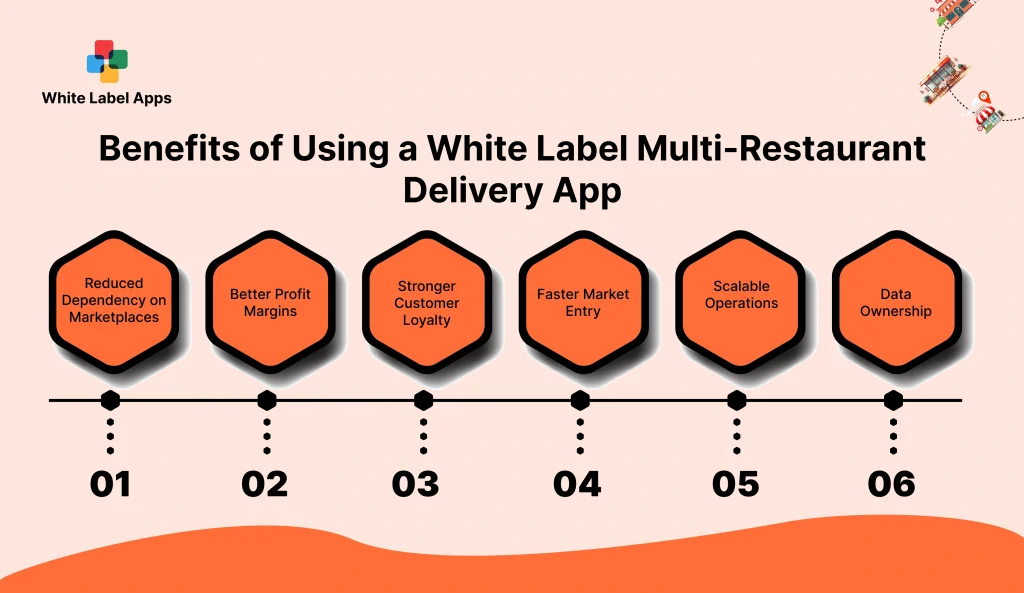
This model offers practical advantages that go beyond convenience and branding, giving businesses more control, better margins, stronger customer ties, and room to grow without constant platform pressure.
-
Reduced Dependency on Marketplaces
Relying on big delivery marketplaces often feels convenient at first, but over time, it creates pressure. High commissions eat into profits, and customer data never truly belongs to the restaurant or platform owner. A white-label multi-restaurant delivery app changes that dynamic. Businesses regain control over how customers order, communicate, and return. Restaurants feel more connected, not replaceable. This independence builds trust on both sides and gives businesses confidence to grow without constantly worrying about changing marketplace rules or rising fees.
-
Better Profit Margins
When you own the platform, the numbers start to make more sense. Instead of losing a portion of every order to third-party apps, revenue stays within your system. A white-label multi-restaurant delivery app allows flexible pricing models that fit local markets and restaurant needs. Even small savings per order make a noticeable difference over time. As order volume grows steadily, these saved margins turn into stronger cash flow, helping businesses reinvest in growth rather than paying endless commissions.
-
Stronger Customer Loyalty
Customers tend to stick with brands they recognize and trust. When orders happen through your own app, the relationship feels more personal and consistent. A white-label multi-restaurant delivery app keeps branding, experience, and communication under one roof. Familiar layouts and smooth ordering create comfort. Over time, that comfort leads to repeat orders without relying heavily on discounts. Customers remember the app, not just the food, which helps build long-term loyalty naturally.
-
Faster Market Entry
Speed plays a big role in today’s food delivery space. Building an app from scratch can take months, sometimes longer, and costs often rise along the way. A white-label multi-restaurant delivery app removes that waiting period. Businesses can launch quickly, test real demand, and adjust early. Entering the market faster means gaining attention before competitors settle in. That early presence often makes a lasting impression, especially in areas where customers are still choosing their preferred delivery platform.
-
Scalable Operations
Growth brings excitement, but it can also bring chaos if systems are not ready. Adding more restaurants, drivers, or service areas should not break operations. A white-label multi-restaurant delivery app is built with expansion in mind. The same system supports small launches and larger rollouts without major changes. This scalability allows businesses to grow step by step, protecting momentum and reducing stress during busy growth phases when mistakes can be costly.
-
Data Ownership
Data quietly shapes smarter decisions. Marketplaces often keep customer behavior, order patterns, and insights hidden. With a white-label multi-restaurant delivery app, that data belongs to you. Businesses can see what customers order, when demand peaks, and which restaurants perform best. These insights help improve menus, marketing, and delivery planning. Over time, owning data leads to better strategies, stronger relationships, and growth that feels informed instead of guessed.
Together, these benefits create a delivery model that feels balanced, sustainable, and fair, helping food businesses grow confidently while staying connected to customers, restaurants, and real market needs over time.
Cost and Pricing Models for White Label Multi-Restaurant Delivery Apps
Understanding costs early helps businesses avoid last-minute surprises, plan realistic budgets with confidence, make smarter decisions, and move forward calmly without feeling unsure about hidden fees or unexpected expenses later.
- Setup and Licensing Costs: Most platforms charge a one-time setup fee and ongoing license costs. A white-label multi-restaurant delivery app usually costs less than custom development. These fees cover core features, updates, and support. Clear pricing upfront helps businesses plan without fear of sudden expenses appearing later.
- Commission-Based Model: Some platforms support a commission per order. Restaurants pay a small percentage for using the system. A white-label multi-restaurant delivery app allows flexible commission rates, unlike rigid marketplaces. This model works well when order volume is high and restaurants prefer low upfront costs.
- Subscription-Based Model: Subscriptions charge restaurants a fixed monthly fee. This model provides a predictable income for platform owners. A white-label multi-restaurant delivery app supports this structure easily. Restaurants like knowing exact costs. It removes uncertainty tied to order fluctuations.
- Hybrid Pricing Approach: Many businesses mix commissions and subscriptions. A base fee plus a small commission balances risk. A white-label multi-restaurant delivery app supports hybrid pricing without complexity. This approach works across different restaurant sizes, from small cafes to busy chains.
- Custom Feature Costs: Extra features like advanced analytics or custom integrations may cost more. A white-label multi-restaurant delivery app keeps these optional. Businesses pay only when needed. This flexibility prevents overspending during the early stages while leaving room to grow later.
- Long-Term Cost Savings: Over time, owning the platform saves money. Lower commissions, direct marketing, and data access reduce ongoing expenses. A white-label multi-restaurant delivery app becomes more cost-effective as order volume grows, making it a long-term investment rather than a short-term tool.
When pricing feels clear and flexible, businesses move ahead with confidence, knowing their delivery platform can grow steadily without financial stress, confusion, or unpleasant surprises slowing progress later on.
Also Read: White Label App Marketplace: How Businesses Launch Apps Faster Without Building From Scratch
How to Choose the Right White Label Multi-Restaurant Delivery App Provider?
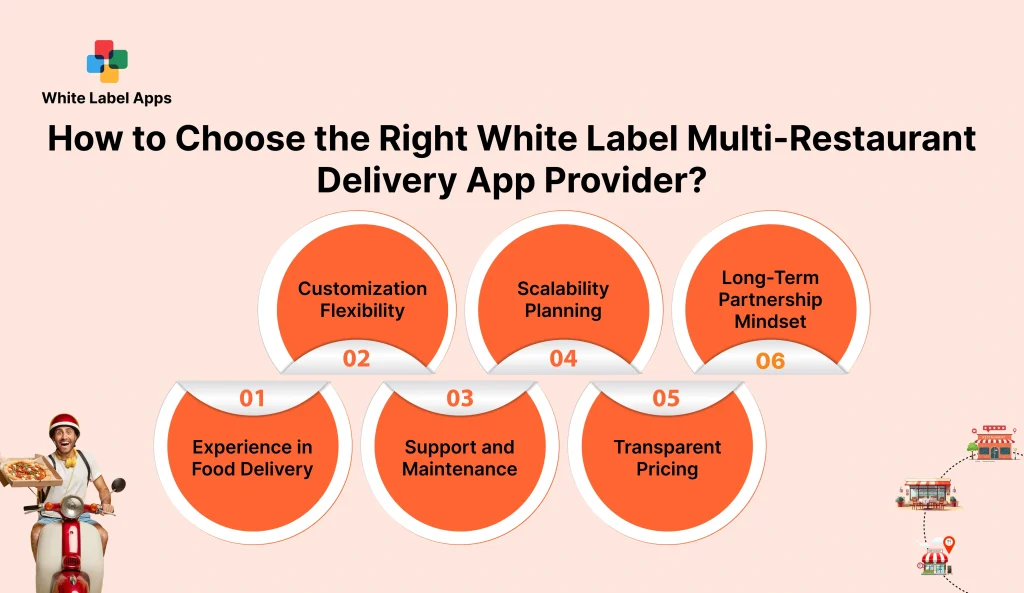
The provider you choose directly shapes how stable your platform feels, how smoothly it grows, and how easy daily operations become for restaurants, drivers, and customers using the system regularly.
-
Experience in Food Delivery
Not every tech company truly understands how food delivery works in real life. Teams with hands-on experience know the pressure of peak hours, late orders, and impatient customers. When a provider has worked in food delivery before, it shows in smoother order flow, smarter driver handling, and fewer mistakes. That experience saves time, money, and daily stress for everyone involved.
-
Customization Flexibility
Every city, restaurant type, and customer group behaves differently. That is why flexibility matters so much. A provider should allow changes in design, features, and workflows without making things complicated. When a white-label multi-restaurant delivery app adapts to local habits, it feels natural to users. Rigid systems slow growth and force businesses to adjust instead of the software doing its job.
-
Support and Maintenance
No platform runs all the time. Bugs, updates, and sudden issues are part of the journey. What matters is how fast support responds and how clearly problems get solved. Strong support keeps restaurants calm and operations stable. Regular maintenance also prevents small issues from turning into big ones. Reliable help makes busy days feel manageable instead of overwhelming.
-
Scalability Planning
Growth should not feel scary. A good provider plans for expansion from day one. Whether you add more restaurants, move into new cities, or gain thousands of users, the system should handle it smoothly. A scalable setup avoids constant rebuilds and surprise costs. Proper planning gives businesses confidence to grow without worrying about tech limits slowing them down later.
-
Transparent Pricing
Clear pricing builds trust early. Providers should explain setup costs, monthly fees, and optional charges without hiding details in fine print. When pricing is transparent, businesses can plan budgets properly and avoid awkward surprises later. A white-label multi-restaurant delivery app with honest pricing makes decision-making easier and keeps long-term relationships healthy, instead of being strained by confusion or unexpected expenses.
-
Long-Term Partnership Mindset
Launching the app is only the beginning. A strong provider thinks beyond delivery and focuses on growth, updates, and future needs. Technology changes, customer habits shift, and markets evolve. Partners who listen, adapt, and improve the platform over time help businesses stay competitive. That long-term mindset turns a simple service into a lasting, supportive partnership.
Choosing the right provider is not just a tech decision. It shapes daily flow, future growth, and long-term trust. The right partner makes scaling feel steady, not stressful, and growth feel possible.
Conclusion
Food delivery keeps changing, but control still matters. Businesses want freedom, fair margins, and closer ties with customers. A white-label multi-restaurant delivery app offers that balance without overwhelming teams or budgets. It supports growth while keeping branding strong and operations steady.
The real value shows over time. Lower costs. Better data. Loyal users. Restaurants feel supported instead of squeezed. Customers feel at home using a familiar app.
If you are exploring this path, working with a team that understands both technology and food delivery makes the journey smoother. Solutions like those offered by White Label Apps help businesses build reliable platforms that grow naturally with demand. The right foundation today can shape stronger delivery businesses tomorrow.
FAQ
1. What businesses benefit most from a white-label multi-restaurant delivery app?
Food startups, local delivery services, restaurant groups, and franchise owners benefit most. A white-label multi-restaurant delivery app helps them control branding, manage multiple restaurants, and reduce third-party fees. It works especially well for businesses planning long-term growth and regional expansion.
2. How long does it take to launch a white-label multi-restaurant delivery app?
Launch time depends on customization needs. Most white-label multi-restaurant delivery app platforms can go live within weeks. Branding, testing, and restaurant onboarding affect timelines. Compared to custom builds, this approach saves months of development time.
3. Can small restaurants afford a white-label multi-restaurant delivery app?
Yes. Many platforms offer flexible pricing. A white-label multi-restaurant delivery app supports subscription or commission models that fit smaller budgets. Restaurants avoid high marketplace fees and gain direct customer access, which improves profitability over time.
4. Is technical knowledge required to manage the platform?
No great technical skills are needed. A white-label multi-restaurant delivery app includes user-friendly dashboards. Restaurants manage menus easily. Admins control operations without coding. Support teams handle technical updates and maintenance.
5. Does a white-label multi-restaurant delivery app support future expansion?
Absolutely. These platforms are built to scale. A white-label multi-restaurant delivery app supports adding restaurants, cities, and delivery partners without rebuilding systems. This flexibility makes expansion smoother and less risky for growing businesses.