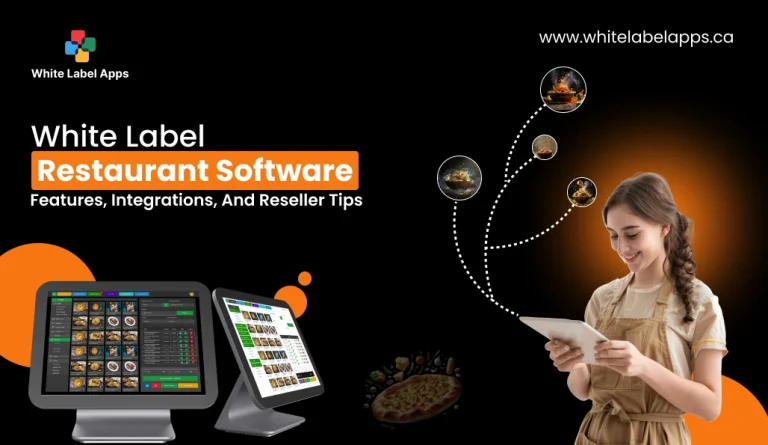
You know that moment when a restaurant owner says, “We are paying fees, and we still do not own the customer.” That is usually where this conversation starts. We have seen it up close while building ordering flows through white label app development. The messy parts are never the demo screens. It is the Friday rush, POS sync, staff training, and support when one order gets stuck. This blog is written from that real experience, and backed by focused research, so you get the full picture, not just the shiny side.
Now look at customer behavior. A report says 7 in 10 limited-service customers are likely to place an order using a smartphone app. That tells you why restaurants want their own branded ordering channel, not only aggregator listings. They want speed, repeat orders, and control.
That is why White Label Restaurant Software is becoming popular with agencies and resellers. It lets you sell a ready-made ordering and management system under your own brand, without building everything from zero. In this guide, you will learn what it is, how it compares with third-party aggregators, what features matter, how to integrate it into an existing setup, and how to succeed as a reseller without common mistakes.
TL;DR
- White Label Restaurant Software lets you resell a ready ordering system under your brand.
- It helps restaurants own customer data, pricing, and offers instead of relying on aggregators.
- The best setups cover customer ordering, restaurant operations, and stable tech infrastructure.
- POS, payments, and printer integrations matter, because double entry kills speed.
- Resellers win by choosing the right partner, targeting the right restaurants, and offering strong support.
Key Points
- White Label Restaurant Software is a built platform you rebrand and sell as your own product.
- White label restaurant software helps restaurants build direct repeat orders with their own app or website.
- Third-party aggregators bring reach, but they often limit control over customer relationships and fees.
- The best white label restaurant online ordering software focuses on fast ordering, clean checkout, and easy reorders.
- White label online ordering software for restaurants works best when pickup, delivery, and scheduling are simple to manage.
- Restaurant pos software white label integrations reduce errors when orders can flow directly to POS or kitchen printers.
What Is White Label Restaurant Software?
White label restaurant software is a ready-made ordering and management system that you sell under your own brand. The core product is already built, you just add your logo, colors, domain, and pricing. To your client, it looks like your own platform.
It usually includes an online ordering website, a customer app, and a restaurant dashboard. Many setups also add payments, delivery settings, coupons, and basic reports. In simple words, you are reselling a working product, not building it from zero.
For a reseller, it is like buying a fully fitted kitchen and putting your nameboard outside. You focus on selling, onboarding, and support, while the tech partner keeps the engine running. That is why teams use white label restaurant software when they want to launch faster and keep control of the brand.
Read More : White-Label vs Custom-Built Food Delivery Apps: Which Is Best for Startups?
White Label Restaurant Software vs. Third-Party Aggregator Solutions
A third-party aggregator is a marketplace app. You list the restaurant there, and they bring you orders. In return, they control the customer relationship, take commissions, and set many rules. You get reach, but you also get dependency.
White label restaurant software works in the opposite way. The restaurant runs its own branded ordering site and app, with its own offers and customer database. The restaurant owns the data, controls pricing, and decides how orders flow to the kitchen. This is why many resellers push white label restaurant software when clients are tired of fee surprises and lost customer loyalty.
Here is the simple difference in daily life. Aggregators help you get discovered. White label tools help you keep customers coming back directly.
| Factor | White Label Restaurant Software | Third-Party Aggregator Solutions |
| Branding | Your client’s brand is front and center. | Aggregator brand stays on top. |
| Customer Ownership | Restaurant owns customer data and repeat buyers. | Aggregator often keeps the customer relationship. |
| Fees | Usually a fixed subscription or plan pricing. | Commissions, plus extra service and marketing fees. |
| Menu And Pricing Control | Full control over menu, pricing, and offers. | Rules and limits can apply to pricing and promos. |
| Marketing | Direct loyalty, coupons, and campaigns are easier. | Promo options depend on the aggregator. |
| Order Flow | Can route orders to kitchen tools and dashboards. | Flow depends on aggregator setup and limits. |
| POS Integration | Easier when supported by the provider. | Integrations can be restricted or basic. |
| Long-Term Value | Builds an owned sales channel and brand asset. | Builds sales on rented traffic. |
| Support And Changes | Reseller plus vendor support, updates per plan. | Support is owned by the aggregator, you follow their roadmap. |
Key Features Of White Label Restaurant Software
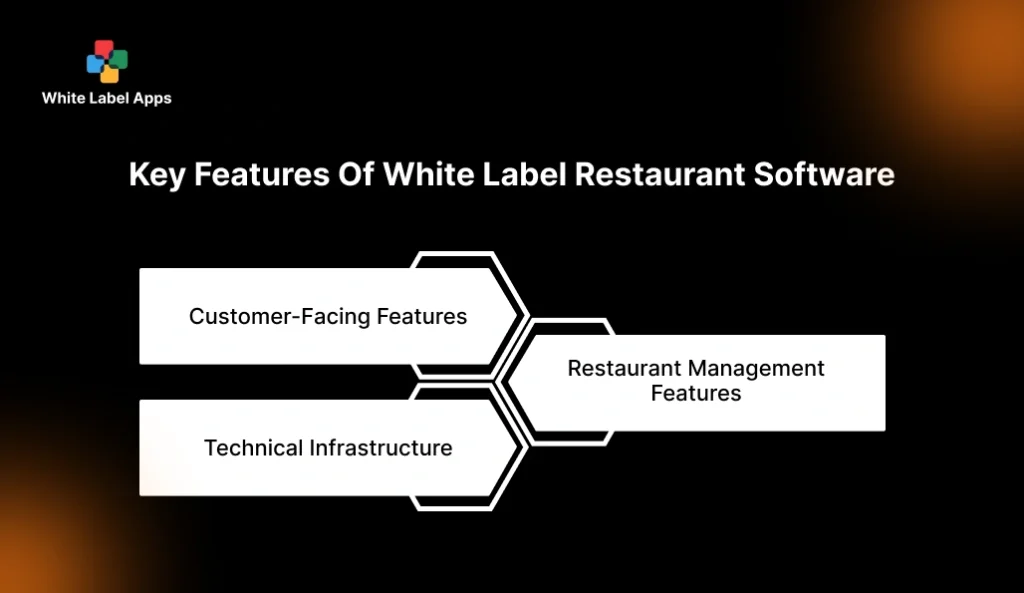
When you sell white label restaurant software, features are not “nice to have.” They decide if a restaurant sticks with you after the first busy Friday night. The best systems cover three layers. The customer side that drives orders. The restaurant side that reduces chaos. And the technical layer that keeps things stable during peak hours. If you are positioning the best white label restaurant online ordering software, you need to show how each layer helps the restaurant sell more, make fewer mistakes, and stay in control.
Customer-Facing Features
The customer side is where trust starts. If the menu loads slowly or checkout feels messy, people drop off in seconds. A strong white label online ordering software for restaurants setup should feel like the restaurant’s own brand, not a borrowed marketplace page. It should also support real needs like scheduling, quick reorders, and clear order updates. This is the part that quietly lifts repeat orders because the experience feels smooth and familiar.
- Branded Storefront: The ordering site matches the restaurant’s logo, colors, and tone.
- Easy Menu Browsing: Customers scan categories fast and find best sellers quickly.
- Smart Customization: Add-ons, spice levels, and special notes are easy to select.
- Flexible Fulfilment: Pickup, delivery, and scheduled orders work with clear time slots.
- Safe Payments: Cards and wallets are supported with secure checkout and tips.
- Order Tracking: Customers see status updates without calling the store.
- Coupon Codes: Promo codes work for first orders, cart value, or specific items.
- Loyalty Rewards: Points or stamps nudge customers to order again soon.
- Push Updates: Deal alerts and order updates reach customers at the right time.
- Ratings And Feedback: Quick reviews help spot issues early, before they snowball.
Restaurant Management Features
This is the “back of house” layer. It keeps staff from juggling calls, tablets, and manual notes. A good white label restaurant ordering software setup gives the owner control without making them feel they need a tech person on standby. Think simple tools that reduce mistakes, like item availability toggles, delivery zone rules, and clear order status steps. When this layer works well, restaurants run smoother, even with a small team.
- Live Order Dashboard: Staff accept, delay, and complete orders in one place.
- Menu And Pricing Edits: Items, prices, and availability can be updated anytime.
- Delivery Rules: Zones, minimum order, delivery fees, and timings are easy to set.
- Staff Access Levels: Roles and permissions prevent errors and protect settings.
- Sales Trends: Track peak hours and slow slots that need a small offer.
- Best Sellers: See top items and bundle them to lift average order value.
- Discount Tracking: Measure how coupons impact revenue, not just order count.
- Customer Insights: Spot repeat buyers and build offers that feel personal.
Technical Infrastructure
This part stays invisible until something breaks. The technical layer decides uptime, speed, and security. If you are selling restaurant pos software white label, integrations and reliability matter a lot, because restaurants hate double entry. A solid setup also needs backups, monitoring, and clean updates, so new features do not create new problems. This is what separates a quick tool from a platform restaurants can trust for years.
- Cloud Scaling: The system stays steady during lunch and weekend spikes.
- Secure Logins: Admin access is protected with role-based controls.
- Regular Updates: Bug fixes roll out without breaking the ordering flow.
- Backups And Recovery: Data is protected so a crash does not wipe history.
- Payment Gateway Support: Connect common processors for smooth checkout and payouts.
- POS And Printers: When supported, orders flow to POS or kitchen printers.
- APIs And Connectors: Integrate SMS, email, analytics, and delivery partners.
- Multi-Location Ready: Support multiple stores and brands inside one system.
Read More : White Label Mobile Apps Benefits
Why White Label Restaurant Software Is Becoming Popular?
Restaurants are tired of paying for “borrowed” customers. They want their own ordering channel, with their own offers, and their own data. That is why white label restaurant software is getting popular with both single-location stores and small chains. It feels like a simple switch. Less dependency, more control.
Another reason is speed. Many resellers can offer white label restaurant software for sale that is already tested, so the restaurant does not wait months to start taking direct orders. Owners also like predictable costs. They can plan better when they are not guessing commissions each week.
There is also a big shift happening inside the store. Self-serve is no longer “only for big brands.” A lot of restaurants now want white label self-serve in-store restaurant software for kiosks or counter tablets, so staff can focus on packing and service. When this connects with white label restaurant ordering software, the whole flow feels smoother, even during rush hours.
What Is Driving This Demand
- More Repeat Orders: Direct ordering helps restaurants build habits with regulars.
- Better Control: Menu, pricing, and promos stay in the restaurant’s hands.
- Cleaner Operations: Fewer tablets and fewer manual mistakes during peak hours.
- Future Fit: Easier to add POS links, loyalty, and new ordering touchpoints later.
How To Integrate White Label Restaurant Software into an Existing System?
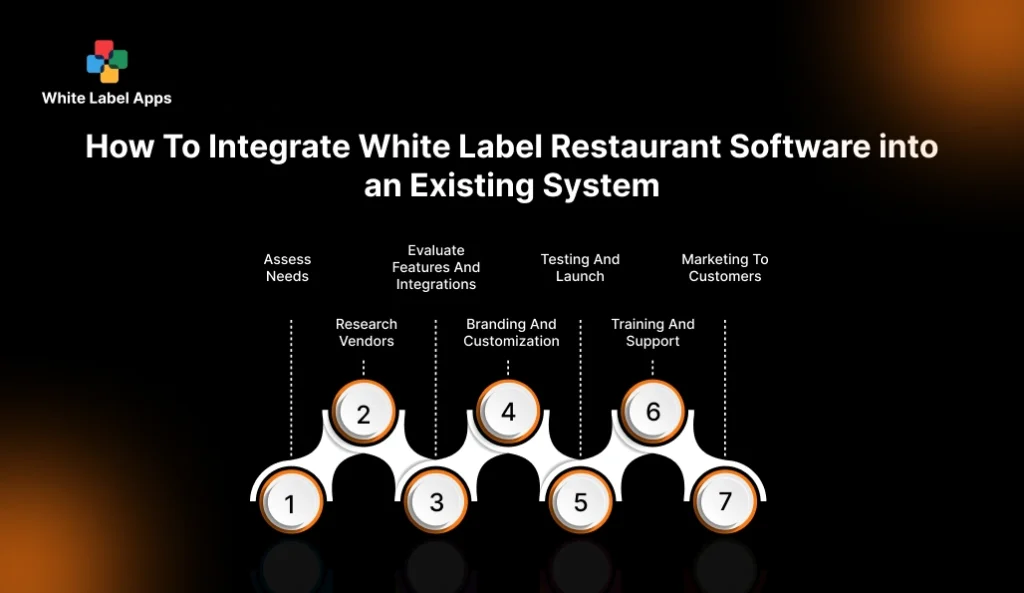
Integration sounds scary, but it is mostly clean planning. You are fitting new white label restaurant software into a live restaurant setup, where orders are already coming in. So you need to protect two things. Daily operations and staff confidence. The best rollouts start small, test the flow end to end, then expand. If you do it right, the restaurant gets a smoother order pipeline without breaking POS, printers, or payments.
1. Assess Needs
Start by mapping what the restaurant uses today. One POS, two tablets, a printer, and maybe a delivery app setup. Ask where the pain is. Missed orders, slow checkout, wrong modifiers, or manual entry. Also note peak hours, because the system must survive that rush. This step helps you decide what must be connected on day one, especially if the client needs restaurant pos software white label support. If you skip this, you will “integrate” fast, but fix issues for weeks.
2. Research Vendors
Now shortlist vendors who match the restaurant’s reality, not just your reseller pitch. Check what they support out of the box, and what needs custom work. Ask about uptime, release cycles, and support response times. Also check if they offer a complete white label online ordering software for restaurants stack, not only a web page. For resellers, this is where you confirm you can scale. One smooth client is nice. Ten clients need a vendor that behaves like a partner.
3. Evaluate Features And Integrations
This is where you test the “does it really work” part. Make a list of must-have integrations like POS, kitchen printer, payment gateway, SMS, and email receipts. If POS is critical, confirm the exact POS model and version, because “POS supported” can mean many things. Ask how modifiers, combos, and taxes sync. This is also where you compare feature depth if you are aiming to sell the best white label restaurant online ordering software. Good UI is not enough. The order flow must stay accurate.
4. Branding And Customization
Branding is not only a logo. It is the full feel of the ordering journey. Set up the restaurant name, domain, colors, menu layout, and offer rules. Also add practical things like pickup timings, delivery zones, and minimum order. If the restaurant wants kiosks or counter tablets, plan white label self-serve in-store restaurant software screens here too. Keep customization controlled. Too much change too soon creates bugs and slows training. Clean and familiar wins.
5. Testing And Launch
Test like a restaurant, not like a software demo. Place at least 10 test orders across different cases. Pickup, delivery, scheduled, cash tip, card tip, and a coupon order. Try one refund or cancel flow too. Check if orders reach the right screen, and if the kitchen printout is readable. Launch in a soft way first, like weekdays before peak weekend traffic. This protects your reseller reputation when selling white label restaurant ordering software, because early failures spread fast in restaurant circles.
6. Training And Support
Training is the difference between “we launched” and “we actually use it.” Do short sessions with role-based flow. One for the cashier, one for the kitchen, one for the manager. Create a one-page cheat sheet with order status steps and common fixes. Also set support rules. Who calls whom, and within what time. If you are offering white label restaurant software for sale, your support promise is part of the product. Restaurants do not care who wrote the code. They care who picks up when orders get stuck.
7. Marketing To Customers
Once the tech is stable, help the restaurant shift customers to the new channel. Start in-store first. QR on tables, counter standees, and a simple “Order Direct” message on receipts. Then move to SMS and email for regulars with a small first-order offer. Keep the message simple: faster ordering, direct deals, easier reorders. If the restaurant is coming from aggregators, do not say “delete them” on day one. Run both for a while, then slowly push repeat buyers to the direct channel powered by white label restaurant software.
Read More : What is White Label Delivery Software? A Complete Guide
How To Succeed As A White Label Restaurant Software Reseller?
Being a reseller is not only about getting a demo and closing deals. It is about keeping restaurants happy after week two, when the first rush hits and small issues show up. You win when your clients feel the system is “theirs,” and orders keep flowing without drama. The smartest resellers treat white label restaurant software like a long-term service, not a one-time setup.
1. Choose The Right White Label Partner
Your partner decides your reputation. Before you sell white label restaurant software for sale, check what happens after launch, not just during onboarding. Ask how often they ship updates, how they handle bugs, and what support looks like on weekends. If your plan includes restaurant pos software white label integrations, confirm the exact POS models supported and how menu modifiers sync. A partner that is clear, stable, and honest will save you from refund fights later.
2. Target The Right Audience
Not every restaurant is ready for a branded system today. Start with owners who already feel the pain of marketplace fees, missed customer data, or too many tablets at the counter. Small chains, franchises, and busy single-location stores usually see value fast, especially when they want direct repeat orders. Position white label restaurant ordering software as their owned channel, not “another app.” When you speak in their language, like fewer order mistakes and better control, you close faster and churn less.
3. Provide Value-Added Services
This is where you stop being “just a reseller.” Restaurants pay more, and stay longer, when you handle the messy parts they hate. Offer a clean menu setup, photo standards, offer planning, and a simple monthly health check. If you are pitching the best white label restaurant online ordering software, prove it with execution, like faster launch, better training, and smoother customer migration. Even small extras, like a QR kit and a receipt message plan, can lift direct orders in a few weeks.
Common Pitfalls To Avoid While Becoming White Label Restaurant Software Reseller
Most resellers do not fail because the product is bad. They fail because they sell it like a one-time deal, then the restaurant feels alone when real usage starts. You are not only selling white label restaurant software, you are selling trust, follow-up, and stability. If you avoid a few common mistakes early, you protect your margins and your reputation.
1. Underpricing Your Services
Low pricing feels like an easy way to win deals. But it usually attracts the wrong clients and leaves you with no time for proper onboarding. Integration, menu setup, testing, and training take real hours. If you charge too little, you rush, and then issues pop up during peak time. Price your service like a package, not like a small add-on. When you sell white label restaurant ordering software, your value is the rollout, not only the license.
2. Overpromising Features
Restaurants hear big claims all the time. “Full POS sync,” “instant setup,” “everything automated.” Then they discover small gaps, like modifiers not syncing perfectly or reports being basic. This creates distrust fast. Be clear about what is included, what depends on integrations, and what needs custom work. If you are positioning the best white label restaurant online ordering software, prove it with realistic outcomes, not shiny promises. Honest scope closes slower sometimes, but it keeps clients longer.
3. Neglecting Customer Support
Support is where resellers win or lose. One stuck order during dinner rush can ruin the restaurant’s night. If your support is slow, the owner stops pushing the system to customers. Set clear support hours, a response process, and escalation rules with your vendor. Also keep simple help docs for staff, like “how to pause delivery” or “how to mark items out of stock.” When selling white label online ordering software for restaurants, fast support is part of the product.
4. Ignoring Platform Updates And New Features
Software changes often. Payment rules change, devices update, and new ordering habits show up, like kiosks and QR ordering. If you ignore updates, your clients feel the system is getting old, even if it still works. Track releases, test them on one pilot client, and roll out in a planned way. This is even more important if you sell white label self-serve in-store restaurant software, because hardware and app updates can break small things quickly. Staying updated keeps your offer fresh, and reduces sudden fire-fighting later.
Conclusion
Reselling white label restaurant software is a smart move when you treat it like a long-term service, not a quick sale. Restaurants are done with few surprises, scattered tablets, and losing repeat customers to marketplaces. They want their own branded ordering flow, their own offers, and their own customer list. When you bring them a system that feels simple for customers and easy for staff, you become more than a vendor. You become the partner who keeps orders moving.
Your success will come from the basics done well. Pick a stable platform, confirm POS and payment fit early, and test the full order journey before launch. Train the team in short steps, then stay available during the first two weekends. That is when most real issues show up. If you handle those moments well, the restaurant trusts the system, and you earn referrals without chasing them.
Also remember, restaurants do not buy software, they buy relief. Less manual work. Fewer order mistakes. A smoother rush hour. If you keep your pricing realistic, your promises honest, and your support strong, you can build steady revenue as a reseller in white label apps.
Want to resell under your own brand? White Label Apps is a leading white label app development company in USA & Canada. Contact us for a quick demo and clear reseller plan options.
FAQs
1. What Is White Label Restaurant Software For Sale?
It means the software is already built and ready to rebrand. You sell it under your own name with your logo, colors, and pricing. You focus on onboarding and support, while the vendor maintains the core platform.
2. Is White Label Online Ordering Software For Restaurants Hard To Set Up?
Not if you follow a clean rollout plan. Most setups need menu upload, payment setup, delivery rules, and a short staff training. A soft launch with test orders helps avoid rush-hour surprises.
3. Can I Offer Restaurant POS Software White Label With This?
Yes, but only if the provider supports the exact POS brand and version your client uses. Ask how modifiers, taxes, and order statuses sync. Also confirm if it is a full sync or just order push.
4. What Is Included In White Label Restaurant Ordering Software?
Most platforms include a branded ordering website, order tracking, payments, coupons, and a restaurant dashboard. Many also support reports, customer data, and multi-location management. Features can vary, so scope should be written clearly.
5. Can This Also Work For Kiosks Or Counter Tablets?
Yes, if the platform offers white label self-serve in-store restaurant software. You can run ordering on kiosks or tablets, reduce queue pressure, and speed up service. It works best when the menu and pricing stay consistent across all channels.