
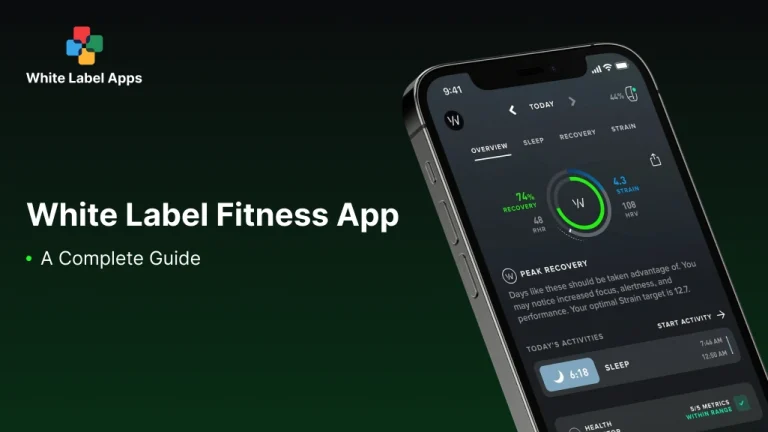
Your clients should open one app and know what to do today. Not search old PDFs, not scroll WhatsApp, not ask you, “Which plan am I on again.”
That mess is common for gyms and online coaches. Workouts live in one place, payments in another, progress in a Google Sheet. After a week, follow-ups slip. People drop off quietly.
A white label fitness app fixes the delivery gap. You start with a ready base, brand it with your name, then run your coaching inside one clean flow. Workouts, check-ins, tracking, and payments stay in one place, so clients build a routine.
The timing is right too. Grand View Research estimates the fitness apps market at $13.92B in 2026. But building from scratch is still heavy. Clutch’s November 2025 pricing guide reports an average app project cost of about $90,780 and a typical timeline of around 11 months. That is why many gyms and coaches do not build from zero. They choose a faster path that still looks professional.
With white label fitness app development, you start with a ready fitness app foundation, then brand it as your own. Your logo, colours, plans, and client flow go live faster, without waiting months for a full custom build. You also get the core pieces most coaches need from day one, like workouts, check-ins, tracking, and payments, all in one place.
This guide is based on our hands-on work building and rebranding fitness and wellness apps for studios, coaches, and growing brands. We have seen how program scope, feature complexity, design expectations, and ongoing maintenance shape the total cost and launch timeline. More importantly, we know where teams often overspend, like building too much too soon, and where they under-plan, like content setup, testing on older phones, and post-launch support.
In this guide, we will break it all down. What these apps are, how they work, which features matter, and when custom development makes more sense. You will also see costs, use cases, best practices, and a simple build plan you can actually follow.
TL;DR
- White label fitness apps stop the “PDF + WhatsApp + spreadsheet” mess.
- You launch faster by starting with a ready base and branding it as your own.
- Core flows stay in one place: workouts, check-ins, tracking, and payments.
- Building from scratch is slower and costlier, so many coaches pick the quicker route.
- The guide explains how it works, what to choose, and how to grow it after launch.
Key Points
- A white label fitness app lets coaches run their program inside one branded app instead of using scattered tools.
- White label app development helps you launch sooner because the base platform is already built and tested.
- The app typically includes workout creation, progress tracking, client management, scheduling, and subscription payments.
- Coaches use it to improve client retention because users can see today’s workout and log progress in seconds.
- The model supports new revenue through subscriptions, paid programs, session packs, and add-ons inside the app.
- Custom development fits teams that need fully unique workflows, while white label fits teams that want speed and lower risk.
What Is a White Label Fitness App?
A white label fitness app is a ready-made app you can put your brand name on. You do not start from a blank screen. You take an existing white label fitness app platform, add your logo, colours, and plans, then launch it as a branded fitness app.
Think of it like renting a furnished space. The structure is already done. You only set it up for your gym, studio, or coaching business. Many white label fitness apps come with the basic building blocks coaches need, like a workout builder app, exercise program software, and workout program software.
The big reason people choose this route is speed. It works well for personal training platforms and for a fitness app for personal trainers where you want client tracking, payments, and check-ins in one place. Many also include client management software for personal trainers and even a simple fitness CRM, so you can manage clients without juggling spreadsheets.
Also Read : White Label Travel Portal Development: Complete Guide for Travel Agencies
How Does A White Label Fitness App Work?
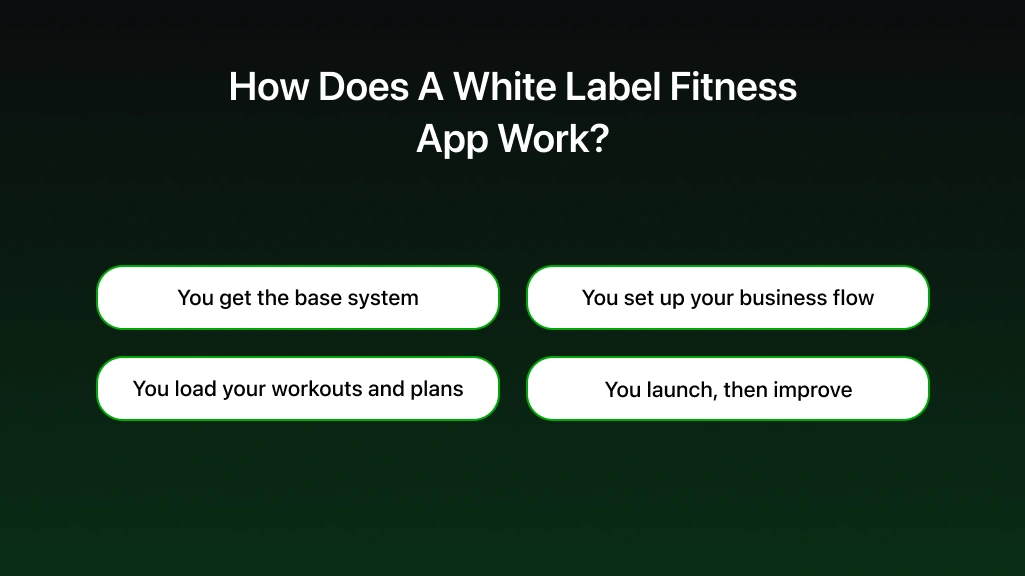
A white label fitness app works like a ready setup you can brand and run fast. You start with a white label fitness app platform, then turn it into a branded fitness app that looks and feels like your business. You add your logo, colours, plans, and pricing. Then you upload workouts using a simple workout builder app style flow. Your clients download the app, sign in, and follow the plan each day. You track progress with an exercise log app or a basic workout logger. You do not build from zero, so you can launch sooner and improve as you go.
Here is the simple flow.
- You get the base system. It usually includes the client side and trainer side, made for personal training platforms and a fitness app for personal trainers.
- You load your workouts and plans. This is where tools like a workout builder app, exercise program software, and workout program software come in.
- You set up your business flow. Add client management software for personal trainers, a personal trainer scheduling app or personal trainer booking app, and a workout logger for tracking.
- You launch, then improve. Many teams also connect a fitness CRM or coaching CRM so follow-ups feel organized, especially for online coaching business models using online personal training software.
Why Coaches Are Choosing White Label Fitness Apps In 2026?
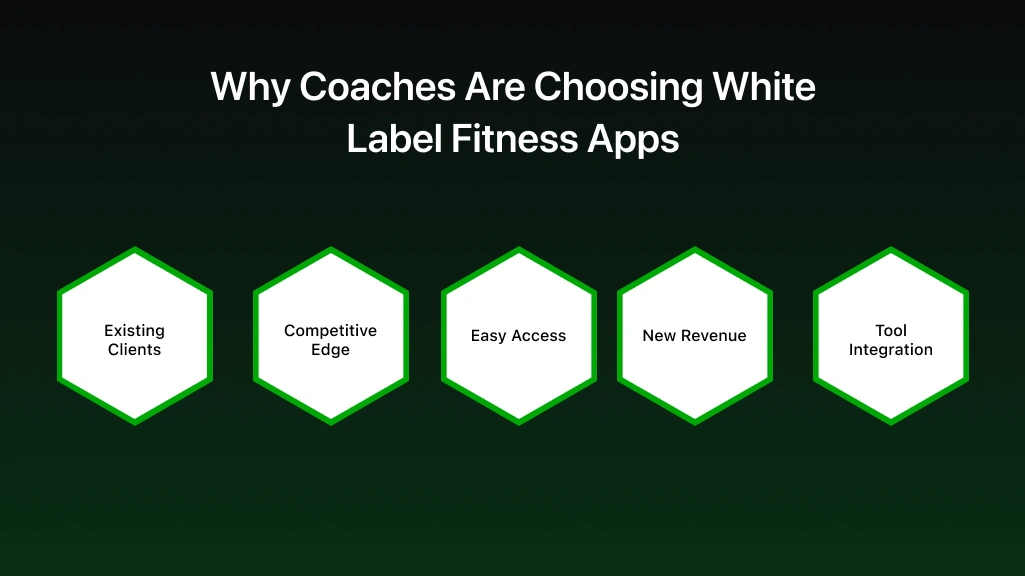
Coaches are choosing white label fitness apps in 2026 because clients want a single, easy place to train, track, and stay accountable. A branded fitness app also helps coaches look more professional, deliver plans faster, and keep check-ins organised. It opens new ways to earn through subscriptions and programs, not only 1:1 sessions. And since the base app is already built, coaches can launch sooner and improve the experience as they grow.
1. Existing Clients
Most coaches already have people paying them. The problem is delivery. Plans sit in PDFs, updates happen on WhatsApp, and check-ins get missed. A white label fitness app pulls everything into one place, so clients know where to go every day. It also makes coaching feel more “real,” because the experience lives inside a branded fitness app, not scattered across tools. With clean client management software for personal trainers, coaches can handle more clients without losing the personal touch.
2. Competitive Edge
Fitness is crowded. Many coaches sell the same promise, and prospects struggle to pick. When you show a clean branded fitness app, it instantly makes you look organised and premium. Your plans feel structured, your tracking feels reliable, and your offer feels more professional. This does not replace good coaching, but it helps people trust you faster. A strong app also reduces drop-offs, which means your results look better over time, and word-of-mouth improves naturally.
3. Easy Access
Clients want fewer steps. They want to open the app and see what to do today. A good setup gives them a quick exercise log app flow and a simple workout logger so they can track without getting tired. When access is easy, consistency improves. And consistency is the real product. Coaches choose white label because they do not want to build an app from scratch just to get this basic experience right.
4. New Revenue
A fitness app is not only for delivery. It can also help you earn in more ways. You can sell subscriptions, one-time programs, and upgrades like form checks or premium support. Many coaches use the app like online personal training software, where payment and program access sit together. If you also run sessions, adding a personal trainer booking app flow makes it easier to sell packs and reduce cancellations. Revenue becomes more predictable, and you spend less time chasing dues.
5. Tool Integration
Coaches already use tools like calendars, payment links, and spreadsheets. The best white label setups reduce this mess instead of adding to it. A solid white label fitness app platform can connect key workflows, so you are not doing double work. If you need deeper workflows, a clean fitness app development approach helps you integrate what you already use. The goal is simple. One system that fits your routine, not another tool you have to learn.
Also Read : Top 15 White Label Reseller Programs That Deliver Big Profits
Key Features Of White Label Fitness Apps
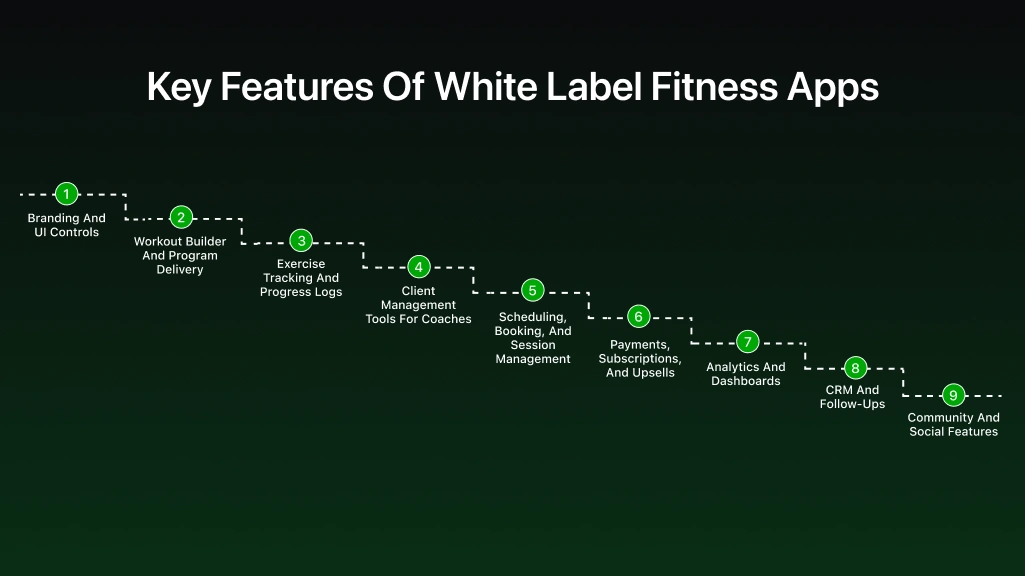
A good white label fitness app should feel like your own product, not a borrowed tool. The best ones cover the full client journey, from onboarding to results. You get the basics fast, then you keep improving it as your program grows.
1. Branding And UI Controls
This is where your white label fitness app stops looking generic. You start with a white label fitness app platform, then apply your logo, colours, app name, and key screens so it feels like a true branded fitness app. Small details matter here. The onboarding text, button labels, and plan naming should match your coaching style. When branding looks clean, people trust the app faster. And when you run ads or share links, the app feels like your product, not a third-party tool.
2. Workout Builder And Program Delivery
A strong app gives you a workout builder app flow that is quick to use. You can create plans, add exercises, set reps and rest, and assign programs to clients. For many coaches, this behaves like simple exercise program software or workout program software, without heavy learning. Delivery should be smooth. Clients should see today’s workout in one tap, not hunt for it. If program delivery is clean, clients follow the plan more often. That is the real win.
3. Exercise Tracking And Progress Logs
Clients need tracking that feels easy, not like homework. A good app includes an exercise log app setup where users tick off workouts, enter weights, and add notes. It should also support a basic workout logger view so clients can see what they did last week. Progress photos, measurements, and streaks help too. When logging is simple, people stay consistent longer. And for you, logs turn into coaching signals. You can spot who is skipping, who is stuck, and who is improving.
4. Client Management Tools For Coaches
This feature keeps your day organised. Look for client management software for personal trainers inside the coach panel. You should be able to view client plans, check-ins, goals, injuries, and notes in one place. Tags and quick filters help when you have many clients. This is also where a light fitness CRM feel is useful, because you can track trials, active clients, and renewals. The goal is simple. Less chasing. More coaching.
5. Scheduling, Booking, And Session Management
If you sell sessions, scheduling must be built-in. A personal trainer scheduling app setup lets clients see available slots, book quickly, and get reminders. A personal trainer booking app flow also reduces WhatsApp back-and-forth and last-minute confusion. You should be able to block dates, set capacity for group sessions, and track attendance. This makes your business look more professional. It also protects your time, because clients follow a clear system instead of asking you daily, “What time works.”
6. Payments, Subscriptions, And Upsells
Payments should not be a separate headache. A good online personal training software style app supports subscriptions, one-time payments, trials, and plan upgrades. You can sell monthly coaching, a 6-week program, or add-ons like form checks and custom meal guidance. Renewals should be clean, with reminders and receipts. When payments sit inside the app, clients pay on time more often. It also helps you scale, because you are not manually sending payment links to every client each month.
7. Analytics And Dashboards
Analytics should answer basic questions fast. Who is active? Who is dropping off? Which plan is actually getting finished? A strong setup feels like fitness management software for your business, not just a tracker for users. On the coaching side, a coaching management software view helps you see adherence and missed sessions, so you can intervene early. These insights also guide your content. If a plan has high drop-offs, you can simplify it. Data makes your next version smarter.
8. CRM And Follow-Ups
A built-in CRM is small, but powerful. A fitness CRM or coaching CRM view can track leads, trials, renewals, and follow-up reminders. This is not about fancy sales pipelines. It is about not losing warm leads because you forgot to reply after a consult. It also helps reduce churn. When you see a client go inactive, you can message them early, before they quit. Simple follow-ups often save more revenue than a new feature.
9. Community And Social Features
Community keeps people coming back when motivation dips. Social elements like challenges, leaderboards, and group chats give the app a social fitness platform feel. A team workout app mode is also useful for studios and gym chains, because groups like to compete and share wins. Community features reduce drop-offs after the first week, because users feel seen. It is basic psychology. When people see others showing up, they show up too, even on low-energy days.
Also Read : White Label Coaching App Development Guide for Startups & Enterprises
Key Benefits Of Choosing A White Label Fitness App
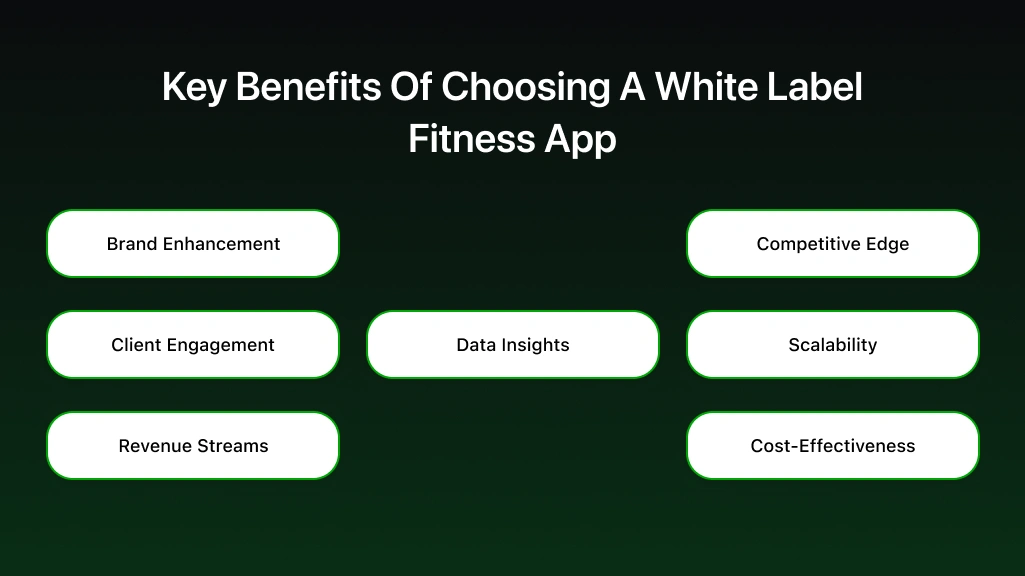
A white label fitness app is mainly about speed and control. You start with a ready white label fitness app platform, then turn it into a branded fitness app in less time than building from zero. Your logo, colours, plans, and client flow go live fast. After launch, you keep improving based on real user behaviour, not guesses. This approach helps you stay flexible, test ideas quickly, and grow without getting stuck in long development cycles.
1. Brand Enhancement
Your program feels more real when it lives inside a branded fitness app. Clients see your logo, colours, and plan names every day, not a third-party tool. When you start from a white label fitness app platform, you skip the “generic app” vibe and still look premium. This also helps your marketing. Your Instagram link, QR code in the gym, and referral messages all point to one clean brand touchpoint.
2. Client Engagement
People stay consistent when the app feels easy. A good setup gives them a clear “today” screen, plus an exercise log app flow that does not take 20 taps. Add a simple workout logger, reminders, and small streak wins, and you reduce drop-offs. For coaches, the coach view matters too. When check-ins and updates happen inside the app, clients stop disappearing after week one.
3. Revenue Streams
The app becomes your storefront, not just your workout library. You can sell subscriptions, one-time programs, and add-ons like form checks or premium support, the same way online personal training software does. If you also offer sessions, pairing payments with a personal trainer booking app setup makes buying feel simple. You do not chase payments on WhatsApp. The system does it for you, which is a quiet but big win.
4. Data Insights
When clients track inside the app, you finally see patterns. You can spot who is skipping workouts, who is stuck, and who is improving fast. A dashboard that feels like fitness management software helps you see completion rates and drop-off points. Even a light fitness CRM or coaching CRM view helps track trials, renewals, and inactive users. This data is not for vanity. It tells you what to fix next.
5. Competitive Edge
Most gyms still run coaching on spreadsheets and chats. When you show up with a clean app, it feels more professional, even if your coaching style is simple. Features like a workout builder app flow, progress logs, and structured plans help you look organised. Plus, client management software for personal trainers keeps your follow-ups tight. That reliability becomes a selling point when people compare you with the gym down the road.
6. Scalability
Scaling is hard when everything depends on you remembering things. With an app, your program delivery becomes repeatable. You can onboard more clients without losing quality, because plans, check-ins, and messages stay structured. Tools that feel like coaching management software help you manage groups, not just 1:1 clients. If you add a personal trainer scheduling app setup later, it also becomes easier to run sessions without calendar chaos.
7. Cost-Effectiveness
The biggest savings is time. You avoid long build cycles and heavy trial-and-error, because the base product is already tested. With white label, your money goes into branding, setup, and the few custom things that matter most. You can launch, learn, and iterate instead of paying for months of development before you see real users. For many studios, that “launch first, refine later” approach is simply safer.
Also Read : White Label Wealth Management Platform: A Complete Guide With AI Features
White Label Fitness App vs. Custom Development: Which is Right for You?
Both paths can get you to a strong product. The difference is what you are buying first. A white label fitness app gives you a ready base that you brand and launch quickly. Custom fitness app development is a fresh build, where you design every screen, rule, and workflow from scratch. If your goal is to sell programs fast, white label usually wins. If your goal is a unique product that does not look like anyone else, custom is the better bet.
| Factor | White Label Fitness App | Custom Development |
| Starting Point | Built on a ready white label fitness app platform. | Built from zero with full product planning. |
| Speed To Launch | Faster. You brand, set up plans, then launch. | Slower. Design, build, test, then launch. |
| Brand Look | Ships as a branded fitness app, but inside limits. | Fully unique UI and flows, end to end. |
| Feature Control | You switch features on or off. Some parts stay fixed. | You decide everything, including edge cases. |
| Core Coaching Tools | Often includes workout builder app, exercise log app, workout logger, and check-ins. | You choose and design every coaching feature. |
| Coach Operations | Usually includes client management software for personal trainers and basic dashboards. | You can build advanced coaching management software style workflows. |
| Analytics And CRM | Often includes basic fitness management software metrics, plus fitness CRM or coaching CRM style follow-ups. | You can build custom analytics, funnels, and CRM rules. |
| Integrations | Limited to what the platform supports. | Any integration possible in fitness app development, if budget allows. |
| Long-Term Flexibility | Good for iteration, but within platform boundaries. | Highest flexibility. You own the full roadmap. |
| Best Fit | Gyms, studios, and coaches who want online personal training software fast. | Startups building a distinct product, or complex enterprise use cases. |
| Cost Pattern | Lower upfront, predictable upgrades. | Higher upfront, more variable scope changes. |
The White Label Fitness App Development Process
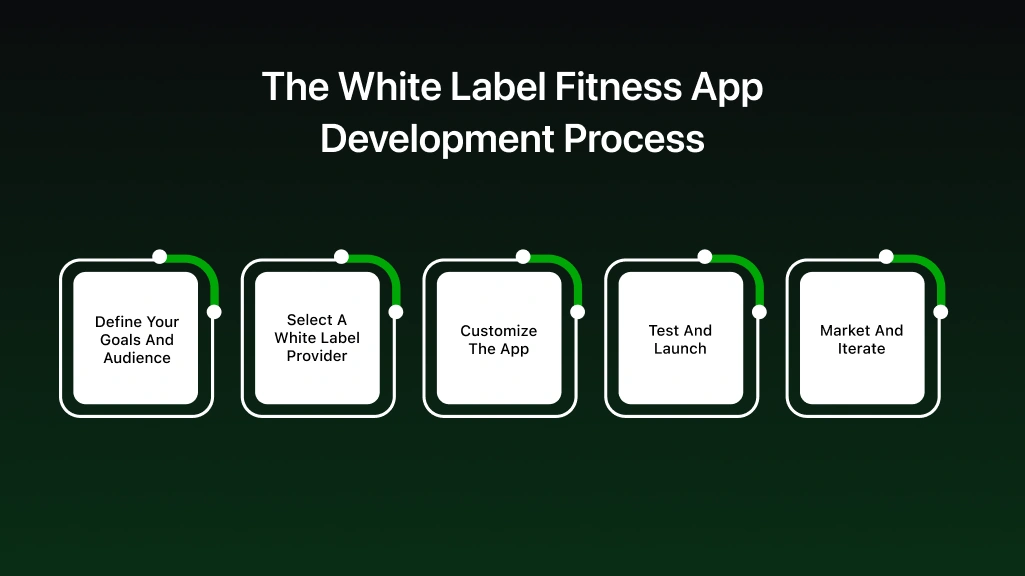
A white label fitness app is not just “pick a template and publish.” The app still needs smart setup, real testing, and a clear plan for your audience. When you treat it like a product launch, not a quick upload, you get better retention and cleaner revenue. Here is a simple process that works for gyms, studios, and coaches using a white label fitness app platform to ship a branded fitness app.
Step 1: Define Your Goals And Audience
Start with one clear goal. Do you want more memberships, more coaching clients, or a paid program that runs on autopilot. Then define the audience in plain terms. Beginners, busy professionals, rehab clients, or strength-focused members. This step decides your features. For example, beginners need a simple exercise log app and habit reminders. Serious lifters care more about a workout logger and progressive overload tracking. Get this wrong and the app feels “nice,” but nobody sticks.
Step 2: Select A White Label Provider
Now choose the base product. Check if the white label fitness app platform supports the workflows you actually use, not what looks good in a demo. Ask about the coach panel and admin panel, because that is where daily work happens. You want strong client management software for personal trainers, clean messaging, and stable payments. Also check what is editable versus fixed. If you need advanced flows later, confirm if the provider supports deeper fitness app development changes or if you will be stuck.
Step 3: Customize The App
This is where it becomes a branded fitness app. Add your logo, colours, plan names, and onboarding steps. Then build your core content. Upload workouts using a workout builder app style editor, and create templates for common goals. If you run coaching, set up check-ins, questionnaires, and progress tracking. If you sell programs, set up subscriptions and plan access rules. Keep it simple in version one. A small clean setup beats a huge messy setup.
Step 4: Test And Launch
Testing is where most teams rush, and then regret it. Test on older phones, slow Wi-Fi, and real user flows. Create 10 test users, run 10 test workouts, and try one refund. Check login, payments, notifications, and the full workout flow inside the exercise log app screens. Make sure the workout logger does not lag or crash. Fix the basics first. Then launch softly with a small group before you promote it widely.
Step 5: Market And Iterate
After launch, your job is not “more features.” Your job is better habits. Track weekly metrics like active users, workout completion, renewals, and drop-off points. Use simple fitness management software style analytics, plus a light fitness CRM or coaching CRM follow-up flow for trials and inactive users. Promote the app through your gym, email list, and social channels. Then iterate. Improve onboarding, simplify workouts, and tweak content based on what people actually do, not what they say.
Also Check: White Label Personal Training App Development: Launch Your Branded Fitness App Faster
Top Use Cases For White Label Fitness Apps
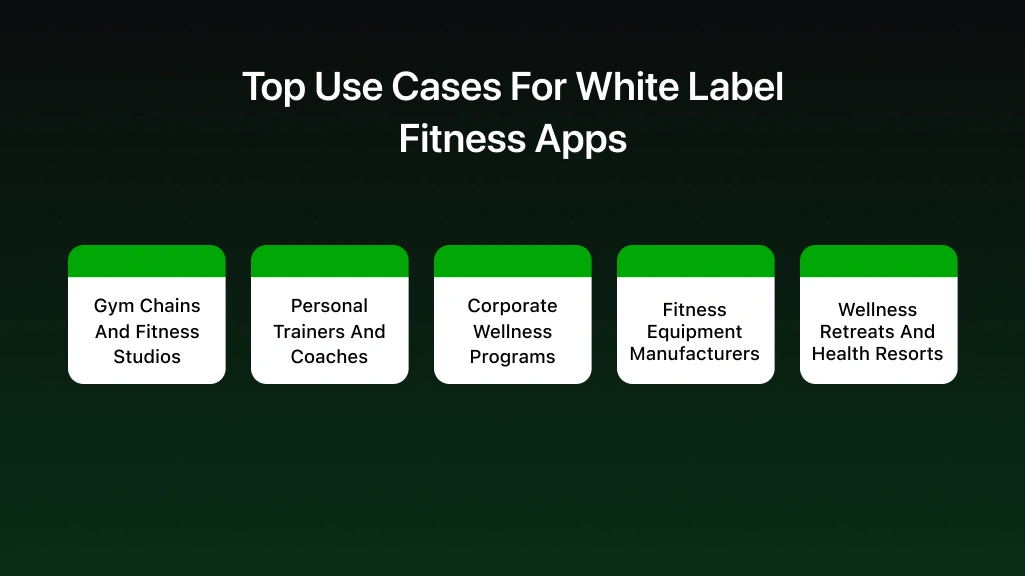
White label fitness apps work best when you already have an audience. A gym community, coaching clients, or a partner network. You take a ready white label fitness app platform, brand it, and turn it into a branded fitness app that supports your daily workflows. Here are the strongest use cases.
1. Gym Chains And Fitness Studios
For gyms, the app becomes the “member home.” You can publish workout plans, class schedules, challenges, and progress tracking in one place. A simple exercise log app flow helps members stay consistent between visits. For trainers on staff, client management software for personal trainers keeps notes and check-ins organised. Many chains also use a team workout app style challenge to boost attendance. The biggest win is retention, because members feel connected even when they skip the gym for a week.
2. Personal Trainers And Coaches
This is the cleanest fit. Coaches can deliver programs using a workout builder app setup, then track adherence through a workout logger. A good system feels like online personal training software, because it combines workouts, check-ins, messaging, and payments. With a personal trainer scheduling app or personal trainer booking app add-on, session-based coaches reduce admin work too. For growth, a basic fitness CRM or coaching CRM pipeline helps manage leads, trials, and renewals without spreadsheets.
3. Corporate Wellness Programs
Corporate wellness needs structure and reporting. A branded app makes participation easier, because employees have one place for workouts, habit challenges, and reminders. Teams can join step challenges or workout streak programs, which adds a light social push without pressure. HR teams often want progress snapshots, so simple fitness management software dashboards help track participation and completion. This model also works for hybrid teams, because workouts are mobile-first and do not depend on a single office gym.
4. Fitness Equipment Manufacturers
Equipment brands use apps to increase product stickiness. A branded fitness app can include guided routines built around the equipment, like “20-minute rower plan” or “beginner kettlebell weeks.” This is where a strong exercise program software or workout program software setup matters. Users log workouts through an exercise log app, and you can suggest upgrades or accessories later. Some brands also add a community layer, which makes the app feel like more than a manual, it becomes part of the product experience.
5. Wellness Retreats And Health Resorts
Retreats can use a white label app to extend the experience beyond the stay. Before the retreat, guests can complete onboarding forms and prep workouts. During the stay, they follow daily schedules and track sessions. After the retreat, they continue the plan at home using the same white label fitness app experience. Coaches can manage guests with light coaching management software style check-ins, so support feels personal. This improves repeat bookings, because the retreat becomes a longer journey, not just a weekend.
Also Read : White Label Milk Delivery App: A Complete Guide
Best Practices For Maximizing Success Of White Label Fitness Apps
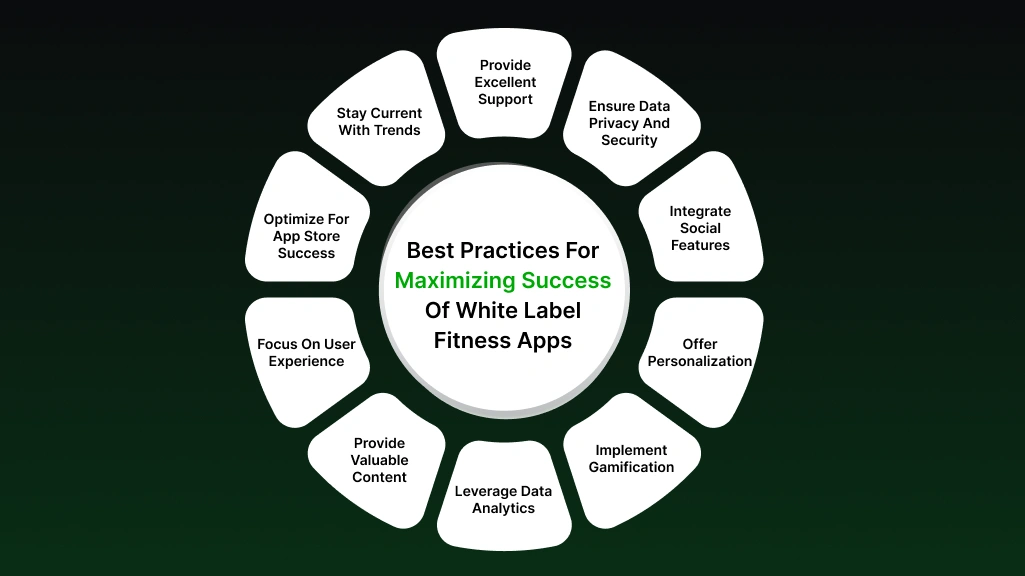
A white label fitness app can look great on launch day, then quietly die in week two. It usually happens for one reason. The setup is heavy, the content is thin, and the first-time user experience feels confusing. These best practices keep your branded fitness app useful for real people, not just nice in a demo.
1. Focus On User Experience
Keep the first week simple. Show a clear “Start Today” flow, not 12 menus. Your exercise log app screens should take seconds, not minutes. Remove extra steps like repeated confirmations and long forms. Test on an older Android phone and a mid-range iPhone, because real users do not all have the latest device. If the workout logger loads slowly or crashes during tracking, people quit. Good UX is boring, and that is the point.
2. Provide Valuable Content
Most apps fail because content feels generic. Build a small library of programs that match your audience. Beginners, fat loss, strength, mobility, and “busy week” plans. Use your workout builder app tools to create simple progressions and clear weekly goals. Think like exercise program software, not like a random workout list. Add short cues for form and pace, because that is where clients struggle. Valuable content makes users trust you, and trust keeps them coming back.
3. Leverage Data Analytics
Do not guess what is working. Track weekly numbers like active users, workout completion rate, and plan drop-offs. Your dashboard should feel like practical fitness management software, not a confusing report. Use the data to fix onboarding, simplify plans, and improve reminders. If you run coaching, connect follow-ups through a light fitness CRM or coaching CRM flow, so inactive users get a nudge before they churn. Data is not for bragging. It is for repair work.
4. Implement Gamification
Gamification works when it is small and fair. Use streaks, badges, and weekly challenges, but avoid making it feel childish. A simple leaderboard can also work for studios, especially when paired with a team workout app vibe. Tie rewards to behaviours that matter, like “3 workouts this week,” not random taps. Also give “restart wins,” so users who miss a week can come back without shame. Fitness is emotional. Your app should not punish people for being human.
5. Offer Personalization
Personalization does not have to mean complex AI. Start with basic choices. Fitness level, equipment available, goal, and available days. Then tailor plans and reminders. For coaches, personalization also means different check-in questions for different goals. A good white label fitness app platform should let you adjust workflows without breaking the system. Keep it clear. Users should feel the app understands them, but they should not feel like they are filling a survey.
6. Integrate Social Features
Community helps retention, but only when it feels safe. Add optional features like group challenges, studio announcements, or a simple progress share. A social fitness platform style feed is useful if you can moderate it. If you cannot, keep it lighter with closed groups or challenge boards. For gyms and corporate programs, social features create accountability without extra coaching hours. For online coaches, it reduces drop-offs because members feel part of something bigger than a workout list.
7. Ensure Data Privacy And Security
Fitness data is personal. Protect it like it matters, because it does. Use secure logins, strong access controls, and proper permissions in the admin panel. Be clear about what you collect and why. If you store health-related info, keep consent simple and visible. Also secure payments if you sell subscriptions. A branded fitness app that feels unsafe breaks trust fast, and trust is hard to rebuild. Security is not a feature users praise. It is the reason they do not leave.
8. Provide Excellent Support
Support is part of the product. Add an in-app help section with short answers, not long documents. Set up quick replies for common issues like login, payment, and plan access. For coaching apps, make sure clients can reach you easily inside the app, not only on WhatsApp. If you are running many clients, client management software for personal trainers should help you track tickets and follow-ups. Good support reduces refunds and negative reviews, especially in the first month.
9. Stay Current With Trends
Trends matter only if they help your audience. Wearables, recovery, mental wellness, and short workouts are still strong directions. Add features slowly, and only after your basics work. If you add AI features, keep them practical, like smarter plan adjustments or faster content search. Do not add tech just to sound modern. Your app should feel useful on a tired Monday. That is the real test of “current.”
10. Optimize For App Store Success
Most apps lose installs because the listing is weak. Use clear screenshots that show the real flow, not just a pretty home screen. Write a simple description that explains who it is for and what it helps them do. Ask happy users for reviews at the right time, like after a completed week. Fix crashes quickly, because app store ratings drop fast. If you launch multiple brands from one white label fitness app platform, make sure each listing feels unique and honest, not copied.
Examples Of White Label Fitness Apps
These are popular examples that offer a white label fitness app or a custom branded app option. In most cases, you start with their platform, then ship a branded fitness app with your logo, colours, and client experience.
1. FitBudd
FitBudd positions its offering as a white-label solution where you can apply your branding and run your coaching business on top of their base platform. It is usually used by personal trainers and small studios who want workouts, client tracking, and business tools in one place, without building from scratch.
Key Features
- White label setup that lets you run a branded app under your own name.
- Customizable workout plans and nutrition plans for different client goals.
- Progress tracking so clients can log results and see improvements over time.
- Scheduling tools, plus client management to handle many clients in one place.
- In-app communication, including options like messaging and video calls.
- Secure payment processing, plus device integrations (where supported).
Also Read : What is White Label App Builder: What They Are & How To Use Them
2. Trainerize
Trainerize has a “Custom Branded App” option that they describe as a white-labelled mobile app for iOS and Android. This is commonly chosen by coaches who want their own app look and feel, while still using Trainerize’s core coaching features underneath.
Key Features
-
- Custom branded app elements like custom app icons, store listings, and in-app colors/theming.
- Nutrition support for tracking meals and macros, plus recipes and meal plans.
- Built-in payments to manage packages, sessions, and digital memberships.
- Integrations so you can connect other tools into your coaching stack.
3. Virtuagym
Virtuagym promotes a custom mobile app built as a white-label option for fitness businesses.
It is often seen as a fit for gyms and studios that want scheduling, memberships, and community-style engagement inside one branded experience.
- White-label app built to run the business side too, with scheduling, payments, and a community layer.
- 24/7 online sign-up, so clients can buy memberships or upgrades inside the app.
- Real-time bookings for classes and appointments through the app.
- Coaching features like personalized workout plans, progress monitoring, and challenges.
- Business tools mentioned with the coaching suite, like online payments/invoicing, nutrition plans, in-app messaging, and a mobile community.
4. My PT Hub
My PT Hub clearly describes its white label app as a fully branded version of its training software, using your logo, colours, and identity. It is typically used by personal trainers who want a professional brand presence while keeping the core coaching setup simple and repeatable.
Key Features
- White label app branding controls like app icon, app name, in-app logo, color scheme, and App Store/Google Play listings.
- Publishing support so your app can be listed in both Apple App Store and Google Play Store.
- Workout builder to build, assign, and track workouts, including video exercises.
- Nutrition coaching with custom nutrition plans, plus macro and calorie tracking.
- Automated check-ins, calendar bookings, and client management at scale.
- Habit coaching, video coaching (live/on-demand), and business analytics.
5. Everfit
Everfit offers custom branding for the client app experience and also mentions a white-label solution for enterprise plans. This is usually picked by coaches and fitness brands that want strong branding controls, plus a modern coaching workflow, without building the full system from zero.
Key Features
- Workout builder focused on fast program creation (drag-and-drop), plus custom logo and your own demo videos.
- Nutrition tools like food journals, macros/calorie tracking, habit tracking, custom tasks, and automated reminders.
- Automation for group coaching: scheduled workouts, auto messages, and task/habit reminders.
- Challenges and leaderboards for motivation and friendly competition.
- Community forums and custom branding controls (logo, theme colors, workout images).
How To Choose The Best White Label Fitness App?
Picking the best white label fitness app is not about the longest feature list. It is about fit. The app should match how you coach, how your clients behave, and how you plan to earn. Start with a short checklist, then test the product like a real user, not like a buyer watching a demo.
1. Check If The Platform Matches Your Business Model
Ask one simple question. Are you selling memberships, 1:1 coaching, group programs, or a mix. If you run coaching, the platform should feel like online personal training software, not just a tracker. If you run a studio, you may need community and challenges. A solid white label fitness app platform should support both client use and coach operations without messy workarounds.
2. Test The Core Workout Tools First
Your daily product is the program. So test the workout builder app flow. Can you create a full 4-week plan quickly? Can you assign it easily? Can clients follow it with one tap? Also test the tracking side. The exercise log app should be fast and clear. The workout logger should show history without lag. If these basics feel slow, clients will quit, even if the app looks pretty.
3. Look For Real Coach Operations
Many tools look great for users but are weak for coaches. Check if it includes client management software for personal trainers like notes, check-ins, tags, and goal tracking. If you run sessions, confirm it supports a personal trainer scheduling app and a personal trainer booking app flow, or at least clean calendar logic. If your coaching team is bigger, ask if it supports role-based access so staff do not step on each other’s work.
4. Make Sure Payments And Plans Are Clean
Revenue should be simple inside the app. Test subscriptions, plan upgrades, and refunds. Ask if you can sell multiple tiers like basic, plus, and premium. If you sell both programs and sessions, confirm you can bundle them. A good branded fitness app should let clients pay without confusion, and it should send clear receipts. If payments are clunky, you will lose money and time, and support tickets will pile up.
5. Check Analytics And CRM Support
You need visibility after launch. Ask what analytics you get by default, like active users, completion rate, and churn. This should feel like practical fitness management software, not a confusing dashboard. Also check if it supports a light fitness CRM or coaching CRM pipeline for leads, trials, and inactive users. Even basic reminders like “follow up in 2 days” can lift conversions. If there is no CRM view, you will go back to spreadsheets.
6. Confirm Customization Limits Upfront
White label still has boundaries. Ask what you can change and what is fixed. Can you adjust onboarding steps? Can you rename tabs? Can you change the plan structure? Can you add your own content blocks? If you know you will need deeper edits later, ask if the provider supports extra fitness app development work, or if you will be locked into a fixed roadmap. This is where many teams get stuck after the first launch.
7. Check Security, Data Ownership, And Support
Ask who owns the data and how you export it if you ever leave. Confirm basic security like role permissions and secure payments. Also ask what support looks like after launch. Do you get bug fixes, update help, and store support. A good provider will answer clearly in writing. If the answers feel vague, treat it as a red flag. You are trusting them with your business, not just an app.
Also Read : White Label Multi-Restaurant Delivery App: A Scalable Solution for Modern Food Businesses
How We Develop White Label Fitness App?
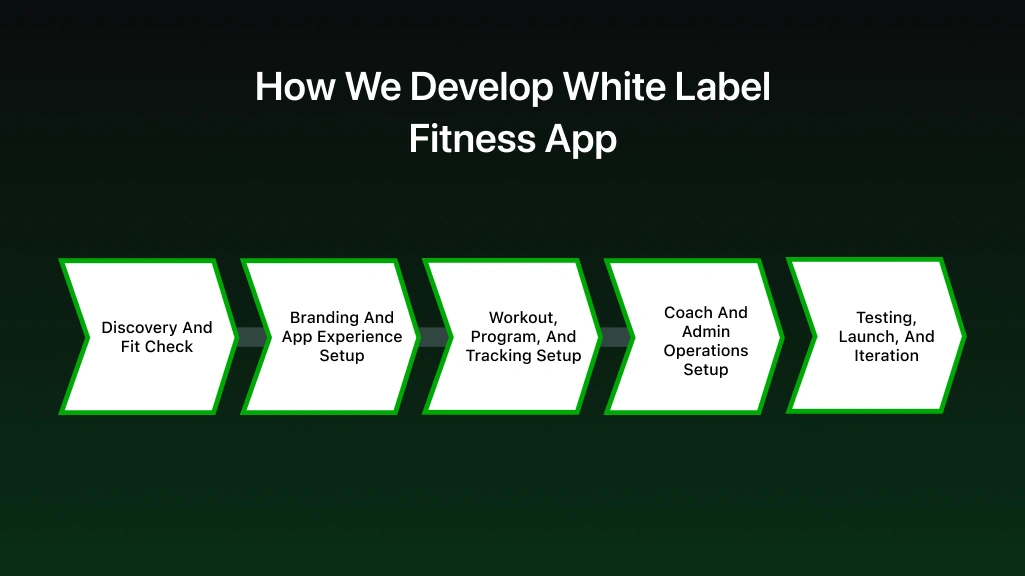
We build your white label fitness app in a clean, brand-first way, so it feels like your own product from day one. We use a reliable white label fitness app platform, then shape it into a branded fitness app with your look, content, and business flow. Your workouts and programs are set up using a simple workout builder app structure, and tracking stays easy through an exercise log app style experience. We also support payments, analytics, and ongoing updates so the app stays stable as you grow.
1. Discovery And Fit Check
We start by mapping your business model, not by showing a demo. Are you selling memberships, 1:1 coaching, group programs, or all three. Then we match you with the right white label fitness app platform, so your day-to-day flow stays smooth. We also check what must be editable, and what can stay standard. This step avoids surprises later, especially when your plan includes features like online personal training software style check-ins, or session booking.
2. Branding And App Experience Setup
Next, we turn the base into a branded fitness app that looks like your business, not a copied template. We apply your logo, colours, naming, onboarding screens, and plan labels. We also simplify the first-week experience, because that is where most apps lose users. If your home screen feels crowded, clients bounce. If it feels clear, clients start. This is where a white label fitness app becomes something people actually keep on their phone.
3. Workout, Program, And Tracking Setup
Now we set up your training content. We configure the plan library using a workout builder app style flow, so workouts are easy to create, assign, and update. Then we tune the tracking experience, because logging should not feel like homework. We set up the exercise log app screens to stay fast, and the workout logger to show history clearly. If you run multiple program types, we structure them like exercise program software so users always know what to do today.
4. Coach And Admin Operations Setup
This is where the app starts saving you time. We configure client management software for personal trainers tools like notes, tags, check-ins, and progress views, so you do not chase updates in chats. If you run sessions, we add a personal trainer scheduling app or personal trainer booking app flow, so booking stays clean and reminders go out on time. We also set up payments, subscriptions, and access rules, so your coaching plans and upgrades are easy to buy and easy to manage.
5. Testing, Launch, And Iteration
Before launch, we test the full user journey end to end. Signup, payments, notifications, workout completion, and progress tracking, all of it. We also test on older devices and slower networks, because that is where apps fail quietly. After launch, we watch real usage and refine. That includes simple fitness management software style metrics, and optional follow-ups using fitness CRM or coaching CRM logic for trials and inactive users. This keeps the product improving, instead of staying stuck at version one.
Tech Stack We Use For The Development Of White Label Fitness App
For a white label fitness app, we use a stable, mobile-first stack that keeps the app fast on both iOS and Android. Our default approach is cross-platform for speed, then we switch to native only when your use case needs it. We keep the backend API clean, choose databases that scale, and use proven tools for payments, push notifications, analytics, and security. This makes fitness app development easier to maintain after launch, not just on day one.
| Layer | Tech Stack We Use | Why It Fits A Fitness App |
| Mobile App (Cross-Platform) | Flutter, React Native | One codebase, faster launch, smooth UI. |
| Mobile App (Native) | Swift (iOS), Kotlin (Android) | Best performance and deeper device access. |
| Backend API | Node.js (Express/NestJS) | Fast APIs, real-time friendly, easy integrations. |
| Database | PostgreSQL, MongoDB | Reliable data storage for users, workouts, logs. |
| Real-Time Features | Socket.IO, Firebase Realtime tools | Live chat, coach updates, quick sync. |
| Authentication | JWT, OAuth, Apple Sign-In, Google Sign-In | Secure login, smoother onboarding. |
| Payments | Stripe | Subscriptions, one-time plans, upgrades. |
| Push Notifications | FCM (Android), APNs (iOS) | Reminders, streak nudges, renewal alerts. |
| Analytics | Firebase Analytics, Mixpanel | Tracks engagement, drop-offs, funnels. |
| Admin Panel | React, Next.js | Clean dashboards for staff and admins. |
| Cloud And Hosting | AWS, Google Cloud | Stable hosting, scaling, monitoring. |
| DevOps And Release | GitHub, CI/CD, Docker | Safer deployments, faster updates. |
| Wearables And Health Data | Apple HealthKit, Google Fit | Steps, heart rate, activity sync. |
| Security | TLS, encryption, role-based access | Protects user and payment data. |
Average Cost Of Development Of White Label Fitness Apps
A white label fitness app usually costs less upfront because the base product already exists. You mainly pay for branding, setup, integrations, and store publishing. A custom build is different. You pay for design + backend + mobile apps from scratch, so the budget and timeline are higher. Many app projects sit in the $10,000–$49,999 range, and the average project cost they report is about $90,780 with an ~11-month timeline.
| What You Are Paying For | White Label Development (Setup + Rebrand) | Custom App Development (Build From Scratch) |
| Typical Upfront Cost | $5,000–$20,000 | $10,000–$49,999 |
| App Store Account Costs | Apple Developer Program is $99/year. Google Play Console is $25 one-time. | Same store fees apply for publishing your custom app. |
| Speed To Launch (Typical) | Usually weeks, not months | Often months |
Also Read : What Is a White-Label Restaurant Ordering System and Why Restaurants Are Switching
How You Can Earn From White Label Fitness App Model?
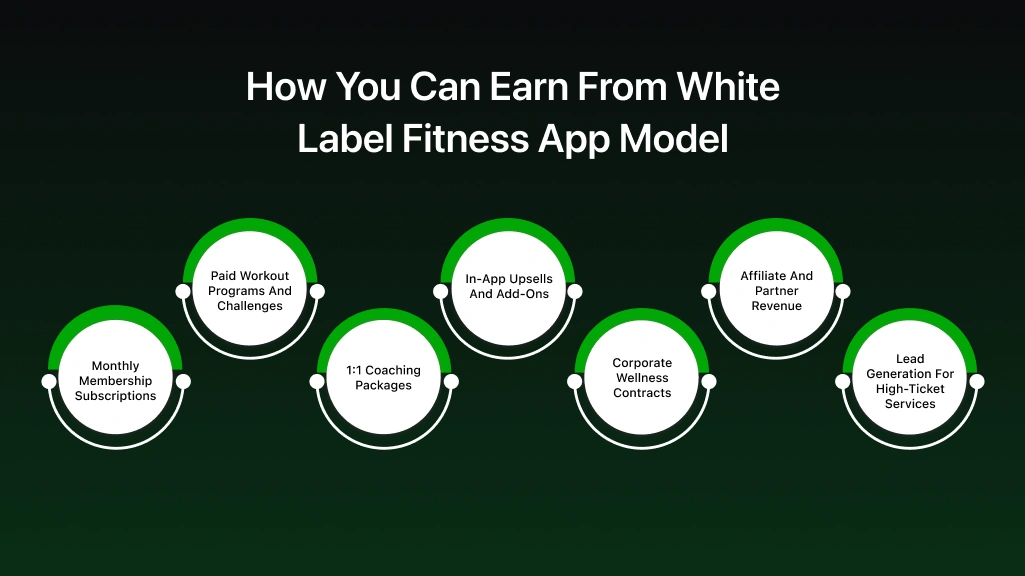
A white label fitness app is not just a delivery tool. It can be a real revenue engine if you set up pricing and offers in a simple way. Most brands earn through a mix of recurring plans, upsells, and lead capture. Here are the most practical models that work for gyms, studios, and coaches.
1. Monthly Membership Subscriptions
Sell monthly or yearly memberships inside your branded fitness app. Keep tiers simple, like Basic, Plus, and Premium. Subscriptions work well because revenue is predictable. It also reduces awkward follow-ups, because renewals happen automatically. This model fits gyms and online coaches using the app as online personal training software for ongoing programs.
2. Paid Workout Programs And Challenges
Create time-bound programs, like 4-week fat loss or 8-week strength, then sell them as one-time purchases. Your workout builder app setup makes this easy because the content is already structured. Challenges work well too, because people like clear start and end dates. Add a certificate or badge at the end, and completion rates improve.
3. 1:1 Coaching Packages
If you sell personal coaching, bundle it into packages like “12 weeks with weekly check-ins.” Use client management software for personal trainers to keep check-ins, notes, and progress clean. If your app supports a personal trainer booking app or personal trainer scheduling app flow, you can also sell sessions directly. This reduces cancellations and keeps your calendar organised.
4. In-App Upsells And Add-Ons
Add-ons can quietly increase revenue without increasing your workload too much. Examples include form review packs, nutrition add-ons, premium chat support, or extra workout plans. The key is to keep it useful, not spammy. Inside a white label fitness app platform, add-ons also help you test what people actually pay for before you expand your service list.
5. Corporate Wellness Contracts
For corporate wellness, you can charge per employee per month or sell a fixed quarterly plan. The app helps because delivery and tracking are consistent across teams. Add challenges, habit tracking, and team leaderboards to increase participation. Your reporting should feel like fitness management software, so HR can see usage without chasing your team for updates.
6. Affiliate And Partner Revenue
You can earn through partnerships with supplement brands, local physios, or fitness gear sellers. Keep it light. One “recommended partners” screen is enough. If you overdo it, trust drops. This works best when the partner offer matches your audience, like a rehab partner for injury clients or a healthy meal partner for fat loss programs.
7. Lead Generation For High-Ticket Services
Some brands use the app to generate leads for higher-ticket services like coaching intensives, retreats, or premium plans. A simple fitness CRM or coaching CRM follow-up flow helps you track trials, re-engage inactive users, and convert warm leads. The app becomes the top of your funnel, and your premium service becomes the main profit.
Future Trends In White Label Fitness Apps
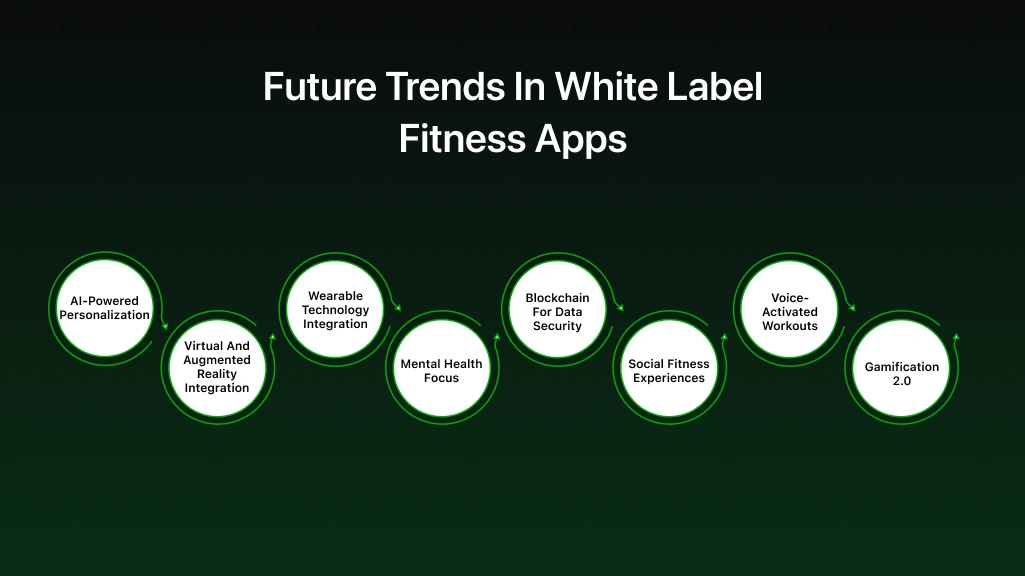
Fitness apps are getting more personal, more connected, and easier to use in real life. People do not want more features. They want fewer steps, clearer guidance, and results they can stick to. These trends are shaping what users will expect from a white label fitness app in 2026 and beyond.
1. AI-Powered Personalization
Personalization is moving from “pick a goal” to “the plan adapts with you.” A good white label fitness app platform will support smarter plan changes based on progress, missed workouts, fatigue, or schedule changes. It can also help coaches by suggesting small tweaks instead of full plan resets. The key is to keep it simple. Users should feel supported, not watched. And coaches should stay in control of the final plan.
2. Virtual And Augmented Reality Integration
VR and AR will be used more for guided workouts, form cues, and immersive classes. Think of it like a trainer in your room, helping you stay focused. For most brands, this will start as an add-on experience, not the main app. The smartest move is to keep the core branded fitness app experience strong first, then add VR or AR only if your audience actually wants it. Otherwise it becomes a costly feature that sits unused.
3. Wearable Technology Integration
Wearables are becoming a normal part of fitness routines. Users expect their steps, heart rate, sleep, and calories to sync without manual effort. In a white label fitness app, this usually means cleaner dashboards and better recovery signals, not a dozen graphs. When wearable data is used well, it improves habit building. It can also make your exercise log app tracking easier, because some data gets logged automatically.
4. Mental Health Focus
Fitness is no longer only about weight loss. Many users want stress relief, better sleep, and calmer routines. Apps are responding with gentler plans, low-pressure streaks, short mobility sessions, and simple mood check-ins. This trend matters because it reduces drop-off. When the app supports hard days, users stay longer. For coaches, it also means building programs that feel safe for beginners, not only intense for advanced users.
5. Blockchain For Data Security
Security is becoming a bigger decision factor, especially when apps store sensitive data and handle payments. Blockchain is often discussed as a way to improve data integrity and reduce tampering. In practice, most brands will still win by doing the basics well. Strong access control, encrypted storage, and clear data ownership terms matter more than adding new tech for the sake of it. If you use blockchain, it should solve a real trust problem.
6. Social Fitness Experiences
Social features are shifting toward smaller, safer communities. Private groups, studio challenges, and friend circles are replacing loud public feeds. A social fitness platform approach can improve consistency because people show up when they feel accountable. A simple team workout app style challenge also works well for gyms and corporate wellness programs. The key is moderation and control. Users should feel encouraged, not judged.
7. Voice-Activated Workouts
Voice is becoming a comfort feature. Users want hands-free timers, quick cues, and simple commands while they train. This is useful in strength training, yoga, running, and home workouts where touching the screen is annoying. Voice can also help accessibility. The best voice features stay quiet and practical. Short prompts, clear pacing, and the ability to switch it off anytime.
8. Gamification 2.0
Gamification is moving from random badges to meaningful progress. Users respond better to streak protection, comeback rewards, level-based challenges, and weekly goals that match their fitness level. It should feel like motivation, not pressure. If your workout logger and progress screens are clean, gamification becomes more effective because users can actually see results. Done right, it boosts retention without making the app childish.
Also Read : What is White Label Delivery Software? A Complete Guide
White Label-Ready Fitness Apps We Can Rebrand For You
We can white label our existing fitness apps for you, so you launch with a proven base instead of starting from scratch. WhiteLabelApps takes an already-built fitness product, then rebrands it into a clean branded fitness app with your logo, colours, app name, and program style. We also help set up your workouts, tracking flows, payments, and coach tools, so the app feels ready for real users, not just a demo. If you want to see what this looks like in action, check these fitness apps created by our developers.
1. Vita Track
Vita Track is a simple wellness app that helps users stay on top of daily health checks. It works like a digital health diary where people log key numbers and lifestyle habits in one place. Over time, the app turns those entries into clear trends, so users can spot patterns in things like blood pressure or sugar levels before a doctor visit. It makes day-to-day tracking feel less stressful, because the data is organised and easy to read. We can rebrand this app for you as a white label solution. That means your logo, colours, app name, and key screens can match your brand, so you launch a clean, branded product faster.
Key Features
- Vital Metric Logging: Track blood pressure, heart rate, blood sugar, and cholesterol in quick entries.
- Wellness Tracking: Log water intake and weight, with auto BMI calculation for basic progress checks.
- Data Visualization: View charts and graphs across days, weeks, or months to spot trends easily.
- Professional Reporting: Export health reports as PDFs to share during clinical consultations.
- Smart Reminders: Set alerts for medicines, hydration goals, and routine health check-ins.
2. PEAhappy
PEAhappy is a cozy wellness app that makes self-care feel light and doable. It mixes fitness, calm routines, and mood tracking in one friendly space. The app uses cute vegetable characters to keep things warm and non-judgy, so users do not feel pressured. Instead of big promises, it focuses on small daily actions. Over time, those small steps add up. It is a nice fit for users who want to feel stronger, calmer, and more steady, without turning wellness into another stressful task. We can white label this app for you and brand it as your own. That includes your app name, logo, colours, and key screens, so you can launch sooner with a clean, professional product.
Key Features
- Gamified Fitness: Track workouts and strength training with character-based goals and fun milestones.
- Mindfulness Tools: Use guided sessions and cozy calming spaces to reduce stress and reset daily.
- Progressive Goal Setting: Build habits with daily streaks, reminders, and a “one day at a time” flow.
- Visual Habit Growth: See progress through your vegetable avatars, which change as you stay consistent.
- Holistic Wellness Hub: Keep fitness, mood, and habit tracking together in one simple, easy interface.
Why Choose Us for the Development of White Label Fitness Apps?
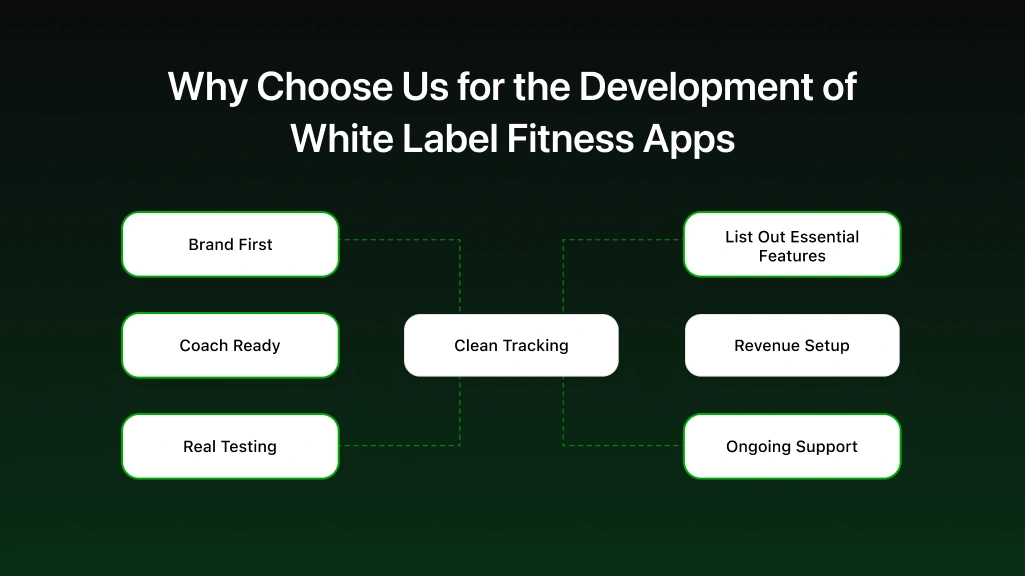
You want a fitness app that clients actually use, not one they download and forget after two days. That is what we focus on at WhiteLabelApps. As a leading white label fitness app development company, we set up your fitness app to feel smooth, branded, and easy to follow from day one. We shape the flow so workouts are simple to start, tracking is quick, and coaching stays organised. We also test real user journeys before launch and support updates after release, so your branded fitness app keeps improving as your business grows.
1. Brand First
Most apps fail because they feel generic. We fix that first. We take your white label fitness app and shape it into a true branded fitness app with your logo, colours, plan names, and onboarding tone. We also keep the first screens clean so clients do not feel lost. Your app should look like it is an extension of your gym or coaching company, and not just a theme/template pulled off the shelf somewhere. The more consistent your branding, the faster people will have confidence in you and the more likely they are to remain with you.
2. Coach Ready
A fitness app is only useful when coaching is easy behind the scenes. We set up the coach panel with proper workflows for check-ins, notes, tags, and progress views. It should feel like reliable client management software for personal trainers, not a messy inbox. We set things up for you so that if you manage many clients you will be able to see immediately how many of them need a follow-up. By using this method you minimize the number of missed check-ins, save yourself time, and offer a more consistent coaching experience.
3. Easy Programs
Programs are the product, so we keep this part strong. We structure your plan library using a workout builder app style setup that is easy to edit later. Workouts are grouped by goal and level, so clients know what to do today without thinking too much. We also set up simple progressions so the plan does not feel random after week one. When programs are clear, clients complete more sessions, and your results look better over time.
4. Clean Tracking
Tracking should feel like a quick habit, not homework. We configure the exercise log app experience to reduce taps and confusion. Clients can log workouts fast, see their history, and stay motivated by visible progress. We also tune the workout logger screens so users can compare weeks and notice improvements. Clean tracking helps retention because it gives people proof. When clients see progress, they stick. When they cannot see progress, they drift away.
5. Revenue Setup
You should earn without chasing payments. We set up subscriptions, one-time programs, and upgrades so the app supports real revenue models. The flow is built to work like online personal training software, where payment and access stay linked. We also help you keep pricing simple so clients do not get confused at checkout. When billing runs smoothly, you get predictable income, fewer refund requests, and fewer “my plan is not showing” support issues.
6. Real Testing
Most apps look fine in a demo, then break in real life. We test the full journey before launch, from signup to workout completion. We check notifications, plan access, payments, and logging speed. We also test on older phones and slower networks because that is where apps fail quietly. This protects your app store ratings and reduces early churn. A smooth first week is often the difference between a growing app and a dead app.
7. Ongoing Support
Launch is not the finish line. It is the first version. After release, we support updates, improvements, and fixes based on real user behaviour. We track what matters like drop-offs, workout completion, and renewals, then refine onboarding and content to improve retention. If your business adds new programs or coaching offers, we help you roll them out cleanly inside the same app. This keeps your white label fitness app stable and useful as you grow.
Conclusion
A fitness app only works when clients actually use it. Not just on day one, but on tired Mondays too. That is why your choice matters. A white label fitness app is a strong fit when you want to launch faster, keep costs predictable, and improve based on real user behaviour. Custom builds still make sense when you need a fully unique product and complex workflows, but they take more time and budget.
If you want a cleaner, quicker launch, WhiteLabelApps can help. We take a proven white label fitness app platform, turn it into a branded fitness app that matches your program, and set up workouts, tracking, payments, and the coach workflow in a practical way. Then we test, publish, and support updates as you grow, so the app keeps getting better, not just bigger.
FAQs
1) How long does it take to launch a white label fitness app?
The majority of launch times are shorter than starting from scratch; however, the time to launch will depend on how much branding and content you will be uploading as well as whether or not there are any payment or tool integrations to be made. If your workout and plan are complete you can typically launch quicker. If you are still building content, that becomes the real timeline driver.
2) Can my white label fitness app look fully unique?
Yes, to a point. You can usually change the app name, logo, colours, onboarding screens, and plan labels, so it feels like a true branded fitness app. Some platforms also allow layout tweaks. The smart step is to ask what is editable versus fixed, and request examples of two brands using the same base.
3) Will I own my client data?
The terms of the service provider’s contract will determine the location, storage, and access to data. It is important to clarify who will own the data and allow for an easy data exit option (in case you stop using their services) if you will be growing and doing coaching for the long term.
4) What features should I prioritize first?
Start with the basics that drive habit. Workout delivery, easy tracking, check-ins, and payments if you sell online. A clean onboarding flow is also critical. Fancy features like social feeds can come later. If the first week feels simple, people stay. If it feels heavy, they leave.
5) Is white label better than custom development for coaches?
For many coaches, yes, because it launches faster and costs less upfront. There are also validated workout, logging, and client management processes. If your workouts, advanced data rules/reasons, or product roadmap don’t fit into available forms, custom development may be the way to go. Your goals, budget, and timeline will help determine which option is best suited for you.It depends on the provider and the contract terms. Always confirm who owns the data, where it is stored, how you can export it, and what happens if you stop the service. A clear data exit option matters, especially if you plan to scale and do long-term coaching.

whitelabelapp
Related Articles

White Label Travel Portal Development: Complete Guide for Travel Agencies
You want to launch a travel business and start taking bookings fast. But the moment you try to build the platform, things start getting messy. Too many modules, too many supplier links, and too many moving parts between search, pricing, payments, and admin control. That is where white label travel portal development helps. You get […]
Read More
White Label Personal Training App Development: Launch Your Branded Fitness App Faster
Your day is full of small fitness tasks. A client asks for the plan again. Another forgets to pay. Someone says the video link is not opening. It all happens on WhatsApp, notes, and screenshots, and it gets messy fast. A white label personal training app helps you put workouts, check-ins, payments, and progress in […]
Read More