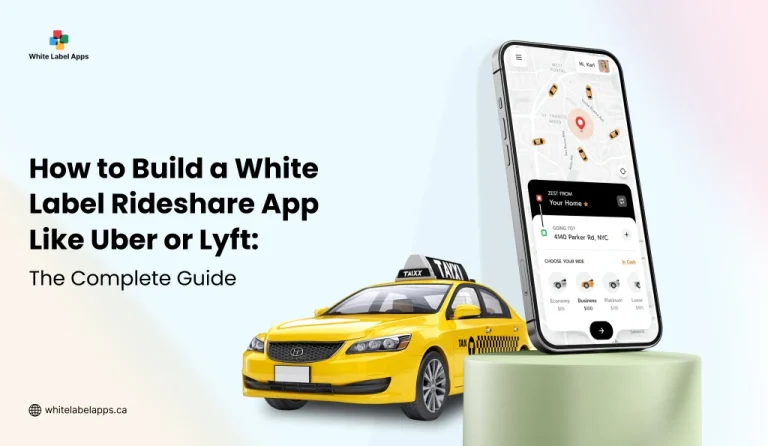
The ridesharing market isn’t slowing down. According to Mordor Intelligence, the global market sits at $53 billion in 2025 and is on track to cross $100 billion by 2031. That’s not a niche play. That’s a market that’s still in the middle of its growth curve, with real room for new operators in cities and verticals that the big platforms haven’t bothered to serve properly.
Here’s what most guides skip: building from scratch is the wrong starting point for 90% of operators entering this space. It takes 12 to 18 months, costs $150,000 to $500,000, and still leaves you with an untested product on the other side. Startups in Dubai, fleet operators in the UK, transport agencies across Southeast Asia. Many have learned that lesson the hard way, and the expensive way.
The smarter route is a white label rideshare app solution. You get a fully functional platform that’s already solved the hard engineering problems. The real-time tracking, the payment integrations, the dispatch logic. All of it already built and tested in live markets. Your job is to brand it, configure it for your geography, and launch. Weeks instead of years. Real savings instead of runway burn.
At WhiteLabelApps.ca, we build and configure fully branded rideshare platforms for startup founders, fleet operators, and digital agencies across North America, the UK, UAE, India, Australia, and Southeast Asia. We’ve taken operators from signed agreement to live app in under six weeks. This guide is built on that experience, and on direct analysis of what separates operators who launch and grow from those who stall before they start.
Here’s what we cover: what a white label rideshare app actually is, how it compares to custom development, the features and tech stack you need, how to build it step by step, what it costs, how to make money from it, and what to look for in a provider.
TL;DR
- A white label rideshare app gets you to market in 4 to 8 weeks. Custom development takes 12 to 18 months and costs $150,000 to $500,000 or more. The white label route typically runs $10,000 to $50,000 all in.
- Four panels make up the core platform. Rider app, driver app, dispatcher panel, admin dashboard. That’s it.
- Commission models, corporate contracts, surge pricing. Those three monetization paths generate the most revenue for new operators. Not because they’re complicated, but because they match how rideshare businesses actually make money.
- But here’s where most operators lose. They pick the wrong provider. Wrong contract terms, missing source code access, no post-launch support. Know what good looks like before you sign anything
Key Points
- The global ridesharing market is projected to grow at 11.26% CAGR through 2031, according to Mordor Intelligence. App-based platforms already control over 71% of revenue in 2025. That’s not a trend. That’s where the money is.
- White label rideshare platforms go live in 4 to 8 weeks. Custom builds rarely ship in under 12 months, even with a solid team. And a production-ready white label solution covers 30 to 50 features across four apps. Building that from scratch needs 8 to 12 developers minimum, plus a budget most early-stage operators don’t have sitting around.
- Corporate contracts change the math. Operators who go after B2B alongside B2C tend to see 40 to 60% higher per-ride revenue than consumer-only models. Worth thinking about before your pricing structure is locked in.
- Compliance is the part most providers gloss over. GDPR, CCPA, local transport licensing. The rules vary by market, sometimes significantly. Your provider needs to have this sorted before launch. Getting flagged after you’re live is a much harder problem to fix.
- One more thing. Not every white label solution hands over source code. If yours doesn’t, you’re operating someone else’s platform under your name. Ask about this directly. Get the answer in writing before you sign.
What Is a White Label Rideshare App and Why Does It Matter?
Most founders mix up three different things: a white label app, a clone script, and a custom build. They’re not the same. Picking the wrong one can cost you six figures and the better part of a year.
A white label rideshare app is a fully developed, production-tested platform built by a software company and licensed to you under your own brand. Rider app, driver app, admin panel, dispatcher interface. You apply your branding, set your pricing rules and service zones, and launch. The code is already written, tested, and running in real markets before you touch it.
Clone scripts are different. You buy the files, hand them to a dev team, and they spend months making it actually work. Cheap upfront. Rarely stays that way.
Custom development is building from zero. Full control, full risk, and a timeline that makes sense if you’re chasing Uber-scale ambitions with Uber-scale funding. For most operators starting out, it’s overkill.
White label sits between the two. You’re not starting from scratch, but you’re not buying someone’s half-finished code dump either. You’re licensing something that works and putting your name on it. That distinction matters more than it sounds, because it directly affects your time to revenue, your support structure, and whether your platform stays current as the market moves.
Still, this model isn’t for everyone. It fits startups entering a new city, taxi companies moving off manual dispatch, fleet operators adding a consumer booking layer. Agencies too, the ones building recurring revenue by reselling rideshare platforms to transport businesses.
White Label Rideshare App vs. Building From Scratch: The Real Comparison
The instinct to build from scratch makes sense. Full control, no vendor dependency, your code, your way. But the numbers don’t support that call at the early stage. Not for most operators.
Custom development covers a lot of ground. Rider app, driver app, admin panel, backend API, real-time tracking, payment integration. Done properly, that’s $150,000 on the low end for a lean MVP. Production-grade pushes $500,000 or more. The timeline runs 12 to 18 months with an experienced team. Longer if you’re hiring offshore and piecing the team together as you go.
A white label rideshare app solution gets you to market in 4 to 8 weeks. The platform has already been through QA in live production environments, which matters more than most founders expect until they’ve dealt with a broken booking flow at 2am on a Friday.
Configuration and launch typically runs $10,000 to $50,000, depending on the provider and how much your market requires in terms of customization. That’s not a small number. But against 18 months and half a million dollars, it’s a different conversation entirely.
| Factor | Custom Development | White Label Rideshare App |
| Upfront Cost | $150,000 to $500,000+ | $10,000 to $50,000 |
| Timeline to Launch | 12 to 18 months | 4 to 8 weeks |
| Team Required | 8 to 12 developers | 1 to 2 configuration specialists |
| Ongoing Maintenance | In-house or outsourced | Managed by provider |
| Customization Depth | Full | Moderate to high |
| Source Code Ownership | Yes | Varies by provider |
| Risk Level | High (unproven) | Low (production-tested) |
| Scalability | Full control | Provider-dependent |
One honest trade-off worth naming: white label platforms do have customization limits. If you need a highly specific feature that’s outside the provider’s roadmap, you’re either waiting for it or paying for custom development on top of the license. That’s a real constraint. For most operators entering a new market, it’s not a dealbreaker. But it’s worth knowing before you commit.
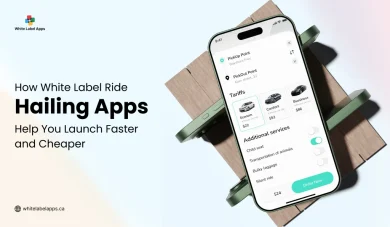
Also Read: How White Label Ride Hailing Apps Help You Launch Faster
Core Features of a White Label Rideshare Platform
Your white label rideshare platform is only as strong as what each user actually experiences inside it. A rider who can’t track their driver in real time won’t book again. A driver who can’t see their earnings clearly won’t stay past week two. This section breaks down the must-have features across all four panels of a production-ready white label rideshare app, and why each one directly affects your retention, revenue, and growth.
1. Rider App Features
The rider app is your brand in the rider’s hand. If booking feels slow or tracking lags, riders blame you, not the software vendor.
- Instant and Scheduled Booking
Riders book now or schedule up to seven days ahead. Scheduled rides matter more than most operators expect, especially for corporate clients who plan travel in advance.
- Real-Time Driver Tracking
Live GPS with ETA. Riders who can see the driver moving toward them cancel less and rate higher.
- Fare Estimation Before Booking
Show the price before the rider commits. Surprise fares are one of the fastest ways to lose a repeat customer.
- Multiple Payment Options
Cards, digital wallets, cash, and corporate billing. Markets like India and Southeast Asia still run heavily on cash. Your payment stack needs to match your geography, not the other way around.
- In-App Chat and Call
Riders reach drivers without sharing personal numbers. Protects both sides of the transaction.
- Ride History and Receipts
Every trip logged and accessible. Business riders need this for expense reporting.
- Ratings and Reviews
Two-way. Drivers know which passengers to avoid. Riders know which drivers to request again.
- Promo Code and Loyalty Support
Discounts to bring riders in. Loyalty points to give them a reason to stay.
2. Driver App Features
Drivers are your supply side. A frustrating driver app leads to high churn and coverage gaps in the zones where you need coverage most.
- Trip Request Alerts with Accept/Decline
Clear, fast, with enough trip detail for drivers to make an informed call.
- Turn-by-Turn Navigation
Built-in routing so drivers aren’t juggling a second device while on the road.
- Daily and Weekly Earnings Dashboard
Drivers who can see their earnings clearly tend to stick around longer. Transparency does more for retention than most incentive programs.
- Document Management and Verification
Licenses, registrations, and insurance all handled inside the app. No separate portal, no back-and-forth emails.
- Availability Toggle
Drivers go online and offline on their own schedule. That flexibility matters more than most operators realize.
- In-App Support Access
Drivers report issues without leaving the app or waiting on hold.
- Performance Metrics
Acceptance rate, cancellation rate, average rating. Good drivers track these anyway. The data also helps you catch problems before they turn into complaints.
- Incentive and Bonus Tracking
Show surge bonuses and weekly targets inside the app. Drivers chase goals when the reward is visible.
3. Dispatcher Panel Features
Manual dispatch teams aren’t going away, especially in taxi and fleet operations. The dispatcher panel is what connects traditional ops to modern tech.
- Live Map View of All Active Rides
Every driver and every active trip, visible in real time.
- Manual Ride Assignment
Override the algorithm and assign specific rides to specific drivers when the situation calls for it.
- Driver Communication Tools
Message or call drivers directly from the panel without switching to a separate app.
- Zone and Shift Management
Assign drivers to specific service zones or shift windows from one screen.
- Incident Flagging
Log complaints, accidents, or route deviations directly in the panel as they happen.
4. Admin Panel Features
The admin panel is where you actually run the business. Every pricing decision, every driver approval, every campaign starts here.
- Full User and Driver Management
Approve, suspend, or remove riders and drivers. View profiles, documents, and trip history in one place.
- Dynamic Pricing and Fare Rules
Set base fares, per-mile rates, surge multipliers, and minimum fares by zone. No developer needed.
- Revenue and Commission Tracking
See what you’re earning, what drivers are earning, and where the gaps are.
- Analytics and Reporting
Trip volume by zone, peak hours, cancellation rates, revenue trends. The data you need to make real operating calls, not just review numbers.
- Promotions and Campaign Management
Create and schedule discount codes, referral rewards, and seasonal offers without touching the codebase.
- Fleet and Vehicle Management
Track vehicle types, registration status, and compliance documents across your entire fleet.
- Customer Support Tools
View ride history, resolve disputes, and issue refunds without switching between systems.
- Multi-City and Multi-Zone Support
Add new cities or service zones from the same panel. No separate setup required.
Also Check: White Label Taxi Dispatch Software Features Every Fleet Needs
Tech Stack for White Label Rideshare App Development
The tech stack behind your white label rideshare app determines how fast it loads, how well it holds up under pressure, and how much room you have to grow. You don’t need to be an engineer to evaluate it. But you do need to know enough to ask the right questions before you commit to a provider. Here’s what a production-ready stack actually looks like, and why each layer matters.
| Stack Layer | Recommended Options |
| Mobile Frontend | React Native, Flutter |
| Native Alternative | Swift (iOS), Kotlin (Android) |
| Backend | Node.js with Express, Python with Django |
| API Layer | REST, GraphQL |
| Relational Database | PostgreSQL |
| Caching and Sessions | Redis |
| Unstructured Data | MongoDB |
| Maps and Location | Google Maps Platform, Mapbox |
| Payment Gateways | Stripe, Razorpay, PayU, Telr, PayTabs, GrabPay, GoPay |
| Cloud Infrastructure | AWS, Google Cloud |
How to Build a White Label Rideshare App: Step-by-Step
Most operators underestimate how much of the heavy lifting is already done when they go the white label route. You’re not managing a development team or writing API documentation. Signing with a provider is step one. Getting a live app into the hands of real riders and drivers takes more than signing a contract. These eight steps break down what that process actually looks like, who owns each stage, and where most launches slow down or stall completely.
Step 1: Define Your Market and Service Model
Start with clarity on who you’re actually building for. B2C commuters in one city, corporate clients across a region, airport transfers as a niche vertical — the answer isn’t just a positioning call. It shapes your pricing rules, your driver onboarding requirements, and which features you actually need on day one.
Step 2: Research Local Regulations
Transport regulations vary dramatically by market. The US requires different licensing than the UK. The UAE has its own rideshare permit structure. India operates under state-level transport authority rules. Get this sorted before you build, not after your first driver gets flagged.
Step 3: Choose a White Label Rideshare App Provider
Evaluate at least three providers before you commit. Ask for a live demo, not a recorded walkthrough. And get specific answers on source code access, how often the platform gets updated, what the support SLA actually covers, and how flexible the payment gateway setup is. We cover what good looks like in the provider selection section below.
Step 4: Branding and UI Configuration
This is where it starts feeling real. Your logo, your color scheme, your app name. Set up your app store listings and go through the onboarding flow yourself, as a rider and as a driver. If the default copy doesn’t sound like your brand, change it. That first impression matters more than most operators give it credit for. Good providers handle this in one to two weeks.
Step 5: Payment and Third-Party Integration
Connect your payment gateway, SMS notification service, and mapping provider. If you’re running corporate accounts, integrate your invoicing system. This phase typically takes one to two weeks and is where most delays happen, usually because the payment gateway approval process takes longer than expected.
Step 6: Driver Onboarding Setup
Configure your driver verification flow: document types required, background check integration, vehicle inspection criteria. Set your onboarding approval workflow. You want drivers active the moment you launch, not waiting in a queue.
Step 7: Testing and QA
Test every user flow end to end. Rider books, driver accepts, ride completes, payment processes, receipt arrives. Do it on iOS and on Android. Run it under simulated load, not just a clean single-user test. Check your admin panel controls while you’re at it.
One broken payment flow on launch day can undo weeks of marketing. That’s not a hypothetical.
Step 8: Launch and Growth
Deploy to the App Store and Google Play under your brand. Run a soft launch in one zone before opening city-wide. Monitor your admin dashboard closely in the first two weeks. Driver cancellation rates and app crash reports are your early warning signals.
Cost of White Label Rideshare App Development
The cost gap between custom development and a white label rideshare app solution is not marginal. It’s the difference between betting $300,000 on an unproven product and spending $30,000 to launch a tested one.
Here’s how the cost breaks down for a white label route:
| Cost Component | Typical Range |
| Platform License / Setup Fee | $5,000 to $20,000 |
| Branding and UI Customization | $1,000 to $8,000 |
| Payment Gateway Integration | $500 to $3,000 |
| Additional Feature Development | $3,000 to $15,000 |
| QA and Deployment | $1,000 to $5,000 |
| Cloud Hosting (annual) | $1,200 to $10,000 |
| Ongoing Support (annual) | $2,000 to $12,000 |
| Total Estimated (Year 1) | $13,700 to $73,000 |
Monetization Strategies for Your White Label Rideshare Platform
A rideshare platform can generate revenue from multiple directions at once. Most operators launch with one model and leave significant money on the table. Here are eight revenue streams worth building into your plan from day one.
1. Commission Per Ride
The standard model. You take a percentage of every fare processed through the platform, typically 15% to 25%. Uber takes around 25%. As a newer operator, starting at 15% to 18% lets you attract drivers while still building margin. Once you have supply density, you have more pricing power.
2. Subscription Plans for Drivers
Offer drivers a weekly or monthly subscription instead of per-ride commission. A driver paying $50/week keeps 100% of their fares above that threshold. This model works well in markets where drivers do high volume and want predictable costs. It also gives you predictable revenue regardless of ride volume.
3. Corporate Account Contracts
Corporate clients book rides for employees and settle on account with monthly invoicing. These contracts run at premium rates and come with low cancellation rates. One mid-size company with 50 commuting employees can generate $8,000 to $15,000 a month in platform revenue. No surge dependency, no seasonal dips. Just predictable volume at a rate your B2C riders won’t touch.
4. Surge Pricing
Automatically increase fares during peak hours, events, or bad weather. Surge pricing is a proven demand management tool. It also significantly increases your commission revenue during the periods when ride volume is highest.
5. In-App Advertising
Sell banner or interstitial ad space to local businesses inside the rider app. Restaurants, hotels, and retail stores in your service area will pay for visibility to a captive local audience. This works best once you have meaningful daily active users, typically 500 riders per day or more.
6. Cancellation Fees
Charge riders a fee when they cancel after a driver has accepted and is en route. This protects driver earnings and reduces your churn on the supply side. Standard cancellation windows run two to five minutes.
7. Premium Ride Tiers
Offer standard, premium, and luxury vehicle options at different fare levels. A standard sedan booking at $12 generates different margin than a premium SUV booking at $28. Multi-tier pricing also helps you serve corporate clients who need premium vehicles without building a separate product.
8. Referral and Promo Revenue Sharing
Partner with local businesses to offer riders discounts at participating venues in exchange for a referral fee. A rider who books a trip to a restaurant and gets 10% off their meal generates a commission for you on the back end. It also gives riders a reason to keep using your platform over a competitor’s.
Read Also: What Is White Label Taxi Software? A Complete Buyer’s Guide
How to Choose the Right White Label Rideshare App Solution
Picking the wrong provider is the most expensive mistake you can make in this process. The platform might look identical in a demo. The pricing might seem comparable. The differences show up after you’ve signed. When you need a critical bug fixed at midnight. When you’re ready to expand to a second city and find out the platform wasn’t built to handle it. Here’s how to tell a serious provider from one that isn’t.
1. Green Flags
- Source code access included. If you don’t get the code, you don’t own the product. You’re renting software. If the provider goes under, your platform disappears with them. Always confirm source code access is part of the deal.
- Live production references. Ask for two or three clients running live apps on the platform. Talk to them directly. A provider who can’t produce live references hasn’t built what they’re selling.
- Multi-gateway payment support. One payment gateway is a red flag. Markets differ. You need Stripe for the US and UK, Razorpay for India, and regional options for other markets. A provider locked to one gateway limits your geography.
- Defined support SLA. “We’ll get back to you” is not a support policy. You want a written response time commitment. Four hours for critical issues is a reasonable baseline. Anything longer isn’t acceptable for a live transport platform.
- Active update history. Ask when the platform was last updated and what changed. A product that hasn’t shipped an update in 12 months isn’t being maintained. It’s being abandoned slowly.
2. Red Flags
- No live demo. If they’ll only show you a recorded video, assume the live product doesn’t match the screenshots.
- Vague pricing with hidden tiers. “Starting from $X” with no itemization usually means the real number is 3 to 5 times higher. Get a full scope document before you sign anything.
- No compliance features. GDPR-compliant data handling, driver background check integration, and data export tools should come standard. If they don’t, you’re building your own compliance layer from scratch. That’s time and money you didn’t budget for, on problems you shouldn’t have to solve yourself.
- Single-city limitation. If the platform can’t support multiple service zones or cities from one admin panel, you’ve already hit your growth ceiling before you’ve launched.
Our White Label Rideshare App Development Process
A lot of providers call their onboarding a “process” when it’s really just a handoff. You get a configured platform, a short call, and a link to documentation. That’s not how we work. At WhiteLabelApps.ca, every launch follows a structured, milestone-driven process with clear ownership at each stage. Here’s exactly what happens between the day you sign and the day your white label rideshare app goes live on the App Store and Google Play.
Step 1: Discovery and Scope
We start with a structured call to map your market, service model, and technical requirements. This session covers your target geography, driver onboarding requirements, payment preferences, and the features you actually need on day one. Most run 60 to 90 minutes. You leave with a written scope document. Not a ballpark number, not a vague timeline — something you can actually hold the provider to.
Step 2: Platform Configuration
We configure the base white label rideshare platform to match your service model. Service zones, fare rules, vehicle types, and commission structures are all set at this stage. You review and approve before anything goes to branding.
Step 3: Branding and UI Application
Your logo, color palette, app name, and app store assets are applied across all four apps. We handle the App Store and Google Play developer account setup if needed. You get a staging environment to review before anything goes live.
Step 4: Payment and Integration Setup
We connect your chosen payment gateway, SMS provider, and mapping service. If you’re integrating with an existing dispatch system or fleet management tool, this is where that work happens. We handle the API connections. You handle the account approvals.
Step 5: QA and Testing
Our QA team tests every user flow end to end. Booking, matching, routing, payment, cancellation, rating, admin controls. All of it. We also run load testing before your launch date to confirm the platform holds up when ride volume spikes, not after.
Step 6: Launch and Post-Launch Support
We manage the App Store and Google Play submissions. Once you’re live, our support team monitors for issues in the first 72 hours. After that, you’re covered by your support agreement with documented SLAs and a direct line to our technical team.
Also Check: White Label Taxi App Development Guide
Challenges of Launching a White Label Rideshare App (and How to Overcome Them)
No launch goes perfectly. The rideshare space has specific challenges that catch new operators off guard, and most of them have nothing to do with the technology. Driver supply, local competition, regulatory hurdles, rider trust. Those are the real obstacles between you and a platform that actually makes money.
Knowing what’s coming means you can plan for it. Here’s what to expect, and how operators who’ve been through it handle each one.
1. Competing Against Uber and Lyft
This is the challenge every new operator names first. Uber and Lyft have brand recognition, driver networks built over a decade, and years of pricing data behind every decision they make. Going head-to-head on their terms is the wrong fight. You won’t win it, and you don’t need to.
The operators who do well find edges the big platforms don’t bother with. Smaller cities where Uber coverage is thin. Corporate contracts are worth pursuing specifically because Uber’s surge pricing makes procurement teams nervous. A fixed-rate agreement with predictable billing is an easy sell to a finance department that’s been burned by a $90 ride expensed at 2x surge.
Niche verticals tell a similar story. Airport transfers, school transport, medical rides. In each of those, a dedicated and reliable service wins over a generic platform almost every time. Scale isn’t always the advantage. Sometimes showing up consistently in a market Uber ignores is enough.
2. Driver Acquisition and Retention
Supply is your first real problem. Riders won’t come if there are no drivers. But drivers won’t sign up if there are no riders. This is the classic two-sided marketplace cold start problem.
The approach that works: launch in a small, defined zone with a guaranteed earnings incentive for early drivers. $200/week guaranteed for your first 30 drivers costs $6,000 a month and buys you the supply density to generate enough rides for organic driver income within 60 to 90 days. Don’t try to launch city-wide on day one.
3. Regulatory Compliance
Transport licensing requirements differ by city and country. In the US, requirements vary state by state. The UK has its own private hire vehicle licensing framework. UAE operators need a Roads and Transport Authority (RTA) permit. India operates under state transport authority rules that vary by state.
Get local legal counsel before you launch in any new market. Build your compliance checklist before your driver onboarding flow, not after your first regulatory complaint.
4. Technical Issues at Scale
A platform that works for 10 rides a day may behave very differently at 500 rides during a Friday evening peak. Real-time tracking, dynamic fare calculation, and simultaneous payment processing all put pressure on your infrastructure at the same time.
Choose a provider whose platform runs on auto-scaling cloud infrastructure. Test under load before you launch. And make sure your support SLA covers critical issues within four hours, not four business days.
5. Building Rider Trust in a New Market
Riders don’t trust new apps by default. Most riders have been let down before. Driver ratings, transparent pricing, in-app safety features, a visible refund policy. These aren’t nice-to-haves. They’re the baseline signals a new rider needs before they’ll trust a platform they’ve never heard of.
The product alone won’t do it though. Local marketing matters just as much in the early days. Riders trust platforms their neighbors use. Referral programs, community partnerships, and hyperlocal social media consistently outperform broad digital advertising when you’re breaking into a new market.
Legal, Compliance, and Safety Considerations
This is the section most operators skip until they have a problem. By then, the damage is already done. A missed licensing requirement doesn’t result in a warning. It results in your platform being shut down. A data breach without proper consent frameworks results in fines that dwarf your development costs. Getting compliance right before launch isn’t bureaucratic box-ticking. It’s the foundation your entire operation runs on, and it varies significantly by market.
Data Privacy: If you serve riders in the EU, GDPR applies. If you serve California residents, CCPA applies. Both require explicit consent for data collection, documented data retention policies, and the ability to delete user data on request. Your platform needs these controls built in. Ask your provider directly which regulations their platform is built to support.
Transport Licensing: Confirm the licensing requirements for every market before you onboard a single driver. In the UK, drivers need a Private Hire Vehicle licence and their vehicles need PHV insurance. In the UAE, your platform needs RTA approval before operating. In the US, requirements vary by state and sometimes by city. Non-compliance doesn’t result in a fine. It results in your platform being shut down.
Driver Background Checks: Every market that matters requires driver criminal background checks and licence verification. Build this into your onboarding flow, not as an afterthought. Operators who skip this create liability for themselves and safety risks for riders.
Data Ownership: Who owns the rider and driver data on your platform? If it’s your provider and not you, that’s a structural problem. Your customer data is a core business asset. Confirm in writing that you own the data, can export it at any time, and that the provider has no rights to use it for their own purposes.
Insurance Requirements: Rideshare platforms in most markets require commercial vehicle insurance at the driver level and platform-level liability coverage. The specifics vary by market. Get this confirmed with a local insurance broker and a transport attorney before your launch date.
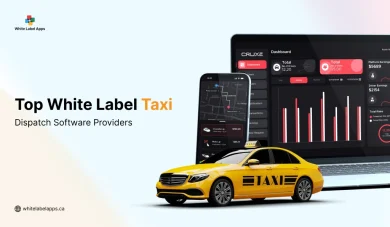
Also Check: Best White Label Taxi Dispatch Software Providers
Future Trends in White Label Rideshare App Development
The operators building platforms today aren’t just competing in the current market. They’re making bets on where the rideshare industry is heading over the next three to five years. Get those bets right, and your white label rideshare platform stays relevant as the market shifts. Get them wrong, and you’re rebuilding sooner than you planned. Here are the five trends shaping where rideshare technology is going and what they mean for your platform decisions right now.
1. Electric Vehicle Fleet Integration
EV adoption in rideshare fleets is accelerating. According to Grand View Research, the EV segment of the rideshare market is projected to grow at 22.3% CAGR through 2030. Forward-looking operators are already partnering with EV leasing companies to offer drivers lower running costs in exchange for platform exclusivity. Your platform needs to support EV-specific features: charging station mapping, range-aware dispatch, and EV incentive tracking.
2. AI-Powered Dispatch and Demand Prediction
Static fare tables and manual dispatch zones are being replaced by dynamic systems that predict demand by zone, time, and event before the surge happens. AI dispatch reduces driver idle time and improves rider wait times simultaneously. White label platforms that incorporate demand prediction give operators a genuine operational edge over competitors running manual systems.
3. Super-App Bundling
In Southeast Asia and increasingly in the Middle East, standalone rideshare apps are losing ground to super-apps that bundle rides, food delivery, and payments in one platform. Operators who build a rideshare base now are well-positioned to add delivery and other on-demand services as a second revenue stream without rebuilding their platform.
4. Corporate Rideshare Growth
The corporate rideshare segment is growing at 17.85% CAGR through 2031, according to Mordor Intelligence. Companies are formalizing travel policies that require app-based booking with automatic expense reporting. This is a massive, underserved opportunity for white label operators who build corporate account management into their platform early.
5. Autonomous Vehicle Readiness
Full autonomy is further away than the headlines suggest. But the platforms being built today need to be architected to add autonomous vehicle routing when it arrives. Operators who partner with white label providers actively building toward AV compatibility are making a sensible long-term bet. It’s not a day-one requirement. It’s a five-year consideration worth asking your provider about.
Why Choose WhiteLabelApps.ca for White Label Rideshare App Development
There’s no shortage of white label rideshare app providers. Most of them will show you an impressive demo, quote you a reasonable number, and disappear after the handoff.
WhiteLabelApps.ca works differently. We’ve built and launched rideshare platforms across North America, the UK, UAE, India, and Southeast Asia. We know what compliance requirements look like in each market. We know which payment gateways actually get approved in which regions. And we know what operators need in their admin panel at 2am on a Friday when something isn’t working.
What we offer:
- Fully branded rider, driver, dispatcher, and admin apps
- Source code access included as standard
- Multi-city and multi-zone support from day one
- Multi-gateway payment configuration for any market
- Dedicated post-launch support with a documented SLA
- Average time from signed agreement to live app: 4 to 6 weeks
We work with startup founders who need to validate a market fast, fleet operators modernizing from manual dispatch, and digital agencies adding rideshare platform deployment to their service offerings. If you’re serious about launching, we’re the team that gets it done.
White Label Ready Rideshare Apps We Can Rebrand for You
These are two white label rideshare platforms we’ve already built and deployed. Zefir and Cruxe are both production-ready. Pick the one that fits your market, and we’ll swap in your branding, your colors, and your domain. What riders and drivers see is entirely yours.
1. Zefir
Zefir is built for operators who want a clean, driver-first ride hailing experience without the commission model that chips away at driver earnings and loyalty. It covers the full trip lifecycle, runs fast on mid-range devices, and gives you enough configuration flexibility to match your market without a custom build.
Key Features:
- Instant ride booking with map-based pickup and drop location input
- Real-time GPS tracking with live driver location and ETA on the map
- Advance ride scheduling with date, time, and assigned driver details
- In-app wallet with balance display, top-up, and saved card management
- Full ride info screen showing driver name, rating, vehicle number, model, color, and fare
- Trip OTP for secure ride verification at pickup
- Zero commission model, drivers earn the full fare
2. Cruxe
Cruxe is a dark-themed, multi-service ride hailing platform built for operators who want to offer more than a standard car booking. Multiple ride categories, built-in promo tools, and a clean location search experience make it a strong fit for markets where riders expect options, not just one vehicle type.
Key Features:
- Live map home screen showing nearby drivers across all vehicle categories in real time
- Multiple ride types in a single booking flow including standard car, moto, and premier options
- Pickup and drop location search with recent locations, saved favourites, and set-on-map option
- Upfront fare display per ride type with ETA before booking
- Payment selection at checkout: cash, saved card, or add new card
- Built-in promo code support with expiry dates and minimum order conditions
- Ride scheduling available directly from the booking screen
Conclusion
The rideshare market is real, it’s growing fast, and the infrastructure to enter it affordably has never been more accessible. A white label rideshare app gets you from idea to live product in under eight weeks, at a fraction of the cost of building from scratch.
The operators who succeed aren’t necessarily the ones with the best technology. They’re the ones who launch first, learn fast, and pick the right partners. Get your white label rideshare platform right, and you’ve got a business that can scale city by city, market by market, without rebuilding from zero each time.
Ready to launch? Visit whitelabelapps.ca to see our live demo and talk to our team about your market.
FAQs
1. How Long Does It Take to Launch a White Label Rideshare App?
Most white label rideshare app projects go live in 4 to 8 weeks. The timeline depends on how quickly your payment gateway gets approved and how much custom branding work is required. Custom development, by comparison, typically runs 12 to 18 months.
2. How Much Does a White Label Rideshare App Cost?
Expect $13,000 to $73,000 for year one, including platform license, branding, payment integration, QA, hosting, and support. Custom development starts at $150,000 and rarely comes in under $300,000 for a production-ready platform.
3. Do I Own the App and the Data?
That depends entirely on your provider. With WhiteLabelApps.ca, you receive full source code access and own all rider and driver data. Always confirm data ownership and source code terms in writing before signing any provider agreement.
4. Can a White Label Rideshare App Scale as My Business Grows?
Yes, provided it’s built on auto-scaling cloud infrastructure. Confirm with your provider that the platform runs on AWS or Google Cloud with load balancing. A platform running on shared hosting will struggle above a few hundred daily rides.
5. What’s the Difference Between a White Label Rideshare App and a Clone Script?
A white label rideshare app is a production-tested, fully supported platform you license and configure. A clone script is a code purchase that requires a development team to make functional. Clone scripts look cheaper upfront and consistently cost more before launch.
6. How Do I Compete With Uber and Lyft Using a White Label Rideshare Platform?
Don’t compete head-to-head on their terms. Target the gaps: smaller cities with thin Uber coverage, corporate contracts where pricing stability matters, or niche verticals like airport transfers and medical transport. A focused white label rideshare app solution in an underserved market outperforms a generic app competing in a saturated one.