
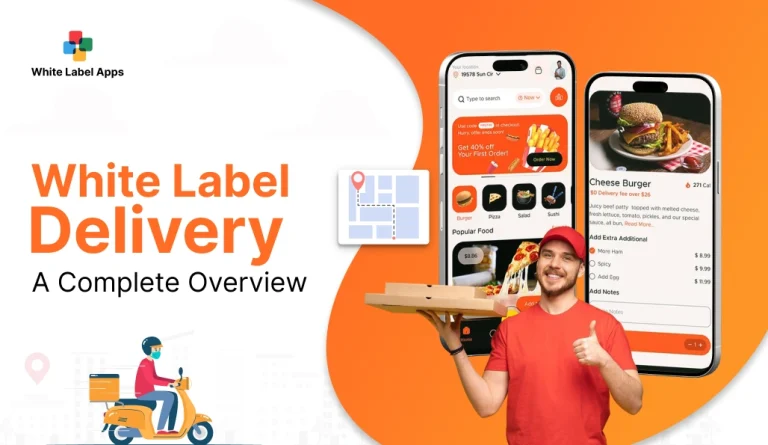
Most restaurants today feel the pressure. More people order online, but big delivery apps take a large cut and push your menu next to hundreds of other places. It eats into profit and weakens your brand. The global food delivery market is rising fast. Statista shows strong growth here.
This guide gives you a clear picture of how white label delivery helps restaurants take control again. You learn how the system works, what you get inside the app, and why many owners now shift from third-party platforms to their own branded solution. If you want a quick look at online ordering basics for restaurants, you can check white label online ordering for restaurant startups.
A white label setup feels like opening a small digital branch of your restaurant. You keep your logo, your menu, and your customer data. You decide the delivery zones and timing rules. You even manage loyalty and repeat orders the way you want. The whole idea is simple. Bring customers back to your own platform instead of sending them to crowded apps.
As you go through each section, you will see how white label app development fits a real restaurant workflow. Short steps. Clear tools. A setup your team can handle every day. This makes your delivery smoother in 2026 and gives your brand a stronger place online.
TL;DR
- Direct ordering helps restaurants keep more profit instead of paying 20–30% commissions.
- White label delivery gives you your own branded app, menu, and customer base.
- Customers order faster with real-time tracking and clean checkout.
- You control pricing, offers, delivery zones, and customer data.
- Launch time is 2–4 weeks, not months.
- Works for single outlets, cloud kitchens, and multi-location brands.
- Costs stay low because the system is ready-made and easy to scale.
- A stable delivery flow increases repeat orders and brand loyalty.
Key Points
- White label delivery helps restaurants replace high-commission aggregator orders with their own direct ordering system.
- A branded delivery app gives full control over menu updates, real-time tracking, and customer communication.
- Restaurants gain higher margins because they avoid per-order fees from third-party apps.
- Customer data stays with the restaurant, allowing better loyalty rewards and personalized offers.
- The launch process is fast because most features are already built and only need branding.
- A ready white label system supports drivers, kitchen staff, and admins through a connected workflow.
- Multi-outlet restaurants can manage separate menus, timings, and zones from one dashboard.
- White label delivery creates long-term stability by reducing dependency on shifting aggregator algorithms.
- Restaurants can scale features, zones, and outlets without rebuilding the entire system.
- Direct ordering strengthens brand identity and encourages repeat customers throughout 2026 and beyond.
What Is White Label Delivery?
White label delivery is a simple idea. Your restaurant offers delivery under your own name, but the technology behind it is already built for you. You get a ready system that feels like your brand from the first screen to the last. The customer sees only your logo, your colours, and your menu. The delivery flow runs in the background through a reliable setup that you control without building it from scratch.
This model helps restaurants replace costly aggregator dependence with a direct ordering channel. You save more per order because there are no heavy commissions. You also get full access to your customer data, which lets you plan offers, run loyalty rewards, and improve repeat orders.
A strong white label delivery setup usually includes your own customer app, driver tools, order tracking, and a simple dashboard for your team. If you want to see how these tools come together inside a full restaurant system, you can explore White Label Mobile App for Restaurant.
White label delivery gives your restaurant the freedom to run delivery your way. No mixed listings. No algorithm changes. No lost customer connection.
How It Works Behind the Scenes?
White label delivery runs on a clean workflow that takes orders from your customer app and sends them straight to your kitchen without delay. The moment someone places an order, your team sees it inside the restaurant panel. You can update status, adjust timings, or pause items when the kitchen gets busy. The system also alerts the driver app so the right person picks up the food on time.
Most setups follow one simple chain. Customer orders, kitchen prepares, driver accepts, and delivery moves in real time. You and your customer can track every step on the map. This is the same smooth flow shown in many ready-made systems.
Because the technical work sits behind the scenes, your brand stays in front. Your logo, your menus, your offers. The engine handling routing, tracking, and order updates simply makes the process faster and cleaner for your team.
Why Restaurants Choose It Over Aggregators?
Many restaurant owners switch to white label delivery because it gives them control they never get on big delivery apps. Third-party platforms place your food next to hundreds of other places. Customers browse by discounts, not by loyalty. And every order comes with a commission that cuts deep into your margins.
With white label delivery, customers order from your own app or website. No mixed listings. No sudden fee changes. No dropped visibility. You build a direct path where people return again because the experience feels personal. This helps your brand stay stronger, especially during peak hours when orders move fast and mistakes cost money.
If you want to see how restaurants build their own branded journey, you can read: Affordable White Label App Development for Startups
White label solutions give you the freedom to manage offers, add loyalty rewards, and improve repeat orders on your own terms. Instead of depending on aggregator algorithms, you shape the full journey from menu to delivery.
2025–2026 Delivery Market Shift: What Every Restaurant Owner Should Know
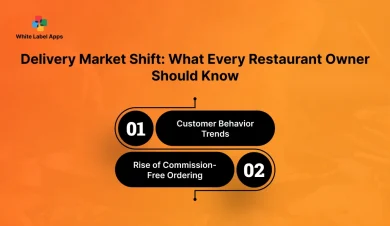
The delivery market is changing fast, and restaurants that rely only on third-party apps feel this shift the most. More customers now prefer ordering directly from restaurants they trust. They want simple menus, faster delivery, and fewer hidden fees. At the same time, global numbers show steady growth in online food delivery.
As the market expands, restaurants need stronger control over their digital presence. A rented space on aggregator apps no longer feels stable. It pushes your food behind discounts, ads, and competing kitchens. This is why many restaurant owners turn toward branded solutions where they can build their own ordering base and protect their profit. White label delivery fits this shift because the system gives you freedom to design everything around your own workflow.
Customer Behavior Trends
Customers order more meals online today compared to even two years ago. Most people want a clean ordering flow that shows real-time updates, clear pricing, and quick checkout. They also return more often to restaurants that offer loyalty rewards and direct ordering links. This pattern becomes stronger every year as more diners look for convenience without extra service fees.
Direct ordering helps customers feel closer to your restaurant. They see your brand, not a marketplace full of ads. Small steps like simple menus, clear order status, and fast delivery notifications create trust and increase repeat orders. White label delivery lets you shape this experience from the start.
Rise of Commission-Free Ordering
Every restaurant owner knows how heavy aggregator commissions feel. Some orders lose money by the time they leave the kitchen. This is why the demand for commission-free ordering keeps rising. More restaurants want a system where every sale helps them grow instead of shrinking their margins.
A direct ordering setup gives you this balance. You keep your customer, your data, and your earnings.
Commission-free ordering is not just a trend. It is becoming a normal expectation in 2026 as more owners choose stable, brand-first delivery systems.
Why White Label Delivery Matters for Restaurant Owners?
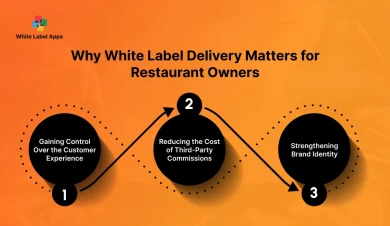
Running a restaurant in 2026 feels different from the old dine-in days. More people order from their phones. Fewer wait for a table. And almost every meal passes through a delivery flow. When this happens, your brand must stay in front. White label delivery gives you that control. It lets you run your own ordering setup with your own logo, colours, menu, and offers. No extra screens. No commission layers. No competing kitchens beside your dishes.
Direct ordering keeps your customer closer. It also protects your margins during busy lunch hours and weekend peaks. If you want a simple view of how restaurants build a branded online ordering path, you can check white label restaurant ordering app.
A good white label system fits daily kitchen work. Your team receives orders faster. Drivers get clear routes. Customers get real-time tracking. Everything moves smoother because the tools are built for restaurants, not marketplaces.
1. Gaining Control Over the Customer Experience
When someone orders from your direct channel, the whole journey belongs to you. They see your brand from start to finish. You can add photos, update dishes, run offers, and build loyalty programs without waiting for a marketplace to approve anything. A white label restaurant app lets you shape a clean ordering flow that feels personal. This helps create repeat customers who prefer ordering from you instead of scrolling through long lists on third-party apps.
2. Reducing the Cost of Third-Party Commissions
Most restaurants lose a big cut on aggregator orders. Some platforms charge up to 20 or 30 percent. This becomes painful for small kitchens with tight margins. With white label delivery, every order goes directly to your restaurant. No extra cuts. No hidden fees. This helps you keep more of your earnings and reinvest in better packaging, staff, or menu improvements. The difference becomes clear when you track your monthly numbers.
For ideas on how restaurants improve their revenue using their own systems, you can check this guide: White Label Restaurant App for Food Businesses
3. Strengthening Brand Identity
Your restaurant becomes stronger online when customers interact with your own brand every time they order. Your colours, your layout, your tone. These small details build loyalty over time. Third-party apps weaken this connection because customers browse by discounts, not by familiarity. A direct white label setup helps you build a stable identity that stays consistent across dine-in, takeaway, and delivery.
What You Get in a White Label Delivery App?
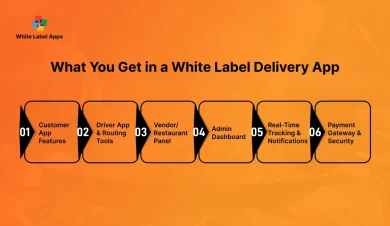
A full white label delivery system gives your restaurant all the tools needed to run delivery smoothly without depending on third-party apps. You get your own customer app, driver tools, a restaurant dashboard, and an admin panel that keeps everything connected. The setup is already built, so your team only needs basic training to start managing orders, timings, and deliveries every day. This gives your kitchen more control during rush hours and keeps customers updated with clear tracking.
Most restaurants choose this model because it works with real workflows. Orders reach your staff on time. Drivers get clean routes. Payments come through secure channels. If you want to see how these tools work together inside a branded environment, you can explore this page: White Label Food Delivery App Development Company
The system grows with your restaurant. You can add new outlets, adjust menus, change delivery zones, and run offers without long delays. Everything stays under your brand, which helps build trust and more repeat orders.
1. Customer App Features
The customer app is the front door of your restaurant online. People browse your dishes, choose options, place orders, and track their driver in real time. The flow is simple, clean, and branded for your kitchen. You can update photos, prices, categories, and offers anytime. This keeps your menu fresh and helps customers order faster.
2. Driver App & Routing Tools
Drivers see new orders quickly, accept tasks, and follow the best routes. The app shows pickup details, drop-off points, timings, and notes from the kitchen. Clear routing helps reduce delivery delays, which improves customer satisfaction.
3. Vendor/Restaurant Panel
Your team gets a simple dashboard to manage daily work. They can view incoming orders, update status, pause items, adjust timings, or add offers. This helps your kitchen stay organised, especially during peak evening hours.
4. Admin Dashboard
The admin panel gives you a top-level view. You can monitor performance, track revenue, handle coupons, manage drivers, and review customer history. These insights help improve your delivery strategy over time.
5. Real-Time Tracking & Notifications
Customers see where their order is at every step. Your team also gets live updates on preparation time, driver arrival, and completed deliveries. This reduces confusion and keeps both sides informed.
6. Payment Gateway & Security
Secure payment options help customers trust your platform. Cards, wallets, and online payments all work smoothly. Your restaurant gets clear settlement reports through the admin panel.
The Hidden Costs of Aggregators: Why Restaurants Need to Take Control
Third-party delivery apps look convenient at first, but the hidden costs build up fast. Every order carries a commission, and some platforms charge enough to eat most of your profit. Over time, this affects staffing, packaging, and even your menu pricing. The market keeps growing, which means these platforms get more power over how your food appears online.
When your restaurant depends only on aggregators, you lose control over customer relationships. They own the data, not you. You cannot run your own offers freely, and you cannot build loyalty programs that bring customers back. White label delivery removes these layers so your menu stays in front without getting lost in crowded listings.
1. Order Commission Drain
Most restaurants already run on thin margins. When a delivery app takes a percentage from every order, it becomes harder to maintain profit. Some dishes even lose money after commission. With white label delivery, you keep the full earnings, which makes a big difference during busy weekends or slow midweek hours.
2. Loss of Customer Loyalty & Data
On aggregator apps, customers behave like browsers, not loyal diners. They scroll through lists, follow discounts, and switch between restaurants quickly. You get the sale, but you do not get the relationship. Without customer data, you cannot run meaningful offers or understand ordering patterns. White label delivery gives you full visibility.
3. Marketing Dependency
Many restaurants pay extra for visibility on delivery apps. Sponsored listings, boosted placements, and discount programs add more cost to each order. Over time, these expenses become difficult to manage. With your own branded platform, you run your own promotions without paying for placement.
The Economics: Why It Beats Third-Party Platforms
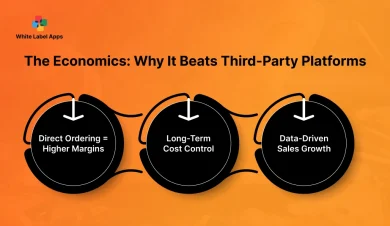
When you compare white label delivery with third-party apps, the financial difference becomes clear fast. Aggregators charge per order. Sometimes per customer. Sometimes per boost. The more you grow, the more you pay. With your own branded setup, every rupee stays with you. This helps during peak hours when order volume is high and margins matter most. You also gain long-term stability because your brand, not an algorithm, drives your sales.
As the delivery market keeps expanding worldwide, restaurants that rely only on large platforms face rising cost pressure.
If you want a simple breakdown of different ordering and delivery paths, this guide helps you compare them clearly: Food Delivery App Business Models
With white label delivery, you control pricing, promotions, loyalty, and repeat business. This shifts power back to your restaurant instead of paying rent to a marketplace for every order.
1. Direct Ordering = Higher Margins
Every time a customer orders through your own app or website, you keep the full revenue. There are no commission layers or sudden fee changes. This lets you invest in better packaging, fresh ingredients, or kitchen upgrades that improve the overall experience.
2. Long-Term Cost Control
Aggregator fees rise as you grow. White label costs don’t. You pay a fixed setup or subscription, then scale at your own pace. This gives your restaurant predictable monthly spending and a more stable financial model.
3. Data-Driven Sales Growth
Direct ordering gives you customer data. You can see top dishes, peak hours, repeat order patterns, and buyer behaviour. These insights help you offer targeted discounts, seasonal combos, or loyalty rewards without depending on app-level promotions.
White Label Delivery vs Delivery-as-a-Service (DaaS)
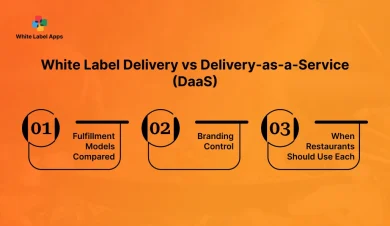
Many restaurant owners confuse white label delivery with Delivery-as-a-Service (DaaS), but both serve different needs. White label delivery gives you a fully branded ordering and delivery system under your own name. Customers interact with your app, your website, and your delivery flow. DaaS, on the other hand, uses a third-party fleet or infrastructure in the background while your brand stays in front. You still control the customer journey, but you don’t manage your own drivers.
For restaurant owners who want to understand how on-demand systems work in a branded environment, this breakdown gives a clear view of the process: On Demand App Development
The best choice depends on your daily operations. If you want full control, white label delivery is better. If you want your own brand but don’t want to manage a fleet, DaaS gives you flexibility. Many restaurants mix both models to cover peak hours and special zones.
1. Fulfillment Models Compared
White label delivery runs on your own workflow. Your team manages orders, timings, and customer communication. DaaS uses an outside fleet to complete the delivery, while you maintain the brand layer. Both send orders smoothly, but white label gives more control.
2. Branding Control
With white label delivery, every screen belongs to your restaurant. You set colours, photos, layout, and tone. With DaaS, the branding stays on your ordering side, but the delivery process may show small signs of a third-party system. For many restaurants, this difference matters when building long-term loyalty.
3. When Restaurants Should Use Each
If your kitchen handles steady daily orders and you want predictable quality, white label delivery fits well. If your restaurant has wide delivery zones or seasonal spikes, DaaS helps manage load without hiring more drivers. Some owners use white label for regular zones and DaaS for overflow areas.
Cost of White Label Delivery (Full Breakdown)
The cost of building your own white label delivery system is far lower than running a full custom app. Custom builds take months and require expensive development hours. A white label setup gives you most features ready on day one, so your restaurant spends less and launches faster.
A white label structure also helps you manage costs over time. You can add new outlets, update menus, change delivery rules, and adjust prices without paying for deep development work. This balance of cost and control is one reason restaurant owners now move toward white label app development instead of relying only on platforms or custom builds.
You can also explore how restaurants grow revenue using their own system here: How to make money with white label apps
Below is a simple table showing what restaurants usually spend based on their needs.
| Setup Type | What You Get | Best For | Cost Range | Launch Time |
| White Label Food Delivery App | Customer app, restaurant panel, driver app, tracking, payments, branding | Restaurants wanting fast launch | Lower cost, depends on modules, far below custom builds | 2–4 weeks |
| Custom Delivery App | Fully built from scratch, advanced UI, unique flows | Large chains with very specific needs | High cost, grows by feature | 6–12 months |
| Food Delivery Script (White Label Base) | Ready workflow, essential modules, simple branding | Small restaurants testing their first delivery system | Lowest cost | 1–3 weeks |
| Multi-Restaurant Setup | Multiple panels, menus, zone rules, timing controls | Restaurants with many outlets | Mid to high cost based on outlet count | 3–6 weeks |
How We Can Help Restaurants Build Their Own White Label Delivery System?
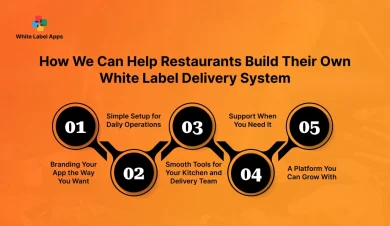
Running your own delivery system feels big at first, but our job is to make the process simple for your team. We walk you through each step, from planning your menu flow to setting delivery zones and testing your setup before launch. With our white label app development approach, you get a branded system that fits your daily kitchen routine without long waits or complex tools. Your staff learns how to manage orders, update menus, handle timings, and track deliveries in a clear, easy way. This lets your restaurant stay in control of margins, customer relationships, and repeat orders.
1. Branding Your App the Way You Want
Your restaurant gets a fully branded customer app with your logo, colours, photos, and categories. Everything the customer sees reflects your restaurant’s identity, not a marketplace layout. This helps build trust and keeps your brand strong across dine-in, takeaway, and delivery.
2. Simple Setup for Daily Operations
We help your team organise categories, delivery timings, offers, and menu updates. These basic settings shape your daily workflow. A clear setup reduces mistakes during peak evenings and helps your staff manage orders faster.
3. Smooth Tools for Your Kitchen and Delivery Team
Your kitchen staff gets fast order alerts, real-time updates, and the ability to modify items quickly. Drivers receive clean routes and task details so they can handle drops without confusion. You also get one dashboard to manage everything, which keeps your team focused and organised.
4. Support When You Need It
From testing to soft launch, we guide you through each stage. You learn how to manage busy hours, adjust delivery rules, and plan promotions.
5. A Platform You Can Grow With
Start with basic ordering and add more features later. New outlets, new delivery zones, scheduled delivery, loyalty rewards, or coupon tools. The platform grows with your restaurant so you don’t have to rebuild your system every time business expands.
Conclusion
Running your own delivery system is not a big leap anymore. It is the smarter move for restaurant owners who want full control over their orders, margins, and customer relationships. A white label food delivery app gives you a clean, branded path where every order comes directly to you. No commission cuts. No mixed listings. No lost customer data. You learn what people buy, when they order, and how to serve them better.
With the delivery market growing each year, owning your platform puts your restaurant in a stronger position. You start small, learn from your early orders, and shape a system that fits your kitchen flow. This steady growth helps your team handle busy hours, improve repeat orders, and build long-term loyalty.
If you want help setting up your own branded delivery system, you can reach our team.
FAQs
1. What is a white label food delivery app?
It is a ready-made delivery system your restaurant can brand as your own. You add your logo, colours, menu, and delivery rules. Customers see only your restaurant, not a marketplace listing.
2. How much does it cost to build my own delivery platform?
A full custom app can become expensive because every feature needs to be built from scratch. A white label setup costs much less and launches faster. Final cost depends on your menu size, delivery zones, and number of outlets.
3. How fast can I launch a white label delivery system?
Most restaurants go live in 2–4 weeks. You add branding, menu details, timings, and delivery zones, then run a short testing phase before accepting real orders.
4. Can a small restaurant compete with big delivery apps?
Yes. A white label delivery system gives you a direct path to your customers without commission cuts. Many customers prefer ordering straight from the restaurant they trust.
5. Can I run multiple outlets with one system?
Yes. You can create separate menus, zones, and timings for each outlet from one dashboard. This helps you manage branches easily without switching between apps.
6. What features do customers expect in 2026?
Customers want clean menus, secure payments, fast checkout, real-time tracking, and simple reordering.
7. Can I update my menu or delivery timings anytime?
Yes. You can change categories, dishes, prices, delivery slots, or offers within minutes. Updates appear instantly in the customer app.
8. Does a white label delivery app support coupons and loyalty?
Yes. You can run offers, referral bonuses, and loyalty rewards that help you increase repeat orders and improve weekend sales.
9. Is a food delivery script enough for my restaurant?
For most restaurants, yes. A script gives you all core modules: customer app, restaurant panel, driver app, and admin tools. It is the backbone of many white label apps and helps you launch quickly.
10. How do I get started?
Start by planning your menu flow, delivery areas, and timings. Then add branding and run test orders.

whitelabelapp
Related Articles
White Label Personal Training App Development: Launch Your Branded Fitness App Faster
Your day is full of small fitness tasks. A client asks for the plan again. Another forgets to pay. Someone says the video link is not opening. It all happens on WhatsApp, notes, and screenshots, and it gets messy fast. A white label personal training app helps you put workouts, check-ins, payments, and progress in […]
Read More
Top 15 White Label Reseller Programs That Deliver Big Profits in 2026
If you have ever tried reselling services, you know the truth. The pitch is easy. Delivery is where most resellers bleed time and profit. That is why this list is not based on “popular names” or random directories. We did deep research before writing this blog. We reviewed reseller program pages, service menus, white label […]
Read More