

Online ordering picked up speed; delivery slowly became the center of daily operations. The space grew fast, too. Global online food delivery revenue is expected to cross 170 billion dollars in 2025, which shows just how normal delivery has become for customers everywhere.
With that growth came new problems. High commissions, strict platform rules, and limited control started to frustrate business owners. Being busy stopped feeling rewarding when profits stayed tight and customer relationships stayed distant. Many brands realized they were working inside someone else’s system, not their own.
This is why white-label delivery software is getting serious attention now. Businesses want delivery that feels personal again. They want customers to see their brand, not a marketplace logo. They want control over prices, data, and how the full experience feels.
White-label delivery software offers that balance. It lets businesses run delivery under their own name without building everything from scratch. In this blog, we’ll break down how it works and why so many businesses are choosing it as a smarter long-term move.
TL;DR
- White-label delivery software lets businesses run delivery under their own brand.
- It removes heavy commission fees from third-party platforms.
- Owners get full control over customers, data, and pricing.
- It works well for restaurants, stores, and local delivery brands.
- Long-term profits often improve with the right setup.
Key Points
- White-label delivery software gives full branding control.
- Customer data stays with the business, not a platform.
- Monthly costs feel more predictable over time.
- Businesses manage delivery rules their own way.
- Growth depends more on strategy than platform limits.
What Is White Label Delivery Software?
White-label delivery software is a ready-made delivery system that businesses can use under their own brand name. Customers never see the software provider’s name. They only see your logo, your colors, and your business identity.
Instead of joining a third-party app, businesses get their own ordering website or app. Orders, payments, and delivery tracking all happen inside this system. It feels like something built only for that brand, even though the tech already exists.
This setup works well for businesses that want control without building software from scratch. You focus on food, products, or service, while the software handles the delivery process quietly in the background.
How White Label Delivery Software Works
The process usually starts when a customer places an order through your branded website or app. The menu or product list is fully managed by you. Prices, availability, and offers stay in your control.
Once the order is placed, it reaches your dashboard instantly. Staff can accept, prepare, and mark it ready. If delivery is included, the system assigns a driver or shares delivery details based on your rules.
Customers get live updates, order status messages, and delivery tracking. Payments go directly to you, not through a marketplace. From start to finish, the entire journey stays inside your brand space.
Also Read: White Label Delivery App Development Guide
Why Businesses Are Moving to White Label Delivery Software
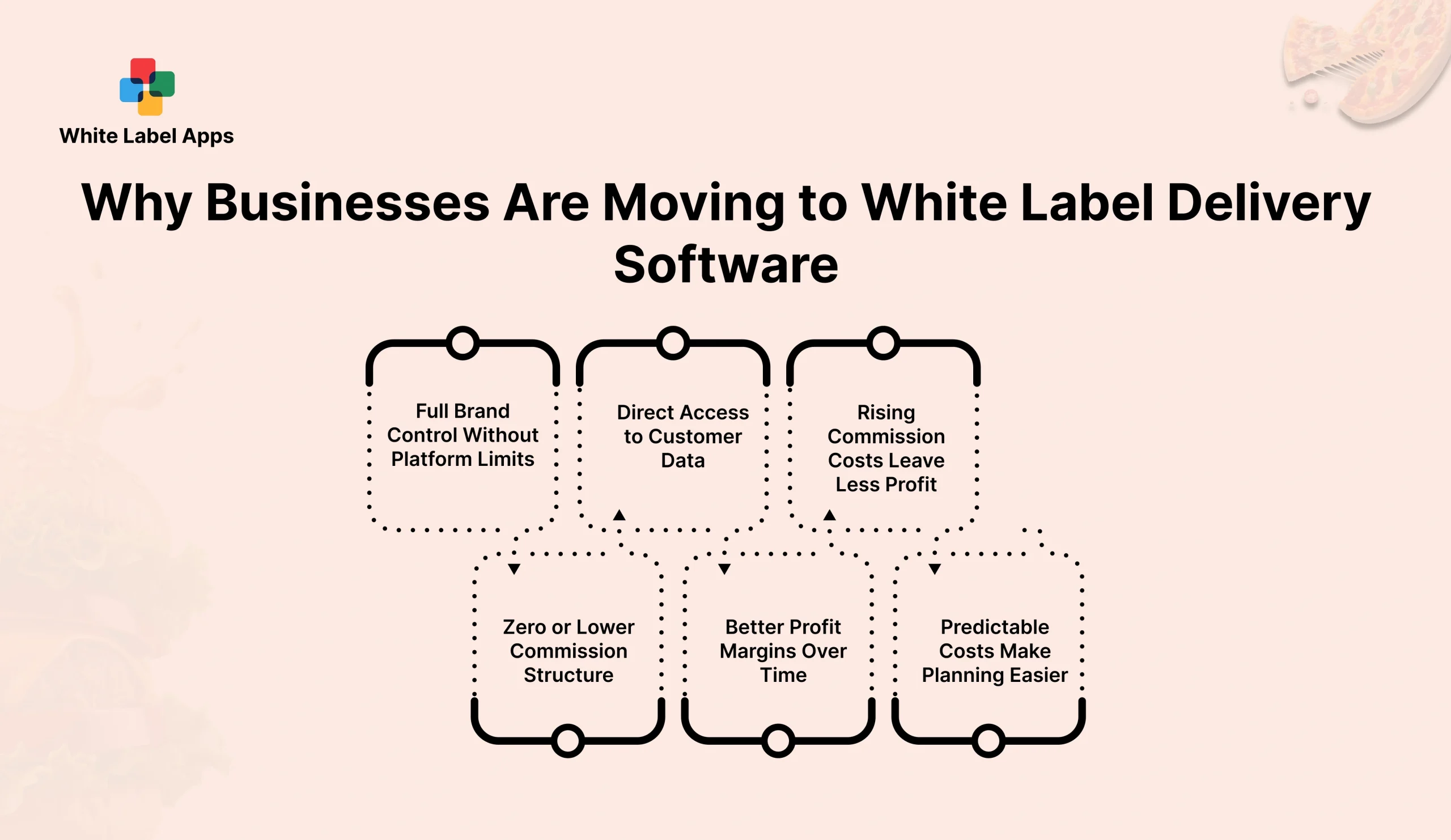
Businesses are rethinking delivery because control and profits matter more now. Rising fees, limited branding, and weak customer ownership push brands to look for better options. White-label delivery software offers freedom, clarity, and long-term stability for growing modern businesses.
- Full Brand Control Without Platform Limits
When you use white-label delivery software, your brand stays front and center every time a customer places an order. Your logo, colors, tone, and layout all feel familiar and personal. Customers remember who they ordered from, not some third-party app. This steady exposure builds trust slowly. Over time, your business starts feeling reliable, recognizable, and worth coming back to again.
- Zero or Lower Commission Structure
High commission fees quietly eat into profits, especially when order volume grows. White-label delivery software removes that pressure by offering fixed or lower-cost pricing. Instead of losing money on every order, businesses know exactly what they’re paying each month. This makes budgeting easier and removes constant stress. Many owners feel more relaxed knowing busy days no longer mean higher platform charges.
- Direct Access to Customer Data
With white-label delivery software, customer information belongs to you, not an outside platform. You can see order history, buying habits, and contact details without limits. This helps you understand what people actually like and when they order the most. You can send offers that feel relevant, not random. That personal touch often turns casual buyers into loyal, repeat customers.
- Better Profit Margins Over Time
Lower fees, repeat orders, and full pricing manipulation slowly enhance earnings margins. The effect may additionally no longer feel large at first; however, it grows month by month. Businesses can alter prices, run offers, or manipulate shipping expenses freely. Without commissions cutting into every sale, earnings start making more sense. Over time, the business feels healthier and easier to scale without constant money worries.
- Rising Commission Costs Leave Less Profit
Many businesses started noticing that higher order volume did not mean higher profit. Aggregator commissions quietly eat into every sale, making growth feel expensive. White-label delivery software removes this pressure by replacing per-order fees with stable costs. Owners finally see their hard work reflected in margins, not disappear through platform deductions.
- Predictable Costs Make Planning Easier
Predictable costs help business owners breathe a little easier. Instead of guessing how much commission will disappear each month, white-label delivery software offers steady pricing. This makes budgeting clearer and planning less stressful. Owners can run offers, adjust menus, or prepare for busy seasons without worrying that higher order volume will suddenly reduce profits or create unexpected platform charges.
Read Also: Top 10 Best White Label Food Delivery App Providers
White Label Delivery Software vs Aggregator Platforms
In the following table, we can see the differences between white-label delivery software and an aggregator platform.
| Parameter | White-label delivery software | Aggregator platforms |
| Cost structure | Usually, a fixed monthly fee or setup cost. Predictable spending, so profit margins get clearer over time. | Commission per order (often high) plus occasional marketing/promoted-listing fees. Costs rise with more orders. |
| Branding & customer experience | Full branding control of your logo, colors, tone, and checkout flow. Customers see you, not a third party. | Customers interact with the aggregator’s brand first. Your presence is inside a bigger marketplace and feels less personal. |
| Customer data & ownership | You keep customer data, order history, and contact info. Easier to run loyalty and email campaigns and retarget. | Data is mostly held by the aggregator. You get limited access, making direct marketing and repeat-customer strategies harder. |
| Operations & control | More setup and management work up front (integration, delivery rules, support), but you set pricing, fees, and delivery rules. | Easier to start; they handle delivery logistics, tech, and support. Less control over pricing, fees, and order flow. |
Choosing between white-label delivery software and aggregator platforms shapes control, costs, and growth. Understanding their real differences helps businesses avoid short-term wins that hurt long-term independence and future stability.
- Ownership of Customers and Data: Aggregator structures maintain consumer relationships for themselves, whilst agencies remain in the background. With white-label shipping software, clients have immediate interaction with your brand. Their data, order history, and preferences stay with you, supporting building trust, loyalty, and long-term relationships without relying on a backyard platform.
- Cost Structure and Hidden Fees: Aggregator platforms often seem simple but include commissions, service charges, and paid visibility costs that grow quietly. White-label delivery software usually follows clear pricing, making expenses predictable. Businesses know what they pay upfront, avoid surprise deductions, and can plan profits better without losing money on every single order.
- Branding and Customer Experience: On aggregator apps, every business looks almost the same, which weakens brand identity. White-label delivery software allows full control over design, layout, and communication. Customers experience a familiar look each time, which feels more personal, builds comfort, and encourages them to order again directly from you.
- Long-Term Business Growth Comparison: Aggregator platforms help with short-term reach but limit independence over time. Growth depends on paid exposure and platform rules. White label delivery software supports steady, controlled growth by helping businesses build their own audience, repeat customers, and delivery system without long-term dependency risks.
Key Features to Look for in White Label Delivery Software
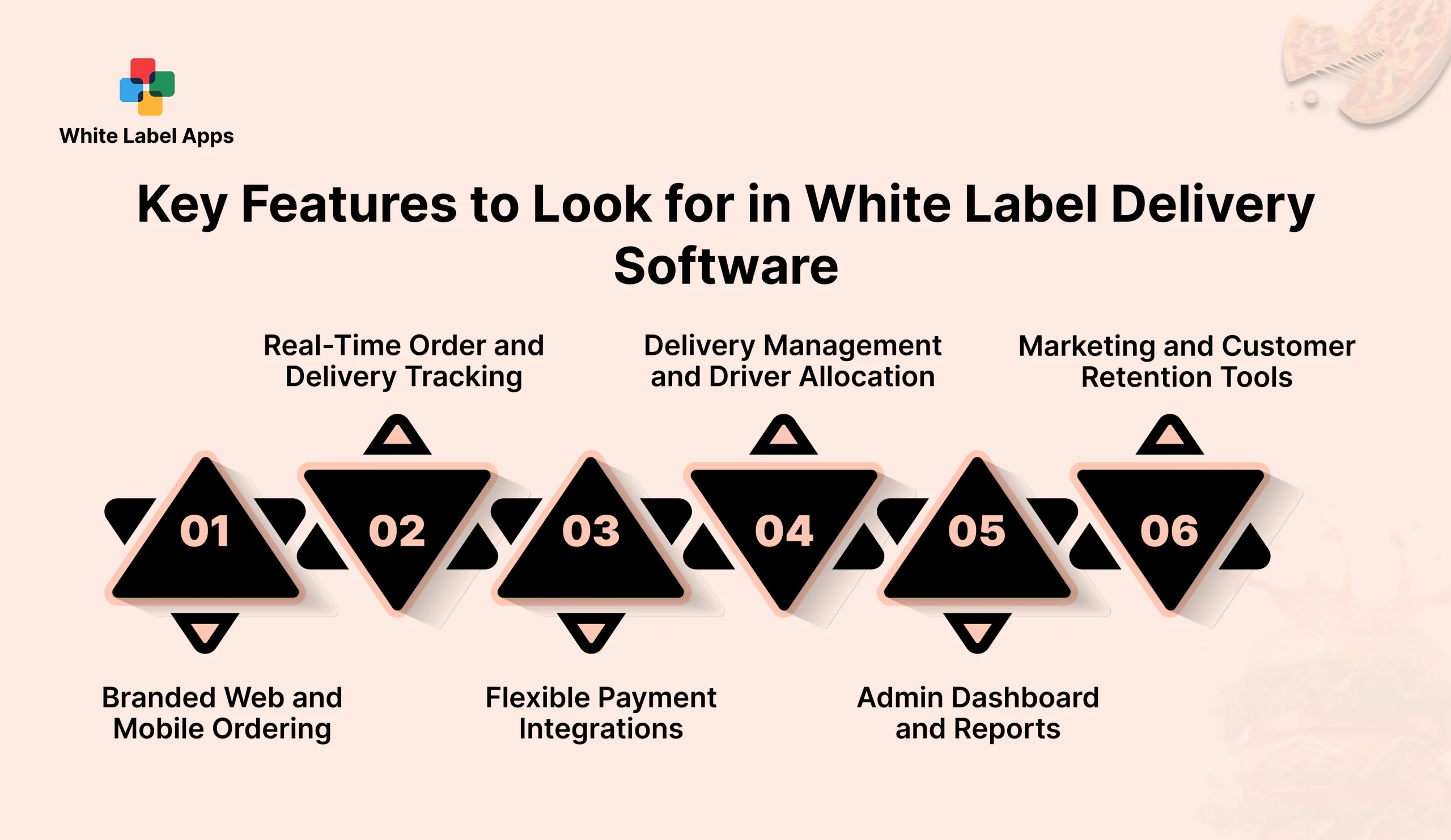
Not every delivery system works the same way. The right features decide how smooth daily operations feel, how customers experience ordering, and how easily your business can grow without constant technical trouble.
- Branded Web and Mobile Ordering
Branded web and mobile ordering lets customers order directly from your business without confusion. Your colors, logo, and style stay consistent, making ordering feel familiar, simple, and trustworthy across phones, tablets, and desktop screens everywhere.
This feature reduces dependence on third-party apps and builds stronger brand memory. Customers return more often when the experience feels smooth, personal, and easy to use, instead of crowded marketplaces filled with competing options.
- Real-Time Order and Delivery Tracking
Real-time order and delivery tracking keeps customers calm and informed after checkout. Seeing live updates reduces anxiety, cuts support calls, and builds confidence that their order is moving forward without unnecessary delays today.
For businesses, tracking improves coordination between staff and drivers. Everyone knows the order status, pickup timing, and delivery progress, which lowers mistakes, speeds service, and creates a more reliable experience during busy hours each day.
- Flexible Payment Integrations
Flexible payment integrations let customers pay the way they prefer, whether by cards, wallets, or local methods. Fewer payment barriers mean fewer drop-offs and higher chances of completing orders successfully every time easily today.
For businesses, direct payments improve cash flow and clarity. Money reaches your account faster without extra cuts. This transparency helps with planning, accounting, and understanding real performance without platform interference issues or delays later on.
- Delivery Management and Driver Allocation
Delivery management tools help businesses assign orders clearly and quickly. Zones, distance rules, and timing controls reduce confusion. Drivers know where to go, and customers receive orders faster with fewer mistakes during busy peak hours.
This structure supports both in-house drivers and third-party partners. Businesses stay flexible as demand changes. Clear delivery flows improve reliability and protect customer trust when volumes increase unexpectedly too often during growth seasons.
- Admin Dashboard and Reports
An admin dashboard gives owners a clear view of daily activity. Orders, revenue, peak hours, and popular items appear in one place, helping businesses understand performance without digging through complicated systems or confusing spreadsheets manually.
Reports help spot trends early and fix problems faster. When data feels simple, decisions feel easier. Owners gain confidence and control instead of guessing what is actually working inside the business every single day now.
- Marketing and Customer Retention Tools
Marketing equipment within the software program helps organizations continue to be linked with customers. Promo codes, offers, and loyalty rewards inspire repeat orders and make clients feel valued, without relying on exterior advertising systems or pricey outdoor agencies.
Retention features work quietly over time. Small reminders and rewards build habits. When customers return often, growth feels steadier and less stressful than chasing new users every day through constant ads and discounts everywhere.
Also Read: Brief Guide For White Label Delivery App for Food Businesses
Industries That Benefit Most from White Label Delivery Software
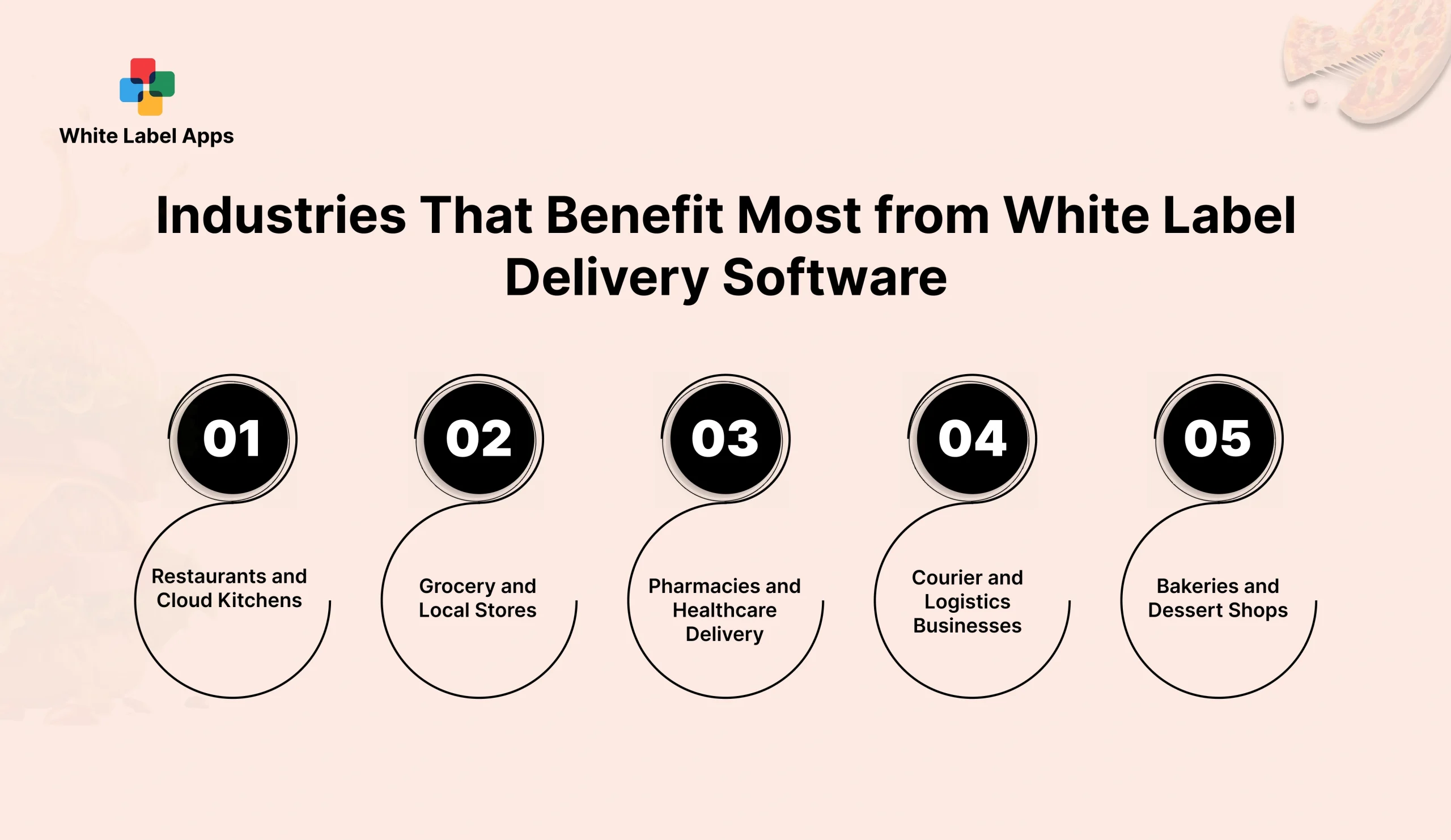
Different industries face different delivery challenges. Some need speed; others need control or trust. White-label delivery software adapts well across sectors where ownership, branding, and smooth delivery truly matter.
- Restaurants and Cloud Kitchens
Restaurants and cloud kitchens count closely on transport for day-to-day sales. A white-label transport software program helps them take orders directly, decrease fee losses, and maintain full management over menus, pricing, and patron experience.
Cloud kitchens have a special advantage because transport is their primary channel. A branded device helps them stand out, manipulate more than one manufacturer easily, and construct loyal clients, besides relying on crowded third-party marketplaces.
Example – Domino’s Pizza runs delivery almost entirely through its own website and app. Customers order, track drivers, and get updates under the Domino’s brand, helping the company avoid third-party dependency and protect margins.
- Grocery and Local Stores
Grocery and local stores use delivery to stay competitive with bigger chains. White-label delivery software lets them offer online ordering while keeping their local identity strong and familiar.
Customers often trust nearby stores more for daily needs. A branded delivery system feels personal, helping shoppers return regularly instead of switching between large apps and unfamiliar sellers.
Example – Walmart Grocery uses its own branded ordering and delivery experience. Customers place orders directly with Walmart, schedule delivery slots, and track orders without feeling routed through an external marketplace.
- Pharmacies and Healthcare Delivery
Pharmacies need accuracy, privacy, and trust when handling orders. White-label delivery software supports secure ordering under the pharmacy’s own brand, which feels safer for customers ordering medicines regularly.
Clear order tracking and direct communication reduce confusion. Patients know when medicines will arrive, and pharmacies avoid repeated calls asking for updates or changes.
Example – CVS Pharmacy allows customers to order prescriptions and health products through its own app. Delivery updates, refills, and communication stay within the CVS ecosystem, which builds trust and protects patient data.
- Courier and Logistics Businesses
Courier and logistics businesses need clear tracking and smooth coordination. A white-label shipping software program helps manipulate pickups, drop-offs, and routes under its own expert company identity.
Real-time updates keep consumers knowledgeable and decrease delays. Drivers observe clear instructions, whilst corporations reveal development except for steady guide follow-ups or confusion during busy schedules.
Example – FedEx operates its own branded tracking and delivery management system. Customers book shipments, track packages, and receive notifications directly from FedEx, not through third-party tools.
- Bakeries and Dessert Shops
Restaurants, cloud kitchens, and bakeries depend heavily on repeat orders and timing. White label delivery software lets them own ordering, avoid commissions, manage menus freely, and build direct customer relationships without relying on third-party apps.
Groceries, pharmacies, and liquor shops deal with frequent, need-based purchases. A white-label transport software program helps with scheduled delivery, records privacy, and provides branded tracking and neighborhood trust, supporting clients reordering necessities effortlessly while companies remain compliant and predictable.
Example – Nothing Bundt Cakes accepts online orders through its own branded system. Customers schedule pickups or deliveries for events, keeping the experience personal and repeat-friendly without aggregator pressure.
Benefits of Using White Label Delivery Software for Business Owners
Once businesses understand where white-label delivery software fits, the real value becomes clearer. These benefits show how daily operations, profits, and customer relationships improve when delivery stays fully under your control.
- Stronger Brand Identity: White-label delivery software keeps your brand visible at every step, from ordering to delivery updates. Customers remember your name, colors, and service quality, not a third-party app. This repeated exposure builds familiarity and trust, making your business feel reliable. Over time, strong brand recall helps customers choose you first without comparing multiple platforms again.
- Higher Repeat Orders: When customers order directly through your system, the experience feels smoother and more personal. Saved details, familiar layouts, and direct communication reduce effort. This comfort encourages people to come back without thinking much. Over time, repeat orders grow naturally because customers trust the process and know exactly what to expect from your business.
- Predictable Monthly Costs: White-label delivery software usually follows clear pricing instead of per-order commissions. This helps business owners plan expenses without surprises. Busy days no longer mean higher platform cuts. Predictable costs reduce stress, simplify budgeting, and make profit tracking easier. Owners can focus on growth instead of constantly worrying about fees eating into revenue.
- Scalable Operations: As orders increase, white-label delivery software grows with the business. Adding new locations, delivery zones, or menu items feels manageable. Systems stay organized even during peak demand. This scalability helps owners expand confidently, knowing operations won’t break under pressure. Growth feels controlled, steady, and far less chaotic than sudden platform dependency.
- No commissions: Commission fees quietly cut into every order, even when sales look strong. With white-label delivery software, you avoid per-order charges and pay a fixed cost instead. That means more money stays with your business, margins feel healthier, and growth does not punish you financially as volume rises over time naturally.
White-label delivery software puts control back where it belongs. When branding, costs, and growth stay in your hands, businesses build stronger loyalty, healthier margins, and delivery systems that truly support long-term success.
Read Also: Food Delivery App Business Models: A Founder’s Guide
Challenges and Limitations of White Label Delivery Software
While a white-label delivery software brings freedom and control, it additionally comes with actual challenges. Understanding these limits early helps organizations get together better, keep away from frustration, and set sensible expectations from the start.
- Initial Setup and Customization
Setting up white-label delivery software takes planning and patience. Menus, pricing, delivery zones, branding, and workflows must be configured carefully to avoid confusion once customers start placing real orders.
Customization can feel overwhelming at first, especially for non-technical owners. Small design choices, wording, and flow decisions matter because they directly affect how customers experience ordering and trust the system.
- Marketing Responsibility Shifts to You
Without third-party platforms, corporations have to appeal to clients on their own. Traffic does not show up automatically, which can feel volatile for proprietors used to built-in visibility from aggregator apps.
Marketing now consists of social media, search, offers, and direct communication. This requires time, learning, and once in a while a budget, specifically in the establishing when consciousness is nonetheless low.
- Ongoing Software Management
White-label delivery software needs regular attention to run smoothly. Updates, feature checks, and small fixes are part of keeping the system reliable for staff and customers alike.
If support is slow or unclear, small problems can grow fast. That’s why choosing a provider with responsive help matters more than flashy features alone.
White-label delivery software works best when businesses plan, stay patient, and commit to learning. With the right mindset and support, those early challenges turn into long-term control, stability, and stronger customer relationships over time.
How to Choose the Right White Label Delivery Software?
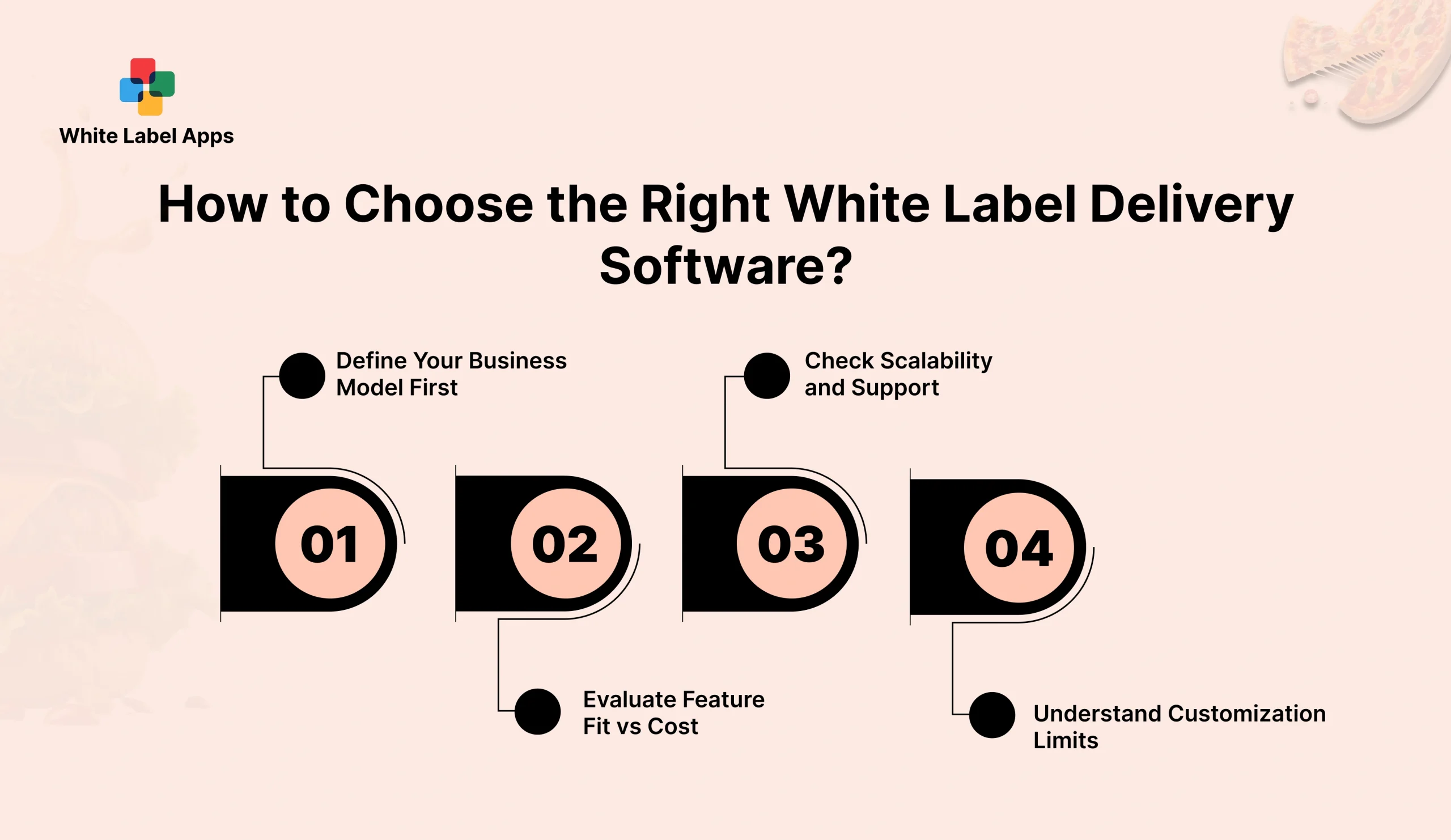
Choosing the right white-label delivery software decides how smoothly your business runs later. A choice reduces stress, saves money, and ensures the system supports growth instead of limiting progress.
- Define Your Business Model First
Before picking any software, businesses must understand their delivery model clearly. Order volume, delivery distance, product type, and staffing affect which system works best and which features matter daily. Skipping this clarity often leads to wrong choices later on projects.
When goals feel clear, comparing options becomes easier and faster. Businesses avoid paying for tools they never use and select software that actually fits operations, budget, and growth plans comfortably without constant changes or painful adjustments later during expansion phases.
- Evaluate Feature Fit vs Cost
More features do not always mean better value. Some businesses pay extra for advanced tools they rarely touch, which increases cost without improving daily delivery operations or customer experience in meaningful ways over time for small growing teams, especially early on.
Evaluating feature fit means focusing on what helps today. Ordering flow, payments, delivery tracking, and reports usually matter most. Anything beyond that should justify its cost clearly based on business size and realistic growth expectations over the next few years.
- Check Scalability and Support
A delivery system must handle growth without breaking workflows. As orders increase, the software should manage higher volume, more locations, and new drivers smoothly without slowing performance or creating confusion for staff and customers during busy peak hours everywhere consistently.
Support quality matters when issues appear unexpectedly. Fast responses, clear guidance, and helpful fixes prevent small problems from turning into service disruptions that hurt customer trust and revenue, especially during launches or high-demand periods when pressure feels highest internally.
- Understand Customization Limits
Not all white-label delivery software allows full customization. Some systems limit layout changes, workflows, or features, which can restrict how closely the platform matches your brand vision and long-term customer experience goals for growing competitive markets today onward.
Understanding limits early avoids frustration later. Businesses should ask what can be changed, what stays fixed, and how future needs are handled before signing any agreement so expectations remain realistic and planning stays smooth as operations expand gradually over time.
The right white-label delivery software feels supportive, not stressful. When choices match goals, features, and growth plans, businesses move forward with confidence, smoother operations, and fewer surprises waiting later.
Conclusion
White-label delivery software is not just a technical switch. It’s a mindset change for businesses that want control, clarity, and long-term stability. Instead of sharing margins and customer relationships with third-party platforms, brands build something they truly own. Orders, data, pricing, and delivery rules stay in one place, shaped around real business needs.
The shift does take effort at the start. Setup, marketing, and management require attention. But over time, that effort turns into freedom. Businesses gain predictable costs, stronger branding, and customers who return directly, not through a middleman.
For restaurants, stores, pharmacies, and delivery brands thinking beyond quick wins, white-label delivery software creates a solid foundation. It supports steady growth, healthier profits, and a delivery experience that feels yours, not borrowed.
FAQ’s
1. What is white-label delivery software used for?
White-label delivery software is used by businesses that want to manage online ordering and delivery under their own brand. It helps handle orders, payments, delivery tracking, and customer communication without relying on third-party marketplaces. This setup gives businesses more control, better margins, and direct customer relationships over time.
2. Is white-label delivery software better than third-party apps?
It depends on goals. White-label delivery software is more effective for long-term brand building and profit control. Third-party apps help with fast exposure but take commission and limit ownership. Businesses focused on independence and repeat customers usually prefer white-label systems after some growth.
3. How much does white-label delivery software cost?
The cost varies based on features, scale, and provider. Many systems use monthly subscription pricing, while others offer one-time licenses or hybrid models. Final pricing depends on customization, support, and order volume. Compared to commission fees, long-term costs often feel lower.
4. Can small businesses use white-label delivery software?
Yes, small businesses can use white-label delivery software effectively. Many providers offer simple plans designed for single locations or low order volumes. It helps small brands build direct customer connections early and avoid future platform dependency as they grow steadily.
5. Does white-label delivery software support mobile apps?
Most modern white-label delivery software supports mobile-friendly ordering and often includes branded mobile apps. Customers can order from phones easily, track deliveries, and save details. Mobile access improves convenience and helps businesses reach customers wherever they are.

whitelabelapp
Related Articles

White Label Personal Training App Development: Launch Your Branded Fitness App Faster
Your day is full of small fitness tasks. A client asks for the plan again. Another forgets to pay. Someone says the video link is not opening. It all happens on WhatsApp, notes, and screenshots, and it gets messy fast. A white label personal training app helps you put workouts, check-ins, payments, and progress in […]
Read More
Top 15 White Label Reseller Programs That Deliver Big Profits in 2026
If you have ever tried reselling services, you know the truth. The pitch is easy. Delivery is where most resellers bleed time and profit. That is why this list is not based on “popular names” or random directories. We did deep research before writing this blog. We reviewed reseller program pages, service menus, white label […]
Read More