

Online betting looks easy, until real money hits the wallet. One stuck withdrawal, one wrong odd update, and your support inbox blows up. That is why many teams pick a white label sports betting app instead of building every screen from scratch.
The market is also moving fast. As per reports, the global online gambling market was about $78.66B in 2024 and projects it to reach $153.57B by 2030. That kind of growth pulls in new operators, and competition gets tight.
We have seen the messy part up close while shipping products through white label app development. The hard work is not the demo. It is KYC flow, payment edge cases, fraud triggers, admin control, and smooth updates during big match hours. In this guide, you will learn what a white label sports betting app is, what features matter, what compliance basics to plan for, how monetization works, and how to choose the right partner.
TL;DR
- A white label sports betting app helps you launch faster than a custom build.
- Strong sports betting app features decide trust, retention, and reviews.
- The player side needs smooth login, odds, wallet, and live updates.
- The admin side needs risk controls, reports, and clean payment tracking.
- Security, KYC, and compliance are non-negotiable in sports betting apps.
Key Points
- A white label sports betting app is a ready-made platform you brand and configure for your market.
- White label app development helps teams reduce build time, while still keeping control over setup and operations.
- High-traffic moments during live matches test the real quality of a sports betting app, not the demo.
- Core sports betting app features include fast odds refresh, clean wallet flow, and clear bet status updates.
- Player panel basics like registration, multi-currency, and multi-lingual support reduce drop-offs and support load.
- Admin panel tools like user management, analytics, and risk rules help you run safer and smoother operations.
- Security measures like KYC, AML checks, SSL, and fraud systems protect payouts, data, and platform trust.
- Your sports betting app development cost depends heavily on integrations, compliance, and post-launch support, not just screens.
What Is A White Label Sports Betting App?
A white label sports betting app is a ready-made betting app you can launch under your own brand. You get the core product already built, then you change the logo, colors, and name. Think of it like buying a furnished house, then painting the walls to match your taste. You move in faster, and you avoid months of construction noise.
In simple words, a sports betting app lets users place bets on matches, see odds, and track results in one place. It also comes with the boring but important parts, like user accounts, payments, and basic reporting. Many solutions also include KYC checks and anti-fraud controls, because betting is not a “launch and chill” space. One gap in security can hurt trust fast.
The big difference vs a custom build is time and effort. With custom, you start from a blank page and every screen takes longer. With a white label sports betting app, your job shifts to setup, legal compliance, and smooth operations after launch. That is where most teams win or lose.
Benefits Of Investing In A White Label Sports Betting App
A white label sports betting app helps you enter the market faster, without starting from zero. You focus on branding, setup, and operations, not months of core build work. For many teams, that speed matters more than fancy add-ons. It also reduces early risk, because the base product is already tested in real use.
A well-built sports betting app can support high traffic during live matches. That is when real money moves fast, and users get impatient in seconds. If the checkout or odds screen lags, they leave. With a white label route, you can spend your time on performance checks, support, and smooth onboarding.
It also gives you more control than listing on third-party platforms. You can run your own offers, set your own UX flow, and track what users actually do. Over time, that data helps you improve retention, upsells, and safer betting limits. And yes, it can lower the overall sports betting app development cost, because the heavy lifting is already done.
If your goal is to create sports betting app experiences under your brand, the white label model is a practical shortcut. But it is not a magic button. You still need strong compliance, secure payments, and a clear plan for updates after launch.
Essential Features Of A White Label Sports Betting App
A white label sports betting app looks simple on the surface. Pick a match, pick a bet, pay, and wait for the result. But the real quality shows up in the small things, like how fast odds refresh, how smooth login feels, and how clean the wallet flow is. These are the sports betting app features that decide if users trust you, or uninstall in one bad session.
You also need the right split between the player side and the admin side. Players want speed, clarity, and quick payouts. Admins need control, reporting, and risk limits that are easy to use. When a sports betting app development company builds this well, the platform feels steady even during peak hours.
In the next sections, we will break features into three parts, Player Panel, Admin Panel, and Security and fraud control. This structure also helps when you talk to sports betting app developers or compare vendors. It keeps the scope clean, and avoids last-minute surprises.
1. Player Panel Features
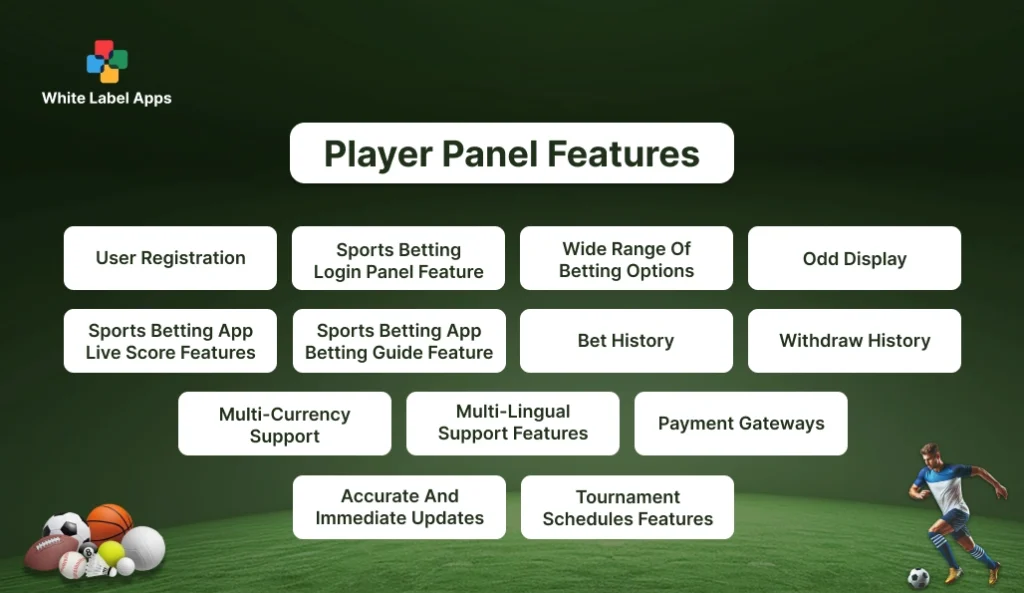
The player side is where trust gets built, or lost. If the app feels slow, confusing, or “too many taps,” users drop off fast. Strong sports betting app features keep the flow simple, but still safe. Below are the key player panel features most sports betting mobile apps need.
- User Registration
This is the first door. Keep it short, clear, and quick, with basic details and clean validation. A sports betting app should also guide the user on age rules and basic terms before they place a bet.
- Sports Betting Login Panel Feature
Login should be stable on weak networks too. Add OTP, email login, or social sign-in options, based on your market. This is a core part of sports betting mobile app development, because login issues create support tickets in minutes.
- Wide Range Of Betting Options
Users expect multiple sports, leagues, and bet types. This includes pre-match bets and live bets during ongoing games. When you create sports betting app experiences, variety keeps users active without pushing them to other apps.
- Odd Display
Odds must refresh fast and stay readable. Show clear formats, and avoid clutter on small screens. A white label sports betting app should also explain odd changes, so users do not feel cheated.
- Sports Betting App Live Score Features
Live scores help users stay inside the app instead of jumping to Google. It increases time spent, and improves the betting mood. Many sports betting apps also show match stats, like wickets, fouls, or possession, based on the sport.
- Sports Betting App Betting Guide Feature
New users feel lost at first. A small guide helps them understand bet types, odds, and rules in simple language. It reduces refunds, disputes, and angry chats, which is good for long-term retention.
- Bet History
Users want to see what they placed, when they placed it, and what happened next. Bet history should show status clearly, pending, won, lost, or void. It is also a support tool when users raise tickets.
- Withdraw History
Withdrawals are the “money moment.” Show timestamps, amounts, method used, and processing status. In a sports betting app, this improves trust because users can track payouts without calling support.
- Multi-Currency Support
If you target more than one region, multi-currency becomes important. Users should see balances and bets in their currency without mental math. Many sports betting mobile apps also support auto currency conversion rules in the wallet.
- Multi-Lingual Support Features
Language is not a nice add-on. It decides if users understand rules, warnings, and payout terms. A white label sports betting app with multi-language support can expand faster across regions.
- Payment Gateways
Deposits should be quick and reliable, with clear success and failure screens. Support cards, wallets, and local payment methods where needed. This is one area where a sports betting app development company must be careful, because payment issues hit revenue first.
- Accurate And Immediate Updates
Users should get instant updates on bet status, match events, and wallet changes. Use push notifications, in-app alerts, and clean status labels. A delay of even a minute during live betting can cause disputes.
- Tournament Schedules Features
Schedules help users plan bets early. Show upcoming matches, timings, and tournament stages in a simple list. This reduces drop-offs and keeps users returning, even on non-match days.
2. Admin Panel Features
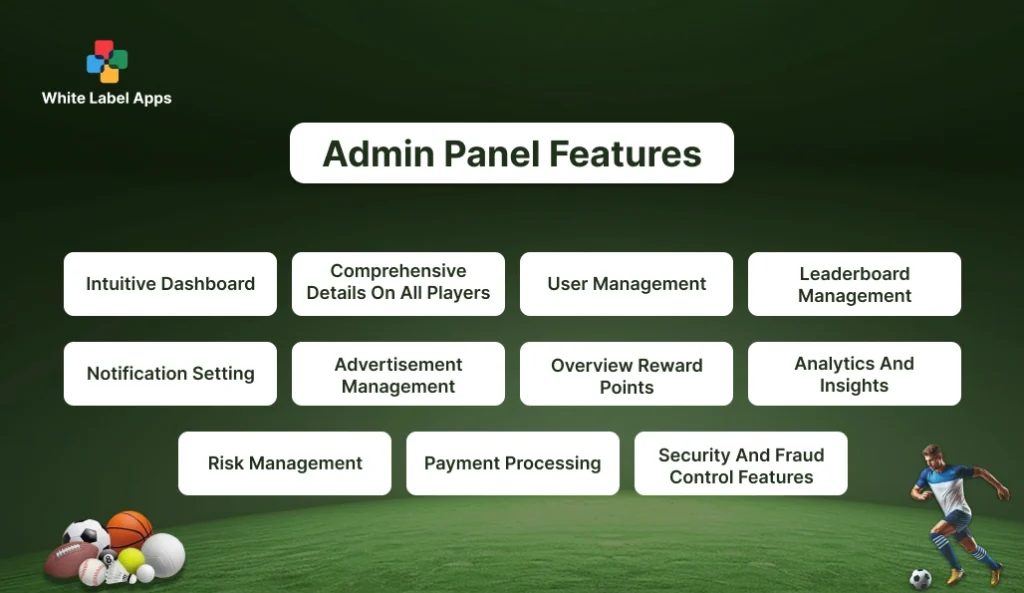
The admin side is the control room. If it is messy, your team will struggle during live matches. A strong white label sports betting app should give you clear controls, not ten confusing menus. This is also where a good sports betting app development company proves its value, because small admin gaps create big money problems later.
- Intuitive Dashboard
This is your home screen. It should show active users, live bets, deposits, withdrawals, and alerts in one view. During peak hours, you should be able to spot issues in 10 seconds.
- Comprehensive Details On All Players
You need a full profile for each user, KYC status, wallet activity, bet history, and device or login patterns. This helps resolve disputes faster. It also helps flag risky behaviour before it becomes fraud.
- User Management
Admins should be able to suspend, unblock, or verify users with clear reasons logged. You also need tools to handle self-exclusion and limits. These controls matter for safer operations in any sports betting app.
- Leaderboard Management
Leaderboards can push repeat betting, but they can also be games. Admins should be able to set rules, reset periods, and remove suspicious entries. When done right, it boosts engagement without hurting trust.
- Notification Setting
Admins should control what alerts go out, match reminders, odds changes, wallet updates, and promo messages. Timing matters. Too many notifications feel spammy, and users mute the app.
- Advertisement Management
If you run in-app ads or banners, you need control over placement and schedules. Admins should be able to pause ads during sensitive moments, like payout delays. This keeps the app from looking greedy when the support load is high.
- Overview Reward Points
Rewards help users stay active, but the rules must be clear. Admins should set point logic, expiry, and redemption limits. In a white label sports betting app, this also supports retention without heavy discounts.
- Analytics And Insights
You need reports on active users, bet volume, sport-wise trends, drop-offs, and revenue. Good analytics help you decide what to improve next. This is also useful when planning sports betting app development upgrades.
- Risk Management
This is a must-have. Set limits, flag unusual bets, track bonus abuse, and manage high-risk accounts. Many issues in sports betting apps start small, then spike during big matches.
- Payment Processing
Admins must track deposits, withdrawals, failed transactions, and chargebacks. You should also see gateway-wise performance. Clean payment controls reduce support tickets and protect cash flow.
- Security And Fraud Control Features
Security is not a “nice extra” in a white label sports betting app. It is the base layer. One weak flow can invite fake accounts, bonus abuse, and payment fraud. And once users doubt payouts, they leave, even if your UI looks perfect.
At minimum, your platform should support KYC checks, device and IP risk signals, and strong login protection. You also need transaction monitoring for unusual deposits, fast withdrawals, and repeated failed payment attempts. A reliable sports betting app development company builds these controls in a way your admin team can actually use, without digging through logs all day.
Fraud control also includes simple rules, like bet limits, cooldowns, and manual review triggers for risky patterns. Add clear audit trails, so every block, payout hold, or user suspension has a reason attached. This keeps support clean and helps you stay compliant when regulators ask questions.
Security Measures For White Label Sports Betting App
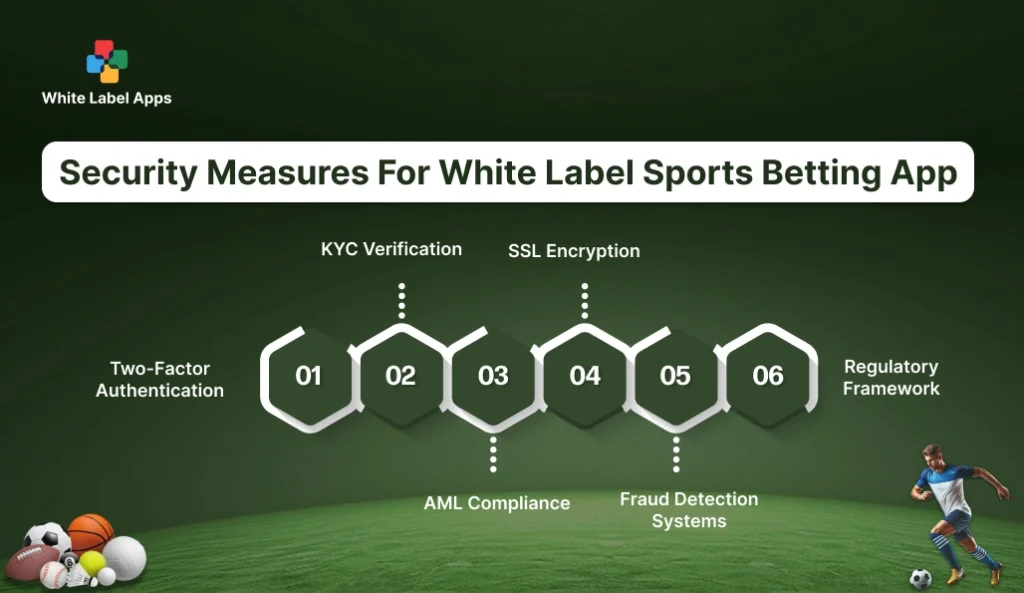
Security is where a white label sports betting app either earns trust or loses it. People are placing real money bets, so even one weak link can become a daily problem. A good sports betting app protects logins, payments, and user data from day one.
1. Two-Factor Authentication
Two-factor authentication adds a second lock after the password. The user logs in, then confirms with an OTP or an app code. It cuts down account takeovers in sports betting apps, especially when users reuse passwords.
2. KYC Verification
KYC checks confirm the user is real and meets age rules. It usually includes ID upload, selfie checks, and basic address verification. In a sports betting app, KYC also helps reduce chargebacks and fake wallet activity.
3. AML Compliance
AML rules help you spot and stop suspicious money movement. This includes unusual deposit patterns, fast withdrawals, and repeat transactions that do not match normal play. A serious white label sports betting app should support monitoring and clear reporting trails.
4. SSL Encryption
SSL encryption protects data while it moves between the phone and the server. It keeps logins, card details, and personal info safer during transfer. Without SSL, users are exposed on public Wi-Fi, which is common in real life.
5. Fraud Detection Systems
Fraud systems watch behaviour, not just payments. They can flag bot signups, bonus abuse, risky devices, and strange betting spikes during live matches. This is a core part of stable sports betting app development, because manual checks do not scale.
6. Regulatory Framework
Rules change by country and sometimes by state. A white label sports betting app should support geo-blocking, responsible gambling tools, and record keeping. This makes it easier to stay legal and avoid sudden shutdowns.
What Types Of Betting Games Can You Launch With A White Label Solution?

A white label sports betting app can cover many games from day one, like golf, casino, and more. You can offer pre-match bets and live bets, based on the sport and the feed you choose. Some platforms also add esports, racing, and small tournaments to keep users active between big matches. The key is to start with 5 to 7 sports your audience already bets on, then expand in phases.
White Label Golf Betting App
A white label golf betting app works best for tournament betting and player performance markets. Golf is slower than most sports, so users spend more time comparing odds and stats. You can offer bets on winners, top finishes, and head-to-head player matchups. It also fits well with live betting on each round, if your odds feed updates fast and clean.
- Tournament Winner. Bet on who lifts the trophy at the end.
- Top Finish Bets. Pick Top 5, Top 10, or Top 20 players.
- Head-To-Head. Compare two golfers and bet on who ranks higher.
- Round Betting. Bet on round leaders and key round outcomes.
White Label Horse Racing Betting App
A white label horse racing betting app is built for quick bets and fast results. Races come in short bursts, so speed matters more than fancy screens. Users want clear race cards, odds, and a smooth wallet flow. You also need solid time handling, because race schedules change and users bet close to start time. If payouts feel slow, trust drops fast.
- Race Cards. Show runners, jockeys, and key race details.
- Win And Place. Simple bets that most users understand quickly.
- Exacta And Trifecta. Pick the correct top finish order for higher risk.
- Fast Cashout View. Clear status and payout timeline after the race.
White Label Esports Betting App
A white label esports betting app is for users who follow teams daily, not only on weekends. Matches run across many games and leagues, so the app needs strong filtering and match discovery. Live betting is a big part here, because rounds change fast. Clear odds updates and real-time match data are critical. Add a simple betting guide, because new users get confused by formats.
- Match Winner Bets. Bet on which team wins the match.
- Map Or Round Bets. Bet on a single map or round result.
- Player Props. Kills, assists, or other in-game performance bets.
- League Filters. Sort by game title, league, and match time.
White Label Soccer Betting App
A white label soccer betting app is usually the first sport to launch because demand is steady all year. Users expect pre-match and live bets, plus fast score updates. Soccer also has many betting markets, so you need clean grouping to avoid clutter. The player flow should stay simple, pick match, pick market, confirm bet, and track status without confusion.
- Match Result. Home win, draw, or away win in one tap.
- Goals Markets. Over or under goals, and both teams to score.
- Corners And Cards. Extra markets that keep users engaged live.
- Live Score View. Fast match updates with key events in-app.
White Label Football Betting App
A white label football betting app can cover American football or local football leagues, depending on your region. It works well because there are many moments to bet on, quarters, drives, and key plays. But it also means more odds updates and more data. Your live betting screen must stay stable, even when users refresh fast during big plays. Clear bet slips reduce mistakes.
- Spread Bets. Bet on the margin, not only the winner.
- Totals Bets. Over or under total points in the game.
- Quarter Markets. Bets based on a quarter outcome or points.
- Player Props. Touchdowns, yards, or other player performance bets.
White Label Casino Betting App
A white label casino betting app is a different beast. It runs all day, and users expect instant gameplay, not match schedules. So you need strong wallet controls, clear limits, and responsible gaming tools. Casino content also needs careful compliance checks in many regions. Start with a small set of popular games, then expand once payouts, support, and fraud controls are running smoothly.
- Slots. Fast rounds and high repeat play in short sessions.
- Table Games. Blackjack, roulette, and similar classic formats.
- Live Dealer. Real-time streams with real players and dealers.
- Responsible Limits. Deposit limits, cool-off, and self-exclusion options.
Cost To Build White Label Sports Betting App
A basic white label sports betting app setup often starts around $5,000 to $15,000, and can go up to $50,000+ when you add deeper custom work and more integrations.
The cost depends less on “how many screens” and more on what sits around the app. Betting apps need strong payments, KYC, fraud checks, admin controls, and logs. These are not optional extras. They shape the real sports betting app development cost.
A big cost driver is setup work. Branding, changing the user interface, setting up the sportsbook, getting odds feeds, adding payment gateways, supporting different languages, and following state or country rules all take more time. If you want to launch faster, keep custom changes to a minimum and ship stable core flows first. Many teams launch a simple version, then improve it in phases.
Support and updates also affect the budget. Live betting means you will face bugs, edge cases, and peak traffic moments. So ask what post-launch support is included, how fast fixes happen, and how updates are priced. This is where a good sports betting app development company can save you from surprise bills.
One more thing, do not ignore compliance costs. Licences, legal review, KYC vendors, payment provider fees, and audits can sit outside the build cost. If you plan these early, your total budget feels controlled instead of chaotic.
| Package Level | Best For | Typical Cost Range (USD) | Typical Timeline |
| Basic White Label Setup | MVP launch in 1 market | $5,000–$15,000 | 2–4 weeks |
| Standard Launch | Steady live ops | $15,000–$35,000 | 4–8 weeks |
| Advanced Custom | Growth + multiple rules | $35,000–$75,000 | 8–14 weeks |
| Enterprise Grade | Large scale + strict compliance | $75,000–$150,000+ | 3–6 months |
Future Trends In White Label Sports Betting App
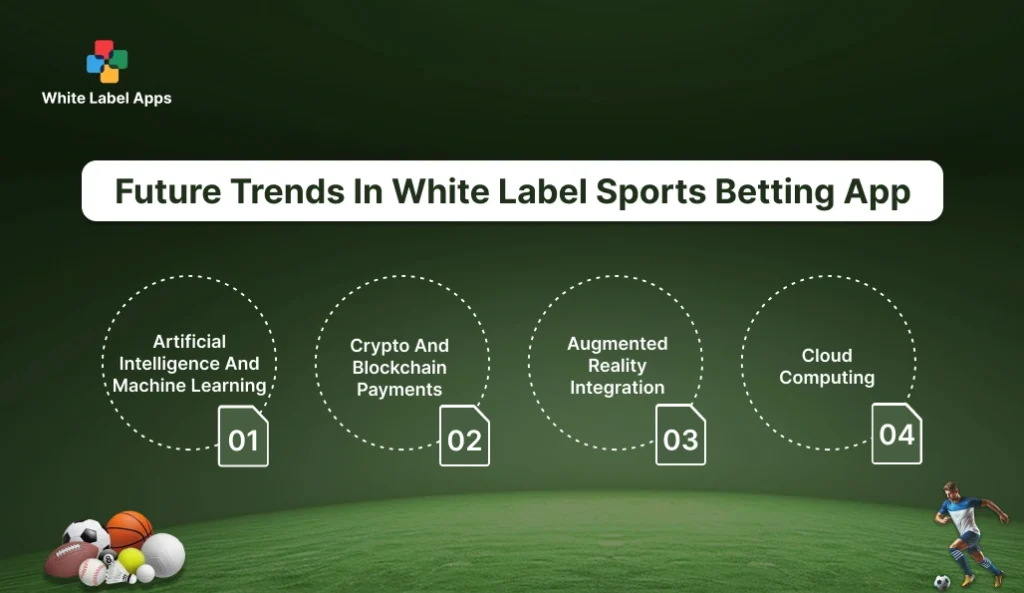
Trends move fast in betting. So your white label sports betting app should be built like a system you can update, not a one-time launch. What looks “new” today becomes a basic expectation in a year or two. If your platform cannot evolve, you will keep patching it, and that gets expensive.
1. Artificial Intelligence And Machine Learning
AI is showing up in two places first, personalisation and fraud checks. A smarter sports betting app can flag risky patterns, like bot signups, bonus abuse, and unusual betting spikes. It can also help operators understand what sports and bet types drive repeat usage. Still, keep rules transparent, because users hate “mystery decisions” around limits and payouts.
2. Crypto And Blockchain Payments
Some operators are adding crypto options for faster deposits and withdrawals. But it is not a plug-and-play move. If you plan a crypto sports betting app, your KYC and AML flow needs to be tight, plus clear wallet monitoring and risk rules. If compliance is weak, payments become the biggest headache.
3. Augmented Reality Integration
AR is still early, but it is getting more common in fan experiences. In betting, AR can mean overlays like live odds, match stats, or quick bet prompts while a user watches a game. Keep it optional and clean. If it feels distracting or pushy, users drop off.
4. Cloud Computing
Cloud helps handle traffic spikes during big matches and tournaments. It also makes updates easier, especially when you operate across regions with different rules. For sports betting app development, cloud is also useful for monitoring, alerts, and quick rollbacks when something breaks. The simple goal is uptime, speed, and controlled change.
Monetization Strategies For White Label Sports Betting App
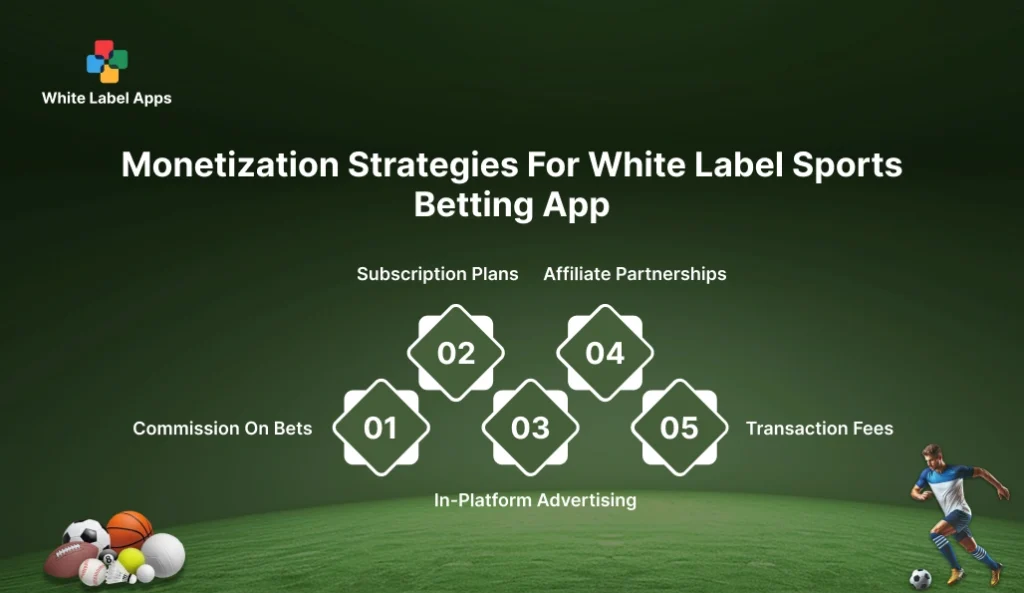
Monetization is not only “how to earn.” It is also how to earn without breaking trust. A white label sports betting app that feels greedy will lose users fast. Keep charges clear, keep terms simple, and show numbers before users tap confirm. That is how sports betting apps stay steady over time.
1. Commission On Bets
This is the most common model. You get a small cut from each bet, which is usually included in the odds or the bet fee. Being consistent is the key. If users feel charges change randomly, they complain and stop using the sports betting app.
2. Subscription Plans
Subscriptions work when you offer real value. Think premium analytics, faster withdrawals, higher limits, or ad-free experience. But be careful. If core features are locked behind a paywall, new users will not even start.
3. In-Platform Advertising
Ads can work, but only if they do not disturb betting flows. Use banners in safe zones, like home screens or content sections, not during checkout. You should also let admins pause ads in a white label sports betting app when payouts are late or support calls are high.
4. Affiliate Partnerships
You can make money by sending people to related services, such as streaming packages, sports merchandise, or partner platforms. Make sure it has something to do with the sport and what the user is interested in. If it looks like spam, it hurts trust in your sports betting app.
5. Transaction Fees
Some platforms charge a small fee for deposits and withdrawals. If you make it clear from the start and keep it predictable, this can work. The risk comes from hidden fees. Hidden fees lead to refund requests, chargebacks, and bad reviews, all of which are hard to fix later.
How To Choose The Best Partner For White Label Sports Betting App
A white label sports betting app can look perfect in a demo. The real test begins after the launch, when payments don’t go through, odds go up, or support tickets come in during a live match. So don’t pick a partner just because of screenshots. Choose the team that can run the boring parts well, because those decide uptime and trust.
1. Experience In Sports Betting App Development
Ask what they have shipped in betting or real-money apps. Betting has strict rules, high fraud risk, and heavy payment flows. A partner with real sports betting app development experience will talk about KYC, limits, reporting, and failure handling, not only UI.
2. A Proven Track Record
Request live examples, not only case studies. Check app stability, update frequency, and how bugs were handled. A reliable sports betting app development company should also share what went wrong in past projects and how they fixed it.
3. A Strong Team Of Developers And Designers
You need more than coders. You need product thinking, QA, security checks, and release support. Ask who your day-to-day contact is, and who handles testing. Good sports betting app developers will have a clear process for load testing and payment testing.
4. Competitive Pricing
Low pricing can hide future costs. Clarify what is included, setup, branding, payment integrations, KYC, admin controls, and post-launch fixes. Ask for a clean scope and what counts as “extra,” so your sports betting app development cost does not jump later.
5. Good Communication Skills
This sounds basic, but it saves projects. You want clear weekly updates, clear timelines, and clear ownership of tasks. If a partner avoids direct answers now, they will avoid them later too, when real issues show up.
Common Mistakes When Choosing A White Label Sports Betting App Development Partner
Most problems do not start after launch. They start on day one, when you pick the wrong partner. A white label sports betting app is a serious product, with real money, real rules, and real risk. So small “shortcuts” during selection can turn into months of pain later.
1. Not Doing Your Research
People skip due diligence because the demo looks smooth. But demos do not show payment failures, fraud attacks, or how support works at midnight. Check real client reviews, ask for live apps, and ask how they handle incidents. A reliable sports betting app development company will not avoid these questions.
2. Choosing The Cheapest Option
Cheap quotes often mean missing pieces. Testing, security hardening, and post-launch support may not be included. Then you pay extra later, and your sports betting app development cost quietly climbs. Price matters, but scope clarity matters more.
3. Not Considering The Long-Term
You are not buying an app, you are entering a market that keeps changing. Laws, payment rules, and user expectations shift. Your sports betting app development partner should have a roadmap mindset, regular updates, and clear upgrade paths. If they disappear after launch, you will be stuck with a product you cannot safely grow.
Conclusion
A white label sports betting app is a faster path to launch, but it still needs serious planning. If your login, payments, and fraud controls are weak, users will not stay. That is why picking the right features, player panel flow, and admin controls matters more than fancy screens.
Treat it like a long game. Keep your first release simple, then upgrade in phases with clear testing. And when you compare vendors, look for real sports betting app development experience, clean support terms, and a team that can handle match-day pressure.
If you want a steady build and clean rollout, WhiteLabelApps can ship sports betting apps that are secure, scalable, and easy to manage.
FAQs
1) Is it legal to run a white label sports betting app?
It may or may not be legal, depending on where you are. Different countries have different laws about betting, and the same is true for different states in the US. Before you can start, you usually need the right licenses, geo-restrictions, and compliance steps.
2) What features should I put at the top of my list for a white label sports betting app MVP?
Start with a login that works, odds that are easy to see, fast deposits and withdrawals from your wallet, and a simple betting process. Right away, add KYC and basic fraud controls. These will stop fake accounts and chargebacks from happening on your site.
3) How do sports betting apps handle payments?
Most apps let you add and take money out of your wallet through payment gateways and keep track of your wallet inside the app. You should also plan for failed payments, refunds, and a clear transaction history so that support can fix problems quickly.
4) How do I compare white label sports betting app development companies before I sign?
Don’t just ask for demos; ask for real apps. Find out what kind of support is available after the launch, how they deal with high traffic, and who owns the source code and data. Check the timelines, security measures, and what counts as “extra” work as well.
5) What is the biggest risk for a white label sports betting app after it goes live?
Trust issues and fraud. Users stop using the app if they have to wait too long for payouts, can’t log in, or don’t know what their bet status is. The platform stays stable because it has good monitoring, clear admin controls, and quick fixes.

whitelabelapp
Related Articles
White Label Personal Training App Development: Launch Your Branded Fitness App Faster
Your day is full of small fitness tasks. A client asks for the plan again. Another forgets to pay. Someone says the video link is not opening. It all happens on WhatsApp, notes, and screenshots, and it gets messy fast. A white label personal training app helps you put workouts, check-ins, payments, and progress in […]
Read More
Top 15 White Label Reseller Programs That Deliver Big Profits in 2026
If you have ever tried reselling services, you know the truth. The pitch is easy. Delivery is where most resellers bleed time and profit. That is why this list is not based on “popular names” or random directories. We did deep research before writing this blog. We reviewed reseller program pages, service menus, white label […]
Read More