
A startup can have a solid idea and still lose time. One delay becomes two. Then the budget starts shrinking. This is why many founders look at white label solutions early, not later.
New businesses also have a narrow first year. A report shows 1-year survival rates can vary a lot by location, and even the highest number it highlighted was 84.6%. That still means some businesses drop off fast.
Behind this blog is a team that has spent years building real products for real users, including white label app development work for brands that need speed and stability. The focus stays practical. Clear steps. Clean setup. Strong testing before launch. And steady support after launch, so the first month does not turn into daily firefighting.
This guide is written for startup owners who want a simple path. It explains what white label solutions are, how they work, and when they make sense over building from zero. It also covers risks, what to check before picking a provider, and how to stand out even with a ready base.
TL;DR
- White label solutions help startups launch faster without starting from zero.
- White label app development keeps early costs and timelines more predictable.
- It works best when speed, testing, and steady updates matter more than perfect control.
- The right provider makes setup, support, and scaling feel calmer.
- The wrong provider can create hidden costs, weak support, and brand look-alike risk.
Key Points
- White label solutions are ready products that you brand and set up for your own customers.
- White label app development is a practical choice when you want to test demand before spending big on a full build.
- A white label solution can reduce early launch issues because the core system has already been used and refined.
- A startup should choose the solution type based on its goal, budget, and how fast it needs real users.
- White label vs. custom software depends on timing, cost comfort, and how unique the product must be on day one.
- Industries like food, fitness, grocery, delivery, and local services use white label solutions to go live quickly and build repeat business.
- A clean step-by-step setup process helps avoid launch-week chaos and protects the brand experience.
- Common risks include limited changes, hidden fees, weak support, and unclear data control terms.
- A trustworthy provider offers clear pricing, real examples, strong support, and a written exit plan for data export.
- Startups can use white label solutions to scale, onboard clients faster, reduce team burnout, and open new revenue streams.
White Label Solutions: What They Are and How They Work?
Think of a startup that wants to launch fast. The idea is clear. The budget is tight. Time is tighter. That is where white label solutions can help.
In simple words, it is a ready-made product you can put your own name on. Like buying a plain notebook and printing your brand on the cover. The inside pages are already there. You just change the front, the colours, and the small details that matter to your customers.
Here is how it usually works. You pick a ready base that already does the main job. Then you set it up with your logo, name, and basic rules, like how people sign up and how orders or requests move. After that, you test it like a real customer would. You fix the small gaps. Then you launch.
The big win is speed. You do not start from zero. You start from “almost ready.” But it still needs care. If you rush the setup, users will feel it. If you pick the wrong partner, updates and support can get messy later.
So the idea is simple. Start with a ready base, make it yours, and launch with fewer surprises.
Read more : Top 10 White Label Online Ordering Platforms for Restaurants
Types of White Label Solutions
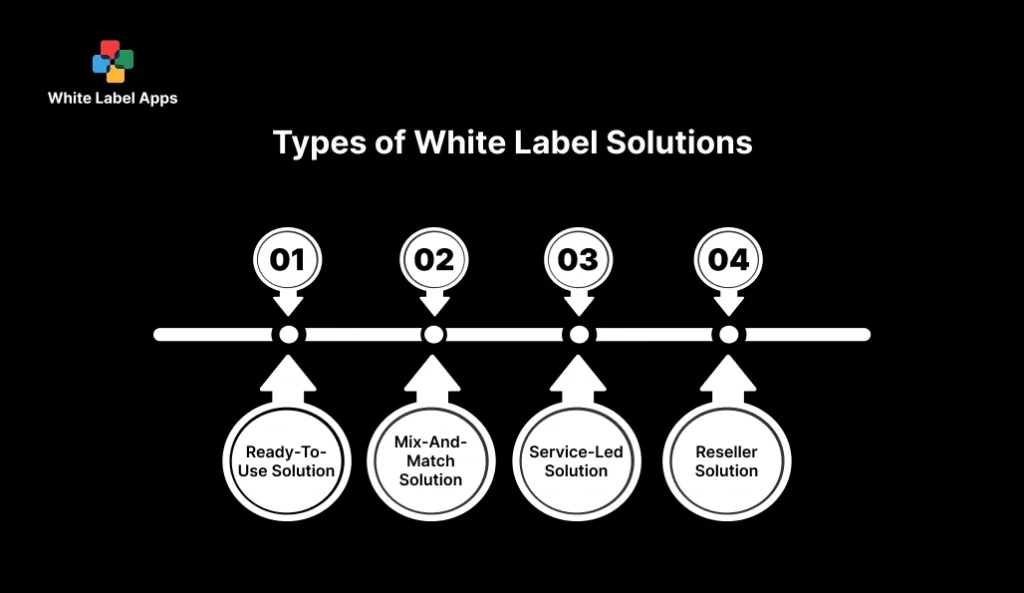
Startups do not fail only because the idea is bad. Many fail because the first version takes too long, costs too much, or breaks in simple use. That is why choosing the right type matters. With white label solutions, you can pick a ready base that matches your budget and timeline. Some options help you launch in a simple way. Others let you add parts as you grow. A few are made for agencies and resellers who want to sell the same setup to many clients.
- Ready-To-Use Solution: This is almost set from day one. You add your name, colours, prices, and basic rules. It is best when you want to launch fast and learn from real users.
- Mix-And-Match Solution: The main base stays the same, but you can turn parts on or off. You can start small, then add more as you grow. It is best when you know your plan, but want room to change.
- Service-Led Solution: You get the ready product plus help to set it up and run it. This matters when your team is small and you cannot handle support alone. It is best when you want fewer fires after launch.
- Reseller Solution: You sell the same ready product to many clients under your own brand. Your income comes from setup fees, monthly plans, and add-ons. It is best when you want a service business with repeat revenue.
Who Should Consider White Label Solutions?
If a startup has a clear idea but limited time, this option can be a smart move. White label solutions suit founders who want to test a market fast, without burning months on building from scratch. It also fits teams that are strong in sales or service, but do not have enough people to build and maintain a full product on their own. The key is simple. If speed, budget control, and a cleaner launch matter more than owning every tiny detail on day one, this path can work.
Here are common startup situations where it makes sense.
- A founder wants to launch the first version quickly and start getting real users.
- A small team wants a steady product instead of constant fixes and rework.
- An agency or reseller wants to sell the same setup to many clients under one brand.
- A local business wants to go digital without hiring a big in-house team.
- A startup wants to focus on marketing, support, and growth, not building everything from zero.
White Label vs. Custom Software
This is a common fork in the road. Do you buy something ready and make it yours. Or do you build everything from zero. Both can work, but they suit different startup stages.
With white label solutions, you start with a ready base. You change the name, look, and rules. You can launch sooner, and you usually know the cost upfront. The trade-off is simple. You may not get every tiny change exactly the way you imagined on day one.
With custom software, you build it your way from the start. You can shape every detail. But it takes more time, more money, and more planning. It also needs steady care after launch, or it can become messy fast.
| Factor | White Label | Custom Software |
| Start Time | Fast, because the base is already built. | Slower, because everything starts from scratch. |
| Upfront Cost | Usually more predictable. | Can grow as the scope grows. |
| Control | You control the brand and basic rules. | You control every detail from day one. |
| Flexibility | Good for common needs, limited for very unique needs. | High, built to match your exact idea. |
| Risk Level | Lower early risk, fewer unknowns. | Higher early risk, more moving parts. |
| Maintenance | Often handled with the provider’s updates and support plan. | Your team must plan fixes, updates, and long-term care. |
| Best Fit | Testing a market, launching quickly, or running a service business. | Proven startups that need a unique product and full ownership. |
Read more : How Much Does a White Label Crypto Exchange Cost?
The Top 10 Foremost Reasons to Invest in a white label solution
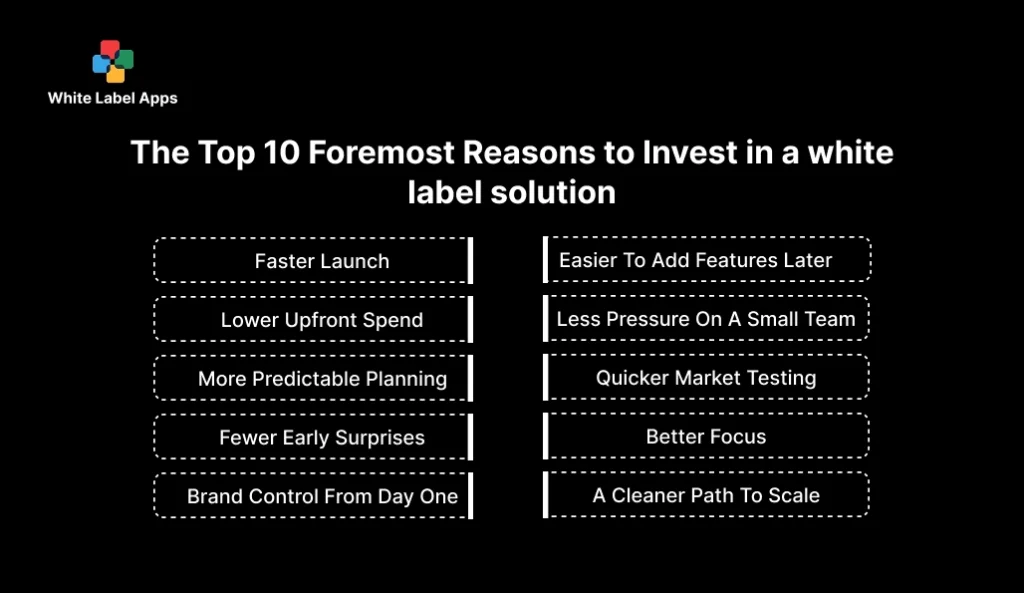
Startups have two big enemies, time and cash. Every extra week of delay can kill the mood in the team and the money in the bank. A white label solution helps because it gives you a ready base, so you can focus on selling, support, and learning from real users. You are not starting from a blank page. You are starting from “almost ready,” then making it yours. Here are the top reasons founders invest in this path.
1. Faster Launch
Speed matters more than perfection in the first round. A ready base helps you get in front of real users sooner, so you can see what people actually do, not what you guessed they would do. Early feedback also saves money because you stop building the wrong things. For many startup owners, the real benefit is confidence. You launch, learn, and tighten the product in small steps. That feels safer than spending months building in silence.
2. Lower Upfront Spend
In the early stage, cash goes out faster than it comes in. One long build can eat your runway without giving you any proof. A ready-made option reduces that early burn because you are buying something that already exists, then shaping it to match your brand. You still spend money, but you avoid many “first-time” costs. This is useful when you want to keep funds for marketing, hiring, and customer support.
3. More Predictable Planning
Startups need a plan that does not change every week. When the base product is already made, it is easier to estimate the work left. You can plan the launch steps, the setup tasks, and the first month of support without guessing too much. A good partner will also tell you what is included and what will cost extra later. That clarity helps you avoid last-minute surprises that delay launch and stress the team.
4. Fewer Early Surprises
New products often break in small places, like login, basic search, or simple checkout steps. These are the places users notice first. A ready base usually has fewer such cracks because it has been used before. That does not mean it is perfect. It just means you are less likely to hit basic problems that waste days. You can spend your energy on improving the user journey instead of fixing the same early bugs again and again.
5. Brand Control From Day One
For a startup, brand is not decoration. It is trust. When people see your name, colours, and tone across the full journey, they remember you. They also feel you are “real,” even if your team is small. This is one reason founders choose white label solutions. You stay in control of how the product looks and feels. It is easier to build loyalty when customers associate the experience with your brand, not someone else’s.
6. Easier To Add Features Later
Most founders change direction once they see real usage. It is normal. The key is to choose a setup that lets you grow in steps. Start with the core flow that brings value. Then add more only when users ask for it and when it supports revenue. This keeps the product clean and prevents feature overload. It also helps you move faster, because you are not rebuilding everything each time you want to add one new capability.
7. Less Pressure On A Small Team
Small teams do everything. Sales calls, customer queries, partnerships, and content, sometimes on the same day. If the product also needs heavy building work, the team can burn out quickly. A ready base reduces pressure because you are not managing every detail from scratch. Your team can focus on running the business and handling customers. And when things go wrong, you want support that does not disappear after launch.
8. Quicker Market Testing
Startups need proof early. Not opinions. Not “maybe.” A working product helps you test demand, pricing, and what customers are willing to pay for. You can also see which features matter and which ones are ignored. This protects you from betting everything on one big build. Quick testing is also useful when you want to pitch partners or investors. Real usage data, even small, beats a long slide deck.
9. Better Focus
Focus is the one thing startups keep losing. When you are stuck in build mode for too long, you miss customer calls and marketing windows. A ready base helps you stay focused on the business side. That means sales, onboarding, support, and retention. These are the things that actually bring money in. You still improve the product, but you do it while the business is moving, not while it is waiting.
10. A Cleaner Path To Scale
Growth feels good, but it can also feel messy. More users means more questions, more edge cases, and more daily work. A good setup should handle growth without collapsing. The goal is simple. Add more users, add more clients, or enter new areas, without changing your full system each time. You also want the ability to adjust plans, support, and rules as you grow. That is how scaling stays calm instead of chaotic.
Industries & Businesses That Use White Label Solutions
A ready-made setup is not only for one type of business. It shows up everywhere, because many industries face the same problem. They want to launch fast, look professional, and grow without hiring a huge team. White label solutions are common in businesses where customers expect a smooth experience from day one. The product may change by industry, but the goal stays the same. Offer a branded service, deliver it reliably, and keep costs under control while you learn.
Here are common industries and business types where this model is widely used.
1. White Label Food Delivery App
White Label Food Delivery App suits founders who want to sell meals online under their own brand. Customers can browse the menu, place an order, pay, and track delivery. For a new food business, it saves time because the main flow is already ready. The real value is control. The brand stays yours, offers stay yours, and repeat buyers feel like they are ordering directly from you. It also helps you avoid depending on only third-party platforms for sales.
2. White Label Fitness App
White Label Fitness App works well for gyms, trainers, and small fitness studios. You can offer classes, plans, and memberships with your own name on it. Users can book sessions, get reminders, and stay consistent. It also helps in building a habit, because the customer sees your brand every day. For startup owners, this is useful when you want steady monthly income instead of one-time sales. It can also support online programs, so you are not limited to one location.
3. White Label Restaurant App
White Label Restaurant App is built for restaurants that want direct orders and loyal customers. People can view the menu, place orders, choose pickup or delivery, and get updates. The biggest advantage is that your restaurant becomes the first choice, not the last option after food marketplaces. It also helps you run your own deals, like weekday combos or loyalty rewards, without waiting for anyone’s approval. For a growing restaurant brand, it is a clean way to build repeat orders.
4. White Label Grocery Delivery App
White Label Grocery Delivery App fits grocery stores and local sellers who want to move beyond walk-ins. Customers can add items to a cart, choose delivery time, and place orders from home. It helps when people want quick basics like rice, milk, or snacks without going out. For startup owners, it is useful because grocery buying is repeat behaviour. If the service is reliable, customers return weekly. It also helps stores handle more orders without turning the store counter into a daily mess.
5. White Label Milk Delivery App
White Label Milk Delivery App is ideal for a daily-need business model with strong repeat potential. Customers can set daily delivery, pause for a few days, and restart anytime. That small control makes people stick longer. It also reduces phone calls and manual notes like “send two packs tomorrow.” For startup owners, this solution works best when you want predictable daily sales. It also suits local dairy brands that want to build trust, not just sell once and disappear.
6. White Label Taxi Booking App
White Label Taxi Booking App is for taxi businesses that want direct bookings under their own name. Riders can request a ride, see driver details, and get updates. The main goal is reliability and quick booking, especially during peak hours. For startup owners, it helps build a local network where customers remember your service instead of searching again every time. It also helps you run your own pricing rules and service areas, so your business is not forced to follow someone else’s terms.
7. White Label On Demand App
White Label On Demand App is ideal for businesses that deliver services quickly,, like home cleaning, repair, beauty services, or moving help. Customers can choose a service, pick a time, and get updates. The value is convenience. People want help fast, and they want clear steps. For startup owners, this option is useful because you can start with a few services, then expand slowly. It also helps keep the booking process organised, so you are not managing everything through calls and chats.
8. White Label Delivery App
White Label Delivery App works for businesses that need delivery beyond food, like parcels, pharmacy items, or local store deliveries. It helps manage pickup and drop in a clear way. Customers want to know one thing, where the delivery is and when it will arrive. For startup owners, this solution makes sense when you want to serve multiple sellers or multiple categories. It also supports growth into new areas, because delivery is a repeat need for many local businesses.
9. White Label Telemedicine Platform
White Label Telemedicine Platform fits clinics and health service brands that want online consultations under their own name. Patients can book a time, talk to a doctor, and get basic updates. The main benefit is access, especially for people who cannot travel easily. For startup owners, this model works when trust is the focus. The service must feel safe, clear, and consistent. It also helps clinics serve more patients without crowding the waiting room, which is a real pain point in many places.
Explore the Step-by-Step Guide to Building a White Label App
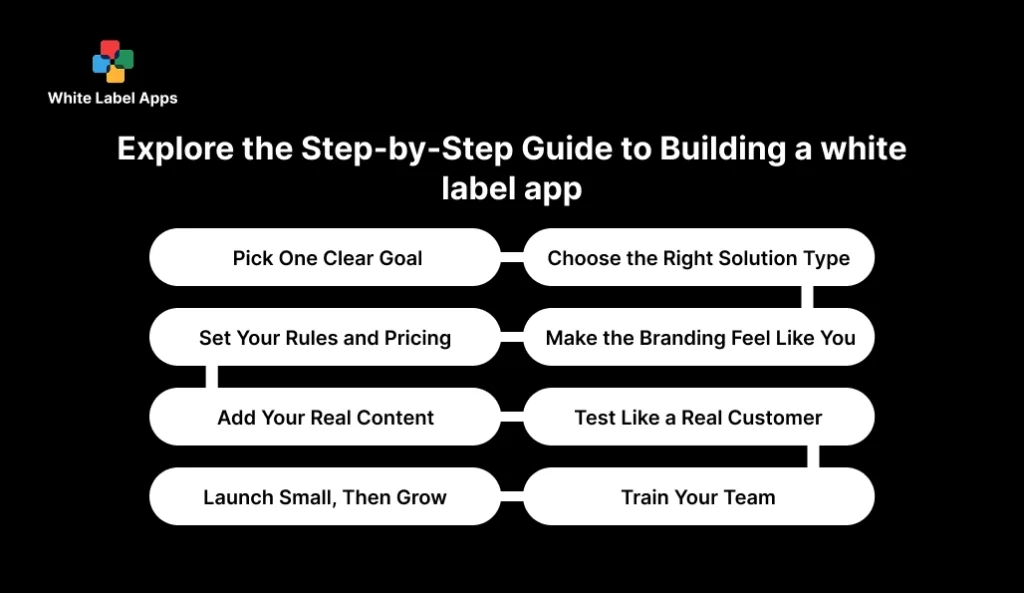
This part is simple, but it needs discipline. A ready base helps you move faster, but you still have to set it up the right way. Many startup owners rush this step, then regret it when customers face small issues on day one. Think of this like opening a new shop. The shelves may be ready, but you still need pricing, signage, and a clean way to take orders. Follow these steps in order, and your launch will feel much calmer.
Step 1: Pick One Clear Goal
Start with one main job the app should do. Not ten. For example, “take orders,” “book appointments,” or “schedule deliveries.” When the goal is clear, every screen and rule becomes easier.
Step 2: Choose the Right Solution Type
Select the model that matches your stage. If you need speed, choose a ready-to-use setup. If you want gradual growth, choose a setup where you can add parts later. Do not buy a big plan just because it looks impressive.
Step 3: Make the Branding Feel Like You
Add your name, logo, colours, and tone. Keep it simple and readable. Use the same style across every screen. If the brand looks confused, users feel unsure.
Step 4: Set Your Rules and Pricing
Decide how pricing works, what fees apply, and what happens when something goes wrong. Keep rules short. A customer should not need to guess what will happen after they pay.
Step 5: Add Your Real Content
Upload menus, services, items, time slots, and business details. Double-check spelling and pricing. Many launches fail because the content is messy, not because the product is bad.
Step 6: Test Like a Real Customer
Place 10 to 15 test orders or bookings. Try mistakes on purpose. Wrong address, late pickup, cancelled order, slow internet. Fix the gaps before you invite real users.
Step 7: Train Your Team
Show staff how orders come in, how updates work, and what to do when something fails. A good launch is not only about the app. It is also about people handling it well.
Step 8: Launch Small, Then Grow
Start with one area, one store, or one city. Watch what users do. Improve the weak spots. Then expand with confidence.
Read more : White-Label vs Custom-Built Food Delivery Apps: Which Is Best for Startups?
Common Challenges & Risks of White Labeling
A ready base can save time, but it is not magic. Many startup owners assume everything will work perfectly from day one. Then small issues show up, and the team feels stuck. The good part is, most risks are easy to avoid if you know what to watch for. Think of it like renting a furnished apartment. It looks ready, but you still need to check the locks, the water, and what the contract really says. Here are the common problems and how they usually appear.
1. Limited Changes In Some Areas
Some providers say everything is flexible, but later you learn a few parts cannot be changed much. This is a common risk with white label solutions. It usually shows up when you want a special flow, a different set of rules, or a unique customer journey. The fix is not complicated. Ask for a clear list of what can be changed and what cannot. Also ask to see the same setup used by two different brands, so you can judge how far branding and layout can really go.
2. Hidden Costs Later
The starter price can look affordable, then extra charges start appearing. It could be for adding a new module, getting faster support, or running updates. This is why “white label solution meaning” should also include cost clarity, not only the product concept. Before you sign, ask for a full fee list in writing. Also ask what is included in the monthly plan and what is billed separately. A trustworthy white label solution provider will not dodge these questions.
3. Slow Or Unclear Support
Support is not a “nice to have.” During launch, it is the difference between a small hiccup and a bad review. If replies take too long, your team loses time and customers lose trust. This risk is common when a white label software solution is sold fast, but support is thin. Ask about support hours, response time, and where support happens, chat, email, or calls. Also ask what happens on weekends, because real problems do not wait for Monday.
4. Quality Gaps In The Ready Base
A demo can look smooth, but real use can reveal weak spots. For example, steps that confuse users, or actions that fail under pressure. This is one reason startups choose white label solutions and still do heavy testing before going public. Do not skip this. Run real tests with real people, even if it is only 5 to 10 friends. Try slow internet, wrong inputs, and cancelled orders. You are not testing to impress, you are testing to protect your brand.
5. Ownership And Control Confusion
Many founders focus on launch speed and forget the boring questions. Who owns the data. How you can export it. What happens if you change providers. These questions matter with white label solutions because you are building on someone else’s base. A safe provider will give clear answers in the contract. Ask for a simple exit plan in writing. If they avoid it, that is a warning. The goal is to grow without feeling locked in.
6. Brand Looks “Same Like Others”
If many businesses use the same base and keep the default look, customers can sense it. It feels generic. That hurts trust, especially for a new brand. The good news is, this is fixable. Use strong branding benefits of white-label solutions properly. Change the colours, tone, images, and content so it feels like your business, not a copy. Also shape your offers and messages around your niche. Your story is what makes the product feel original.
Read more : White Label Multi-Restaurant Delivery App: A Scalable Solution for Modern Food Businesses
Considerations Before Choosing a White Label Solution
Before you spend money, slow down for one hour and check the basics. A shiny demo is not enough. You need a setup that fits your business, your team size, and your next 6 months. With white label solutions, the smartest founders ask simple questions early, so they do not get stuck later. Think of it like picking a shop location. The place may look good, but you still check rent terms, rules, and how easy it is to move if needed. These considerations keep your decision safe.
1. Your Main Goal
Start with one clear goal, or the whole plan gets messy. Many founders try to do ten things at once and the first version feels confusing. Decide the one job that matters most, like orders, bookings, or delivery updates. This helps you pick the right plan and avoid paying for extras you will not use. It also makes vendor talks simpler because you can explain your need in one line. With white label solutions, a clear goal helps you choose the right base and launch faster with fewer surprises.
2. What Can Be Changed And What Cannot
This is where many people get stuck later. A provider may say the setup is flexible, but some parts can be fixed. It could be the flow, the screens, or the way fees are set. Do not rely on “yes, possible.” Ask for a written list of what is editable and what is locked. Also ask to see two brands using the same base, so you can judge real flexibility. A reliable white label solution provider will be clear about limits. That honesty saves you from rework and frustration.
3. Total Cost, Not Just The Starter Price
A low starter price can look safe, then add-ons show up later. These can be charges for extra features, more support, more users, or new updates. This is why white label software solutions should come with clean pricing, not surprises. Ask for a simple fee sheet that shows one-time costs, monthly costs, and what counts as an extra. Also ask what happens when you grow. Will your price jump suddenly. With white label solutions, cost clarity is a big reason founders choose this path, so protect it.
4. Support Quality
Support decides how calm your launch will feel. If something breaks and you wait hours for a reply, your customers will not wait with you. Ask how support works, chat, email, or calls. Ask support hours and weekend coverage too. Also ask what “urgent” means and how fast they reply in those cases. Many founders look for secure white label solutions, but security also includes support when things go wrong. A good partner does not vanish after payment. They stay reachable when it matters.
5. Exit Plan And Data Control
This sounds boring, but it is a serious safety check. Ask who owns your data, how you can export it, and what format you will get. Also ask what happens if you stop the service. Do you lose access instantly, or do you get time to move out. Put this in writing. With white label solutions, you are building on someone else’s base, so you must know how to leave if needed. A provider who avoids these questions is not a safe long-term choice.
6. Brand Flexibility
If your product looks like everyone else’s, customers will feel it. It can hurt trust, especially for a new startup. Ask how much you can shape the look and feel, colours, layout, wording, and key screens. This is where the branding benefits of white-label solutions should show up in real life, not only in a sales call. Also check if you can adjust the experience for your niche, so it does not feel generic. Brand flexibility is what helps you stand out even with a ready base.
7. Testing Plan
Testing is your safety net. Ask if you can run full tests before going live, without extra fees or strict limits. You should be able to place many test orders or bookings, try wrong inputs, cancel actions, and see how the system behaves. Also ask who fixes issues found during testing. Is it included, or billed separately. With white label software solutions, testing is what turns a demo into a real product. A clear testing plan reduces launch-day stress and protects your brand from early bad reviews.
How to Choose the Right White Label Solution Provider
Choosing the provider is the real decision. The product can look nice in a demo, but your day-to-day life depends on the people behind it. A good white label solution provider keeps things clear, fixes issues fast, and does not surprise you with hidden rules. A poor one can delay launch, confuse your team, and make you feel stuck. So pick with calm eyes, not only excitement.
Here are the checks that protect startup owners.
1. Check Real Proof, Not Just Slides
Ask for 2 to 3 live examples that are already running. Not screenshots. Not a video only. See how it feels as a user. This helps you understand the real quality of the white label solutions you are buying.
2. Ask What Is Included, In Writing
Get a simple list of what comes in the plan. Also ask what costs extra. This is the fastest way to avoid surprise bills with white label software solutions.
3. Test Support Before You Sign
Send 2 questions and see how they respond. Are they clear. Are they quick. Do they ask smart follow-up questions. Support tells you how your launch week will feel.
4. Confirm Brand Control
Ask what you can change, like colours, text, layout, and key screens. The branding benefits of white-label solutions only work when you get real control, not tiny changes.
5. Ask About Safety And Data Control
Ask who owns the data, how you export it, and what happens if you leave. A serious provider answers this without getting defensive.
6. Ask For A Simple Launch Plan
A good partner will explain the steps in plain words. What you need to share, what they set up, what you test, and when you go live. No confusion. No “we will see.”
Read more : White Label Food Ordering System for Restaurants & Cloud Kitchens
Identifying New Revenue Streams Through White Label Software
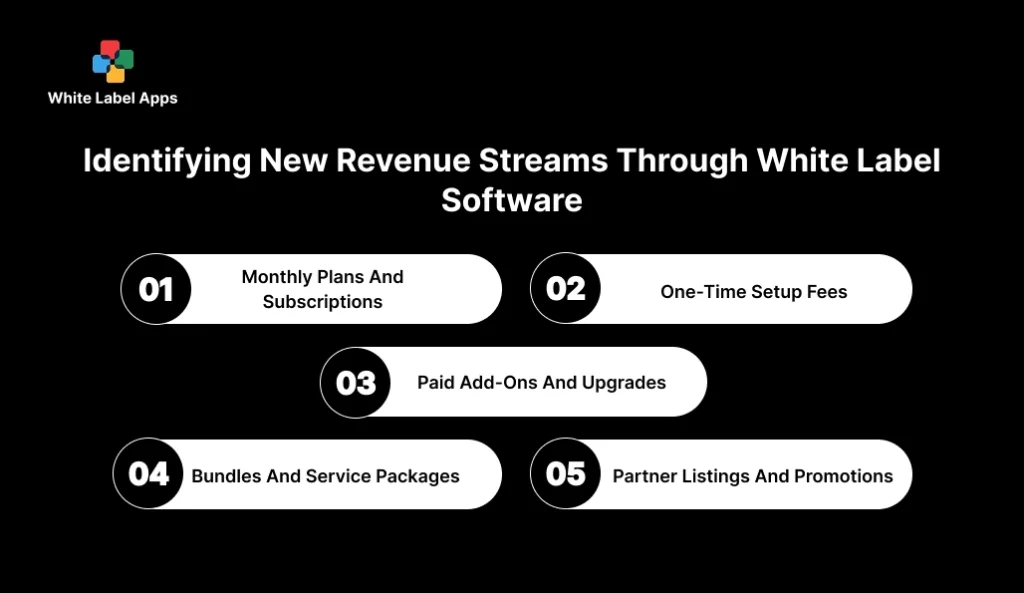
Startups often think revenue only means “sell more.” But real growth comes when you earn in more than one way. A good white label software solution can open new income streams because it lets you package your service better and charge for add-ons without making the customer journey messy.
For example, you can create paid plans, setup fees, monthly subscriptions, or premium features. You can also earn from repeat use, like scheduled orders, memberships, or service bundles. Another simple stream is partnerships, where nearby businesses pay to be listed or promoted inside your branded system. With white label solutions, this becomes easier because pricing and offers can be managed in one place. The goal is not to squeeze users. The goal is to earn steadily while giving real value.
1. Monthly Plans And Subscriptions
A steady monthly plan can make a startup feel safer. Instead of chasing one-time sales, you earn in a repeat cycle. With a white label software solution, it becomes easier to offer simple tiers, like basic, standard, and premium, without confusing the customer. Subscriptions work well when your service is used often, like food ordering, fitness programs, or home services. The key is to keep the promise clear. Tell customers what they get each month, and keep the billing simple and transparent.
2. One-Time Setup Fees
A setup fee is a clean way to earn at the start, especially if you are onboarding businesses or clients. It covers the work of setting things up, adding content, and getting the first launch ready. Many founders like this because it improves cash flow early. With white label solutions, you can standardise the setup steps, so your team does not reinvent the wheel every time. Clients also understand it better when it is framed as a one-time start cost, not a surprise charge later.
3. Paid Add-Ons And Upgrades
Some customers want more. They may want extra services, faster delivery, premium support, or special access. Add-ons help you earn more without raising the price for everyone. A white label software solution makes this smoother because you can offer upgrades inside the same branded system. It also helps you test what people are willing to pay for. Keep add-ons simple and useful. If the upgrade feels like a trick, customers leave. If it feels like value, they stay longer.
4. Bundles And Service Packages
Bundles are easy for customers to understand. They also increase the order value without feeling pushy. For example, a weekly meal bundle, a monthly fitness pack, or a home-service combo. With white label solutions, you can create these packages and run them as limited-time deals or ongoing plans. Bundles work best when they solve a real problem, like saving time or reducing decision stress. People like buying one clear package instead of picking ten small items.
5. Partner Listings And Promotions
Partnership income is underrated. Local brands often pay to be listed, featured, or promoted when the audience matches their niche. For example, a fitness studio can feature supplement stores, or a food service can feature local dessert brands. With a white label software solution, partner placements can be managed in one place, so your team does not juggle messages and manual tracking. The important part is trust. Promote only partners that fit your audience, or users will stop believing your recommendations.
Future Trends in White Label Solutions
The next 12 to 24 months will reward startup owners who move fast, but stay calm. The “latest” shift is simple. Buyers are tired of heavy tools. They want a ready system that fits daily work, not a long list of features. That is why white label options are getting more focused on real jobs, like orders, bookings, support, and billing.
1. Smaller Building Blocks
More providers are breaking big systems into smaller parts you can turn on when needed. This helps startups launch with only the core flow, then add more later without a full rebuild. It also reduces the “locked in” feeling, because you are not forced to buy a huge bundle on day one.
2. Stronger Brand Control
“Logo and colors” is no longer enough. Buyers now want the whole journey to feel like their brand, from first screen to every message a customer sees. This is happening because markets are crowded, and copycat experiences get ignored.
3. Built In Helpers
Teams are asking for tools that remove repeat work, like sorting requests, sending updates, and guiding next steps. The goal is simple. Fewer manual steps, fewer mistakes, and less pressure on staff.
4. Trust First Design
Customers and partners are getting stricter about safety, access, and data handling. This is pushing providers to make trust features a default, not an extra. Now, big companies are publicly pushing stronger governance and secure development principles, which will influence how software products are judged.
5. Easier Scale Up
Startups want growth without chaos. That means smoother ways to add more locations, more services, or more clients while keeping the same working process. This trend is tied to modular design, because reusable parts make expansion simpler.
6. Clearer Pricing Promises
More buyers now demand clean pricing and clear service promises. Not vague “starting from” numbers. This is pushing providers to show what is included, what is extra, and what support looks like before signing.
Read more : Top 10 Best White Label Food Delivery App Providers
Bottom Line!
If you are a startup owner, speed and control matter more than fancy plans. A ready base helps you launch sooner, learn from real users, and fix the weak spots early. That is how you avoid burning months and money before you even get feedback.
Trends are moving in a simple direction. Founders want setups that can grow step by step. They also want clearer pricing, easier updates, and stronger safety, because one bad issue can damage trust fast. The winners will be the teams that keep the product steady, keep the brand consistent, and keep the customer journey simple.
If you want to launch without guesswork, WhiteLabelApps can help you choose the right white label solution, set it up to match your brand, and support you through testing and launch.
FAQs
1. How much does a white label solution cost for a startup?
It depends on what you need on day one. A simple setup costs less. Costs go up when you add more users, more screens, extra help, or special changes. Before you pay, ask for the full price sheet in plain words. One-time fees, monthly fees, and any extra charges. This small step saves you from “Oh, this is extra” surprises later.
2. Can a white label app look fully unique to my brand?
It can, if the provider gives real control. You can change the name, logo, colours, and wording. Some also let you change layout and key screens. Do one easy check. Ask to see two live brands using the same base. If they look and feel different, your brand can stand out too. If they look almost the same, you will struggle to look unique.
3. Will I own my customer data with white label solutions?
Do not assume. Ask directly. Who owns the data. Who can access it. And how you can download it if you ever leave. Also ask what happens after you stop paying. Do you lose access the same day, or do you get time to move out. Get these answers in writing. If someone avoids this topic, take it as a warning.
4. How long does it take to launch a white label app?
It mostly depends on how ready you are. If your logo, prices, menu or service list, and basic rules are ready, launch can move quicker. If you want many changes, it takes longer. A good way is to start small. Set up the core flow, test it with real people, fix gaps, then open it to a wider audience.
5. What should I check before choosing a white label solution provider?
Look at real working examples, not only a demo. Ask what is included and what costs extra, and get it in writing. Test their support with two questions before you sign. Check what branding changes are allowed. Finally, ask for a clear exit plan and a simple data export method, so you never feel stuck.