
Most people think building an app means hiring a full tech team, waiting months, and burning cash before the first user even signs up. That fear stops many good business ideas early. But the app world does not work only one way anymore. There is a faster path that many agencies, consultants, and small software firms quietly use.
That path starts with white label apps.
Before we go deeper, here is the big picture. By 2026, the global mobile application market is expected to reach $614.40 billion, according to Statista’s worldwide mobile app revenue forecast. That number shows one clear thing. Demand for apps is not slowing down. It is spreading into local businesses, niche services, gyms, clinics, coaches, and small brands that want their own app but not the pain of building from zero.
This is where white label models fit in. Instead of coding everything, you start with a ready base app, brand it, price it, and resell it to clients who care more about speed and results than custom code. For many resellers, this becomes a steady income stream, not a one-time project.
In this guide, you will learn what a white label app really is, how the reselling model works, where it fits well, and when it does not. If you want to sell apps without becoming a full development shop, this will help you decide clearly.
TL;DR
- White label apps let you sell ready-made apps under your own brand.
- You skip long builds and start selling faster.
- This model suits agencies, consultants, and small teams.
- Success depends on niche focus, pricing clarity, and support.
Key Points
- A white label app is a pre-built product that you brand, price, and resell as your own solution.
- The vendor maintains the core technology, while you handle sales, onboarding, and client support.
- White label apps reduce upfront cost, launch time, and technical risk compared to custom development.
- This model works best for common business needs like bookings, memberships, ecommerce, and services.
- Resellers earn recurring revenue through subscriptions, add-ons, and ongoing support plans.
- Branding is flexible, but core logic and source code usually remain with the vendor.
- Choosing the right platform affects scalability, integrations, support load, and client trust.
- Clear pricing, defined scope, and honest limits prevent churn and disputes.
- Vertical-focused apps and operational use cases offer the strongest opportunities going forward.
What does “white label” mean in simple terms?
Think of it like buying unbranded packaged food and selling it under your own shop label. You did not grow the wheat or build the factory. But the customer buys from you and trusts your brand. In app terms, the vendor builds and maintains the core software. You rename it, add your logo, set colours, and sometimes tweak features. To the end client, you are the app provider. They never see the original maker unless you tell them. This is why white labels work well for people who want to sell apps, not build them from scratch.
Also Read: What is White Label App Builder: What They Are & How To Use Them
Why White Label Apps Getting Popular?
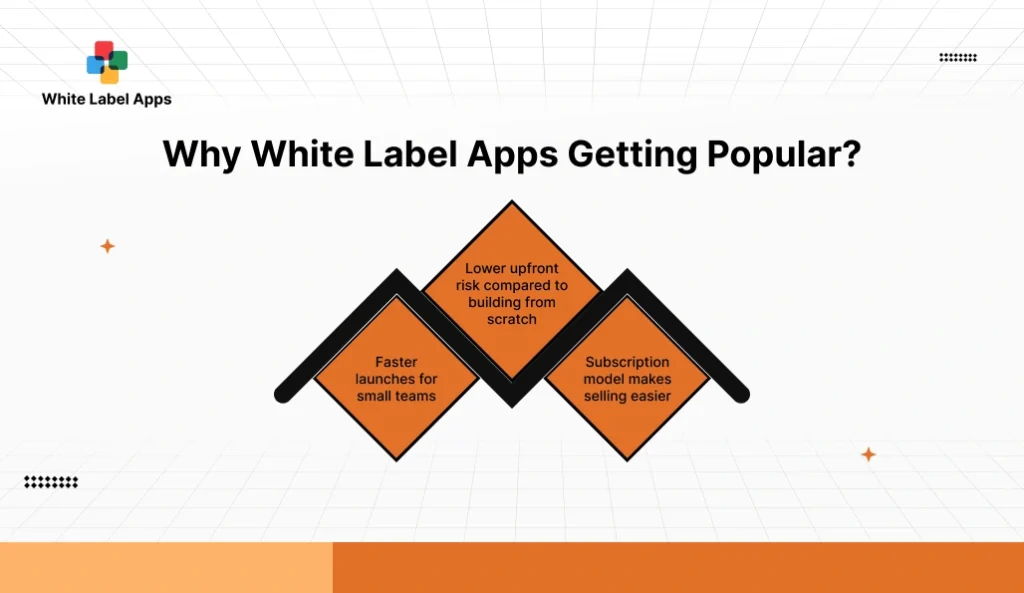
The demand for apps is growing, but patience is shrinking. Most small teams do not have months to wait or large budgets to burn before seeing results. This gap between demand and reality is why white label apps are becoming a common choice. They reduce effort at the start and make outcomes more predictable. Instead of betting everything on one big build, teams can test, sell, and improve faster. For many service businesses, this shift feels practical, not risky.
1. Faster launches for small teams
Small teams move fast, but only when work is simple. White label apps remove long build phases like wireframing, sprint planning, and repeated testing. The base app already exists and works. Teams focus on branding, setup, and onboarding. This makes it possible to launch a client app in weeks instead of months. Faster launches also mean quicker feedback from real users, which helps improve the offer without heavy rework.
2. Lower upfront risk compared to building from scratch
Building an app from zero demands money, time, and faith. There is no guarantee users will adopt it. With white labels, much of that risk is already absorbed by the vendor. The product has been used before, tested across devices, and refined over time. Upfront costs stay lower and clearer. For resellers, this reduces financial stress and makes it easier to say yes to new clients without overthinking every deal.
3. Subscription model makes selling easier
Subscriptions change how apps are sold. Instead of one large payment, clients pay monthly or yearly. This feels safer for them and smoother for you. It also creates predictable income for resellers. You earn over time, not just once. Clients stay engaged because they receive updates, support, and ongoing value. This model fits agencies that prefer steady revenue over one-off projects.
How White Label Apps Help Businesses?
White label apps sit in a practical middle ground. They are not experimental, and they are not overbuilt. This balance is what makes them useful for many businesses today. Buyers get a working solution without long delays. Resellers get a product they can sell again and again without rebuilding each time. When expectations are set right, this model saves time on both sides and reduces friction after launch.
1. For the buyer, what problems it solves
Most buyers struggle with three things. Time, budget, and uncertainty. White label apps reduce all three. The app is already built, so there is no waiting for basic features to be coded. Costs are clearer upfront, which helps small businesses plan better. Buyers also avoid the stress of trial-and-error builds. They get a proven app that solves a known problem, like bookings or payments, and can start using it quickly.
2. For the reseller, how it becomes a repeat revenue stream
For resellers, the value is not in one deal. It is in repetition. You sell the same base app to multiple clients, each with different branding. Monthly subscriptions, support plans, and add-ons create steady income. Effort stays almost the same, even as clients increase. This makes white label apps attractive for agencies and consultants who want predictable revenue without hiring a large tech team.
3. What parts can be branded, and what usually cannot?
Branding gives the app a client-owned feel. You can usually customize the app name, logo, colours, icons, and store listings. Emails and dashboards often match the client brand too. What stays fixed is the core logic, data structure, and deep workflows. These limits are important to explain early. Clear boundaries avoid wrong expectations and keep projects smooth.
Who Are White Label Mobile Apps Best For?
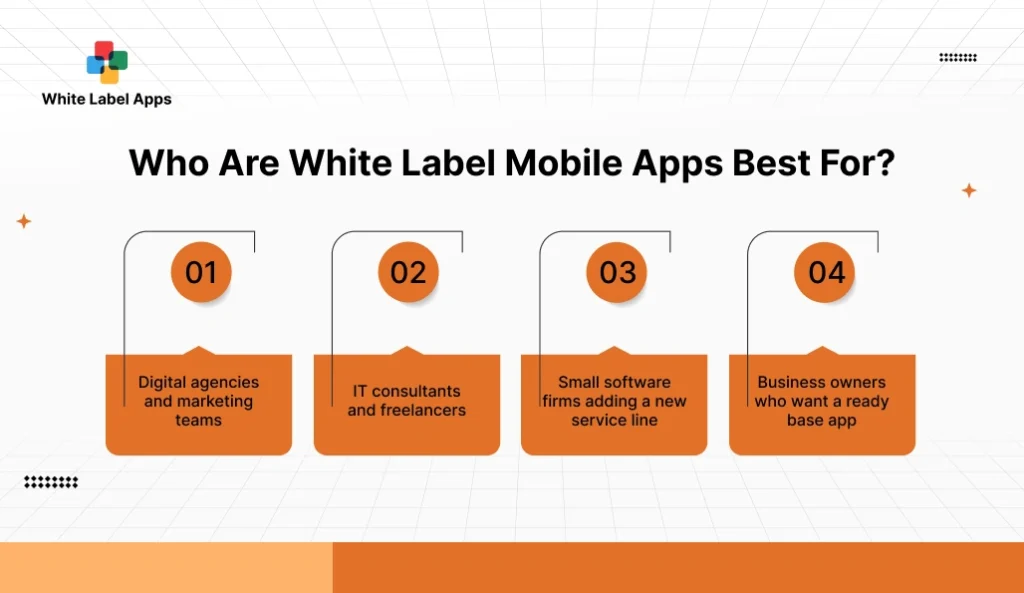
White label mobile apps are not for everyone, and that is a good thing. They work best when the goal is speed, repeatability, and clear outcomes. If someone wants a completely new product idea or deep custom logic, this model will feel limiting. But for many service-led businesses, white label fits naturally. It allows them to offer apps without carrying heavy technical risk or long build cycles.
1. Digital agencies and marketing teams
Agencies often lose deals because clients ask for an app, not a campaign. White label apps help bridge that gap. Agencies can add apps as an extension of their services without hiring developers. A booking app, loyalty app, or store app fits well with marketing retainers. It also strengthens client relationships, since the agency becomes part of daily operations, not just promotions.
2. IT consultants and freelancers
Consultants and freelancers are trusted advisors, but they usually trade time for money. White label apps let them package solutions instead of hours. They can recommend an app, brand it, set it up, and charge monthly. This creates recurring income without managing full development projects. It also reduces delivery stress, since the core product is already stable.
3. Small software firms adding a new service line
Small software firms often want to grow, but hiring a larger team is risky. White label apps allow them to expand their offerings without heavy investment. They can test new industries like fitness, education, or local services using the same base platform. If demand grows, they scale. If not, losses stay limited.
4. Business owners who want a ready base app
Some business owners want an app but not a tech journey. They care about outcomes, not code. White label apps suit them because the app works from day one. They get branding, basic features, and support without dealing with development choices. For many owners, this is the simplest way to go mobile.
Also Read: Why Becoming a White Label Restaurant Ordering Software Reseller Makes Sense
Advantages and Drawbacks of White Label Apps
White label apps come with clear strengths, but also firm limits. Both matter equally. Many resellers focus only on speed and pricing, then struggle later when expectations break. This section explains the advantages, the drawbacks, and the situations where white label is simply the wrong choice. Reading this carefully helps avoid bad-fit clients and protects long-term reputation.
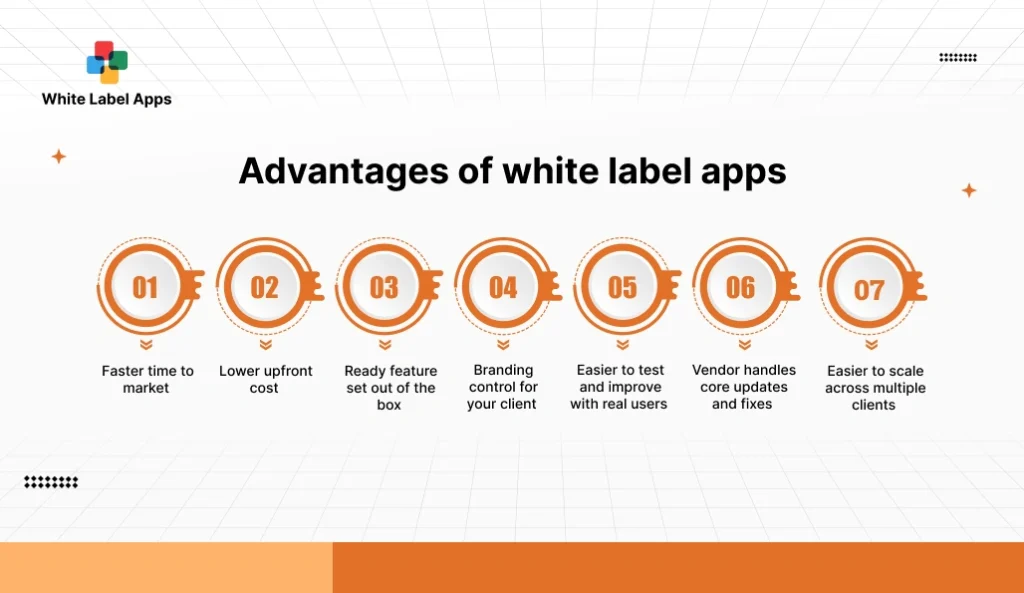
Advantages of white label apps
White label apps work best when the goal is delivery, not invention. They reduce effort at the start and bring structure to selling apps as a service. Instead of managing long builds, resellers focus on sales, onboarding, and support. The product is already tested in real conditions, which lowers uncertainty. For many small and mid-size businesses, reliability matters more than uniqueness. This model also makes pricing simpler and timelines predictable. When used for common use cases, white label apps help teams move faster without increasing operational stress.
1. Faster time to market
Since the core app is already built, launch cycles shrink drastically. Branding, setup, and publishing replace months of development. This speed helps close deals faster and keeps client excitement high. It also allows resellers to test new niches without long waiting periods.
2. Lower upfront cost
There is no large development invoice at the beginning. Costs are usually subscription-based or fixed per app. This lowers financial pressure for both resellers and clients. It also makes selling easier to small businesses that avoid big upfront commitments.
3. Ready feature set out of the box
Most white label apps include proven features like payments, bookings, notifications, and dashboards. These are features users already understand. You are not guessing what to build first. This reduces decision fatigue and avoids unnecessary complexity.
4. Branding control for your client
Clients care about ownership and identity. White label apps allow logos, colours, app names, and store listings to reflect the client brand. To end users, it feels like a custom-built app. For many businesses, this level of control is enough.
5. Easier to test and improve with real users
Because the app launches quickly, feedback comes early. Real users highlight what matters and what does not. Changes can be made through settings or add-ons instead of rebuilds. This keeps improvement cycles short and manageable.
6. Vendor handles core updates and fixes
Operating systems change often. Bugs appear unexpectedly. In a white label setup, the vendor manages these core updates. This removes a heavy technical load from resellers and keeps apps compatible without constant firefighting.
7. Easier to scale across multiple clients
The same base app can be reused for many clients. Effort does not increase with every sale. This makes scaling predictable and profitable. Agencies especially benefit because they can grow revenue without growing teams at the same pace.
Drawbacks you should know before you resell
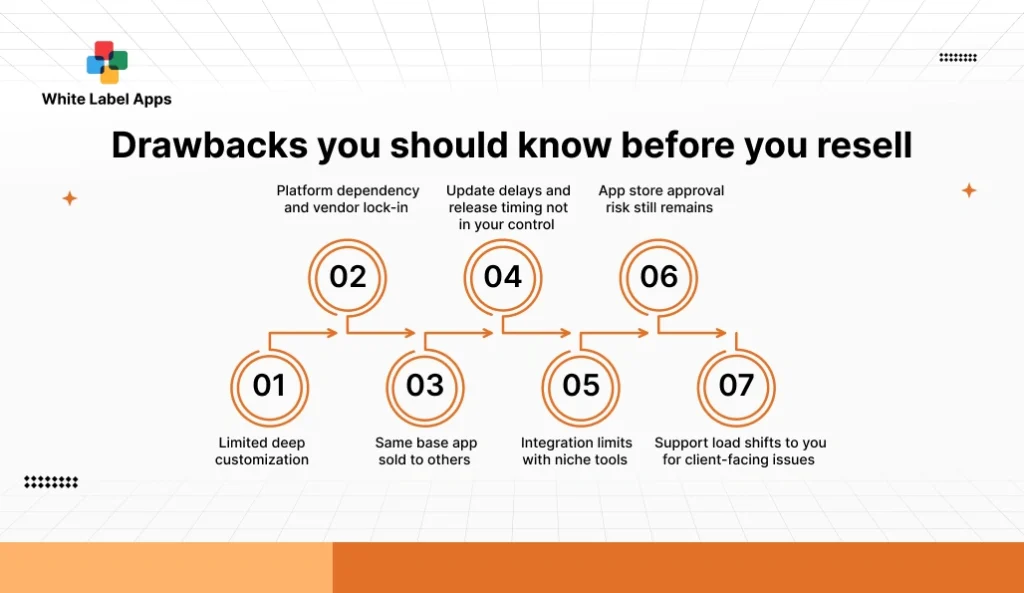
White label apps are not flexible by default. They follow a shared roadmap and fixed architecture. This can frustrate clients who expect deep customization or fast changes. As a reseller, you are also tied to the vendor’s stability, pricing, and update schedule. Support responsibility often shifts to you, even when issues are platform-related. These drawbacks do not make white labels bad. They simply mean it must be sold honestly. Clear boundaries protect both you and the client.
1. Limited deep customization
You cannot rewrite core logic or data flows. Feature changes depend on what the platform allows. If a client expects tailored workflows, white labels will feel restrictive. This should be clarified before contracts are signed.
2. Platform dependency and vendor lock-in
Your business depends on the vendor’s platform. If pricing, policies, or features change, you must adjust. Migrating away later can be difficult. This risk should be considered when choosing a long-term partner.
3. Same base app sold to others
Clients are not buying exclusivity. The same core app may be used by competitors. For many local businesses, this is acceptable. For brand-led or product-led companies, it may feel limiting.
4. Update delays and release timing not in your control
You cannot decide when new features go live. Vendors release updates on their own schedule. This can be frustrating when clients request urgent changes or expect fast innovation.
5. Integration limits with niche tools
Most platforms support popular tools like payments and maps. Niche or region-specific software may not integrate easily. Custom integrations are often costly or not possible at all.
6. App store approval risk still remains
Even with a ready app, approval is not guaranteed. Store policies change. Content or listing issues can cause rejections. White label reduces build risk, not publishing risk.
7. Support load shifts to you for client-facing issues
Clients contact you first when something breaks or feels unclear. Even if the issue is platform-related, you manage communication. This support load must be planned and priced properly.
Also Read: White Label Food Ordering System for Restaurants & Cloud Kitchens
How to Choose the Right White Label Platform?
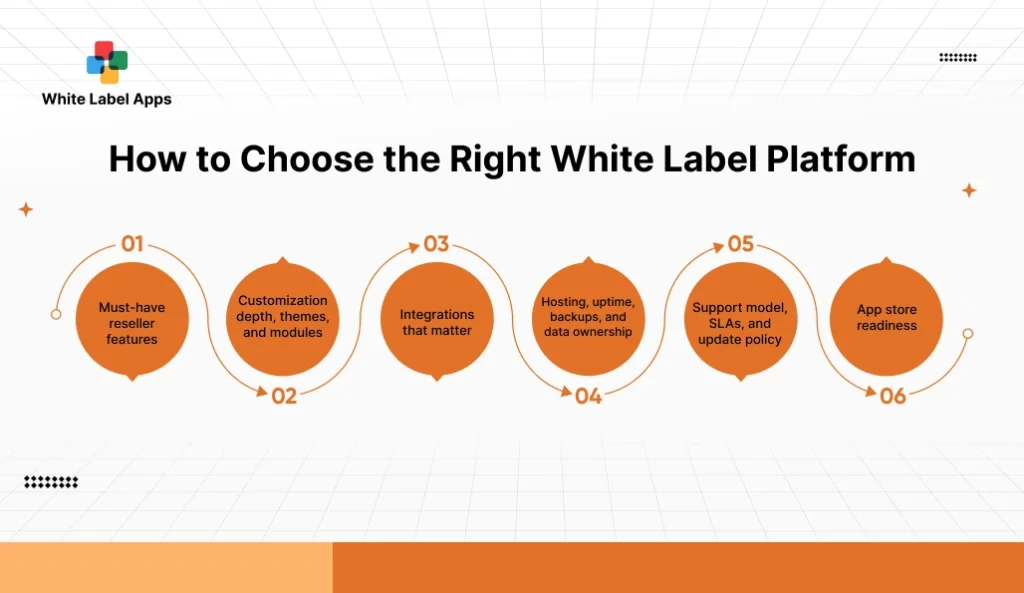
Not all white label platforms are built the same. Some are great at demos but weak in daily use. Others look basic but run smoothly for years. Choosing the wrong platform hurts your reputation, not the vendor’s. This decision affects pricing, support load, and how confident you feel while selling. The right platform should make delivery boring and predictable. That is a good thing in this business.
1. Must-have reseller features
A serious white label platform must support multi-tenant setup. This lets you manage many client apps from one dashboard. Role-based access is important so clients, staff, and partners see only what they should. Built-in billing helps automate renewals and reduce manual follow-ups. Branding controls should be simple and repeatable. Without these basics, scaling becomes messy very quickly.
2. Customization depth, themes, and modules
Customization is not about endless options. It is about useful flexibility. Good platforms offer themes, layout controls, and feature modules that can be turned on or off. This lets you tailor apps per client without breaking the core system. If every small change needs vendor approval, delivery slows down. Look for balance, not extremes.
3. Integrations that matter
Integrations decide how useful the app feels in real life. Payments, maps, and notifications are non-negotiable. POS, SMS, and WhatsApp matter for local businesses. Check how deep the integration goes. A shallow connection often causes issues later. Always ask what is native and what is a workaround.
4. Hosting, uptime, backups, and data ownership
Hosting should be stable and well-documented. Ask about uptime history, backups, and recovery plans. Understand where data is stored and who owns it. Clients care about this more than features. Clear answers here build trust and avoid legal trouble later.
5. Support model, SLAs, and update policy
Support quality shows up after launch, not during sales. Check response times, escalation paths, and SLAs. Understand how updates are rolled out and how often breaking changes happen. Predictable updates reduce client complaints and panic calls.
6. App store readiness
The platform should already be tested on Android and iOS. Ask about approval success rates and policy handling. App store rules change often. A platform that actively manages compliance saves you time and protects your clients from delays.
How to Price White Label Mobile Apps?
Pricing decides whether your white label business feels stable or stressful. The price is too low and support eats your time. The price is too high and deals stall. The goal is simple pricing that clients understand and margins you can defend. White label works best when pricing is structured, not negotiated on every call.
1. Pricing models you can offer
Most resellers mix pricing models based on client size. A setup fee covers onboarding and launch work. Monthly fees handle hosting, updates, and support. Per-location pricing works well for chains and franchises. Per-user pricing fits memberships and internal team apps. Pick one primary model and keep others optional. Too many options confuse buyers. Simple models close faster and are easier to manage long term.
2. Upfront fees and what they should include
Upfront fees should cover real effort, not just access. This includes branding setup, app configuration, store listing preparation, and basic testing. Some resellers also include first-month support and training. Be clear about limits. Upfront fees protect you from clients who drop off early and set a serious tone. If everything is free at the start, churn usually follows.
3. Recurring fees and how to protect margins
Recurring fees are where profit lives. They should cover vendor costs, support time, and a buffer for surprises. Price for the work you will do every month, not just hosting. Build annual increases into contracts where possible. Offer discounts for yearly payment, not lower monthly rates. This keeps cash flow healthy and reduces billing stress.
4. One-time customization and add-on packages
Custom work should never sit inside the base price. Treat it as a separate add-on. This includes integrations, layout tweaks, data migration, or extra training. Package common requests so pricing feels fair and predictable. Clear add-ons prevent scope creep and keep support conversations clean.
5. Sample pricing tiers you can copy
A simple three-tier setup works well. Starter for solo businesses with basic needs. Growth for teams needing integrations and higher usage. Pro for multi-location or higher-support clients. Each tier should add value, not just features. Clients upgrade when growth feels natural, not forced.
Tips for Selling White Label Mobile Apps
Selling white label mobile apps is less about features and more about clarity. Clients buy confidence, not code. When your process is simple and your boundaries are clear, deals move faster and support stays manageable. These tips focus on selling the right way, not selling to everyone.
1. Research and shortlist the right clients
Not every business is a good fit. Look for clients with common, repeatable needs like bookings, memberships, or orders. Avoid those asking for heavy custom logic in the first call. Check how they currently work. Paper, WhatsApp, or spreadsheets are strong signals. These clients feel the value of a ready app quickly and close faster.
2. Positioning your offer, what you sell in one line
Your one-line pitch should explain the outcome, not the app. Say what problem disappears after launch. Avoid technical words. A clear line builds trust and filters bad-fit leads. If someone does not understand it in one sentence, they will struggle later.
3. Demo flow that builds trust fast
A good demo shows daily use, not admin screens first. Start with what the customer will tap. Show booking, payment, or tracking in real time. Keep it short. Ten minutes is enough. Trust grows when clients see themselves using the app, not when they hear feature lists.
4. Handling objections like “why not build custom”
This objection is common and fair. Do not defend. Compare calmly. Explain time, cost, and risk. Share when custom makes sense and when it does not. Honesty here builds credibility. Many clients choose white labels after understanding trade-offs clearly.
5. Offer customization packages without scope creep
Never say yes to open-ended changes. Package common requests like branding tweaks or integrations. Put limits in writing. Clear packages protect your time and margins. Clients respect boundaries when they are explained early and priced fairly.
Also Read: White Label Online Ordering System: Full Guide to Cost, Features, Setup & ROI
How to Resell White Label Apps, Step by Step
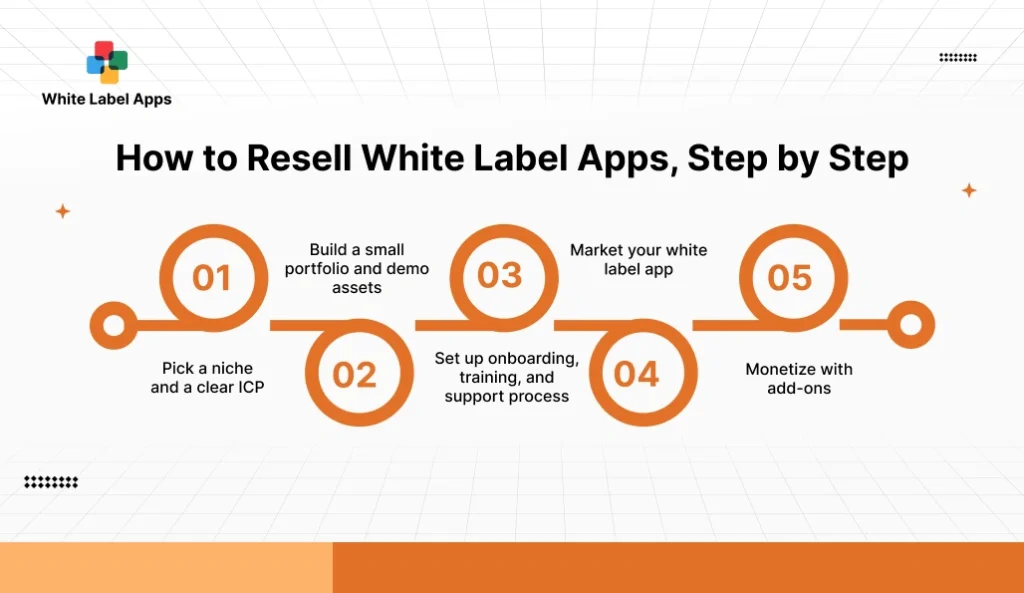
Reselling works best when it feels repeatable, not heroic. You are not launching a startup every time. You are running a process. When each step is clear, deals close faster and delivery stays calm. This step-by-step approach helps you build a small, steady system that grows without chaos.
1. Pick a niche and a clear ICP
Start narrow. Pick one niche with the same daily problem across many businesses. Salons, gyms, clinics, or local services work well. Define your ideal customer profile clearly. Size, location, tech comfort, and budget range matter. When the niche is clear, your messaging sharpens. Demos feel relevant. Objections reduce. A focused niche also helps you price confidently because needs repeat, not change every time.
2. Build a small portfolio and demo assets
You do not need ten clients to start selling. Two or three clean demos are enough. Create sample apps with realistic data and branding. Show common flows, not edge cases. Add simple screenshots and short walkthrough videos. This builds trust quickly. A small, focused portfolio beats a long list of half-ready examples. Clients want proof that it works, not variety.
3. Set up onboarding, training, and support process
Delivery matters as much as sales. Define onboarding steps clearly. What information you need, what you set up, and what the client does. Provide short training guides or videos. Keep support channels limited and predictable. Clear onboarding reduces confusion and support load. When clients know what happens next, they feel safe staying longer.
4. Market your white label app
Marketing should match your niche. Cold outreach works when personalised. Referrals work when delivery is smooth. Local SEO helps when you target nearby businesses. Do not try everything at once. Pick one channel and run it well. Consistency matters more than reach. Most early deals come from simple conversations, not ads.
5. Monetize with add-ons
Base pricing keeps doors open. Add-ons build profit. Offer paid support plans, marketing help, integrations, and maintenance packages. Price these clearly. Do not bundle everything. Clients choose add-ons when they see value, not pressure. Over time, add-ons often earn more than the app itself.
3 Tips for Launching a No-Code White Label App Business
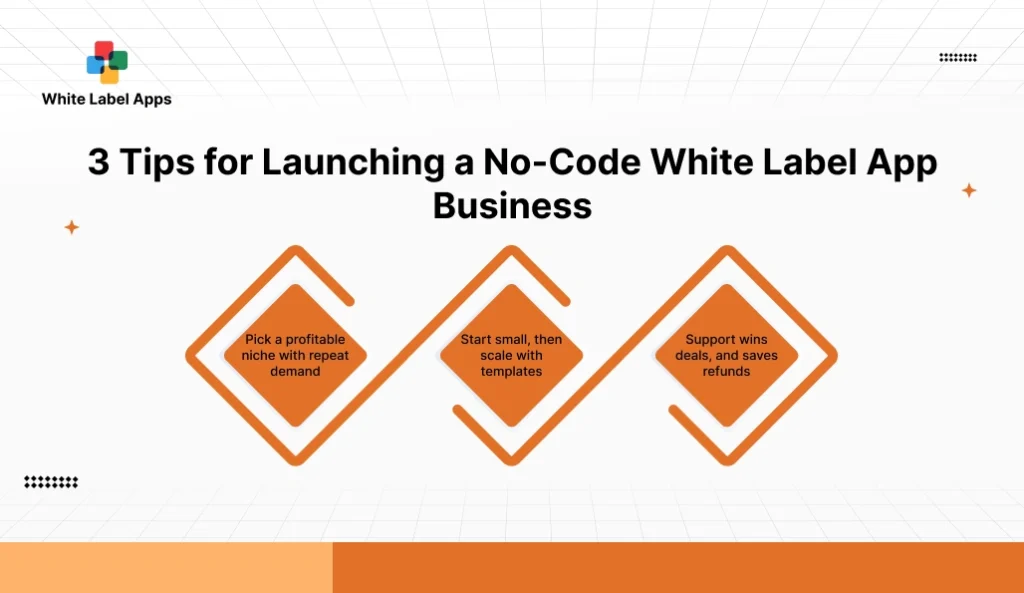
A no-code white label business works when systems come before ambition. Many people rush to sell and fix things later. That usually leads to refunds and burnout. These three tips keep the business stable from day one and help you grow without constant firefighting.
1. Pick a profitable niche with repeat demand
Profit comes from repetition. Choose a niche where the same problem appears again and again. Appointments, memberships, and local services fit well. Avoid trendy ideas with unclear demand. A repeat niche simplifies demos, pricing, and onboarding. It also makes referrals easier because clients talk to similar businesses. When demand repeats, growth feels natural instead of forced.
2. Start small, then scale with templates
Do not build everything upfront. Start with one clean setup and document it. Turn it into a template. Reuse the same structure for new clients. This reduces mistakes and saves time. Templates also make training easier. Scaling becomes a process, not a guess. Small, steady steps beat fast, messy growth every time.
3. Support wins deals, and saves refunds
Support is often the real product. Fast replies build trust before and after the sale. Clear help reduces confusion and complaints. Many refunds happen due to silence, not bugs. When clients feel supported, they stay longer and recommend you. Strong support protects revenue and reputation at the same time.
White Label Mobile App vs Custom Development, Which Is Best for You
This decision shapes everything that comes next. Budget, timelines, control, and long-term stress all depend on it. Many teams rush into custom builds because it sounds serious. Others choose white labels without checking limits. The right choice depends on what you are actually trying to achieve, not what feels impressive.
1. Cost, timeline, and control comparison
White label apps cost less at the start and launch faster. You pay for access, setup, and ongoing use. Custom development needs higher upfront spend and longer timelines, but gives full control. With white label, you trade control for speed and predictability. With custom, you trade speed for flexibility. Neither is better by default. They simply serve different goals.
2. Long-term limits to plan for
White label platforms have ceilings. Custom workflows, data structure changes, or deep integrations may never be possible. Pricing and features depend on the vendor’s roadmap. If your business grows beyond those limits, migration can be painful. Custom apps scale in freedom, but also in responsibility. Planning these limits early avoids regret later.
3. A simple decision checklist
Choose white label if the problem is common, timelines are tight, and budget matters. Choose custom if the app itself is your core product and must evolve fast. If you feel unsure, start white label, learn the market, then move to a custom later.
Also Read: White Label Restaurant App Explained: Benefits, Features, & Why It Works
Real Examples of White Label Apps You Can Resell
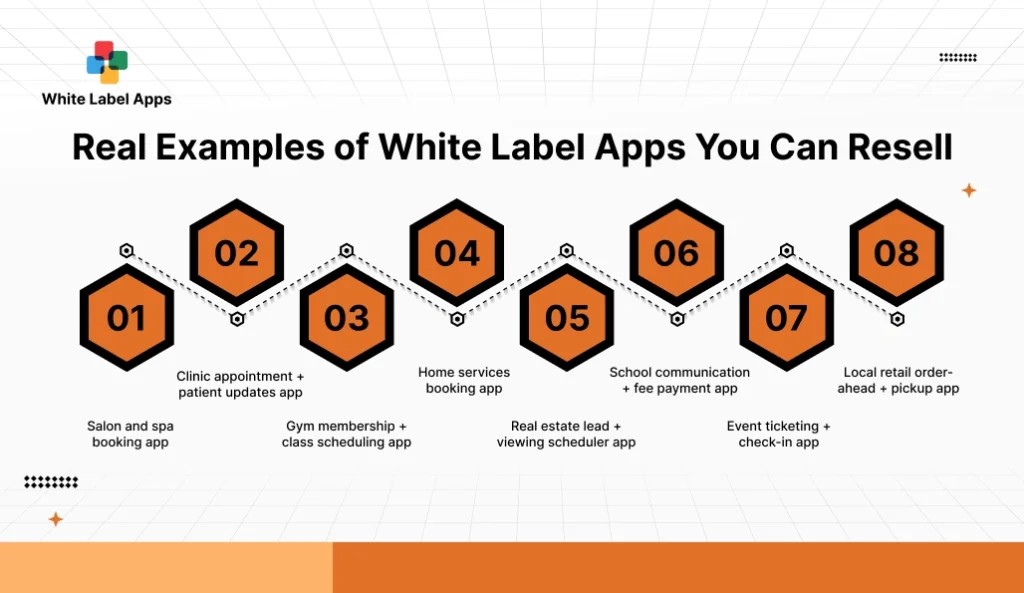
Real examples make white label apps easier to understand and easier to sell. These are not ideas on paper. They are common business needs that already exist in most cities. Because the problems repeat, the apps sell faster and need less explanation. Below are examples that resellers use successfully across markets.
1. Salon and spa booking app
Salons and spas deal with missed calls, double bookings, and no-shows every day. A booking app fixes this quietly. Clients book time slots, get reminders, and reschedule without calling. Staff manage calendars in one place. For resellers, this app is easy to demo and easy to price. Owners see value within days because daily chaos reduces.
2. Clinic appointment + patient updates app
Clinics need order, not complexity. Appointment booking, reminders, and basic patient updates solve most problems. This app reduces front-desk load and missed visits. Patients feel informed without repeated calls. For resellers, clinics offer long-term clients because once systems are set, they rarely switch.
3. Gym membership + class scheduling app
Gyms need retention. A membership app manages plans, renewals, and class schedules in one place. Members book classes, get updates, and feel connected. Owners track attendance and reduce manual follow-ups. Resellers benefit because gyms prefer monthly billing and ongoing support.
4. Home services booking app
Cleaning, repairs, and pest control rely on fast response. A booking app handles requests, assigns jobs, and tracks completion. Customers see progress. Teams stay organised. White label works well here because workflows are similar across services. Resellers can reuse the same setup again and again.
5. Real estate lead + viewing scheduler app
Real estate agents lose leads due to slow follow-up. This app captures enquiries, schedules visits, and sends reminders. Buyers stay engaged without constant calls. Agents value speed and organisation. For resellers, this niche pays well and values simple automation over fancy features.
6. School communication + fee payment app
Schools need clear communication with parents. This app shares updates, notices, and fee information in one place. Payments become easier to track. Parents feel informed. For resellers, schools offer stable contracts and predictable usage once trust is built.
7. Event ticketing + check-in app
Events need smooth entry, not long queues. A ticketing app handles sales, QR check-ins, and basic reporting. Organisers track attendance in real time. This app sells well for recurring events. Resellers can package it with setup and on-day support.
8. Local retail order-ahead + pickup app
Local stores compete on convenience. An order-ahead app lets customers browse, pay, and pick up without waiting. Bakeries, butchers, and pharmacies benefit quickly. For resellers, this app is easy to position as a time-saver, not a tech upgrade.
Best Practices for Reselling White Label Apps
Reselling white label apps is a long game. Shortcuts show up later as support issues, churn, and refunds. The practices below help you build trust, protect margins, and keep delivery calm as you grow.
1. Choose the right partner, not just the lowest price
A cheap platform can become expensive over time. Look for vendors with stable products, clear roadmaps, and responsive support. Check how long they have been in the market and how often they ship updates. A reliable partner reduces firefighting and protects your reputation when things go wrong.
2. Brand it properly
Branding is not just a logo. Use a clear app name, consistent colours, and clean UI. Store screenshots and descriptions should match the client’s business, not generic templates. Even emails and notifications should carry the brand voice. Good branding builds ownership and reduces confusion for end users.
3. Focus on quality
Always test apps on older phones and slow networks. Many users do not have the latest devices. Check loading time, crashes, and basic flows. Small issues become big complaints after launch. Quality testing upfront saves hours of support later.
4. Foster relationships with monthly check-ins
Most churn happens due to silence. Schedule short monthly check-ins to review usage and issues. These calls build trust and surface problems early. Clients feel supported, not abandoned. This habit also opens doors for upgrades and add-ons naturally.
5. Improve the product using metrics and feedback
Track simple metrics like active users, bookings, or orders. Combine numbers with client feedback. Look for patterns across clients. Small improvements based on real use add more value than large feature promises. Data-backed changes reduce guesswork.
6. Offer value-added services without becoming a full dev shop
Stick to services that complement the app. Support, marketing help, integrations, and training fit well. Avoid deep custom development unless planned properly. Staying focused keeps the business profitable and manageable.
Challenges and Opportunities in Reselling White Label Apps
Reselling white label apps is not risk-free. As more platforms enter the market, competition grows and client expectations rise. At the same time, demand for ready solutions keeps increasing. Understanding both sides helps you stay realistic and spot where growth actually lies.
1. Competition and the “same app” problem
Many resellers sell similar apps with similar features. Clients notice this quickly. When everything looks the same, price becomes the only difference. This is where positioning matters. Niche focus, better onboarding, and strong support help you stand out. The app may be shared, but the experience does not have to be. Resellers who solve one problem very well face less direct competition.
2. Client churn and support load
Churn usually comes from confusion, not dissatisfaction. Clients leave when they do not understand updates or feel ignored. Support load grows when onboarding is weak. Clear documentation, fixed support hours, and regular check-ins reduce this risk. Retention improves when clients feel guided, not rushed after payment.
3. Integrations that slow projects
Integrations look simple in sales calls but become complex later. Payment gateways, POS systems, and messaging tools behave differently across regions. When integrations fail or lag, projects slow down. Choosing platforms with proven integrations saves time. Avoid promising niche tools unless already tested.
4. Where the best opportunities are in 2026
The strongest opportunities lie in vertical apps. Fitness, education, local services, and memberships continue to grow. Businesses want tools that solve one clear problem, not all problems. White label apps that focus on operations, not experiments, will see steady demand.
Also Read: White Label Restaurant Ordering App for Your Business
Common Mistakes to Avoid When Reselling White Label Apps
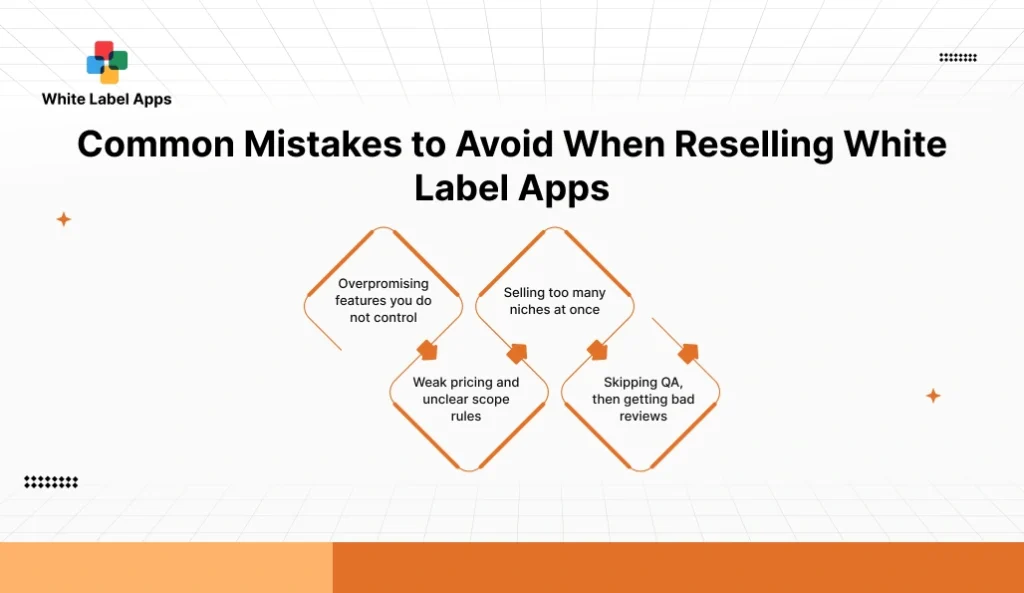
Most failures in white label reselling do not come from bad products. They come from avoidable mistakes made during sales and delivery. Knowing these early saves time, money, and reputation. The points below highlight where many resellers slip, even with good platforms.
1. Overpromising features you do not control
This is the fastest way to lose trust. White label platforms have fixed limits. Promising features outside those limits creates conflict later. Even small promises add up. Always sell what exists today, not what might come later. Clear honesty builds stronger, longer client relationships.
2. Weak pricing and unclear scope rules
Low prices attract the wrong clients. Unclear scope invites endless requests. Both lead to burnout. Pricing should reflect support effort and limits should be written clearly. When scope is defined early, conversations stay focused and delivery stays smooth.
3. Selling too many niches at once
Trying to sell to everyone weakens your message. Each niche has different needs and language. Supporting many niches increases confusion and support load. Focus on one or two niches first. Master them. Expansion becomes easier later.
4. Skipping QA, then getting bad reviews
Launching without testing invites public problems. Users review apps, not excuses. Test on real devices and real networks. Fix small issues before launch. One bad review costs more than one delayed launch.
Understanding the Legalities Involved in White Label App Reselling
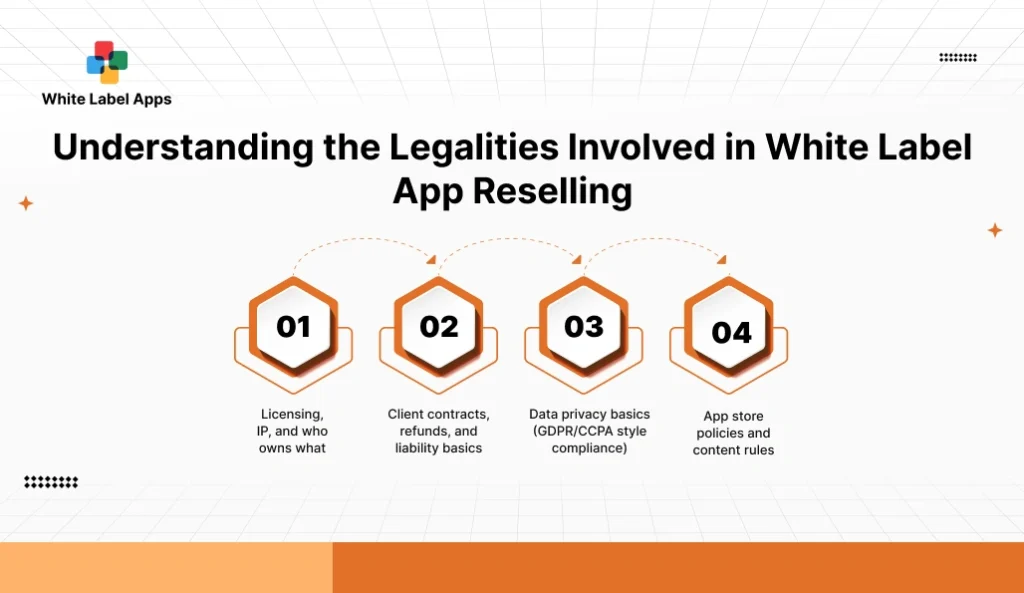
Legal clarity protects you when things go wrong. Many resellers skip this part early, then scramble later when disputes appear. You do not need to be a lawyer, but you must understand the basics. Clear legal ground builds trust with clients and keeps your business stable as it grows.
1. Licensing, IP, and who owns what
Licensing defines your rights and limits. In most white label setups, the vendor owns the core intellectual property. You get the right to use and resell it under certain terms. Your client usually owns their branding and content, not the code. This must be explained clearly. Misunderstanding ownership creates serious conflict later. Always know what you can sell and what you cannot transfer.
2. Client contracts, refunds, and liability basics
Contracts protect both sides. They should explain scope, pricing, support levels, and refund rules in plain language. Avoid vague promises. Clarify what happens if a client cancels or delays work. Liability clauses matter too. If a third-party service fails, you should not carry full blame. Simple, clear contracts reduce disputes and emotional stress.
3. Data privacy basics (GDPR/CCPA style compliance)
Data privacy is no longer optional. Even small apps collect names, emails, and usage data. Clients will ask where data is stored and who can access it. Understand basic privacy rules like consent and data access rights. You do not need full compliance expertise, but you must know your platform’s stance and limits.
4. App store policies and content rules
App stores control visibility. Their policies change often. Content, permissions, and claims are closely reviewed. Even white label apps can be rejected. Know common rules and avoid risky promises in listings. Platforms that track policy changes save you time and rework.
Also Read: Top SaaS Examples for Teams and Startups
The Future of White Label Apps and Their Impact on the App Industry
White label apps are moving away from one-size-fits-all products. As businesses become clearer about what they need, platforms are adapting. The future points toward focus, automation, and trust. Resellers who understand these shifts early will stay relevant, while others struggle to compete on price alone.
1. More vertical apps, fewer generic apps
Generic apps try to serve everyone and end up serving no one well. The market is shifting toward vertical apps built for one industry. Fitness, education, healthcare support, and local services are leading this change. These apps speak the user’s language and fit daily workflows better. For resellers, vertical focus makes positioning easier and reduces sales friction.
2. Built-in AI features and automation, where it helps
Automation is becoming practical, not flashy. Simple AI features like smart reminders, basic chat responses, and usage insights are entering white label platforms. These features reduce manual work and improve consistency. The value lies in small efficiencies, not complex systems. Resellers should focus on AI that saves time, not promises transformation.
3. Security and compliance becoming a selling point
Security is no longer a backend concern. Clients ask about data handling and access control early. Platforms that offer clear security practices and compliance readiness will stand out. For resellers, this becomes a trust signal. Strong security reduces objections and builds long-term confidence.
Final Thoughts
White label apps are not shortcuts. They are structured choices. When used in the right situations, they help you move fast, reduce risk, and build steady income. When sold carelessly, they create friction and churn. The difference lies in clarity.
If you focus on one niche, set honest boundaries, and price for long-term support, this model works well. It lets you sell outcomes instead of builds. For many agencies and consultants, that shift matters more than code ownership. Start small, learn from real users, and grow with intention.
White labels also teach discipline. You learn to say no to bad-fit clients and yes to repeatable work. Over time, this improves margins and reduces stress. The app becomes a tool, not the business itself. What really matters is trust, delivery, and consistency. Those are harder to copy than features.
FAQs
1. Do I need coding skills to build white label mobile apps?
No. Most white label platforms are designed for non-technical users. The vendor handles the code, hosting, and updates. Your role focuses on setup, branding, and client communication. Basic technical understanding helps, but you do not need to write code. Many successful resellers come from marketing or consulting backgrounds.
2. What industries benefit most from white label mobile apps?
Industries with repeat, everyday workflows benefit the most. Salons, gyms, clinics, local services, schools, and small retailers are common examples. These businesses need bookings, payments, or communication, not complex custom logic. White label fits well where needs are similar across many businesses.
3. Can I customize a white label mobile app to match my brand?
Yes, within limits. You can usually change the app name, logo, colours, icons, and store listings. Some platforms also allow layout and module changes. What you cannot change is the core logic or data structure. Clear branding still makes the app feel owned by your client.
4. How long does it take to launch for a first client?
For a first client, launch usually takes a few weeks. Time goes into setup, branding, store approvals, and testing. Once the process is familiar, later launches move faster. Many resellers reduce launch time significantly after the first few projects.
5. Who owns the app code and customer data?
The vendor usually owns the core app code. You and your client own the branding and content. Customer data ownership depends on the platform’s terms. Most platforms allow clients to access and export their data. Always confirm this before selling.

whitelabelapp
Related Articles
White Label Personal Training App Development: Launch Your Branded Fitness App Faster
Your day is full of small fitness tasks. A client asks for the plan again. Another forgets to pay. Someone says the video link is not opening. It all happens on WhatsApp, notes, and screenshots, and it gets messy fast. A white label personal training app helps you put workouts, check-ins, payments, and progress in […]
Read More
Top 15 White Label Reseller Programs That Deliver Big Profits in 2026
If you have ever tried reselling services, you know the truth. The pitch is easy. Delivery is where most resellers bleed time and profit. That is why this list is not based on “popular names” or random directories. We did deep research before writing this blog. We reviewed reseller program pages, service menus, white label […]
Read More