
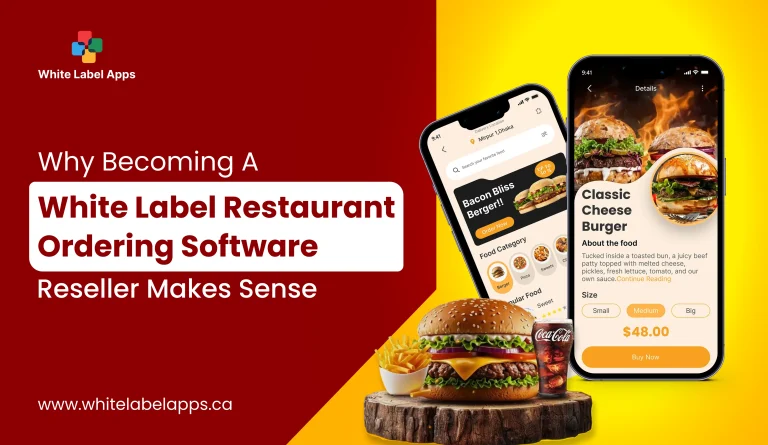
Restaurants today move fast, and the pressure keeps growing. Owners want better control over orders, data, and customer experience, but building software from scratch feels heavy and risky. We have seen many businesses struggle with rising commissions, tech confusion, and tools that never fully fit their flow. Customer behavior adds to this shift, with a 58% of people now preferring to order directly through a restaurant’s own app or website. That is why reselling restaurant ordering software feels practical right now. It lets us step into a space where demand already exists and problems are very real.
With White Label Apps, becoming a reseller is less about selling software and more about solving daily issues for restaurants we already understand. We do not need to convince owners that online ordering matters anymore. They feel it every day. What they need is a reliable system and someone they trust to guide them. This model allows you to build a steady income while staying close to the industry.
This is where white-label apps fit naturally into your business. These ready platforms let you offer branded ordering tools without development stress, helping restaurants launch faster while focusing on support, relationships, and future growth.
TL;DR
- Restaurants increasingly want full control over orders and data, avoiding high commissions that slowly eat profits every month today.
- White Label Restaurant Ordering Software meets real demand as restaurants seek branded, commission-free ordering systems that customers actually trust more today.
- Resellers avoid heavy development costs by selling ready systems, skipping long builds, technical hires, and endless maintenance work entirely upfront.
- Long-term recurring revenue is possible through subscriptions, add-ons, and support fees that grow steadily with each successful restaurant partner.
- The market keeps growing steadily as more restaurants move online and look for affordable, owned ordering technology solutions worldwide.
Key Points
- Restaurants prefer owned ordering systems because they protect branding, customer relationships, and long-term profits better than third-party platforms today.
- White-label fashions decrease startup hazard with the aid of doing away with improvement uncertainty and allowing agencies to launch more quickly with established technology already built.
- Branding matters more than ever as eating places compete online and want constant consumer experiences across websites, apps, menus, and marketing.
- Resellers can scale by focusing on sales, onboarding, and consumer assistance instead of complicated software program improvement duties daily.
- Demand spans small and mid-sized restaurants seeking simple ordering tools without enterprise-level costs or complicated contracts, training, setup, overhead, or stress.
What Does White Label Restaurant Ordering Software Really Mean?
White-label restaurant ordering software means selling an ordering system under your own brand, not someone else’s. Restaurants see your name, your logo, and your identity. The tech stays hidden, while ownership always feels real and trustworthy for them over time.
Instead of establishing software program packages from scratch, businesses use pre-built packages and resell them confidently. Updates, fixes, and enhancements take place quietly in the background. This lets resellers focus on clients, support, and growth without technical stress slowing progress over long-term plans.
It works because restaurants want control, not dependence. They avoid commissions, keep customer data, and manage orders directly. This kind of solution feels personal, practical, and stable, which makes adoption much easier for owners who dislike complicated systems today.
Also Read: White Label Mobile Apps Benefits
White Label Solutions vs Third-Party Ordering Platforms
The difference between white-label solutions and third-party platforms becomes clearer when you look at control, costs, branding, and customer ownership side by side in a simple comparison.
| Factor | White Label Solutions | Third-Party Aggregators |
| Fees | Usually, a fixed monthly cost with no commission taken from individual orders | Takes a large cut from every order, often around 20–30 percent |
| Brand Visibility | Restaurants keep full control over branding, so customers interact directly with their business | The platform’s brand shows first, making restaurants feel secondary |
| Access to Customer Data | All customer details stay with the restaurant for marketing and follow-ups | Data access is restricted or fully owned by the platform |
| Setup Timeline | Goes live within days or a few weeks, depending on customization | Instant listing, but with limited flexibility or ownership |
| Customer Connection | Restaurants communicate and build loyalty directly with their customers | The platform owns the relationship, not the restaurant |
| Marketing Freedom | Full freedom to run offers, loyalty programs, and custom promotions | Promotional options are limited and shared with competing restaurants |
This comparison makes one thing clear. Control, branding, and long-term value matter more than quick visibility. Restaurants deciding on possession over commissions construct more advantageous consumer relationships, whilst white-label options provide them freedom to develop beyond hidden limits.
How Online Ordering Is Reshaping the Restaurant Business?
Restaurants do not run the same way anymore. Phones ring less. Counters feel quieter. Screens do most of the talking now. Online ordering changed how food moves from kitchens to customers. It reshaped staffing, pacing, and even menu design. This shift feels subtle, but it touches everything behind the scenes.
What really changed is control. Restaurants can predict busy hours, prepare smarter, and reduce order mistakes. Digital menus update instantly. Promotions attract clients directly. According to enterprise research, over 60 percent of shoppers now opt for ordering meals online as an alternative to in-person, which explains why eating places deal with online ordering as core, not optional.
The biggest shift is in mindset. Restaurants no longer wait for clients to stroll in. They meet them in the place they already are: on phones, laptops, and late-night cravings. Online ordering grew to become a section of survival, then growth. Those who adapt feel steadier. Those who delay feel pressure building slowly, day after day.
Must-Have Features in White Label Restaurant Ordering Software
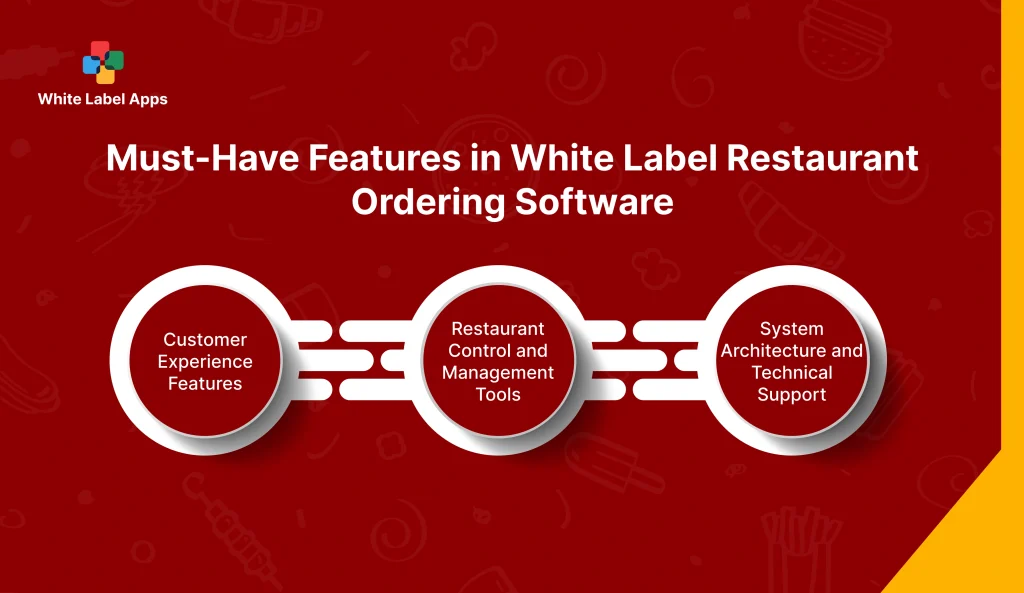
Key facets outline how easily eating places function and how clients place orders without problems. A white-label restaurant ordering software program brings collective control, branding, and usability into one practical, easy-to-manage system.
Customer Experience Features
- Fully Branded Web and Mobile Ordering: Ordering apps and websites reflect the restaurant’s look and feel. Logos, colors, and brand style stay consistent, making customers feel like they are ordering directly from the restaurant.
- Live Order Status Updates: Customers can follow their order in real time, from kitchen prep to delivery. This reduces uncertainty and cuts down unnecessary calls.
- Flexible Payment Options: Support for cards, digital wallets, and contactless payments helps customers complete orders without friction or second thoughts.
- Loyalty and Reward Programs: Restaurants can create reward systems, special deals, and repeat order perks that encourage customers to come back more often.
- Personalized Ordering Experience: Customers can save favorite meals, addresses, and payment details, making future orders quicker and more comfortable.
Restaurant Control and Management Tools
- Centralized Order Handling Panel: All incoming orders appear in one clear dashboard, helping staff accept, manage, and process requests efficiently.
- Simple Menu Editing Tools: Menus, pricing, add-ons, and availability can be updated instantly without technical help or delays.
- Insights and Performance Reports: Sales trends, popular dishes, peak hours, and customer habits are displayed clearly to support better decisions.
- POS System Compatibility: The platform connects smoothly with existing POS systems, reducing errors and duplicate data entry.
- Built-In Promotion Tools: Restaurants can send email or SMS campaigns to promote deals, events, or seasonal offers directly.
System Architecture and Technical Support
- Cloud-Based Platform Design: Reliable hosting ensures the system performs well even during busy hours without crashes or slowdowns.
- Open Integration Capabilities: APIs allow connections with accounting, inventory, and CRM tools already in use.
- QR Code Ordering Options: Dine-in customers can scan, order, and pay without physical menus or staff interruptions.
- Multi-Location Management: Restaurant groups can manage multiple locations centrally while keeping menus and settings flexible.
- Automated Order Alerts: Customers and staff receive instant SMS or email updates for confirmations, preparation, and delivery progress.
Together, these aspects create an easy ordering experience, assisting eating places to work faster, remain organized, and construct confidence while clients experience simple, familiar ordering without confusion or delays each and every single day.
Also Read: White Label Food Ordering System for Restaurants & Cloud Kitchens
Why Demand for White Label Restaurant Software Keeps Growing?
Restaurants desire extra control, secure costs, and direct consumer relationships. White-label restaurant software program solutions do these things without forcing proprietors into complicated structures or heavy ongoing fee structures.
Key Benefits
- Restaurants break out excessive fee charges and hold greater earnings by means of the use of their own ordering structures as an alternative to third-party platforms.
- Full branding control helps restaurants build stronger recognition and trust with customers across digital ordering channels consistently.
- Direct access to customer data helps with marketing, loyalty programs, and repeat orders, besides outdoor platform restrictions.
- Predictable month-to-month pricing makes budgeting simpler and reduces stress precipitated by sudden charges or rising platform fees.
- Faster setup allows eating places to launch online ordering rapidly, barring lengthy improvement timelines or technical challenges.
- Scalable systems support growth, helping single locations and multi-location brands manage orders efficiently as demand increases.
Together, these benefits show why more restaurants choose ownership over dependency. White-label options provide freedom, clarity, and room to grow, supporting organizations to continue to be worthwhile whilst constructing greater consumer connections, without useless platform stress or long-term limitations.
Low Investment, High Opportunity: Getting Started the Smart Way
One of the largest motives for humans stepping into white-label reselling is how handy it feels. Instead of constructing a software program from scratch, this mannequin lets you cross faster and smarter. As a reseller, you can:
- Offer a ready-to-use, proven ordering system under your own brand name.
- Decide your own pricing, packages, and revenue approach based on your market.
- Scale confidently without managing development, updates, or technical headaches.
With the right white-label partner, getting started usually means a simple monthly fee. That fee covers software upkeep, regular updates, and customer support, so you stay focused on selling and relationships.
Common Pricing Approaches for Resellers
- Subscription-Based Plans: Restaurants pay a monthly or yearly fee, often between $99 and $499 per location, depending on features and scale.
- Tiered Packages: Different plans, like basic, premium, or enterprise, allow resellers to serve various restaurant sizes with clear feature differences.
- Revenue Sharing Models: Lower upfront costs paired with a small percentage of transaction value, typically around 5 to 10 percent per order.
Altogether, this approach continues to hold the low threat whilst opening normal earnings paths, making the white-label reselling experience exact for newbies and corporations looking to make a larger salary without heavy investment, extended builds, or everyday technical stress over time and markets.
A Simple Guide to Choosing and Launching White Label Solutions
Choosing and launching white-label options will become simpler when the step-by-step experience is clear and practical. This information focuses on making clever decisions, fending off mistakes, and putting up structures that work easily from day one.
- Clarifying What the Business Actually Needs: Start by understanding what the business truly requires, from online ordering to loyalty tools. Check how existing systems, such as POS or inventory, should connect. Set realistic budget limits and expected returns early, avoiding assumptions that can be confusing later.
- Exploring and Comparing Available Providers: Take time to evaluate carriers carefully. Look past pricing and center attention on stability, features, and real-world use cases. Reading purchaser testimonies and evaluations helps expose how structures operate after launch, not simply at some stage in income conversations.
- Reviewing Core Functions and System Connections: Ask for live demos that highlight daily usage, not just polished features. Test how the platform feels on mobile devices. Make sure integrations with current tools actually work smoothly without manual workarounds or hidden technical limitations.
- Shaping the Brand Experience: Create clear brand guidelines before customization begins. Adjust layouts, colors, and visuals so the platform feels familiar to restaurant customers. Organize menus and classes logically to limit ordering friction and make the searching experience easy, not overwhelming.
- Testing Carefully Before Going Live: Test the system across devices, browsers, and order types. Place trial orders to confirm payment, notifications, and kitchen flow. A soft launch helps catch issues quietly before exposing the platform to all customers publicly.
- Preparing Teams and Support Processes: Train staff on managing orders, updates, and basic troubleshooting. Define how technical issues should be handled and escalated. Simple documentation for common tasks saves time and reduces stress during busy service hours.
- Introducing the Platform to Customers: Promote the new ordering gadget in all places where clients already have interaction with the brand. Encourage first-time use with small incentives. Collect comments actively and alter quickly, displaying to clients the right things, and upgrades take place primarily based on actual input.
When each step is handled with care, launching white-label solutions feels controlled, not overwhelming. The result is a smoother rollout, confident teams, and a platform customers actually enjoy using from the very beginning.
Also Read: White Label Online Ordering System: Full Guide to Cost, Features, Setup & ROI
How to Build Long-Term Success as a White Label Software Reseller?
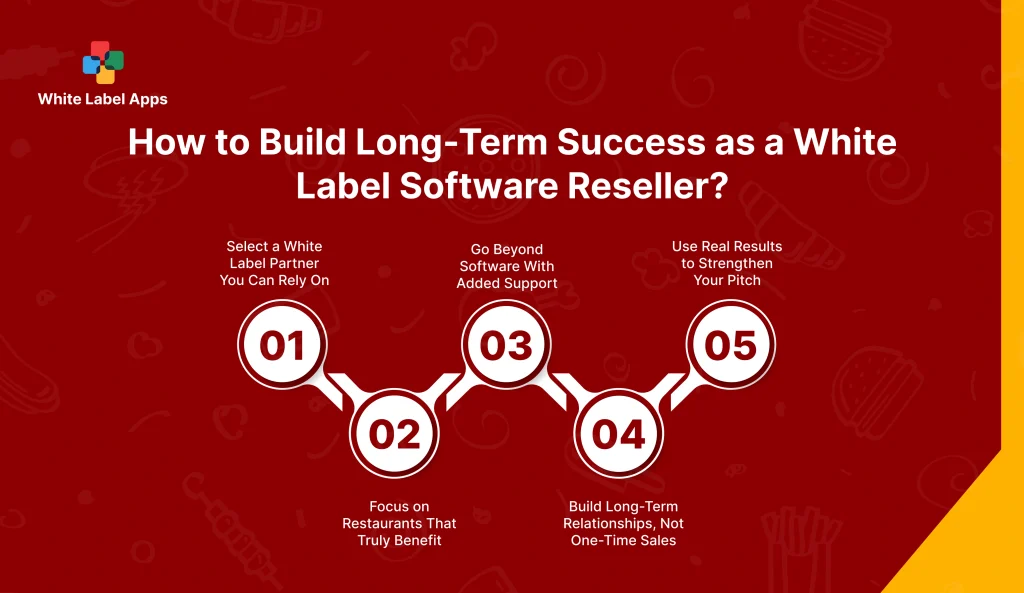
Long-term success as a white-label software reseller comes from consistency, trust, and staying involved. It is less about fast sales and more about helping clients grow, adapt, and stay confident using your solution.
-
Select a White Label Partner You Can Rely On
Success starts with who you partner with. A strong white-label partner gives you reliable software, regular updates, and real support when issues come up. The platform should be easy for restaurants to use, mobile-friendly, and stable during busy hours. Branding flexibility matters too. When the partner handles tech well, you stay focused on clients, not firefighting problems daily.
-
Focus on Restaurants That Truly Benefit
Not every restaurant is a good fit, and that is okay. Focus on independent restaurants, growing local chains, and food businesses that rely heavily on takeout or delivery. These owners feel the commission pressure the most. They value control and cost savings. When you speak to their real problems, conversations feel natural instead of forced sales pitches.
-
Go Beyond Software With Added Support
Software alone rarely wins loyalty. Extra services make the difference. Help with branding, website integration, menu setup, or marketing guidance adds real value. Many restaurant owners need direction, not just tools. When you support them beyond software access, you become useful daily. That usefulness turns into trust, referrals, and longer client relationships.
-
Build Long-Term Relationships, Not One-Time Sales
Quick sign-ups mean little if clients leave after months. Stay connected after launch. Check order performance. Share improvement ideas. Help them adapt offers or menus. Restaurants appreciate partners who stay involved. Long-term relationships create steady income, reduce churn, and build reputation. Growth becomes predictable instead of stressful or sales-heavy.
-
Use Real Results to Strengthen Your Pitch
Nothing sells better than proof. Track results like order growth, commission savings, or repeat customer increases. Share simple numbers and real stories from existing clients. Restaurant owners trust outcomes more than promises. When they see the results others achieved, confidence builds faster. Your pitch becomes believable, not sales-driven or exaggerated.
Challenges to Watch Out For
- Choosing a weak software partner can cause outages, unhappy clients, and damage to your reputation.
- Selling to restaurants that do not need online ordering wastes time and leads to churn.
- Overpromising features or results creates distrust when the software cannot deliver exactly what was promised.
- Ignoring ongoing support after onboarding makes restaurants feel abandoned and increases cancellations over time slowly.
- Failing to explain value beyond price pushes restaurants to compare you with cheaper platforms only.
| Success Area | How to Put It Into Practice |
| Bringing Clients Onboard | Use a simple, repeatable onboarding flow with clear steps, timelines, and expectations so clients never feel lost. |
| Handling Technical Issues | Set up support levels with clear response times, so clients know when and how help will arrive. |
| Teaching Clients the Platform | Offer easy training guides and ongoing sessions that help clients feel confident using the system daily. |
| Delivering Ongoing Value | Share regular updates and improvement tips to help clients get better results over time. |
When resellers stay honest, supportive, and patient, success follows naturally. Strong partnerships, clear value, and steady involvement turn white-label software into a dependable business, not just another short-term sales idea.
How to Track and Measure Reseller Performance?
Tracking reseller performance helps us understand what works and what needs attention. Instead of guessing, we rely on clear numbers and real behavior. When we track progress regularly, we spot gaps early, support resellers better, and keep growth steady without pressure or confusion.
- Review monthly sales and recurring revenue to check consistency, deal quality, and retention.
- Track onboarding success through setup timelines, activation rates, and smooth client launches.
- Monitor customer feedback, renewals, and support tickets to judge satisfaction.
- Measure marketing results using leads generated, conversion rates, and response time.
- Compare performance trends over time to spot patterns and problem areas.
Best Tools for Tracking
- HubSpot: A friendly platform that brings sales, marketing, and support data together so we can see reseller activity, lead flow, and revenue trends in one place without confusion.
- Salesforce: A powerful CRM that helps us track reseller sales, customer interactions, and pipeline stages to understand who’s performing and where support is needed.
- Google Analytics: We use this to see how reseller websites and campaigns drive traffic, conversions, and user behavior simply and clearly over time.
- Zoho Analytics: An easy reporting tool that pulls data from different sources so we can make simple dashboards and spot performance gaps quickly.
- Pipedrive: A clean sales tracker that shows every reseller’s deal progress, success rate, and pipeline health so we stay focused on results.
Also Read: White Label Restaurant Ordering App for Your Business
A Fast-Growing Market with Long-Term Business Potential
Food delivery has quietly become part of everyday life. What started as a convenience now feels like a habit people rely on. Changing work patterns, digital access, and comfort-driven choices keep pushing this market forward. Restaurants adapt because customers expect speed, ease, and flexibility more than ever.
- Busy lifestyles push customers toward ordering meals online instead of cooking daily at home tonight.
- Smartphones and apps make food delivery easy, fast, and familiar for every age group today.
- Restaurants rely on delivery platforms to reach new customers without expanding physical locations too quickly.
- Urban growth and work-from-home habits increase demand for flexible meal ordering options across many cities.
- Subscription offers, discounts, and faster logistics keep food delivery usage rising steadily year after year.
Conclusion
Becoming a reseller of White Label Restaurant Ordering Software is not about chasing trends. It is about meeting restaurants where they already are. Online ordering is part of daily business now. Restaurants want control, predictable costs, and systems that feel like their own, not rented space.
For resellers, this model stays practical. No heavy builds. No endless testing. Just a real solution solving real problems. Growth happens one restaurant at a time, and it compounds quietly. The relationships matter more than speed.
If you are searching to step into this area with the proper technical basis and long-term support, partnering with a skilled improvement crew makes matters smoother. Teams like the one at White Label Apps assist agencies in launching white-label options without confusion, delays, or guesswork. The opportunity is here. It is steady. And it rewards patience.
FAQ
1. What is white-label restaurant ordering software used for?
White Label Restaurant Ordering Software helps restaurants accept online orders under their own brand. It replaces third-party platforms that charge commissions. Restaurants control menus, pricing, customer data, and promotions. For resellers, it becomes a product they can offer without building technology. The software supports pickup, delivery, and direct ordering through websites or apps, improving margins and customer relationships.
2. Is White Label Restaurant Ordering Software suitable for small restaurants?
Yes, small restaurants benefit the most from White Label Restaurant Ordering Software. It gives them professional ordering tools without high development costs. They avoid commission-heavy platforms and keep full branding control. Setup is usually simple, and staff learn quickly. For owners with limited budgets, it provides stability, predictability, and better customer ownership compared to third-party ordering apps.
3. How do resellers make money from white-label software?
Resellers earn via setup fees, month-to-month subscriptions, function add-ons, and ongoing help services. White Label Restaurant Ordering Software creates ordinary profits rather than one-time sales. As more eating places join, income grows steadily. Many resellers also bundle marketing or management services, increasing client value without needing new customers constantly, which helps build long-term, predictable earnings.
4. Do resellers need technical knowledge to sell these solutions?
No deep technical background is required. White Label Restaurant Ordering Software is already built and maintained by the provider. Resellers focus on sales, onboarding, and support. Basic understanding helps, but training is usually included. This makes the model accessible for agencies, consultants, or entrepreneurs who understand restaurants but do not want to manage software development directly.
5. Why are restaurants moving away from third-party ordering platforms?
Restaurants are worn out from excessive commissions, constrained access to facts, and dropping customer relationships. White Label Restaurant Ordering Software offers them possession and predictable costs. They talk without delay with clients and construct loyalty except for interference. Over time, this management improves income and company recognition, making owned ordering structures more beautiful than marketplace-based platforms.

whitelabelapp
Related Articles
White Label Personal Training App Development: Launch Your Branded Fitness App Faster
Your day is full of small fitness tasks. A client asks for the plan again. Another forgets to pay. Someone says the video link is not opening. It all happens on WhatsApp, notes, and screenshots, and it gets messy fast. A white label personal training app helps you put workouts, check-ins, payments, and progress in […]
Read More
Top 15 White Label Reseller Programs That Deliver Big Profits in 2026
If you have ever tried reselling services, you know the truth. The pitch is easy. Delivery is where most resellers bleed time and profit. That is why this list is not based on “popular names” or random directories. We did deep research before writing this blog. We reviewed reseller program pages, service menus, white label […]
Read More