
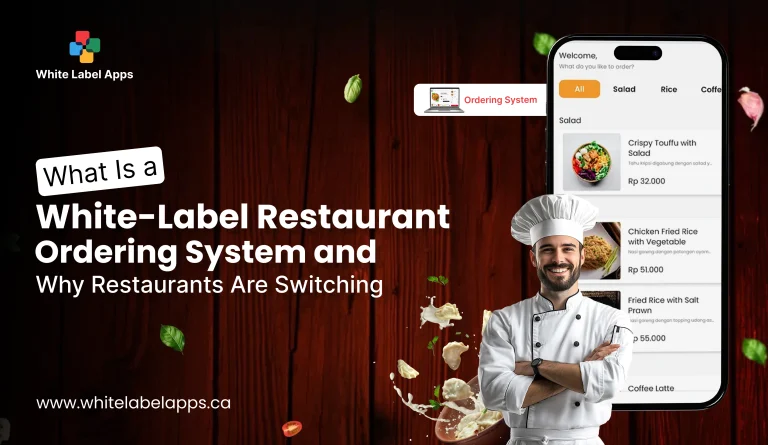
Restaurants used to measure success by full tables and ringing phones. Today, success looks quieter. Orders arrive on screens, customers tap instead of calling, and speed matters more than small talk. Yet many owners feel something slipping away. Profits feel thinner. Customer names disappear. Decisions belong to someone else.
Third-party apps promised growth, and they delivered volume, but at a cost few expected long-term. Fees stack up. Branding fades. Loyalty becomes fragile. A restaurant can be busy all night and still feel behind by morning. That frustration is real, and it is pushing owners to rethink how orders should flow.
This is where a white-label restaurant ordering system enters the picture, not as a trend, but as a reset. It gives restaurants their own space again. Their name stays visible. Their customers stay close. Orders feel direct, not rented.
Switching is not about rejecting technology. It is about choosing how it fits into daily work. When control returns, confidence grows naturally, and decisions start to feel clear again. In this blog, you will get to know how this shift works, why restaurants are making it, and what changes it brings to everyday ordering.
TL;DR
- A white-label restaurant ordering system lets restaurants take back control of orders, branding, and customer relationships fully.
- Direct ordering removes middle layers, making daily operations calmer, clearer, and less stressful for restaurant teams.
- Customer data finally stays with the restaurant, helping owners understand habits instead of guessing blindly.
- Without marketplace noise, customers focus only on your food, not endless comparisons or forced discounts.
- Owning the ordering system builds long-term stability instead of depending on changing third-party platform rules.
Key Points
- White-label ordering keeps branding visible from the first click to checkout, building familiarity and trust over time.
- Direct systems reduce commission losses and help restaurants predict profits without hidden platform deductions.
- Restaurants gain the freedom to change menus, prices, and offers instantly without waiting for approvals.
- Customers enjoy smoother ordering, clearer tracking, and a more personal experience tied to the restaurant.
- Independence from platforms creates confidence, better planning, and steadier growth for restaurant businesses.
What Is a White-Label Restaurant Ordering System?
A white-label restaurant ordering system is a fully branded ordering setup that belongs only to the restaurant. Customers place orders through the restaurant’s own website or app. No third-party logos appear. No shared control. Everything feels direct and personal.
-
Full Brand Ownership From the First Click
When customers order using a white-label restaurant ordering system, they only see your restaurant. Your logo. Your colors. Your voice. That repeated exposure matters more than people think. Over time, customers stop associating meals with apps and start remembering your name instead. That shift builds trust slowly but deeply. It feels familiar, like walking into a place where the staff already knows your order.
-
Direct Ordering Without Middle Layers
Orders come straight to the restaurant without passing through extra platforms. This reduces confusion, delays, and errors. A white-label restaurant ordering system keeps things simple. No bouncing between dashboards. No guessing who controls what. Staff focuses on food, not fixing tech issues. That simplicity often improves speed and reduces stress during busy hours.
-
Customer Data Stays With the Restaurant
One of the biggest shifts happens quietly, and that is data control. With a white-label restaurant ordering system, customer names, order history, favorite meals, and ordering times stay with the restaurant. Owners finally see patterns instead of guessing. They know who orders late, who loves spicy food, and who comes back every Friday. This makes follow-ups feel personal, not salesy. It also lets restaurants speak directly to customers without asking permission from another platform that never really shared ownership.
-
No Marketplace Competition
Third-party platforms push restaurants into crowded screens where everyone looks similar. Prices sit side by side. Discounts shout louder than quality. A white-label restaurant ordering system removes that pressure completely. Customers are not scrolling through endless options. They are already inside your space, choosing your food. That single focus changes behavior. Orders feel intentional. People spend a little more. Loyalty grows naturally because the experience feels calm, not rushed by comparison.
-
A System That Feels Like Your Own
What restaurants often love most is the feeling of ownership. A white-label restaurant ordering system does not feel borrowed or temporary. It feels like part of the business. Owners can update menus anytime, change prices, add offers, or pause items without waiting. That control builds confidence. Decisions feel easier. Mistakes feel fixable. Over time, the device blends into day-to-day work as a dependable device that helps the restaurant rather than reminding them they are renting a house on someone else’s platform.
A white-label restaurant ordering system gives restaurants calm control again, turning everyday orders into direct relationships, clearer decisions, and a business that finally feels owned, not borrowed, by its creators.
Why Are Restaurants Moving Away From Third-Party Ordering Platforms?
Many restaurants joined third-party platforms for exposure. But over time, the downsides became harder to ignore. Costs rose. Control dropped. The relationship with customers felt distant.
- Rising Commission Fees Hurt Daily Profits: Many third-party apps charge 15 to 30% commission on every order. That cut adds up fast. Restaurants notice they are selling more but earning less. A white-label restaurant ordering system removes those per-order fees. Owners can finally predict income without worrying about hidden charges eating into margins.
- Loss of Brand Identity: When customers order through a platform, they remember the platform, not the restaurant. Logos fade. Colors disappear. A white-label restaurant ordering system fixes this by keeping branding front and center. Customers associate good food with the restaurant again, not an app icon.
- Limited Access to Customer Information: Third-party platforms keep customer data locked. Restaurants cannot see full order patterns or contact buyers directly. A white-label restaurant ordering system changes that. It opens a clear view into customer behavior, helping restaurants improve menus, timing, and service quality.
- Platform Rules Change Without Warning: Restaurants often face sudden rule updates, new fees, or visibility changes. These shifts create stress. With a white-label restaurant ordering system, the restaurant sets its own rules. No surprises. No sudden drops in visibility because of algorithm changes.
- Customer Experience Feels Generic: Third-party ordering often feels the same everywhere. Same layout. Same flow. A white-label restaurant ordering system lets restaurants shape the experience. Small touches make ordering feel human again, not copied and pasted.
Restaurants are choosing freedom over fees and connection over convenience. Moving away from third-party platforms brings control back, restores identity, and rebuilds customer relationships that feel real again.
Also Read: White Label Delivery App Development Guide 2026
Key Benefits of Using a White-Label Restaurant Ordering System
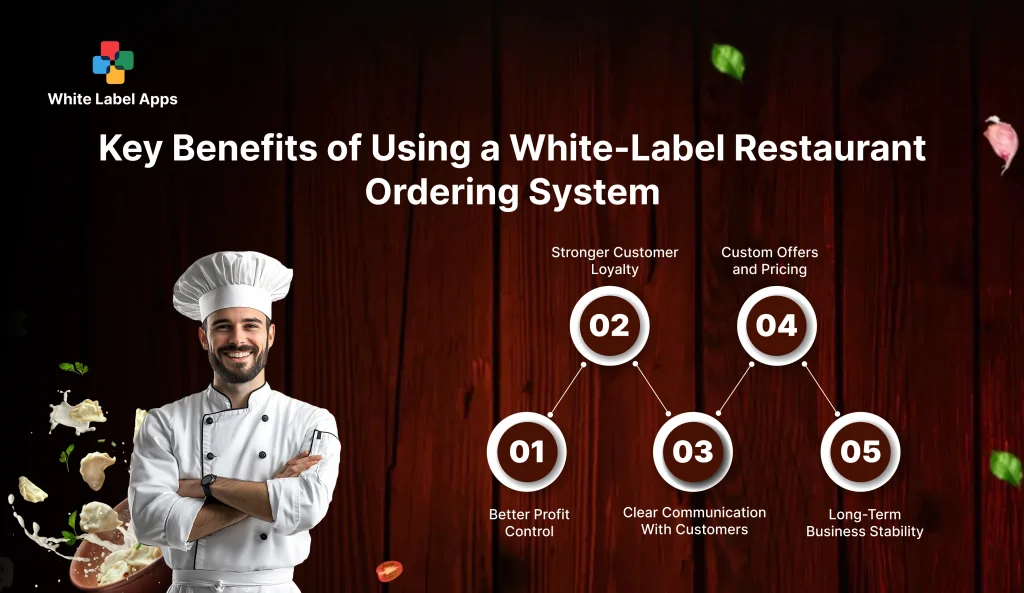
Switching systems is not just about saving money. It is about daily peace of mind, better relationships, and long-term growth that feels steady.
-
Better Profit Control
When commission fees disappear, restaurants finally see real numbers. Busy nights stop feeling confusing. Every order adds value instead of anxiety, helping owners understand what growth actually looks like.
With a white-label restaurant ordering system, costs stay predictable. Owners plan inventory, staffing, and promotions with confidence, not guesswork. Money feels earned, not slowly drained by silent deductions.
-
Stronger Customer Loyalty
Direct ordering creates familiarity. Customers feel like they are ordering from people, not platforms. A white-label restaurant ordering system builds comfort through repeated, smooth experiences customers trust.
Saved preferences, faster checkouts, and familiar layouts reduce effort. When ordering feels easy, people return without thinking. Loyalty grows quietly, shaped by convenience and comfort rather than discounts or pressure.
-
Clear Communication With Customers
Restaurants finally speak directly to their customers. Updates, menu changes, or small offers reach people without filters. A white-label restaurant ordering system keeps messages honest and timely.
This direct line builds trust. Customers feel informed instead of marketed to. When communication feels real, relationships strengthen naturally, and restaurants stop relying on third parties to speak for them.
-
Custom Offers and Pricing
Restaurants regain the freedom to adjust prices and run offers anytime. No approvals. No delays. A white-label restaurant ordering system allows quick responses to slow days or special moments.
Seasonal items, loyalty rewards, or local deals become easy. This flexibility helps restaurants match real customer behavior instead of following rigid platform rules that rarely fit every business.
-
Long-Term Business Stability
Owning the ordering channel removes dependency. A white-label restaurant ordering system keeps restaurants steady even when platforms change rules, raise fees, or shift visibility without warning.
This independence protects future growth. Restaurants build systems they control, not rent. Over time, stability creates calmer decisions, stronger planning, and confidence that the business stands on its own.
Together, these benefits turn daily chaos into calm control. Restaurants earn clearly, connect honestly, and grow without pressure, platform fear, or borrowed space shaping decisions anymore.
How a White-Label Restaurant Ordering System Works for Daily Orders?
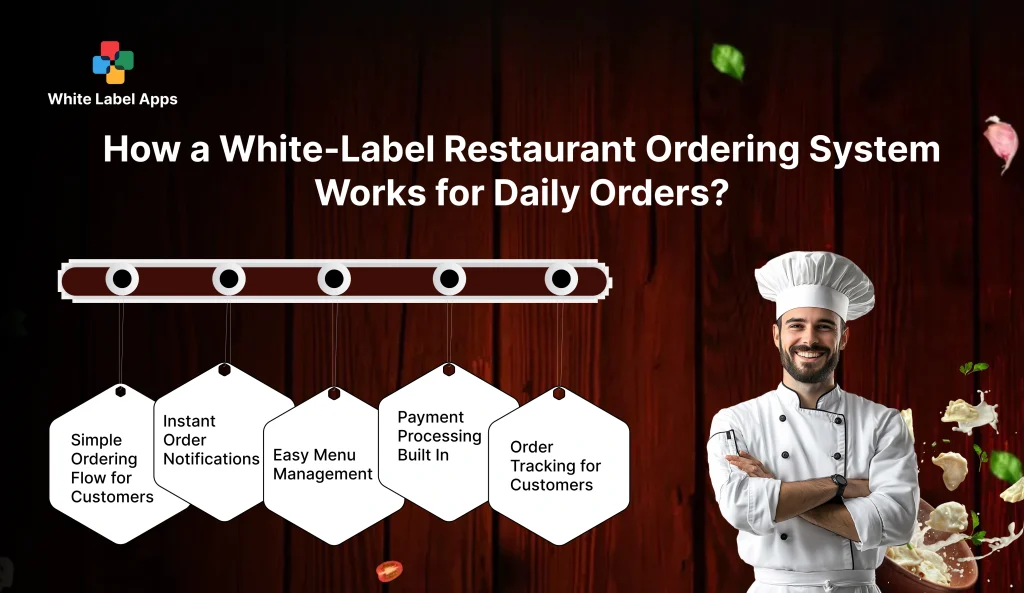
Daily operations matter more than promises. A system must work smoothly during rush hours and quiet moments alike.
-
Simple Ordering Flow for Customers
Customers want ordering to feel quick, not confusing. A white-label restaurant ordering system keeps the flow clean, with fewer steps and clear buttons. People browse menus, customize meals, and check out without friction. When ordering feels simple, customers finish instead of quitting halfway. That small ease reduces abandoned carts and makes ordering feel relaxed, even during busy meal times and daily routines.
-
Instant Order Notifications
When an order is placed, speed matters inside the kitchen. A white-label restaurant ordering system sends instant alerts so staff never miss tickets. Orders appear clearly without delays or confusion. During rush hours, this timing reduces mistakes and stress. Cooks focus on food instead of checking screens repeatedly, helping service move smoothly when pressure feels high for everyone involved daily.
-
Easy Menu Management
Menus change often, sometimes daily, and updates should not feel risky. A white-label restaurant ordering system lets owners edit prices, items, or availability quickly. Changes reflect instantly, keeping customers informed. Accurate menus reduce complaints and refunds. Staff feel less pressure answering questions, and kitchens avoid preparing items that are no longer offered during busy service hours every single day consistently.
-
Payment Processing Built In
Payment should feel seamless, not stressful or slow. A white-label restaurant ordering system keeps payments inside one flow without redirects. Customers pay securely and quickly, which builds trust. Fewer steps mean fewer errors. When checkout works smoothly, restaurants see better completion rates and fewer support calls about failed payments or confusion from first-time users and returning customers.
-
Order Tracking for Customers
People like knowing what is happening after they order food. A white-label restaurant ordering system offers live tracking updates that customers can follow easily. This visibility lowers anxiety while waiting. Fewer calls interrupt staff. When clients see growth clearly, they have extra faith in the manner and feel assured ordering once more subsequent times, except for 2nd thoughts, particularly in the course of busy evenings or weekends.
When daily ordering flows smoothly, kitchens feel calmer and customers feel confident. A white-label restaurant ordering system quietly supports both, turning busy hours into manageable moments without constant stress or confusion.
Features to Look for in a White-Label Restaurant Ordering System
Choosing the proper white-label restaurant ordering system is important due to the fact that it impacts each day’s orders, customer experience, and the team of workers’ workload. The proper faucets make work smoother, limit stress, and assist eating places in developing beyond confusion.
- Mobile-Friendly Ordering Experience: Most customers order from their phones, often while distracted or in a hurry. A white-label restaurant ordering system must feel natural on small screens. Clear menus, fast loading, and easy taps reduce frustration and help customers complete orders without abandoning halfway due to slow pages.
- Easy Setup and Real Human Support: Restaurants should not struggle for weeks just to go live. A white-label restaurant ordering system should offer a simple setup and real support from people who actually respond. When issues appear, quick help keeps operations running and prevents small problems from becoming stressful distractions during busy hours.
- Multiple Payment Options: Customers prefer paying their own way, whether by cards or digital wallets. A white-label restaurant ordering system should support flexible payment options to avoid drop-offs. When checkout feels familiar and smooth, customers trust the process more and finish orders instead of leaving because their preferred method is missing.
- Built-In Marketing and Loyalty Tools: Growth depends on repeat customers, not just first orders. A white-label restaurant ordering system with loyalty tools helps restaurants reward regulars easily. Simple discounts, points, or offers encourage people to return without feeling pushed, building habits that slowly turn into long-term loyalty.
- Stable Performance During Peak Hours: Dinner rushes test every system. A white-label restaurant ordering system must stay stable when orders spike. Crashes or delays cause chaos in kitchens and frustration for customers. Reliable performance keeps staff calm, orders organized, and service consistent when pressure is highest.
The right features do more than support orders. They protect calm during rush hours, build trust with customers, and help restaurants grow without daily stress or constant fixes.
Also Read: White Label Food Ordering System for Restaurants & Cloud Kitchens
Who Should Use a White-Label Restaurant Ordering System?
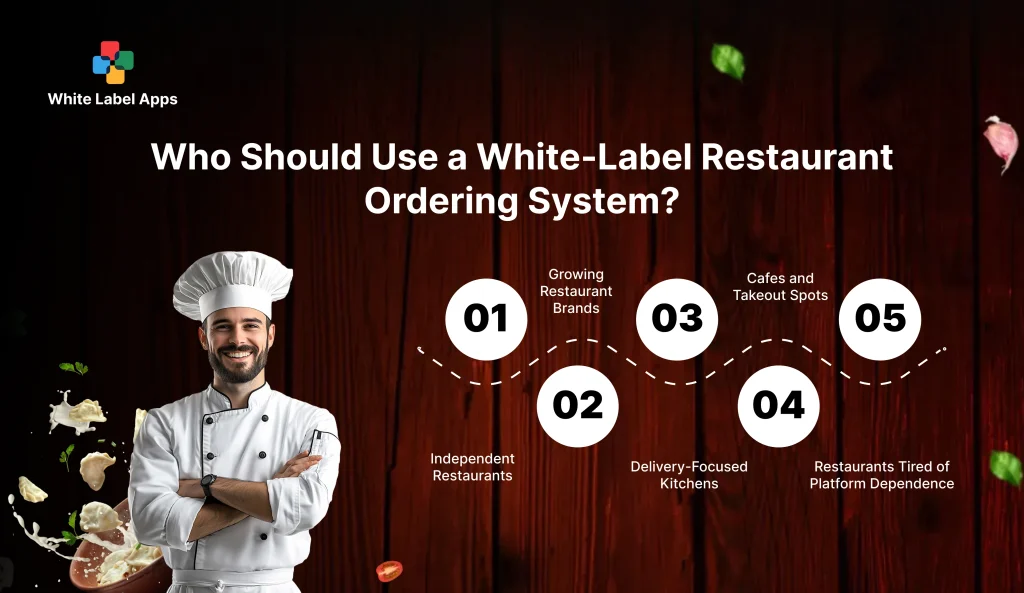
This gadget works for many restaurant sorts that prefer control, steady profits, and direct patron relationships. It fits corporations worn out of sharing space, dropping data, or relying too much on third-party platforms.
-
Independent Restaurants
Independent restaurants often feel the pressure first. Tight margins, rising fees, and limited visibility hurt quickly. A white-label restaurant ordering system helps them own their brand again. Customers order directly, remember the restaurant’s name, and return more often. Profits stay predictable. Owners stop competing on crowded apps and instead build real loyalty through familiar ordering experiences that feel personal and calm over time.
-
Growing Restaurant Brands
Growing brands need consistency across locations. A white-label restaurant ordering system keeps menus, branding, and ordering flow uniform everywhere. Customers know what to expect, whether ordering from one outlet or another. Operations feel easier to manage from one place. This stability supports expansion without losing identity. Growth feels planned instead of rushed, which helps teams stay aligned and confident.
-
Delivery-Focused Kitchens
Delivery-first kitchens rely on speed and accuracy. A white-label restaurant ordering system removes unnecessary steps and keeps orders direct. No marketplace distractions. No shared dashboards. Orders flow straight into operations. This reduces delays and confusion. Customers receive food faster. Kitchens stay focused. For delivery-heavy models, direct ordering helps maintain control while keeping costs lower and processes simple daily.
-
Cafes and Takeout Spots
Cafes and takeout spots depend on quick turnover. A white-label restaurant ordering system reduces lines and errors by letting customers order ahead. Staff spend less time handling payments and more time preparing food. Orders stay clear. Customers move faster. This improves the overall rhythm of busy mornings and lunch hours, making service feel smoother for everyone involved.
-
Restaurants Tired of Platform Dependence
Some restaurants simply feel stuck. Rules change. Fees rise. Visibility drops without explanation. A white-label restaurant ordering system gives them freedom back. They control pricing, communication, and customer data. Decisions feel intentional again. Over time, this independence builds confidence. Restaurants stop reacting to platforms and start shaping their own future instead of waiting for updates.
If control, clarity, and calm matter to your restaurant, this system fits naturally, helping daily work feel lighter while building stronger customer relationships over time.
Conclusion
Restaurants are not switching systems just to follow trends. They are switching because daily life feels harder than it should. A white-label restaurant ordering system removes noise. It brings back clarity. Orders feel direct. Profits feel real. Customers feel closer.
This shift is not about rejecting technology. It is about using it in a way that supports people instead of controlling them. When restaurants own their ordering flow, they breathe easier. Staff work better. Customers return more often.
For businesses looking to move in this direction without overthinking every step, platforms like whitelabelapps offer a practical starting point. The right system does not change who you are. It simply lets your restaurant show up as itself again.
FAQ
- What makes a white-label restaurant ordering system different from third-party apps?
A white-label restaurant ordering system belongs fully to the restaurant. Customers order without delay from your website or app, not a shared marketplace. There are no competing listings, no backyard branding, and no fee cuts on each order. Restaurants manage pricing, purchasing data, and communication. This creates an extra non-public trip and helps agencies construct long-term loyalty rather than borrowing clients from a platform.
- Is a white-label restaurant ordering system suitable for small restaurants?
Yes, small eating places regularly have the most. A white-label restaurant ordering device helps decrease fees that eat into already tight margins. It additionally simplifies day-to-day operations by preserving orders, payments, and updates in one place. Small groups admire the manipulation and readability it brings. Over time, direct ordering helps them construct repeat clients as a substitute for continuously chasing new ones.
- Will customers actually use a restaurant’s own ordering system?
Most customers prefer simple, fast ordering without distractions. When a white-label restaurant ordering system is easy to use, people adapt quickly. Familiar layouts, saved preferences, and clear menus improve comfort. Customers also trust ordering directly from a restaurant they already like. Once they experience smoother ordering, many return without going back to third-party apps.
- How does a white-label restaurant ordering system help increase profits?
The biggest impact comes from removing commission fees. A white-label restaurant ordering system allows restaurants to keep more revenue from each order. Predictable costs make planning easier. Restaurants can also run their own promotions instead of relying on platform discounts. Over time, direct relationships and repeat customers lead to stronger margins and steadier income.
- Can a white-label restaurant ordering system grow with a restaurant business?
Yes, most systems are built to scale. A white-label restaurant ordering system can support higher order volumes, multiple locations, and expanding menus. As a restaurant grows, the system grows with it without changing branding or customer experience. This makes expansion feel smoother and less risky, especially compared to depending on platforms that may change rules or fees unexpectedly.

whitelabelapp
Related Articles
White Label Personal Training App Development: Launch Your Branded Fitness App Faster
Your day is full of small fitness tasks. A client asks for the plan again. Another forgets to pay. Someone says the video link is not opening. It all happens on WhatsApp, notes, and screenshots, and it gets messy fast. A white label personal training app helps you put workouts, check-ins, payments, and progress in […]
Read More
Top 15 White Label Reseller Programs That Deliver Big Profits in 2026
If you have ever tried reselling services, you know the truth. The pitch is easy. Delivery is where most resellers bleed time and profit. That is why this list is not based on “popular names” or random directories. We did deep research before writing this blog. We reviewed reseller program pages, service menus, white label […]
Read More