Patients stopped waiting for healthcare to come to them. They moved to providers who meet them where they are, on their phones, on their schedule, from home. The clinics and health businesses that haven’t built a digital front door yet aren’t just missing a feature. They’re losing patients to operators who launched months ago.
The global telemedicine market was valued at $141.19 billion in 2024 and is projected to reach $380.33 billion by 2030 at a CAGR of 17.55%, according to Grand View Research. That’s a market growing by roughly $40 billion a year. The businesses entering it now, with a working platform and a real brand, are building the patient base that will be extremely hard to dislodge in three years. White label app development is the fastest way to get in.
Most operators who consider building their own telemedicine platform from scratch eventually run into the same wall: $80,000 to $300,000 in upfront development cost and 12 to 18 months before a single patient can log in. Startups don’t have that runway. Clinics going digital don’t want to run a software company. Agencies reselling healthcare products need something working today, not next year. That’s the exact problem a white label approach solves.
At WhiteLabelApps.ca, we build and deploy fully branded white label telemedicine apps for healthcare operators across the US, UK, Canada, UAE, India, and Southeast Asia. Our clients include solo practitioners building their first digital product, hospital networks expanding into virtual care, and agencies licensing telehealth platforms to multiple clinic clients. We handle everything from initial configuration to compliance review to post-launch support.
This blog is built on real deployment experience across multiple markets, not generic software advice. The cost figures are real. The timelines are real. The challenges are ones we’ve seen more than once.
In this blog, we cover what a white label telemedicine app is, why demand is accelerating, what features to look for, how to compare it to a custom build, what it actually costs, how to get started, and how to choose a partner who won’t slow you down.
TL;DR
- A white label telemedicine app is a pre-built, fully brandable virtual care platform you configure, brand, and launch without a dev team.
- Custom builds cost $80,000 to $300,000+ and take 12 to 24 months. White label gets you live in 4 to 10 weeks for a fraction of that.
- The global telemedicine market is heading to $380 billion by 2030. Operators who launch now capture patient loyalty before the market saturates.
- Compliance (HIPAA, GDPR, PIPEDA) is built into quality white label platforms, not something you have to add separately.
- WhiteLabelApps.ca configures and deploys branded telemedicine platforms across North America, the UK, UAE, India, and beyond.
Key Points
- The telemedicine market is growing at 17.55% annually. Asia-Pacific is the fastest-growing region at 17.01% CAGR, and telepsychiatry alone is tracking at 18.21% through 2031.
- A production-ready white label telemedicine app ships with 12+ core features: HD video consultations, EHR integration, e-prescriptions, AI triage, multi-tenant architecture, and more.
- White label development costs $5,000 to $30,000 for setup and configuration. Custom development for a comparable platform runs $80,000 to $300,000+ before the first patient logs in.
- Healthcare compliance is not optional. HIPAA in the US, PIPEDA in Canada, and GDPR in Europe each impose strict data handling requirements. Quality white label platforms handle the technical layer. You still own the operational side.
- Operators aren’t limited to fee-per-consultation revenue. Subscriptions, corporate wellness contracts, insurance billing, agency reselling, and specialist marketplace fees all work on white label infrastructure.
- Vendor selection matters more than platform features. Source code ownership, SLA terms, compliance documentation, and what happens to your data if you leave are the questions most operators forget to ask.
- Timeline to live: white label projects at WhiteLabelApps.ca go from signed agreement to live platform in 4 to 10 weeks for most standard deployments.
What Is a White Label Telemedicine App and Why It Matters
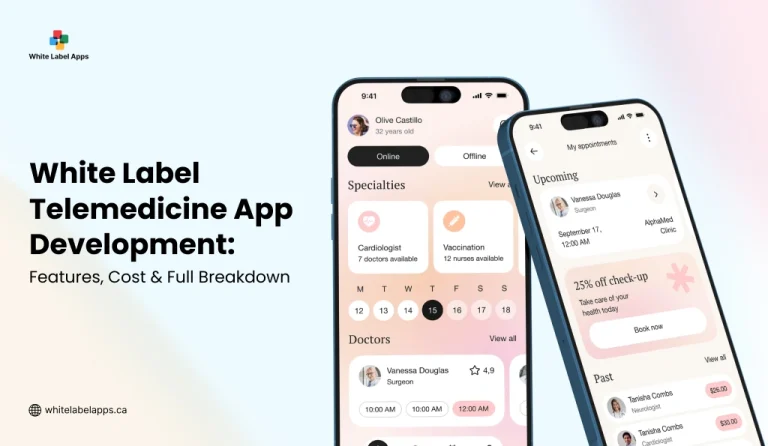
A white label telemedicine app is a pre-built virtual care platform developed by a third-party company, branded as your own product, and deployed under your name, domain, and app store listing. The core infrastructure is already built, tested, and running in real clinical environments. You configure it, apply your branding, connect your health records system and payment setup, pass compliance review, and go live. You don’t start from zero. You don’t manage a dev team. You don’t wait 18 months. A white label telemedicine app is the fastest path from “we need a digital care product” to “patients are booking appointments.”
This model matters because the alternative, building from scratch, is genuinely out of reach for most healthcare operators. Not just expensive but structurally slow in a way that costs market position. Competitors who launched a white label platform two years ago have patient data, brand recognition, and referral networks that can’t be replicated quickly.
This model works for:
- Independent clinics and specialty practices launching their first virtual care service
- Hospital networks building a branded telehealth portal separate from their main site
- Digital health startups that need a working product to show investors before Series A
- Agencies and resellers licensing telehealth under their own brand to multiple clinic clients
- Corporates building employee healthcare benefit programs with virtual access
Why White Label Telemedicine Apps Are Growing Fast
There’s a clear reason the white label telemedicine app market is expanding faster than the overall telemedicine space. Demand from patients is outpacing supply from providers. Most clinics and health businesses know they need a digital care product but can’t afford a full custom build. White label is the gap-fill that makes market entry practical. The global telemedicine market is projected to reach $380.33 billion by 2030 at 17.55% CAGR, and the fastest growth is happening in markets where internet access, mobile penetration, and doctor shortages all intersect: South Asia, Southeast Asia, the Middle East, and parts of Canada and the US. The operators who get to those markets first with a working platform, not a roadmap, are the ones capturing share that’s very hard to give back.
What’s pushing this growth isn’t one thing. It’s several converging shifts:
- Post-pandemic habit lock-in. Patients who used telemedicine for the first time between 2020 and 2022 mostly didn’t stop. The habit is set. Clinics that still don’t offer virtual appointments aren’t just inconvenient. They’re invisible to a growing share of the market.
- Physician shortages in key markets. Rural Canada, regional India, parts of the US, and developing markets in Southeast Asia all face doctor-to-patient ratios that make in-person-only care impractical. Telemedicine is the operational solution, not a luxury add-on.
- Chronic disease management demand. The WHO projects 65+ populations will surpass 1.5 billion by 2050, with over 60% managing at least one chronic condition. These patients need regular check-ins that don’t require travel. Virtual care is the obvious answer.
- Insurance reimbursement catching up. In the US, 43 states now have reimbursement parity for telehealth. In Canada and Australia, coverage for virtual consultations is expanding. That makes the business model viable for a far wider range of operators than it was in 2019.
- Mental health demand explosion. Telepsychiatry is growing at 18.21% CAGR through 2031. Supply of therapists and psychiatrists hasn’t kept pace. Platforms that serve this vertical are seeing some of the strongest growth in the space.
- Asia-Pacific government mandates. The Asia-Pacific region is growing at 17.01% per year. Government digital health programs in India, Singapore, the UAE, and Saudi Arabia are creating structured demand for compliant telehealth infrastructure, not just consumer interest.
The window to build brand recognition in these markets is still open. It won’t stay open much longer.
White Label Telemedicine App vs. Custom Development: What Operators Need to Know
Every operator asks this question. Build or buy? The honest answer is that custom development and a white label telemedicine app are different bets, not just different costs. Custom gives you unlimited control, but you’re paying for every decision, every revision, and every compliance check. You’re also betting that your dev team hits their deadlines in a notoriously difficult domain. Healthcare compliance isn’t optional. EHR integration isn’t simple. And that 12-month estimate from the agency you talked to is almost never the final number. White label swaps that risk for a different trade-off: you work within a proven platform’s parameters, but you launch in weeks, not years, and you launch with something that’s already been through production in real clinical settings. For 90% of operators, that trade is obviously the right one.
| Factor | Custom Development | White Label |
| Upfront Cost | $80,000 to $300,000+ | $5,000 to $30,000 |
| Time to Launch | 12 to 24 months | 4 to 10 weeks |
| Team Required | Developers, QA, designers, PMs | Configuration team + your staff |
| Legal Compliance | You build it from scratch | Already included |
| Customization Depth | Unlimited | High, within platform parameters |
| Source Code Ownership | Yes, if negotiated upfront | Vendor-dependent, always ask |
| Ongoing Maintenance | Your responsibility | Vendor-managed |
| Risk Level | High. Delays and overruns are standard. | Low. It’s a tested, live product. |
Custom development makes sense when your actual differentiation is the software itself, or when you need clinical workflows that genuinely don’t exist in any platform on the market. That’s a narrow set of operators. For everyone else, white label is not a compromise. It’s the faster, lower-risk route to the same destination.
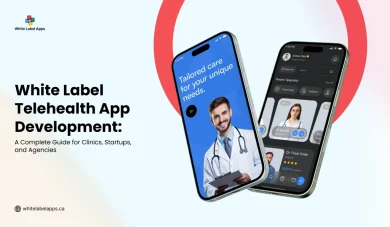
Also Read: White Label Telehealth App Development Guide for Clinics
Reasons You Should Be Investing in a White Label Telemedicine App
Speed and cost savings are the headline, but they’re not the whole story. The reasons to invest in a white label telemedicine app run deeper than launch economics. Whether you’re a clinic trying to keep patients who are already booking elsewhere, a startup looking for a product that can start generating revenue before your seed round is spent, or an agency building a recurring income stream, the business case holds across all three. Here are the reasons that matter most, in order of how often they actually close the decision:
1. Faster Time to Market Means Real Revenue Earlier
Every week your telemedicine platform doesn’t exist is a week someone else is booking those patients. White label projects at WhiteLabelApps.ca typically go live in 4 to 10 weeks. A custom build at a comparable feature level takes 12 to 24 months on the low end. That’s not a small difference in a market growing at 17.55% annually. It’s the difference between being the established option in your market and being the new entrant competing against operators who have 18 months of patient relationships, reviews, and word-of-mouth ahead of you.
Don’t underestimate what that head start compounds into. Patients who find a telemedicine provider they like tend to stay. You want to be the one they find first.
2. Lower Development Cost Frees Up Capital for Growth
Custom telemedicine development at $80,000 to $300,000 is not just a line item. It’s the runway you’re not using for patient acquisition, marketing, hiring, or building out your clinical team. White label puts the same working product in front of your patients for $5,000 to $30,000 upfront. The difference in capital deployed is the difference between a business that can grow after launch and one that’s out of money before it has its first thousand patients.
Ongoing maintenance is also the vendor’s problem, not yours. That $3,000 to $10,000 a month you’d be spending keeping a custom platform running becomes a predictable SaaS-style cost instead.
3. It’s Already Been Tested in Real Clinical Settings
A white label platform that’s been deployed across multiple clinics and multiple markets has had its failure modes found and fixed already. The video infrastructure has been stress-tested on slow connections. The EHR integration has been debugged against real hospital systems. The payment flow has been tested across different card networks and browsers. You’re inheriting that production track record, not starting from zero in front of your own patients.
Custom builds find their bugs in production. That’s expensive, and in healthcare, it’s sometimes a clinical risk.
4. Compliance Is Built In, Not Bolted On
HIPAA, GDPR, PIPEDA, ABDM for India, ADHA for Australia. Healthcare is one of the most regulated industries in every market where telemedicine is growing. Building compliance into a custom platform from scratch means legal review, security architecture, audit logging, and ongoing monitoring that requires specialist knowledge most dev shops don’t have. A quality white label platform handles the technical compliance layer: encryption, access controls, audit logs, data residency. That’s $15,000 to $50,000 in specialist work you’re not doing.
The operational side is still yours. Training your staff, maintaining the right vendor agreements, and updating your processes when regulations change. But the technical foundation is there.
5. Scalability Without a Rebuild
Launching at 100 patients a month and growing to 10,000 should not require rebuilding your infrastructure. Quality white label platforms run on cloud-native architecture that scales horizontally as your patient volume grows. You add capacity without emergency developer work or server migrations. That matters most when growth happens faster than expected, which it often does for operators who launch early in a new market.
6. Your Brand Is the Only Brand Patients See
Your patients book through your app, on your domain, with your logo on every screen. When they recommend the service to someone, they’re recommending your brand. If you ever switch platform vendors, your brand and patient relationships stay with you. That’s not a given with every SaaS-based approach. Make sure your contract is explicit about brand ownership, domain ownership, and patient data portability before you sign anything.
7. Agencies Can Build a Recurring Revenue Business on One Platform
A multi-tenant white label telemedicine platform can power multiple separately branded clinic products on a single infrastructure. If you’re an agency, you configure the platform once and then license it to five, ten, or twenty clinic clients under separate brands. Each client pays a monthly licensing fee. Your cost base stays flat. Your revenue compounds. It’s a fundamentally different business model than project-based development work.
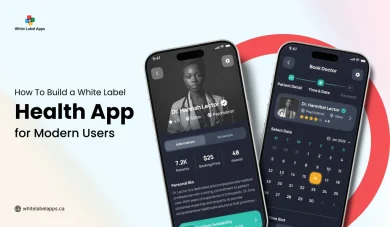
Read Also: How To Build a White Label Health App for Modern Users
Core Features Every White Label Telemedicine App Should Have
Not every white label telemedicine platform is the same. Some platforms list fifteen features on a sales page and turn out to have three of them working properly at launch. Not every white label telemedicine platform ships what it shows in the demo. Some list 15 features, and three of them actually work at launch. The rest are “on the roadmap.” That’s a polite way of saying you’re paying to be a beta tester. So before you commit to any vendor, check what’s live, tested, and running in real clinical settings right now.
Here’s what to look for, feature by feature, and why each one actually matters once real patients are in the system.
1. HD Video Consultations
Poor video quality isn’t just frustrating. It breaks clinical trust on the first call, and most patients don’t give you a second chance.
The best platforms use WebRTC. That’s browser-based video. Patients click a link and they’re in. No app download, no account setup, no “why isn’t this working” right before their appointment. Look for automatic quality adjustment when the connection slows, and a clean fallback to audio-only when video drops. Sub-500ms latency is where conversation still feels natural. Above that, it starts feeling like a delayed phone call. Group video matters too. Family consultations, group therapy, pediatric appointments where a parent needs to be on screen. If the platform only handles one-on-one, you’ll hit that wall faster than you expect.
2. Appointment Booking and Smart Scheduling
Patients book, cancel, and reschedule on their own. No phone calls, no back-and-forth with reception. That’s the baseline.
Time zone handling needs to be automatic. If you’re seeing patients across Canada or the US, a system that doesn’t sort time zones without manual input will create missed appointments within the first week. Reminders go out by SMS and email on whatever schedule you set. Waitlist management fills cancelled slots without anyone having to chase it. For practices with more than one provider, the scheduler should route patients based on specialty, language, and availability, not just whoever has the next open slot. Calendar sync with Google and Outlook helps. It’s not glamorous, but reducing no-shows by even 15% changes the economics of a busy practice. When scheduling works, nobody notices. When it doesn’t, everything else falls apart.
3. EHR and Health Records Integration
No connection to your health records system means your staff is copying data between screens by hand. That’s not just slow. It’s how clinical errors happen.
Ask specifically for HL7 FHIR integration. That’s the current standard for how healthcare systems share data. Patient history, past prescriptions, lab results, and prior consultation notes should be on the clinician’s screen before the call starts. Notes from the session should write back to the record automatically when it ends. Most budget platforms skip the second part. Pulling data in is easier than pushing it back out, so that’s where corners get cut.
Don’t accept a general list of “supported platforms.” Ask whether the integration has been tested against your specific EHR system, your version, your configuration. Six months after launch is a bad time to find out the sync only works one way.
4. Secure Messaging and Async Consultations
Not every clinical interaction needs live video. Secure messaging lets patients send symptom updates, photos, and follow-up questions between appointments. Clinicians respond when they have capacity. This is particularly strong for dermatology, prescription refills, and chronic condition monitoring where synchronous interaction isn’t clinically necessary. All messages must be end-to-end encrypted and stored in compliance with the applicable framework for your market. Async consultation is also a genuine revenue lever. Clinicians handle more patients per hour without compromising care quality.
5. E-Prescribing and Pharmacy Integration
Clinicians issue prescriptions through the platform. Patients receive them digitally and fulfill at a connected pharmacy or via direct mail delivery. E-prescribing removes paper from the prescription workflow and reduces fraud risk. In the US, DEA EPCS compliance is required for controlled substance prescriptions electronically. That’s a specific regulatory requirement, not a generic feature. Ask vendors directly whether their platform meets DEA EPCS standards for your market before assuming it’s covered.
6. Payment Processing and Insurance Billing
Patients pay at booking or post-consultation via credit card, debit, or health spending accounts. For markets with insurance reimbursement (US, Australia, UK), the platform needs to generate correct CPT billing codes and connect to payer systems. Getting insurance billing wrong means rejected claims, delayed revenue, and manual reconciliation work that your admin team shouldn’t be doing every week. Look for platforms with established payer integrations in your specific market, not ones that list insurance billing as a roadmap item.
7. Multi-Tenant Architecture
One platform instance running multiple separately branded clinic products, each with its own patient pool, provider roster, branding, and reporting. This is the technical foundation for the agency resell model and essential for hospital networks running specialty departments as distinct branded portals. Ask explicitly whether the platform is truly multi-tenant or whether “multiple brands” means separate instances you’re paying for individually.
8. Admin Dashboard and Role-Based Reporting
Your ops team needs to see what’s happening without filing a ticket to get a report pulled.
Consultation volumes, revenue by period, provider utilization, no-show rates, patient satisfaction scores. All of it in one place, updated in real time. Role-based access means reception sees the schedule, finance sees the billing, clinical leads see provider performance. Nobody sees everything they don’t need to. Exportable reports cover billing and compliance without manual builds. Real-time alerts catch a missed appointment or a technical failure during a live session before it becomes a patient complaint. A platform with a weak admin panel isn’t just inconvenient. You end up managing a healthcare business on gut feel because the data you need is either locked away or doesn’t exist.
9. AI-Assisted Symptom Triage
Before a patient completes a booking, an AI layer asks structured intake questions and routes them to the right care pathway: urgent care, general practice, mental health, or specialist. This reduces clinically inappropriate bookings, gives clinicians pre-session context, and improves the overall efficiency of the consultation queue. AI triage is becoming a baseline expectation in competitive telehealth markets. Platforms without it are already behind the curve in urban markets across the US, UK, and Canada.
10. Automated Reminders and Patient Notifications
A 30 to 40% drop in no-shows is what most operators see once automated reminders are running. That’s not a small number when you’re billing per consultation.
Reminders go out by push, SMS, and email without anyone on your team touching them. The same system handles the rest: prescription ready, test results available, follow-up due, chronic care check-in overdue. Set the rules once and it runs. The admin hours this replaces add up fast, especially for practices managing a few hundred active patients. Consistency matters too. A reminder that goes out every time, not just when someone remembers to send it, is a different patient experience than one that doesn’t.
11. Multi-Language Support and Accessibility
Multi-language support that gets bolted on after the fact never works properly. Broken layouts, missing translations, text that overflows its container. Patients notice, and they don’t come back.
Right-to-left languages like Arabic and Hebrew aren’t a translation job. They need the UI built differently from the start. Most generic platforms don’t handle this correctly, and you’ll find out at the worst possible time. Accessibility compliance at WCAG 2.1 AA is also worth checking early. In the US, UK, and Australia, it’s increasingly a legal requirement, not a nice-to-have. Both matter before you sign, not after.
12. Remote Patient Monitoring Integration
Chronic care patients don’t need more appointments. They need someone watching the numbers between appointments.
A platform with remote monitoring pulls in readings from home devices automatically. Blood pressure cuffs, glucometers, pulse oximeters, continuous glucose monitors, consumer wearables. The data comes in, the system checks it against the thresholds your clinical team set, and it flags anything that needs attention. No waiting for the next scheduled call to find out a patient’s blood pressure has been elevated for two weeks. In the US market, this also opens up chronic care management billing codes that most operators leave unclaimed. And in a crowded telehealth space where most platforms offer the same video-plus-booking setup, remote monitoring is one of the few features that actually changes the clinical product you’re selling.
Also Check: White Label Meditation App Development for Wellness Brands
Is a White Label Telemedicine App Secure?
It’s the right question to ask, and most vendors don’t answer it well. Yes, a white label telemedicine app from a serious vendor is secure. Patient health data is among the most sensitive data that exists, and a breach in healthcare doesn’t just cost money. It destroys patient trust in a way that’s nearly impossible to rebuild. Quality white label platforms are designed with security as a core architecture requirement, not a compliance badge you buy at the end of the build. But “designed for security” and “actually secure for your market” are different things. Your obligation is to verify, not assume. Here’s what proper security looks like in a telemedicine platform and what you need to check before committing:
1. Regulatory compliance by market:
- Canada (PIPEDA): Explicit consent requirements, mandatory breach reporting, data residency rules for health data, and clear data retention policies.
- US (HIPAA): Encryption at rest and in transit, audit logs for every data access event, role-based access controls, and a signed Business Associate Agreement (BAA) with every vendor who processes patient data.
- Europe and UK (GDPR): Data minimization, right to erasure, data processing agreements, and hosting in approved jurisdictions. EU patient data can’t be stored on US-only infrastructure without additional legal mechanisms.
- India (ABDM): Health data must be stored within India. Patient consent is required for every data use case. Interoperability with the Ayushman Bharat Digital Mission framework is increasingly expected.
- Australia (ADHA): Compliance with My Health Record integration requirements and ADHA clinical data security standards.
2. What to verify in any vendor’s platform before signing:
- End-to-end encryption on all video, messaging, and document transfer
- Role-based access control that prevents cross-provider data visibility
- Multi-factor authentication mandatory for all clinical staff logins
- Complete audit log for every patient data access event, exportable for regulatory review
- Annual penetration testing by an independent third party, with reports available on request
- BAA (US) or DPA (EU/UK) signed as a standard contract deliverable, not on request six months in
- Data residency options that match the country or region you operate in
One distinction most operators miss: compliance claimed versus compliance documented. Some platforms list HIPAA on their marketing page but only mean their video calls use an encrypted connection. That’s one small piece of full HIPAA compliance. Ask for the BAA before you sign. Ask for the last penetration test report. Ask specifically where patient data is stored. A legitimate vendor answers all three without hesitation.
How Long Does It Take to Build a White Label Telemedicine App?
This is where white label telemedicine app development wins the argument clearly. Custom telemedicine development takes 12 to 24 months for a platform with a comparable feature set. That estimate is what good teams quote when everything goes well, and it rarely does. Healthcare compliance adds months. EHR integration adds months. App store approval adds weeks. White label cuts the entire timeline down to 4 to 10 weeks for most standard deployments. Here’s what that actually looks like, week by week:
White label telemedicine deployment timeline:
| Phase | Timeline |
| Discovery, requirements, and scoping | Week 1 |
| Platform configuration and brand application | Weeks 2 to 3 |
| EHR integration and payment gateway setup | Weeks 3 to 5 |
| Compliance review and security testing | Weeks 5 to 7 |
| UAT, staff training, and soft launch prep | Weeks 7 to 9 |
| Go-live | Week 10 |
What extends the timeline:
- Legacy EHR systems that don’t use modern FHIR APIs
- Multi-market compliance requirements that need separate legal review
- Significant UI customization beyond standard branding
- Vendors without a dedicated implementation resource on your project
Custom development timeline for comparison:
- Architecture and planning: 2 to 3 months
- Core development: 6 to 10 months
- QA, compliance audit, and security testing: 2 to 4 months
- App store submission and launch preparation: 1 to 2 months
- Total: 12 to 24 months minimum, typically closer to 18
Ten weeks versus eighteen months is not a preference gap. It’s the difference between being in market before your competitors and watching them build patient loyalty while you’re still in sprint planning.
Cost of Building a White Label Telemedicine App
Most vendors in this space bury the pricing until the third sales call. Here’s what the numbers actually look like, so you can make a real decision. The cost gap between custom development and a white label telemedicine app is large, but the more important difference is where the money goes. With custom development, the upfront investment is a bet on a team’s ability to deliver on time and on budget in a domain, healthcare technology and compliance, that routinely defeats confident estimates. With white label, you’re paying for configuration and setup of a platform that’s already been through that process. The cost is lower, the outcome is more predictable, and the timeline is in weeks, not years.
A custom telemedicine build at the absolute low end assumes a small offshore team, no integration complexity, and basic compliance work. Add EHR integration, insurance billing, and compliance work for two or three markets, and you’re past $200,000 before a single patient books. That’s before the first bug gets fixed in production.
Ongoing maintenance on a custom platform runs $3,000 to $10,000 a month. That’s a real line item every month, not a one-time cost. White label flips that math. Setup runs $5,000 to $30,000. Ongoing hosting, maintenance, and support typically costs $1,500 to $5,000 a month, and that’s the vendor’s problem to carry, not a bill you rebuild from scratch every quarter.
| Factor | Custom Development | White Label |
| Upfront Cost | $80,000 to $300,000+ | $5,000 to $30,000 |
| Time to Launch | 12 to 24 months | 4 to 10 weeks |
| Team Required | 8 to 15 people | Configuration team only |
| Ongoing Maintenance | $3,000 to $10,000/month | Included or low monthly fee |
| Compliance Setup | $15,000 to $50,000 additional | Already included |
| Customization Depth | Unlimited | High, within platform scope |
| Source Code Ownership | Yes, if explicitly negotiated | Vendor-dependent, ask before signing |
| Risk Level | High. Delays and budget overruns are common. | Low. The platform is already built and tested. |
Over a three-year horizon, total cost of ownership for a white label telemedicine platform typically runs 60 to 75% less than a custom-built equivalent. That’s not a marketing claim. It’s the arithmetic of not paying a development team to rebuild features that already exist.
Read Also: White Label Wellness App Development for Your Brand
Tech Stack for White Label Telemedicine App Development
You don’t need to understand the code. But you do need to ask one question before you sign: what is this platform actually built on?
The stack determines how fast the platform runs when 500 patients are booking at once, how cleanly it connects to your existing health records system, and how easy it is to leave if the vendor relationship goes bad. Platforms built on widely used, modern technology are faster to set up and simpler to integrate. More importantly, other developers can work on them if you ever need to switch. Proprietary frameworks lock you in. Customization gets expensive. Switching gets painful. A vendor who won’t tell you what the platform is built on isn’t being modest. That’s worth noting before you commit.
| Layer / Component | Technologies Used |
| Frontend (Patient and Provider Apps) | React Native, Flutter (iOS and Android), React.js (web portal) |
| Backend / API Layer | Node.js, Python (Django, FastAPI), Go |
| Database | PostgreSQL, MongoDB, Redis for caching |
| Real-Time Video Engine | WebRTC, Twilio, Daily.co, Vonage |
| Healthcare Interoperability | HL7 FHIR, SMART on FHIR APIs |
| EHR Integration | Epic, Cerner, Athenahealth APIs |
| Payment Gateway | Stripe, Braintree, PayPal, region-specific processors |
| Cloud Infrastructure | AWS, Google Cloud, Azure (HIPAA-eligible tiers) |
| Push Notifications | Firebase Cloud Messaging, Apple Push Notification Service |
| AI / Triage Layer | Custom NLP models, OpenAI API, symptom-checker SDKs |
| Security and Authentication | OAuth 2.0, MFA, AES-256 encryption, SSL/TLS |
| Admin Panel | Custom React dashboards with role-based access control |
How to Get Started With a White Label Telemedicine App
Most launch problems start before the vendor is even chosen. Operators who rush the groundwork end up with a platform that doesn’t fit their workflows, compliance issues that surface two weeks before go-live, or an integration problem that was completely avoidable.
The ones who launch on time did the same thing: they worked the process in order and didn’t skip steps. Here’s what that looks like:
Step 1: Document Your Requirements Before Talking to Vendors
Write it down before you talk to anyone.
Which specialties are you serving? Do you need more than one language? What EHR system are you on, and is it a modern FHIR-based system or something older and proprietary? Which markets are you launching in and what compliance rules apply? iOS, Android, and web, or just two of the three? These aren’t questions a vendor should be pulling out of you on a discovery call. Getting them on paper first saves weeks of back-and-forth and stops you from committing to a platform that can’t actually handle your clinical setup.
Step 2: Evaluate at Least Three Vendors Against Your Requirements
Three vendors minimum. Not the first one that shows up in a Google search and has a clean website.
Evaluate each one against your requirements list, not their sales page. Ask for a live demo built around your actual use case, not a generic product walkthrough. Then ask the questions most operators forget: where is patient data stored? Can you show me the BAA right now? Who specifically is managing our implementation? What’s your SLA for uptime and for critical support response? What happens to our patient data if we end the relationship? The feature list tells you what they built. The answers to those questions tell you who you’re actually dealing with.
Step 3: Branding, Configuration, and Clinical Setup
Once you’ve selected a vendor, the configuration phase begins. Brand assets go in: logo, colors, domain, app store listings. Provider accounts, clinical role permissions, and service offerings are configured. Intake forms, consent documents, appointment types, and pricing tiers are built out. For standard single-market deployments, this runs 1 to 2 weeks. Multi-tenant or multi-specialty setups typically take 2 to 4 weeks depending on complexity.
Step 4: Integration Build and Compliance Testing
EHR integration, payment gateway connection, pharmacy links, and any other third-party tools are connected and tested here. Everything gets tested against real data in a staging environment before it touches production. The compliance review verifies that every data pathway meets the requirements for your market. This step is not one to compress to save a week. A compliance issue caught in testing costs a fraction of one caught after launch.
Step 5: Staff Training and Soft Launch
Every member of your team who will touch the platform needs to run through their workflows before patients arrive. Clinicians, reception, billing, and admin each have different interaction patterns. Run practice sessions with realistic scenarios. Do a soft launch with a limited patient cohort, typically an invite-only group or a single clinic day, to surface real-world issues before full opening. Fix what you find. Then open.
Our White Label Telemedicine App Development Process at WhiteLabelApps.ca
We’ve run this process across dozens of white label telemedicine app deployments in the US, UK, Canada, UAE, India, and Southeast Asia. Different markets, different compliance frameworks, different EHR environments. But the process we follow is the same every time because it’s the one that gets operators live without the chaos that characterizes most healthcare tech projects. Every step has a clear output. Every milestone has a date. You always know exactly where your project is.
Step 1: Discovery Call and Written Scope
Not a sales call. A working session. We go through everything that matters before a line of configuration gets written. Your market, your patients, your specialties, your existing software, your compliance obligations. What the platform needs to do on day one versus what can wait. At the end of that call, you get a written scope document. Timeline, deliverables, cost, and whatever dependencies sit on your side. Nothing open-ended. Nothing to interpret later. No “we’ll figure that out later.”
Step 2: Platform Selection and Architecture Decision
Based on the discovery output, we select the right base platform and infrastructure for your use case. We make the technical decisions. You review the plan, confirm it matches your requirements, and we move forward. If something in the scope changes before build starts, we address it then, not mid-sprint.
Step 3: Branding, UI Configuration, and Content Build
Your brand assets go in. We configure the patient app, provider portal, and admin dashboard to your specifications. Intake forms, consent documents, email templates, appointment types, and pricing tiers are built in your voice. You review everything before a single element goes into the staging environment.
Step 4: Integration Build and Staging Test
We connect your EHR, payment gateway, pharmacy systems, and any other required third-party integrations. Every connection is tested against real data in a controlled staging environment before touching production. Integration documentation is produced for your compliance records.
Step 5: Compliance Review and Security Audit
Before anything goes live, we run a full compliance review against the rules that actually apply to your market. PIPEDA for Canada, HIPAA for the US, GDPR for the UK and Europe, or the relevant regional framework if you’re operating elsewhere. You get a written report at the end. Something you can hand to your legal team or put in front of a regulator without hesitation. The security audit covers authentication, access controls, encryption, and audit log completeness. Not a checklist you fill out yourself. A real review.
Step 6: Launch Supervision, Team Training, and Post-Launch Support
We run your staff training sessions, supervise go-live, and stay available for the first 90 days of operation. Not a ticket queue. A direct line to the team that built your platform. Platform updates, configuration changes, and new feature additions go through the same team that knows your environment.
Also Check: White Label Personal Training App Development
Challenges in White Label Telemedicine App Development
A white label telemedicine app is the faster, lower-risk path to market. That’s real. But “lower risk” doesn’t mean “no risk.” Operators who go in knowing what tends to go wrong are the ones who plan for it and avoid it. These four challenges come up consistently across markets and operator types. None of them are reasons to avoid the white label route. They’re reasons to choose your vendor carefully and approach the process with your eyes open:
1. Regulatory Compliance That Keeps Moving
Healthcare regulations don’t stay still. HIPAA audit requirements changed in 2024. GDPR enforcement in Europe has picked up noticeably. India’s ABDM framework is still being written. The UAE’s digital health regulations are evolving. A white label platform handles the technical compliance layer: encryption, access controls, data residency, audit logs. But the operational layer is yours. That means staff training documentation, vendor agreement reviews, breach notification protocols, and processes that need to be updated when the rules change. The vendors who cause problems here are the ones who update their platform months after a regulatory change and don’t tell you until you ask. Ask upfront how the vendor handles regulatory updates and what the process is when something changes in your market.
2. EHR Integration Is Rarely as Simple as Advertised
Every vendor says they support EHR integration. What that means varies enormously. Modern EHRs using FHIR APIs are relatively straightforward to connect. Legacy hospital systems, regional Canadian EMRs, or proprietary clinic-built databases often require custom middleware that adds time and cost to the integration phase. Read-only integration (pulling patient history into the platform) is simpler than bidirectional sync (writing consultation notes back to the EHR). Operators who find this out after signing the contract instead of before are the ones who blow their launch timeline and budget. Be specific in your requirements document about which EHR system you’re running and which integration direction you need. Get a written integration plan before committing.
3. Clinical Staff Adoption Doesn’t Happen Automatically
New technology gets resisted. Clinicians who’ve been writing paper prescriptions for 15 years don’t switch overnight, and if your doctors are working around the platform rather than through it, every efficiency gain you expected disappears. Low adoption shows up as booking workarounds, manual data entry that the platform was supposed to eliminate, and inconsistent patient experiences that hurt your reviews. The fix isn’t better software. It’s investing in training and change management with the same seriousness you give to the technical setup. Run practice sessions with real clinical scenarios before go-live. Assign one person in your clinical team to own adoption. Make that person’s success metric the platform’s usage rate, not just the launch date.
4. Security Across Multiple Connected Systems
A physical clinic has one server. A telemedicine environment has many systems: the platform, the video engine, the payment processor, the EHR, the pharmacy connection, the notification service. Every API connection between those systems is a potential weak point. Encryption covers data in transit. But a misconfigured access control can expose one provider’s patient records to another, and encryption does nothing to prevent that. Before go-live, ask your vendor for a complete data flow diagram showing every system your patient data touches. Run an independent penetration test. Review role-based access configurations quarterly. Treat platform security as an ongoing operational responsibility, not a one-time setup check.
Monetization Strategies for Your White Label Telemedicine App
A white label telemedicine app isn’t just a care delivery channel. It’s a revenue platform with multiple income streams available to operators who set it up correctly. Most operators start with fee-per-consultation and stop there. That’s leaving real money on the table. Here are the monetization models that work on white label infrastructure, including several that most operators in this space haven’t thought through:
- Fee per consultation: Patients pay a flat fee for each video or async consultation. Simple model, easy to communicate, strong for general practice, dermatology, and therapy. Works at any patient volume from day one.
- Monthly patient subscription: Patients pay a fixed monthly fee for a set number of consultations, unlimited secure messaging, or a chronic care monitoring program. Builds predictable recurring revenue and improves 90-day retention significantly compared to pay-per-use models.
- Corporate wellness contracts: Employers pay for employee access to your telemedicine service as a workplace benefit. One corporate contract covering 500 employees generates more monthly revenue than a large individual patient list, with far less administrative overhead. This is one of the fastest-growing B2B telehealth revenue models in North America.
- Insurance billing and reimbursement: In markets with established telehealth reimbursement (US, Canada, Australia), billing insurance per consultation is a primary revenue driver. Requires correct CPT code generation and active payer integrations in your platform. Worth building for any operator in a reimbursement-eligible market.
- Agency and reseller licensing: If you’re an agency or platform operator, license your configured white label platform to other clinics or health businesses. Each client gets their own branding, patient pool, and reporting. You charge a monthly licensing fee. One platform investment runs multiple revenue streams. This model compounds as you add clients.
- Specialist referral marketplace: Connect patients on your platform to specialist consultants outside your core team. Psychiatrists, cardiologists, dermatologists, endocrinologists. Charge a platform fee per referral or per consultation. This turns a single-specialty telemedicine product into a multi-specialty marketplace with network effects that improve as the platform grows.
- Premium feature tiers: Offer a base consultation product at a lower price point and charge extra for priority scheduling, dedicated nurse care coordination, at-home monitoring device setup, or longer session slots. Premium tiers let you serve price-sensitive patients without giving away margin to every user.
Read Also: White Label Fitness App: A Breif Guide
Top White Label Telemedicine Apps at a Glance
Not every white label telemedicine app is designed for the same type of healthcare operation. A platform built for a solo mental health practitioner is structurally different from what a hospital network running 50 clinics needs. Before you evaluate vendors, it helps to know which category your operation belongs to. That way you filter out platforms that aren’t designed for your use case before wasting time on demos that don’t fit. At WhiteLabelApps.ca, we’ve built across all six categories below. Our first call with every client is focused on getting this identification right before a single line of configuration is written:
| Platform Category | Best For | Core Differentiator | Key Compliance Focus |
| General Practice | Family medicine, GP clinics, walk-in centers | Fast booking, async consults, EHR sync | HIPAA, GDPR, PIPEDA |
| Mental Health Telehealth | Therapists, psychiatrists, counselors | Session notes, group therapy, strong privacy controls | HIPAA, provincial licensing rules |
| Multi-Specialty Platform | Hospital networks, large multi-department clinics | Multi-provider routing, specialist marketplace | HIPAA, HL7 FHIR |
| Chronic Care Management | Diabetes, cardiology, respiratory programs | RPM device integration, wearable data, care pathways | HIPAA, RPM billing codes |
| Corporate Wellness | Employers, insurers, HR benefits programs | Bulk user access, SSO, HR system integration | HIPAA, employment data rules |
| Agency / Multi-Tenant | Agencies, resellers, multi-brand operators | Separate branding per client, shared infrastructure | Flexible by market |
How to Choose the Right White Label Telemedicine App Provider
The platform matters. The vendor behind it matters more. A technically capable platform with poor support, unclear contract terms, or weak compliance documentation will cost you more in time, legal risk, and patient trust than the savings from going cheap. Most operators who have a bad white label telemedicine app experience don’t have a technology problem. They chose a vendor who looked good in a demo and turned out to be unreachable after go-live. Use this list before you sign anything:
1. Green Flags. These signal a vendor you can work with:
- Provides a signed BAA (US) or DPA (Europe) as a standard onboarding step, not when you specifically ask for it six weeks in
- Shares a real compliance audit report or SOC 2 Type II certification on request, not a generic “we’re HIPAA-compliant” claim
- Offers a live demo using your specific use case, not a pre-recorded product walkthrough
- Source code ownership terms and data portability rights are written clearly into the contract before signing
- A named implementation manager is assigned to your project from day one, not a shared support inbox
- Written SLA for platform uptime (99.9% minimum) and critical support response time (4 hours or less during business hours)
- Has deployed in your target market before and can provide a reference client who will take a direct call
- Patient data is portable: you can export everything in a standard format if you decide to leave
2. Red Flags. Walk away if you see any of these:
- Can’t or won’t tell you specifically where patient data is stored
- Compliance documentation is “available during onboarding,” meaning after you’ve already signed
- No clear ownership clause for source code or patient data in the contract
- “EHR integration” means a third-party plugin that hasn’t been tested against your specific system
- No written SLA, or the SLA for critical issues lists a 72-hour response window during live clinical operations
Future Trends Shaping the White Label Telemedicine App Market
The white label telemedicine app market in 2026 looks materially different from two years ago, and the next phase will move faster. The operators who understand where the market is heading can position their platform now to capture the growth that’s still coming. These aren’t speculative. They’re shifts already underway in markets across North America, Europe, and Asia-Pacific:
- AI handling clinical documentation in real time. AI note-taking during consultations is already in production use on leading platforms. Clinicians speak naturally, the platform generates structured SOAP notes automatically, and post-consultation admin time drops by 30 to 50%. By late 2026, this will be a standard expectation in competitive markets. Platforms without it will feel noticeably behind.
- Wearable and home monitoring device integration going mainstream. Chronic care management via consumer wearables and clinical-grade home monitors is moving from pilot to standard practice. Platforms that ingest continuous data from Apple Watch, Oura Ring, Fitbit, and dedicated clinical devices and flag anomalies in real time give operators a genuine product differentiation in chronic disease management.
- Mental health telehealth becoming its own category. Telepsychiatry is growing at 18.21% CAGR through 2031. Supply of licensed therapists and psychiatrists can’t keep pace. Platforms designed specifically for therapy workflows, not general medicine platforms with a therapy label attached, are where product investment and patient demand are concentrating.
- Asia-Pacific and Middle East market acceleration. Asia-Pacific telemedicine is growing at 17.01% per year. Government digital health mandates in India, Singapore, Saudi Arabia, and the UAE are converting general market interest into structured operational demand. Operators who establish platforms in these markets in 2025 and 2026 are building a market position that will be hard to displace in 2028.
- 5G expanding the addressable patient population. Higher bandwidth and lower latency from 5G networks make HD video consultations viable on mobile in areas where internet quality was previously a barrier. Rural Canada, regional India, parts of Southeast Asia. As 5G coverage expands, the patient population that can reliably use telemedicine grows with it. Platforms built on WebRTC infrastructure are positioned to take advantage of this without re-architecture.
Why Choose WhiteLabelApps.ca for Your White Label Telemedicine App Development
There are many companies that say they build white label telemedicine apps. Most of them do general mobile development and treat healthcare as a vertical. That’s where projects go sideways. Healthcare compliance has nuances that show up in the architecture decisions, not the sales deck. EHR integration quality varies enormously between vendors. Post-launch support in a clinical environment is different from post-launch support in a consumer app. At WhiteLabelApps.ca, healthcare technology deployment is what we do, not one of twenty verticals we cover.
What makes working with us different in practice:
- Market-specific deployment experience. We’ve launched telemedicine platforms in the US, UK, Canada, UAE, India, and Southeast Asia. We know what HIPAA compliance looks like in implementation, not just documentation. We know which EHR systems cause integration problems and why. We know the patient behavior differences between urban Canadian markets and rural South Asian ones.
- Fast launch without compliance shortcuts. Our fastest project went from signed contract to live platform in four weeks. That timeline holds because we run compliance review and platform configuration in parallel, not sequentially. We don’t cut corners to hit a launch date.
- Operators don’t get handed off after go-live. The first 90 days of live operation is when real-world issues surface. We’re present during that period for technical adjustments, staff questions, workflow changes, and whatever else your team discovers once real patients are in the system.
If you’re evaluating telemedicine platform options and want to understand what a deployment would look like for your specific market and use case, visit whitelabelapps.ca or reach out to our team directly.
White Label Ready Telemedicine Apps We Can Rebrand for You
We don’t just build telemedicine platforms from scratch. We also have ready-to-deploy products that can be rebranded and launched under your name in a matter of weeks. If you have a target market and a brand, we can have a working platform in your patients’ hands faster than any custom build timeline comes close to.
1. Tahur
Tahur is a fully featured white label telemedicine app built for clinics, health startups, and digital health operators who need a production-ready platform without the 12-month build. It covers the full virtual care workflow: HD video consultations, appointment scheduling, secure messaging, e-prescriptions, and patient health records access. The admin panel gives your operations team real-time visibility across bookings, revenue, and provider performance without needing developer access. Tahur is built for multi-provider setups and scales cleanly as your patient base grows. It’s compliance-ready for HIPAA, GDPR, and PIPEDA markets, and can be configured, branded, and deployed in 4 to 8 weeks.
Key features:
- HD video consultations with audio-only fallback
- Appointment scheduling with automated reminders
- Secure patient-doctor messaging
- E-prescribing and digital pharmacy connection
- EHR integration via HL7 FHIR
- Multi-provider routing and admin dashboard
- HIPAA, GDPR, and PIPEDA compliant architecture
2. Life Force RPM
Life Force RPM is built for operators focused on chronic care. RPM stands for Remote Patient Monitoring, and that’s exactly what this platform is designed around: keeping patients with ongoing conditions like diabetes, hypertension, and cardiovascular disease connected to their care team between appointments. Home monitoring devices feed readings directly into the platform. Clinical alerts fire when values fall outside the thresholds your team sets. Clinicians get a live picture of each patient’s health without waiting for the next scheduled call. Life Force RPM also supports standard video consultations and secure messaging, making it a complete care platform for chronic disease programs, not just a monitoring tool. It’s rebrandable, compliance-ready, and deployable in 4 to 8 weeks.
Key features:
- Remote patient monitoring with real-time device data ingestion
- Automated clinical alerts for out-of-range readings
- HD video consultations and async secure messaging
- Chronic care management workflows and care pathway tracking
- Wearable and home monitoring device integration
- EHR integration and post-consultation note sync
- Chronic care management billing code support for US markets
Conclusion
The telemedicine market is heading toward $380 billion by 2030 and the operators with established platforms, patient bases, and brand recognition are going to be very hard to displace by the time it gets there. A white label telemedicine app gives you the fastest path from decision to live product. Not the cheapest path to a mediocre product. The fastest path to a production-grade, compliant, fully branded platform that your patients can actually use.
You don’t need a $300,000 development budget. You don’t need 18 months. You need the right platform, the right vendor, and a clear plan.
Talk to WhiteLabelApps.ca and let’s figure out what your platform needs to look like.
FAQs
Q. What is a white label telemedicine app?
It’s a pre-built virtual care platform developed by a third party, branded under your name, and deployed as your own product. The core infrastructure is already built and tested. You configure it for your clinical workflows, apply your branding, and go live without building anything from scratch.
Q. How much does a white label telemedicine app cost?
Setup and configuration typically runs $5,000 to $30,000 depending on integration complexity and customization scope. Custom builds run $80,000 to $300,000+ for a comparable product. Ongoing white label costs are usually $1,500 to $5,000 per month for hosting, maintenance, and support.
Q. How long does it take to launch a white label telemedicine app?
Most projects go live in 4 to 10 weeks from signed agreement. Custom builds take 12 to 24 months for a comparable platform. What extends white label timelines is legacy EHR integration, heavy customization, or stricter compliance requirements in certain markets.
Q. Is a white label telemedicine app compliant with healthcare regulations?
Quality platforms are built to meet the compliance requirements in your market. PIPEDA for Canada, HIPAA for the US, GDPR for Europe. Always ask for the BAA or DPA before you sign. A compliant vendor shares compliance documentation without hesitation. One who can’t is a risk.
Q. Can I own the source code with a white label telemedicine app?
It depends on the vendor and contract structure. Some offer full source code ownership on a one-time license. Others operate a SaaS model where they retain the code. Sort out ownership terms and data portability rights before signing. Know what happens to your patient data if you end the relationship.
Q. Can agencies use a white label telemedicine app to build products for multiple clients?
Yes. A multi-tenant platform runs multiple separately branded telehealth products on a single infrastructure. Each client has its own branding, patient pool, and reporting. One platform investment, multiple monthly licensing revenue streams. It’s a strong recurring revenue model for agencies that know healthcare.
Q. What specialties does a white label telemedicine platform support?
General practice, mental health, dermatology, chronic disease management, women’s health, pediatrics, cardiology, and multi-specialty marketplace models. The clinical workflows, intake forms, and provider routing are configurable by specialty. The platform adapts to your care model, not the other way around.