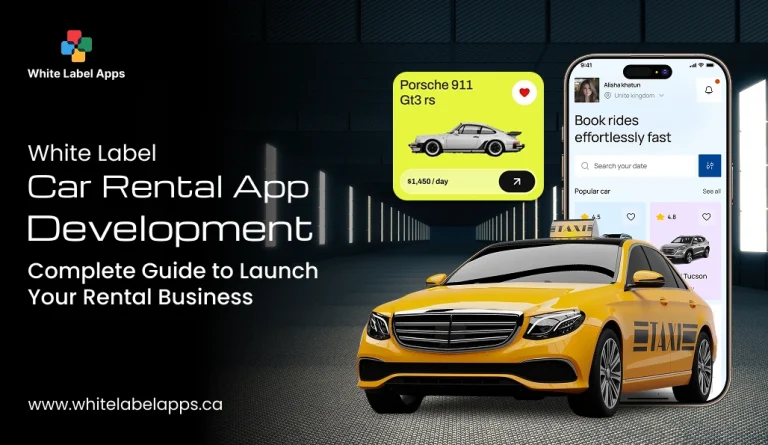
Your day starts with one booking request. Then another customer asks if the SUV is still available. A driver wants to know the pickup time. Someone else says the payment went through, but the car is not showing in the system. You check calls, chats, spreadsheets, and old notes, and things start getting messy very fast.
A white label car rental app helps bring that work into one clean place. It gives startup owners a faster way to launch a branded rental business, so you can start taking bookings sooner and spend less time managing everything by hand.
The demand is real. Grand View Research says the global car rental market was valued at USD 149.87 billion in 2024 and could reach USD 278.03 billion by 2030. That kind of growth tells a simple story. More people are booking cars through digital platforms, and more businesses want a smoother way to manage fleets, pricing, and customer bookings.
Building a full rental platform from scratch can also slow things down. Recent app development estimates place car rental app development anywhere from $40,000 to $300,000+, depending on features, automation level, integrations, and scale. Most startup owners do not want to spend months building the basics while faster competitors go live first.
That is why white label app development makes sense. You start with a ready base product, then shape it around your own business with your brand name, colors, pricing, booking flow, and service model. Instead of building every part from zero, you begin with something usable and make it yours.
This guide is shaped by the same product planning logic that shows up across white-label app projects. Scope changes the budget. Features change the budget. Customization changes the budget. Long-term upkeep changes it too. Just as important, many startup owners guess the wrong way. They overestimate visual changes, and underestimate the work needed for booking flow, vehicle availability, pricing rules, and day-to-day reliability.
This blog is for startup owners who want to launch a car rental platform without getting stuck in a long and expensive build cycle. Inside, you will learn what a white label car rental app is, how it works, key features, major benefits, cost factors, white label vs custom development, revenue models, future trends, and simple FAQs.
TL;DR
- A white label car rental app helps startup owners launch faster without building from scratch.
- It brings bookings, fleet control, pricing, and payments into one branded platform.
- It usually costs less and takes less time than custom car rental app development.
- It works well for startups, fleet operators, travel businesses, and rental marketplaces.
- The right features, pricing model, and tech partner matter for long-term growth.
Key Points
- A white label car rental app gives startup owners a ready platform they can launch under their own brand.
- It helps reduce manual work by bringing bookings, vehicle availability, payments, and customer management into one place.
- Compared to custom car rental app development, white label is usually faster to launch and easier on the starting budget.
- This model is appropriate for all kinds of car rental startups, local fleet owners, travel agencies hotels limo services, and peer-to-peer rental businesses.
- Many powerful features such as booking management, fleet control, pricing tools, payment integration, and analytics here change the platform into an essential tool for daily activities.
- Besides streamlining the booking process and reducing operational confusion, a well-designed white label car rental app can even contribute to business growth by offering one or more additional sources of income.
- Among other factors, startup owners should definitely advertise scalability, branding control, security, and ease of use when selecting a rental platform.
- It is always a good practice to consider the white label or custom development aspect when making a decision because in terms of budget, launch speed, and business goals, each option will provide different advantages that need to be weighed against one another.
Global Car Rental Market and Why White Label Car Rental Apps Are Gaining Demand
The car rental market is growing, but the bigger shift is in how people book. Customers now expect quick mobile booking, clear pricing, and instant confirmation without calls or back and forth. Many rental businesses still run on manual systems, which slows them down and makes them look outdated. This is where a white label car rental app becomes useful. It gives startup owners a faster way to launch a branded rental platform without building the full system from scratch. The demand is not only broad, it is becoming more digital too.
- Online bookings already lead the market. Grand View Research says the online booking segment held more than 71% of car rental revenue in 2024. That is a strong signal that customers now prefer digital-first booking.
- North America is still the biggest market. It accounted for 36.39% of global car rental revenue in 2024, which makes this a strong region for new rental platforms and branded niche launches.
- Airport rentals still drive a big share. Airport transport made up more than 38% of market revenue in 2024, which shows how important real-time booking, location handling, and scheduling features are.
- Economy vehicles lead demand. The economy car segment held more than 32% of revenue in 2024, which matters for startups planning affordable, volume-driven rental models.
- The market is still expanding long term. Precedence Research estimates the global car rental market at USD 152.99 billion in 2025 and says it could reach USD 348.69 billion by 2035.
Also Read : White Label Restaurant Ordering App for Your Business
What Is a White Label Car Rental App?
A white label car rental app is a ready-made rental platform that you can launch under your own brand. You do not start with a blank screen or build every feature from zero. The main system is already there, and you shape it around your business with your name, logo, colors, pricing, and booking flow. That is why many startup owners prefer this model. It helps them enter the market faster, lower early build pressure, and focus more on getting customers instead of managing a long development cycle.
- Built first, branded later. The core product is already developed, and you make it look like your own business.
- Your brand stays front and center. Customers book through your app, see your pricing, and interact with your rental business, not the original provider.
- Faster than building from scratch. You skip months of basic development and move closer to launch.
- Better for early-stage startups. It lowers the pressure of building a full custom platform in the beginning.
- Lets you focus on business growth. Instead of spending all your time on product setup, you can focus on bookings, support, and marketing.
- Works for different rental models. You can use it for cars, bikes, vans, luxury rentals, or even peer-to-peer rental ideas.
How a White Label Car Rental App Works
At a simple level, a white label car rental app gives you a ready system to run bookings under your own brand. The core platform is already there, so you don’t start from square one. You tailor the look, decide your rates, bring in your vehicles, pick your locations, and figure out how bookings will be done. That is why many startup owners see it as a practical way to launch an online car rental app without getting stuck in a long build process. It also works well for founders who want a car rental management app that handles both customer bookings and back-end rental operations in one place.
1. Ready-Made Base Platform
The main product is already developed before you enter. In other words, you do not have to spend months planning every screen, feature, and workflow from scratch. The booking engine, user flow, admin panel, and core logic have already been set up. This helps startup owners move faster and reduce early risk. Instead of getting buried in long car rental app development work, you begin with something usable and shape it around your business goals.
2. Your Brand on Top
After setting up the platform, the following thing is to make it resemble an independent business. You input the brand name logo colors, pricing, and style typical to the customer-facing side so users will recognize your company everywhere they go. This is what makes a car rental white label app useful for startup owners. You get the speed of a ready product, but the customer experience still feels branded, direct, and connected to your own rental business instead of someone else’s system.
3. Fleet Setup
After branding, you set up your inventory inside the system. For this purpose, you load cars categories daily or hourly prices, rules for deposits, pick-up and return spots, open dates, and other charges. Some companies keep it simple with local car rental only, while others add vans, luxury cars, or peer-to-peer options. This part matters because the platform only works well when your actual fleet setup is clear. A good online car rental app should make this process easy to manage and update.
4. Customer Booking Flow
On the customer side, the process should feel simple from the first tap. People launch the app to locate available cars, check out the alternatives, pick the rental duration, see the price, and carry out the booking. Sometimes, driving license submission, ID verification, or choosing of add-ons like insurance or child seats might be the steps involved. A seamless booking process is, in fact, one of the main reasons why people stay loyal to a rental platform. If booking feels slow or confusing, they leave quickly.
5. Business-Side Management
Though customers only experience a straightforward interface, the true advantage is derived from the changes occurring behind the scenes. This platform refines to a car rental management system that assists you in streamlining booking returning customer information, vehicle condition, and the general operations of a car rental business from one location. This reduces manual work and helps your team stay organized. For startup owners, that matters a lot because operational mess usually shows up before growth does. A cleaner system makes scaling easier.
6. Payments and Deposits
A rental business will not be able to operate efficiently if payments are still being done through calls, screenshots, or manual follow-ups. Hence, the platform is integrated with payment gateways to enable customers to make payments for booking amounts, full rental fees, or refundable deposits right within the app. This way, the experience becomes much more seamless, and the possibility of confusion is drastically reduced. It also makes the business look more professional. For many founders, this is one of the biggest upgrades over spreadsheets or patchy manual booking systems.
7. Admin Control
The admin side offers you full control over the daily operations of the rental business. From a single dashboard, you can handle offers, rental rules, discount codes, vehicle availability, document checks penalties support requests, and booking approvals. This allows Startup owners to have more freedom without resorting to a separate tool for every minor task. It also helps when you want to test different pricing models or customer flows. A good system should make control simple, not make the backend harder to use.
8. Growth Without Full Rebuild
One of the biggest reasons founders choose this model is because it gives room to grow without forcing a full rebuild at the start. You can launch with a focused setup, test what customers want, and improve from there. That is much easier than spending heavily on custom car rental mobile app development before you even know what works. For startup owners, this makes the white label model practical. It helps you learn from the market while still launching under your own brand.
Also Read : White Label Restaurant App for Food Businesses
Why Scalability Matters in White Label Car Rental App Development
A rental business may start with ten vehicles, one city, and a small customer base. That looks manageable in the beginning. Then bookings grow, more vehicles get added, new pickup points open, and the old setup starts feeling tight. This is why scalability matters so much in white label car rental app development. Startup owners do not only need a platform that works today. They need one that can keep working when the business gets bigger. A good car rental management app should handle more bookings, more users, more locations, and more vehicles without making the system slow or messy. That matters because growth often breaks weak systems first.
1. More Vehicles Should Not Create More Chaos
As your fleet grows, the work behind it grows too. You are not only adding cars. You are adding pricing rules, availability calendars, maintenance status, return timing, and location tracking. If the platform is not built to scale, even a small jump in inventory can create confusion. A strong online car rental app should make it easy to manage a growing fleet without turning the backend into a daily problem.
2. More Bookings Need Better System Control
A few bookings a day can still be handled with some manual support. But once demand picks up, mistakes start showing. Double bookings, missed returns, delayed confirmations, and payment issues become more common. That is where a scalable car rental white label app becomes useful. It helps startup owners manage rising booking volume without depending on calls, spreadsheets, or patchwork tools.
3. New Locations Change How the Business Runs
Many founders begin in one area and expand later. That is where things get more complex. Different pickup points, separate return hubs, local pricing, taxes, and vehicle movement start affecting operations. A scalable platform should support this shift without needing a full rebuild. In practical terms, good car rental app development should make multi-location expansion easier, not harder.
4. Growth Should Not Slow Down the User Experience
Customers notice small delays quickly. If search takes too long, if pricing loads slowly, or if the booking flow feels confusing, they leave. This is why scalability is not only a backend issue. It affects customer trust too. A strong car rental mobile app development setup should keep the app fast, smooth, and easy to use even when more people are booking at the same time.
5. It Helps Startup Owners Test and Expand With Less Risk
Most founders do not know the full shape of the business on day one. Some may start with local daily rentals. Others may move into airport transfers, luxury rentals, long-term bookings, or peer-to-peer models later. A scalable system gives room to test those ideas without rebuilding from scratch each time. That is one reason many startup owners choose a white label car rental app. It gives them a base they can grow with, instead of a setup they outgrow too early.
Who Should Use a White Label Car Rental App?
A white label car rental app is not only for large rental brands with big fleets. It also works well for startup owners who want to launch fast, keep costs under control, and build a branded rental business without spending months on full car rental app development. Some businesses need a simple online car rental app for direct bookings. Others need a stronger car rental management app to handle vehicles, pricing, locations, and customer flow in one place. The good part is this model can fit more than one type of business, as long as the goal is to offer rentals under your own brand.
1. Car Rental Startups
This model is a strong fit for founders entering the rental market for the first time. Most startups do not want to spend heavily on custom builds before they know what customers want. A white label car rental app helps them launch faster, test demand, and start taking bookings without waiting through a long product cycle. It also gives them a cleaner way to present their brand from day one.
2. Travel Agencies
Travel agencies may implement a white label car rental application to extend their range of services under their own brand name. Instead of directing customers to external rental websites, they can let them make reservations right within their own branded platform. This way, the customer journey remains more cohesive and the agency has a higher probability of generating revenue from repeat bookings, upselling of additional services, and selling of local travel packages.
3. Hotels and Resorts
Hotels and resorts, in general, have already been catering to travelers who require transport for short durations. A car rental app with a hotels or resorts brand online is what can assist them in converting such demand to a direct service rather than a call/ front desk coordination effort. Additionally, it enhances the rental propositions appeal, thereby making it much more attractive and professional in the eyes of the client. For hospitality establishments this may not only be an effective way of upgrading guest facilities but at the same time a profitable revenue stream can be created.
4. Local Fleet Operators
Local fleet operators generally have an intimate knowledge of their local markets. However, this is not to say that they all have switched over to using online booking systems and many still use paper-based inventories and bookings. A well-designed car rental management application enables the rental company to unify their daily availability pricing deposits, and vehicle tracking in one single place. This is very important because managing and even a small fleet of vehicles can be quite difficult if daily bookings are rising. A ready platform gives them better structure without forcing a full custom build.
5. Taxi and Limo Services
Some taxi and limo businesses want to move beyond ride-based service and add self-drive or scheduled rental options. A white label car rental app makes that shift easier because the base booking and management system is already available. Instead of building a separate product from zero, they can expand into rentals using a platform that supports pricing, booking flow, customer records, and vehicle handling in one setup.
6. Peer-to-Peer Rental Platforms
Founders creating a peer-to-peer rental concept are also likely to gain from this arrangement. Typically, they want to test the idea before they plunge into the custom car rental mobile app development. By using a white label throughout their rental journey, they can bring a rental operation to market much more quickly and figure out what the market response is. Besides that, the experience gained from this will be instrumental in driving their brand story, introducing better trust elements, and planning user behavior analysis as well as budgeting for customization.
Also Read : Build Your White Label Ordering App for Restaurants
Why Choose a White Label Car Rental App Over Building From Scratch?
Building a rental platform from zero sounds flexible, but it often takes longer than expected. You deal with planning, design, testing, bugs, and constant changes before launch. For many startup owners, that slows down the business before it even starts. A white label car rental app gives a more practical path. You begin with a working base, shape it to your brand, and start taking bookings sooner. This is why many founders prefer this approach over full custom car rental app development, especially in the early stage.
1. Faster Time to Market
Time matters when you are entering a competitive space. A white label setup cuts down months of initial work because the booking engine, admin panel, and user flow are already built. You can move from idea to launch much faster compared to traditional car rental mobile app development. This speed helps startup owners test the market early instead of waiting too long and missing demand.
2. Lower Development Cost
Custom builds often come with unpredictable costs. Design changes, feature additions, and testing cycles can increase the budget quickly. A car rental white label app helps control this by giving a pre-built system where the core work is already done. You still spend on branding and setup, but you avoid the heavy cost of building everything from zero.
3. Proven, Tested System
When you build from scratch, the first version usually comes with issues that need time to fix. A white label platform is already tested across different use cases. That means fewer surprises at launch. For startup owners, this reduces early risk and gives a more stable starting point compared to a fresh online car rental app built from the ground up.
4. Full Brand Ownership
Even if the core functionality and services are offered through a ready-made framework, the company based-on-the-solution will be quite independently running. For the public, it is your brand, your rates, and your user journey that they will notice. This aspect is critical as far as brand memorization is concerned in rental businesses. A reliable white label car rental software will more effectively foster a direct relationship with your customers rather than handing over potential customers to the usually third-party platforms.
5. Easier Scalability Without Rebuild
Growth can break weak systems. Generally, a white label platform has a design able to accommodate more users, cars, and places without the necessity of a total rework. This feature makes it simpler for the owners of a startup to comfortably plan their growth. Whereas the other way round, i. e. having to custom develop a car rental app might see one not only losing time but also working immensely hard even as the business team is scaling up.
6. Ongoing Support and Maintenance
Running a rental platform is definitely not a one-time activity. There are updates, bug fixes, payment changes, and new features that will be continuously coming. By using a white label model, most of these technical maintenance aspects are managed on the backend. This gives the founders the opportunity to concentrate more on operations, customer service, and growth rather than handling every small technical problem.
Types of Businesses You Can Launch With White Label Car Rental Software
One of the biggest benefits of white label car rental software is flexibility. You are not limited to one rental model or one kind of customer. The same base platform can be shaped for different business ideas depending on your market, fleet type, and pricing model. That is why many startup owners like this route. It gives them a practical way to test different rental services without going through full car rental app development each time. A strong car rental management app can support more than just standard car bookings when the setup is planned well.
1. Bike Rental Service
Bike rentals make a good fit for tourist places, college towns, and short-distance city routes. The booking process is generally straightforward but proper management of availability, timing, and pickup points is still required. A branded online car rental app can also serve as the basis for bike rental businesses that want app-based booking without building their system from scratch.
2. E-Scooter Rental Service
E-scooter rentals are mostly found in urban areas where people want fast and cheap transportation. Such businesses require a simple booking process, short rental periods, and location-based access. A white label car rental app can serve as the base for such a business by simply changing the vehicle type, pricing method, and user flow so that it is suitable for shorter and more frequent bookings.
3. Car Rental Service
This is the most direct use case. Customers browse available cars, compare prices, book by date or time, and manage pickup and return through one platform. For startup owners entering the standard rental market, a car rental white label app offers a fast way to launch a branded service without spending months on custom development.
4. Van Rental Service
Van rentals are useful for travel groups, moving needs, event transport, and business use. This model often needs different pricing rules, larger deposit amounts, and longer booking periods. A good car rental management app should make it easy to handle those differences while keeping the booking process simple for the customer.
5. Truck Rental Service
Typically truck rental companies meet the needs of customers who are moving, doing deliveries, or require commercial transport. These customers may require stronger verification of documents, better handling of insurance, and clear return conditions. A scalable online vehicle rental platform can be changed to accommodate truck rentals if the right booking rules and administrative controls are implemented.
6. Bus Rental Service
Bus rentals are often used for events, tours, school groups, and corporate transport. The booking logic here can be slightly different because customers may ask for custom timing, larger capacity, or driver support. A flexible white label car rental app can support this business type when the platform includes booking management, request handling, and quote-friendly workflows.
7. Limo Rental Service
Limo rentals usually target premium customers looking for events, weddings, airport pickups, or executive travel. This model depends a lot on presentation, service quality, and polished booking flow. A well-branded car rental white label app helps limo businesses create a more premium customer experience while still using a ready base platform underneath.
Also Read : White-Label Mobile App for a Restaurant: A Complete Guide
How to Set Up a White Label Car Rental App Step by Step
Getting started with a white label car rental app is more about setup than building. The main system is already set up, so the focus is on configuring the business properly. This phase is important because a correctly configured system will operate smoothly from the first day, while an improperly set up one will lead to confusion later. New owners of startup businesses, this is where your real job starts. You are shaping the platform into a usable online car rental app that fits your pricing, fleet, and customer flow without needing deep car rental app development effort.
1. Configure Fleet and Depots
First, enter your vehicles to the system. Identify categories like economy SUV luxury, or vans. Next, choose pickup and return locations, also known as depots. These may be city points, airport areas, or hotel-based pickups. A proper setup here will help you avoid misunderstandings in bookings later. An excellent vehicle rental management software should allow you to manage multiple locations with ease.
2. Set Rates and Add-Ons
Next comes pricing. You set the daily or hourly prices, security deposit requirements, late return penalties, and any other charges. Extras like insurance, child seats, or driver service can also be added. This part has a direct impact on your earnings, so it must be done very carefully. A flexible car rental white label app should allow different pricing rules for different vehicles or locations.
3. Enable Payments and Deposits
To run smoothly, your platform needs direct payment handling. Connect payment gateways so users can pay booking amounts, full rental charges, or deposits inside the app. This removes manual follow-ups and builds trust with customers. For startup owners, this is one of the biggest upgrades from offline booking methods.
4. Connect Partners and Tools
As your business grows, you may want to connect other tools. This can include GPS tracking, CRM systems, accounting tools, or third-party integrations. A strong white label car rental app should support APIs and external tools so your system does not stay limited as you scale.
5. Go Live and Measure Performance
Once everything is set, you launch your app to customers. But the work does not stop here. Track bookings, cancellations, customer behavior, and revenue patterns. This helps you understand what is working and what needs change. A well-built online car rental app should give basic analytics so you can improve operations without guessing.
Core Modules in a White Label Car Rental App
A white label car rental app works because different parts of the business are handled inside one system. Instead of using separate tools for bookings, payments, and vehicle tracking, everything sits in one place. This matters for startup owners because early-stage confusion usually comes from scattered systems. A well-structured car rental management app brings clarity to daily operations and makes it easier to scale. Each module plays a clear role in keeping bookings smooth and the backend under control.
1. Car Rental Booking Engine
This is the front layer where customers interact with your platform. It handles search, availability, pricing display, and booking confirmation. A strong booking engine makes the online car rental app feel fast and simple. If this part is slow or confusing, users drop off quickly. That is why most rental businesses focus heavily on keeping this flow clean.
2. Fleet and Availability Management
This module tracks your vehicles and their current status. It shows which cars are available, booked, under maintenance, or reserved for future dates. Without this, double bookings and errors become common. A good car rental management app should update availability in real time so your team always has a clear view of the fleet.
3. Multi-Location Depot Management
If you operate in more than one area, this module becomes important. It helps manage pickup and return points across different cities or zones. You can assign vehicles to specific depots and track movement between them. For growing businesses, this makes expansion easier without adding confusion to operations.
4. Rates, Tariffs, and Add-Ons
Pricing in rental businesses is rarely fixed. This module lets you set base rates, seasonal pricing, discounts, and extra charges. You can also manage add-ons like insurance, accessories, or driver services. A flexible car rental white label app should allow you to adjust pricing without needing technical changes each time.
5. Deposits, Holds, and Refunds
Rental businesses often work with deposits and security holds. This module dealing with blocking payments, refunding, and setting up rules for cancellation. It keeps that the financial handling remains unambiguous and consistent. For owners of startups, this means less standing up against each other and more trust from clients.
6. Pickup, Return, and Damage Logs
That module records the moments when a rental started and finished. It notes the time that a car was taken, time of return, level of fuel, condition of car, etc. It is far easier to get rid of conflicts with clients and be open about the business if you store such data. It also supports better vehicle maintenance planning.
7. Corporate Contracts and Billing
For those who might use a car rental service for the whole company, this module makes it possible to have corporate accounts. It supports large reservations, arranging billing on a monthly basis, and offering special prices for companies. This will be a constant income source besides occasional customer bookings.
8. Reporting and Analytics
You need clear data to grow. This module generates reports of booking patterns income vehicle utilization, and customer activities. You don’t have to make things complicated to understand, yet with a little help from insight, you can change your prices, buy more vehicles, or do promotions.
9. APIs and Integrations
No platform can stay isolated for an extended period. This will enable you to integrate third-party applications such as payment methods, GPS tracking, accounting software, or CRM systems among others. For startup owners, it is very important to keep the system adaptable so as to be able to add functionalities in the future without having to redo the whole platform.
Also Read : White Label Wellness App Development: Build a Scalable Wellness Platform Under Your Brand
Key Features of a White Label Car Rental App
A white label car rental app is not only about launching fast. It is also about giving both sides of the business a smooth experience. One side is the rental company or fleet owner who manages vehicles, pricing, and operations. The other side is the customer who wants quick search, clear pricing, and easy booking. A strong setup should support both without making things complex. That is why most modern platforms split features into business-side and customer-side functions. This balance is what makes a car rental management app practical for daily use and growth.
1. Host App Features for Rental Businesses and Fleet Owners
The business side of a white label car rental app is where daily control happens. Rental companies need one place to manage vehicles, bookings, rates, customer details, payments, and staff activity without jumping between tools. If the backend feels messy, the business feels messy too. A strong host panel helps startup owners stay organized from day one. It also gives them better control as the fleet, team, and booking volume start growing over time.
Fleet Management
Fleet management is the base layer of the whole rental business. This feature helps owners add vehicles, update categories, mark cars as available or unavailable, and keep track of maintenance needs. It becomes more important as the number of vehicles grows, because manual tracking quickly turns confusing. A good car rental management app should make fleet updates easy and clear. If the fleet view is weak, daily operations slow down and simple booking mistakes start becoming common.
Dynamic Pricing Control
Rental pricing rarely stays fixed for long. Rates often change based on season, demand, vehicle category, rental duration, or location. That is why dynamic pricing control matters so much. It helps startup owners update prices without asking a developer to change every small rule. A strong car rental white label app should support flexible pricing so the business can react quickly. This gives rental companies better control over revenue while keeping their pricing model practical and competitive.
Booking Management
Once customers start using the platform, bookings begin moving fast. This is the point where the management of booking becomes one of the main features. It is a great help to rental businesses to keep track of new reservations, changing bookings, checking cancellations and viewing current and future schedules all in one place. Without this, teams usually depend on calls, notes or spreadsheets which leads to confusion. An effective booking management system provides a business cleaner workflow and helps in reducing errors that affect operations and customer trust both.
Payment and Revenue Tracking
A rental business cannot run well if the money side is still unclear. Payment and revenue tracking helps owners view booking payments, pending balances, deposits, refunds, and overall earnings from one dashboard. This gives startup owners a clearer picture of how the business is performing day to day. It also reduces the need to check different payment tools separately. In a growing rental business, clear financial visibility matters just as much as vehicle visibility because both affect stability.
Staff and Driver Management
Some rental businesses rely on more than just vehicles. Besides this, they also require drivers, support staff, delivery teams or even field workers to keep the daily operation running. This feature is useful toassign tasks, manage staff availability and track who is doing what. It becomes helpful when the business is handling more bookings, more locations or more customer requests. A white label car rental app with goodstaff control makes internal coordinating easier and reduces the stress on owners to handle every little task manually.
Real-Time Vehicle Tracking
Real-time tracking of vehicles can provide better visibility in fleet management, especially for businesses that use GPS-enabled vehicles. This can allow rental owners to understand the whereabouts of a vehicle, whether it is moving as expected, and if there are delays in the routes. This can be very effective in fleet management. It is not mandatory for every startup, but for growing fleets or higher-value rentals, this feature can add strong operational value and better peace of mind.
Insights and Analytics
A rental business can grow faster when the owner can understand what is happening. With insights and analytics, owners can understand trends in bookings, revenues, vehicle demand, customer activities, and so on. With such information, founders can make better decisions about their businesses. This feature matters because guesswork becomes expensive over time. A strong car rental management app should give useful data in a simple way, so startup owners can take action without needing a separate reporting system.
Marketing and Promotion Tools
Getting bookings is not only about having a working platform. It is also about giving people a reason to choose your service again. The marketing and promotion tool can allow rental businesses to offer discount codes, offer referrals, offer seasonal offers, and offer special packages within the system. This can be very effective in running the business. For startup owners, these small tools matter because they help turn the online car rental app into a stronger sales channel, not just a booking tool.
Also Read : InDriver App Business Model Explained: A Complete Guide
2. Customer App Features for Renters
The customer side of an online car rental app should feel easy from the first screen. The majority of people do not care about the backend or the technology stack. People only care about finding the right vehicle, understanding the cost, and being able to book without stress. If the app is slow, confusing, or overwhelming, people will leave quickly. They shape trust, improve conversion, and make the rental experience feel smooth enough for users to return again later.
Easy Vehicle Search and Filters
Customers should not have to scroll through every listing to find one suitable car. Easy search and filters help them narrow choices based on price, vehicle type, seating, location, fuel type, or availability. This makes the booking experience feel faster and less frustrating. A good online car rental app should help users reach the right option quickly instead of making them work too hard. Better search flow usually means higher conversion because users find what they need before losing patience.
Instant Booking and Scheduling
Speed matters during booking. Users want to select a vehicle, pick dates, confirm timing, and reserve the car without too many extra steps. Instant booking and scheduling help make that possible. This feature reduces friction and makes the platform feel reliable. It is especially useful for people booking last minute or while travelling. A clean booking process can directly affect how many users complete the transaction. If this part feels slow or confusing, many customers leave before they reach payment.
Seamless Payments
Customers expect payment to be simple and secure. They should be able to pay rental fees, deposits, or partial booking amounts without switching between multiple screens or manual methods. Seamless payments help build trust because the booking feels more complete and professional. For startup owners, this feature also reduces follow-up work and payment confusion. A strong white label car rental app should support smooth checkout because even a good booking flow can fail if the payment step feels weak or unreliable.
Booking Management
After booking, users still want control. They may need to check details, update dates, cancel plans, or review past reservations without contacting support every time. Booking management gives customers that flexibility inside the app itself. This improves convenience and reduces support load for the business. It also makes the platform feel more modern and dependable. In a competitive rental market, small convenience features like this can improve retention because users remember when an app made their life easier, not harder.
GPS Navigation and Pickup Support
Many customers book vehicles in places they do not know well. That is where GPS navigation and pickup support become useful. This feature helps users find the pickup point, understand the route, and avoid confusion at the start of the rental. It improves the real-world experience, not just the app experience. For airport rentals, hotel pickups, or city-based locations, this feature can reduce missed pickups and support calls. It also makes the overall service feel more polished and more customer-friendly.
In-App Chat and Support
Questions come up during rentals. A customer may want to confirm a pickup point, ask about timing, report a delay, or get help with booking changes. In-app chat and support make this easier because users do not need to leave the platform to get answers. This keeps communication direct and simple. For startup owners, it also helps centralize customer support instead of handling every request through separate channels. A better support experience can improve trust and help small issues get solved before they become complaints.
Ratings and Reviews
Ratings and reviews help new customers feel more confident about booking. They can see what others thought about the vehicle, the service, and the overall experience. This matters because trust is a major part of any rental decision. Reviews also help rental businesses spot what is working and what needs attention. A strong car rental white label app should include this feature because social proof often influences bookings more than sales copy does. Good feedback builds credibility over time in a natural way.
Push Notifications and Reminders
Push notifications will allow users to stay updated and informed without having to check the app repeatedly. These notifications can include booking confirmations, pick-up times, return times, and special offers. These will help in improving communication and will prevent users from missing out on important actions. It is beneficial for startup owners as it will keep users engaged with the app. It will remind users of important actions, and this will help in improving the overall user experience for both users and businesses.
Multi-Language and Currency Support
Startup owners who want to expand their business and reach out to users in different locations will find this feature beneficial if they want to serve tourists and travelers in different locations. It will help users in understanding and using the app in a way that is more comfortable for them. It will help in improving user engagement and will make users more comfortable using the app. It will give more room for growth for the white label car rental app and make it more inclusive for users.
Key Challenges Solved by White Label Car Rental Software
Many rental businesses do not struggle because demand is low. They struggle because the system behind the business is too manual, too scattered, or too hard to scale. One vehicle is available in the spreadsheet but already booked on call. One payment is confirmed, but the booking is still pending. One customer wants a quick update, but the team is checking three different tools. This is where white label car rental software becomes useful. It does not only help you launch faster. It also helps fix the daily problems that slow rental businesses down, hurt trust, and make growth harder than it should be.
1. Complex Tax Structures
Rental businesses often deal with more than one type of charge at the same time. There may be booking fees, deposits, late return charges, insurance add-ons, and location-based taxes. When all of this is handled manually, mistakes happen easily. A strong white label car rental app helps organize these pricing layers in one system, so startup owners do not have to manage tax logic through scattered notes or repeated manual checks. That makes billing cleaner and reduces avoidable confusion later.
2. Inefficient Inventory Management
A rental business can look fine on the surface and still lose money because inventory handling is weak. When vehicle availability is not updated in real time, double bookings, missed returns, and idle cars start becoming normal. That hurts both revenue and customer trust. A good car rental management app solves this by giving clear visibility into what is available, what is booked, what is under maintenance, and what is ready for the next customer. Better inventory handling usually means smoother daily operations.
3. Mobile-First Customer Behavior
Most customers no longer want to call, wait for confirmation, or ask basic questions through back and forth messages. They want to open an app, check available options, see the pricing, and book quickly. That shift matters because even a good rental business can lose bookings if the process feels old or slow. A modern online car rental app solves this by giving customers the speed and convenience they already expect. For startup owners, that makes the business easier to trust and easier to use.
4. Scalability Limitations
What works for a small fleet often breaks when the business starts growing. More vehicles, more pickup points, more users, and more bookings usually expose weak systems first. A founder may start with ten cars and one area, but growth changes the shape of the business quickly. A car rental white label app helps solve this by giving a stronger structure from the beginning. Instead of rebuilding everything when demand rises, startup owners can grow on top of a base that is already built to handle more.
Also Read : Top SaaS Examples for Teams and Startups
Common Deployment Challenges in White Label Car Rental App Setup
Launching a white label car rental app is faster than building from scratch, but it still comes with a few practical challenges. Many startup owners assume that once the app is ready, everything will run smoothly from day one. In reality, the deployment stage needs careful setup. Small gaps here can affect bookings, payments, and customer experience. The good part is these challenges are known and manageable if handled early. A well-prepared white label car rental app setup can avoid most of these issues before they start affecting the business.
1. App Store and Play Store Approvals
However, getting the app live in the app stores may not be immediate. There are different terms and conditions for each of these platforms regarding content, permissions, payment, and use of information. In case of any discrepancies in the information provided, there might be a delay in approving the apps. This might lead to a delay in the launch of the app. This would be an essential factor for the owners of startups to consider at an early stage so that there are no issues at a later stage of launch.
2. Payment Gateway Integration Issues
The payment system of the app should also be smooth right from the beginning of the booking process. There might be a delay in integrating the payment gateway, which might lead to issues in the app. If the payment system of the app is not reliable, there might be a high dropout rate for users of the app. The payment system of the app would be essential for the success of the online car rental app.
3. GPS Accuracy and Location Handling
Location is a significant factor in the rental business. Pickup points, return locations, and navigation routes are all determined by GPS. If the location is not clear in the location tracking, it is possible for customers to get confused about the locations. A good car rental management app should be able to handle the location data in a clear and understandable manner for all.
4. Handling High Booking Load
At the start, booking volume may be low. However, in case of a sudden increase in traffic, it is possible for a weak system to slow down or crash. A sudden increase in traffic is a common phenomenon for car rental businesses. A weak car rental app may slow down or crash in such a situation. This is where performance planning is essential. A white label car rental app should be able to handle a sudden increase in traffic without slowing down. This is essential for startup owners.
5. Data Privacy and User Trust
Customers share personal details like ID proof, payment information, and contact data during booking. If the platform does not handle this properly, it can affect trust. Data privacy is not just a technical requirement. It is a business expectation. A secure car rental white label app should follow basic data protection practices, keep user information safe, and clearly communicate how data is handled. This builds confidence and supports long-term usage.
Security and Compliance in a White Label Car Rental App
Security is not something you add later. It has to be part of the system from the start. A white label car rental app handles personal details, driving documents, and payment data every day. If users do not feel safe, they do not book. For startup owners, this is not only about avoiding risk. It is about building trust from the first booking. A well-designed setup ensures that data is protected, access is managed, and the application is following basic compliance rules without making it difficult for people to use.
1. End-to-End Data Encryption
As people use your application, there is a flow of information from their device to your application. Encryption ensures that people cannot misuse this information. It protects login details, booking information, and payment data. A good white label car rental app should use secure protocols so every transaction feels safe. This builds confidence, especially for new users who are booking for the first time.
2. Two-Factor Authentication
However, passwords cannot always be used for the safety of users’ accounts. Two-factor authentication is another way of ensuring safety for users’ accounts. It requires another step for users, such as a code sent through email or phone. It is more difficult for hackers to gain access to users’ accounts using this method. It is beneficial for rental businesses, whether for customers or admin users. It does not make the process too complicated for users’ accounts.
3. Fraud Detection and Risk Control
Rental businesses can be prone to risks such as fake bookings, misuse of identity, and fraud in payments. A good system for car rental business needs to have basic checks in place. It will help in minimizing loss for the business and protect it from fake users. It will also protect genuine users of the app.
4. Compliance With Local Regulations
Different countries have different laws and requirements for data storage, payments, and user verification. A good car rental business app needs to have provisions for complying with such requirements. It will help startup business owners in minimizing legal issues and running the business smoothly.
5. Regular Security Testing
Security is not a one-time configuration. Periodic checks must be done on the security configuration to determine weak points and rectify them. A well-configured white label car rental app should be subject to periodic testing in order for it to be reliable in the long term.
Also Read : How White Label Online Ordering Can Supercharge Your Restaurant Startup
Top White Label Car Rental Software Providers in the Market
Not every provider fits every rental business. Some tools are better for small fleets that want a simple booking flow. Others are stronger for multi-location rentals, self-service models, or deeper integrations. That is why startup owners should not choose based on brand name alone. The better question is this. Is the product right for your business model, budget, and type of experience you want to deliver to your customers? Take a look at what some of the big players have to offer. This will help you get a sense of what is out there and what makes your white label car rental application unique.
| Provider | Launch Speed | Fleet Management | Payments | GPS / Telematics | Reporting | Website / API Integration |
| Rent Centric | Strong | Strong | Yes | Yes | Yes | Yes |
| Navotar | Strong | Strong | Supported | Yes | Basic to moderate | Supported |
| HQ Rental Software | Strong | Strong | Yes | Strong | Strong | Strong |
| RentSyst | Strong | Good | Yes | Limited compared to telematics-heavy tools | Strong | Yes |
1. Rent Centric
Rent Centric is known for cloud-based car rental software built around booking, fleet handling, and automation for rental businesses. It is often seen as a fit for operators that want an end-to-end system instead of managing separate tools. For startup owners, the main value is that it shows how important central control has become in this market. A strong white label car rental app should also bring booking, availability, and operations into one place, because that is what modern rental businesses now expect.
- Full vehicle rental operations management.
- Online reservation website with real-time vehicle and rental rates.
- White-branded mobile apps for Android, iPhone, and Apple Watch.
- Self-service and car-sharing support.
- Add-ons like CRM integration, GPS tracking, SMS notifications, insurance verification, and API/webhooks.
2. Navotar
Navotar positions its RENTALL platform as a cloud-based rental management system designed to reduce workload and simplify fleet operations. The product focuses on usability, booking flow, and access across devices, which matters for businesses that need mobility and quick daily control. For startup owners, this is a useful benchmark. It shows that a good online car rental app is not only about customer booking. It also has to make the operator’s day easier, faster, and less dependent on manual work.
- Cloud-based rental management system.
- Designed to simplify workload for vehicle rental businesses.
- Access from computer or mobile device.
- Fleet management support.
- GPS tracking for vehicle location, routes, and distance monitoring.
- Customization support for rental operators.
3. HQ Rental Software
HQ Rental Software is built around real-time availability, online reservations, online payments, telematics, and self-service rental flows. It also offers multiple integrations and pricing tiers based on fleet size and functionality. That makes it useful for rental businesses that need more than a basic booking tool. For startup owners, this provider shows how valuable modular growth can be. A white label car rental app should not feel stuck at launch. It should give room for upgrades like integrations, self-service, and larger fleet handling as the business expands.
- Real-time availability and online reservation system.
- Online payments.
- Fleet management tools.
- Self-service car rental workflows.
- Telematics with GPS, trip history, fuel and odometer data, driver behavior alerts, and maintenance alerts.
- Integrations, including 30+ payment gateways and add-ons.
4. RentSyst
RentSyst focuses on car rental management, booking control, reporting, online payments, and remote access from different devices. It also highlights features like analytics, digital signatures, and easy site integration through tools like iframe and API. For startup owners, that matters because a strong car rental management app should not only run the backend. It should also connect smoothly with the front end and support a cleaner customer journey. RentSyst is a good example of how flexibility and ease of use can become a major selling point.
- Car rental management and booking control.
- Reporting and analytics.
- Online payments.
- Remote access from different devices.
- Digital signatures.
- Website integration through iframe and API.
- Flexible pricing plans based on fleet size.
White Label Car Rental App vs Custom Development
Choosing between a white label car rental app and custom development comes down to speed, cost, and control. Having a white label car rental application means you get an existing application which you can customize and launch immediately. This is good for startup owners who want to get their business out into the market and get bookings as soon as possible. Custom development gives you much deeper control over the application, but it takes much longer, costs much more, and requires much longer testing periods before you can launch. For most startup companies, white label is probably the better option for them.
| Factor | White Label Car Rental App | Custom Car Rental App Development |
| Launch Time | Faster launch with ready system and setup | Slower due to full design, development, and testing cycle |
| Upfront Cost | Lower initial investment | Higher cost due to building from scratch |
| Branding | Fully branded with your logo and business identity | Complete control over every design and interaction |
| Feature Flexibility | Based on existing feature set with some customization | Fully flexible, built exactly as per requirements |
| Risk Level | Lower risk, easier to test market early | Higher risk due to larger upfront investment |
| Scalability | Built to scale without immediate rebuild | Can scale, but may need upgrades and rework |
| Maintenance | Mostly handled by provider | Fully managed by your own team |
| Best Fit | Startup owners and early-stage rental businesses | Established businesses with specific needs |
Also Read : How to Scale Your Business with Custom White Label Solutions
How to Choose White Label Car Rental App Development Partner?
Selecting the correct partner for you is not just about the features they offer you. It is also about how good the application is at working for you after launch, how good it is at managing day-to-day rentals for you, and how good their support team is when you inevitably have issues. Many startup owners rush this step and end up with a tool that looks good in demo but feels messy in real use. A good white label car rental app partner should help you launch fast, but also keep your operations smooth as you grow. Think of this as choosing a long-term support system, not just a one-time product.
1. Check Real Product, Not Just Screenshots
Ask for a working demo, not only design screens. Test the booking flow, payment steps, and admin panel yourself. Try a full booking from search to confirmation. A reliable car rental app development partner should show how the system works in real conditions, not only how it looks. This helps you spot gaps early.
2. Look for Rental-Specific Experience
A team that has built rental or mobility apps before will understand things like deposits, late returns, damage logs, and multi-location pricing. These are not small details. They affect daily operations. A partner with real car rental management app experience will already have solutions for these cases.
3. Understand What You Can Customize
Not every white label solution gives full control. Ask what you can change. Branding is basic, but you should also check pricing rules, booking flow, add-ons, and user roles. A strong car rental white label app should adapt to your business, not force you into a fixed model.
4. Check Integration Support
Your app will need payments, maps, SMS or email alerts, and sometimes third-party tools. Ask what integrations are already supported and what will cost extra. A flexible online car rental app should connect easily with tools you plan to use as your business grows.
5. Review Support and Maintenance
Problems will happen after launch. That is normal. What matters is how fast they are fixed. Ask about support hours, response time, and update cycles. A good partner does not disappear after delivery. They stay involved and help you run the system smoothly.
6. Look at Scalability Early
You may start small, but your platform should handle more vehicles, more users, and more bookings later. Ask how the system performs under load. A scalable white label car rental app saves you from rebuilding everything when your business grows.
7. Check Pricing Clarity
Do not focus only on the starting price. Ask about hidden costs like integrations, updates, extra features, or support plans. A transparent partner will explain where your money goes. This helps you plan better and avoid surprises later.
8. Simple Reality for Startup Owners
Don’t select based on price or looks. Select based on how it works, how easy it is to manage, and how well they support you after launch. This is where a good decision will help you avoid wasting time, money, and frustration later on.
Also Check: White Label Taxi App Development Guide
Technology Stack Used in a White Label Car Rental App
The tech stack behind a white label car rental app decides how smooth the platform feels in real use. Customers won’t see what’s going on “behind the scenes,” but they will notice if searching is slow, payments aren’t working, or booking info isn’t updating correctly. As a startup owner, there’s no need to become a tech expert, but it’s helpful to have a basic idea of what’s powering your business. A good setup will help your business grow quickly, will support fast booking, and will help you avoid technical issues and chaos.
| Layer | Common Technologies | Why It Matters |
| Frontend | React, Next.js, Flutter, React Native | Helps create a clean and fast user experience across web and mobile apps |
| Backend | Node.js, Laravel, Django | Runs booking logic, pricing rules, user actions, and system workflows |
| Database | PostgreSQL, MySQL, MongoDB | Stores vehicle data, bookings, customer details, and payment records in an organized way |
| Cloud Hosting | AWS, Google Cloud, Microsoft Azure | Keeps the app stable, scalable, and available as booking traffic grows |
| Payments Integration | Stripe, PayPal, Razorpay, Braintree | Supports secure booking payments, deposits, refunds, and transaction handling |
| GPS and Tracking | Google Maps API, Mapbox, telematics tools | Helps with pickup support, route visibility, and real-time vehicle tracking |
| Authentication | OAuth, JWT, two-factor authentication | Protects customer and admin accounts from unauthorized access |
| Notifications | Firebase, Twilio, SendGrid | Sends booking alerts, reminders, OTPs, and customer updates |
| Analytics and Reports | Google Analytics, Mixpanel, custom dashboards | Helps track bookings, customer behavior, revenue, and app performance |
| Security Layer | SSL, encryption protocols, access control tools | Protects user data, payment information, and sensitive rental records |
White Label Car Rental App Cost vs Custom Development Cost
The basic cost for white label app is $5,000 – $25,000, while custom app cost is $30,000 – $150,000+. Cost is where the difference becomes very clear. With a white label car rental app, you already have a system in place. So, your main cost is just getting it set up and a few changes. Custom development is starting from scratch. So, that includes design, coding, testing, and several changes before it is finished. So, it is a significant cost difference. But for a startup owner, it is quite simple. You want to save money in the beginning, launch quickly, and make improvements based on real user feedback instead of investing a lot of money upfront.
| Cost Factor | White Label Car Rental App | Custom Car Rental App Development |
| Initial Cost | $5,000 – $25,000 | $30,000 – $150,000+ |
| Development Time | 2 – 6 weeks | 16 – 40 weeks |
| Design Cost | $500 – $3,000 | $5,000 – $20,000 |
| Feature Cost (per add-on) | $200 – $2,000 | $1,000 – $10,000 |
| Integration Cost (per integration) | $300 – $2,000 | $2,000 – $8,000 |
| Monthly Maintenance Cost | $100 – $500 | $1,000 – $5,000 |
| Upgrade Cost (per update) | $200 – $1,500 | $2,000 – $10,000 |
| Total First-Year Cost | $6,000 – $30,000 | $40,000 – $200,000+ |
Also Read : How White Label App Development Can Help Your Business Grow
How We Build Your White Label Car Rental App
Building a white label car rental app is not about starting from zero. It is about shaping a ready system around your rental business, your pricing model, and your customer journey. The goal is simple. Launch faster, avoid heavy early spend, and create a branded platform that people can actually use without confusion. For startup owners, this approach works better than long custom car rental app development cycles because it helps them go live sooner and improve the product with real bookings, real users, and real feedback.
Step 1: Understand Your Rental Business Model
Every rental business works differently, so the first step is understanding how your model actually runs. Some founders want a local online car rental app for city bookings. Some need airport pickup flow, long-term rentals, or peer-to-peer listings. We look at your target users, your fleet type, your pricing logic, and your service area before anything is configured. This step matters because a car rental white label app works best when it reflects how your business will operate in the real world.
Step 2: Customize Your Brand and Booking Experience
After we understand your business model, we work on making it our own. This includes your logo, colors, and screens that your customers will use. We want it to be your own, not a template. This is one of the biggest benefits of a white label car rental app. You get the speed of a ready product, but the experience still feels branded, direct, and connected to your own rental business.
Step 3: Configure Fleet, Pricing, and Locations
This is where the actual rental setup starts taking shape inside the system. We add vehicles, set categories, define rates, configure deposits, and create pickup and return locations. If needed, we also structure add-ons like driver support, insurance, or extra mileage pricing. A strong car rental management app should make all of this easy to control because daily operations depend on how clearly the fleet and pricing rules are configured from the start.
Step 4: Connect Payments and Business Tools
After the main setup, we connect the systems that make the platform usable in daily business. This includes payment gateways, sending out SMS or email notifications, and the use of maps and GPS. Depending on the nature of your business, you might need CRM or accounting software. This step is crucial since a car rental online app, despite its attractive look and feel, is not fully functional if the payment gateways or the overall user experience do not function well when bookings are live.
Step 5: Test the Full Customer and Admin Flow
Before launch, we test the platform from both sides. We check the customer journey, vehicle search, booking steps, payment, and confirmation. We check the admin side, where we manage bookings, fleet, returns, and pricing. This is important because small problems in a white label car rental app can quickly erode trust. A testing stage is essential to making the experience feel stable, clear, and user-friendly from the start.
Step 6: Launch Your Online Car Rental App
After completing the setup and testing of the car rental online app, it is now live. At this stage, your online car rental app is live and ready for use in managing your car rental business. While developing the car rental online app, the main aim is to make it live quickly. However, it is crucial to make it live with a user experience that is appealing from the onset. This is the stage when startup owners realize the importance of fast car rental app development since they can now learn from the market instead of waiting for the app development to be complete.
Step 7: Improve and Scale Over Time
Launch is just the beginning. After customers use the app, we analyze their usage, where they are dropping off, and so forth. This helps the car rental white label app grow in a practical way. Instead of building everything upfront, startup owners can improve the product step by step. That makes scaling easier and keeps the business from wasting money on features people may not even need in the beginning.
Revenue Models for a White Label Car Rental App
A white label car rental app is not only a booking tool. It is also a way to build recurring income around a rental business. Many startup owners focus only on launch, but the real strength comes from how the platform makes money after launch. The positive side is that you can have more than one revenue source active in your app at one given time. This is a big advantage over developing a car rental app from scratch.
1. Commission on Vehicle Bookings
This is one of the most common revenue models for online car rental apps. This is especially common for marketplaces or aggregator-type apps. Every time a booking is made on your online car rental app, you make a certain percentage of the entire transaction. This is a great option if you want to increase your bookings and make money in the long run. For startup owners, it is a simple model because revenue grows with platform activity. It also fits well when the platform includes multiple fleet owners or peer-to-peer listings.
2. Vehicle Listing Fees
If your car rental app allows vendors or owners to list their cars, you can charge them a fee for listing their cars on your app. This model works well for businesses building a broader car rental white label app that supports multiple partners instead of one single fleet. Listing fees create a direct income stream even before bookings happen. That can be useful in the early stage when transaction volume is still growing.
3. Subscription Plans for Fleet Owners
Some platforms charge a monthly or yearly subscription instead of depending only on booking commissions. This works well if your car rental management app is positioned as a business tool for fleet owners who want booking support, admin control, and customer-facing features. The value here comes from offering software access, not just booking leads. For startup owners, subscriptions can create more predictable income and reduce dependency on seasonal booking swings.
4. Service Fees
A service fee can be added to each transaction as a fixed amount or small percentage. This is different from commission because it is shown as a platform charge for convenience, processing, or support. It works well in a white label car rental app when you want to keep the core rental pricing separate from platform earnings. Many startup owners use this model because it is simple, easy to explain, and works across different booking types.
5. Featured Vehicle Listings
Rental businesses or fleet owners may want their vehicles shown first inside the app. That creates room for a premium listing model. You can charge extra for better placement, homepage visibility, or category highlighting inside your online car rental app. This works especially well once the platform has enough traffic and multiple listings. For startup owners, this becomes an extra income stream without changing the main booking model. It turns platform visibility into a monetizable asset.
Also Read : Top 21 Industries to Target With Your White Label Mobile App Reseller Program
Future Trends in White Label Car Rental App Development
The car rental market is constantly evolving, and startup owners must understand where it is going, not where it is. A white label car rental application that is currently successful is one that is going to be successful in the future. The customer demands more speed, simplicity, and innovation in car rentals. At the same time, there is innovation that is changing the car rental business from behind the scenes. Understanding these trends will help startup owners make better decisions for their business, rather than changing later.
1. Electric Vehicle Rentals Are Growing
Electric cars are being used for car rentals, especially in places where there is a stringent green policy. This means that car rental platforms have to incorporate these into their application. A car rental application that is going to be successful in the future is one that is going to support electric cars. For startup owners, it is a great opportunity to tap into a segment of people who want to use environmentally friendly cars.
2. Connected Cars and IoT Integration
Modern cars are becoming connected devices. This means that the car rental platforms are now able to access real-time data from the car. Such data includes the car’s location, usage, fuel levels, and even the driver’s behavior. A good car rental management system is now able to utilize the data from the car to enhance its operations. For new businesses, this is a great move from manual operations to data-driven decisions.
3. AI-Based Recommendations and Automation
Artificial Intelligence is now affecting the way users are interacting with the car rental platforms. Such interactions include suggesting cars to the user based on previous usage. A smart online car rental system is now able to utilize the data to enhance the user experience without adding extra steps. For startup owners, this is a great way of enhancing the conversion rates.
4. Voice Search and Simpler Booking Interfaces
As users become more comfortable with voice assistants, booking behavior is also changing. People are starting to search and interact with apps using voice instead of typing everything manually. While this is still growing, it is something rental platforms need to prepare for. A flexible white label car rental app should be able to adapt to simpler, faster interaction methods without redesigning the entire system.
5. Autonomous and Self-Drive Expansion
The concept of self-drive rentals is already popular, and autonomous vehicles are slowly being included in the conversation. Although autonomous vehicles are in development, the rental industry is slowly shifting towards a more self-service experience with minimal human interaction. This includes digital key technology, remote unlock capabilities, and automated bookings. A scalable car rental white label app should support this shift by making the booking and access process smoother and more independent for users.
6. Simple Reality for Startup Owners
You do not need to have all the latest features at your disposal from the start. What you do need is a system that can scale with the latest trends and avoid being left behind. A white label car rental app can do just that for you.
Why Choose Our White Label Car Rental App for Your Business?
Choosing a platform is not only about features. It is about how easily you can launch, how smoothly your business runs after launch, and how well the system supports your growth. Many tools look similar on the surface, but the real difference shows in day-to-day use. A strong white label car rental app should feel simple to manage, stable under booking load, and flexible enough to grow with your business. For startup owners, the goal is clear. Launch without delays, avoid early mistakes, and build a system that actually supports operations instead of slowing them down.
1. Ready-to-Launch Setup
You do not need to wait for months before you can start. With a white label solution, you can start immediately. This is because the platform is already built, and you can focus on branding and implementation rather than going through a lengthy car rental app development phase. This is good news for startup owners because you can quickly get started and test your idea in the real world without wasting too much time.
2. Fully Customizable Branding
Your app should feel like your business, not a shared platform. You get full control over your logo, colors, pricing display, and customer flow. This makes the experience consistent and helps build trust with users. A strong car rental white label app gives you branding freedom without forcing you to build everything from scratch.
3. Advanced Fleet and Booking Management
Managing vehicles, bookings, pricing, and availability from one place keeps operations clean. The system is designed to handle daily rental tasks without confusion. This reduces manual work and helps your team stay organized. A reliable car rental management app should make operations easier, not more complex.
4. Scalable and Stable Technology
Your platform should not slow down when bookings grow. The system is built to handle more users, more vehicles, and more locations without breaking performance. This matters because growth often exposes weak setups. A scalable online car rental app helps you expand without needing a full rebuild later.
5. Integrated Payments and Booking Flow
Payments, deposits, and confirmations are handled inside the app, so customers do not need to switch between tools. This creates a smoother experience and reduces booking drop-offs. For startup owners, this also means fewer manual follow-ups and fewer payment-related issues during daily operations.
6. Faster Market Entry With Lower Risk
Launching with a white label setup reduces early investment and lets you test the business with real users. Instead of committing a large budget upfront, you can grow step by step based on actual demand. This approach works well for startup owners who want to stay flexible and avoid unnecessary risk in the beginning.
Also Read : White Label ICO Platform: Complete Guide to Launch, Cost, Features, and ROI
White Label Ready Apps We Can Rebrand For You
Launch faster with white label ready apps that we can rebrand for your business. We take proven app models, add your name, logo, colours, and business flow, then shape the experience around your users. This helps you skip a long build from scratch and move to market with less risk. Whether you want a taxi booking app, service platform, or another ready solution, we can turn it into a product that feels fully yours.
1. Zefir
Zefir is a taxi booking app built to make daily rides simple for passengers, drivers, and fleet operators. Users can book a ride in a few taps, track the driver live, and pay through easy digital options. The app is designed for speed, which matters a lot in local transport, airport pickups, and city travel where people want quick service and clear ride details.
On the business side, Zefir helps manage bookings, drivers, routes, pricing, and trip activity from one place. Drivers can accept rides, follow navigation, and update trip status in real time. Passengers get a smoother booking experience, while admins get better control over operations, support, and service quality.
We can build a similar white label taxi booking app for your business. You get your own brand name, logo, colours, booking flow, and local features, all inside a ready-to-launch ride-hailing platform.
Key Features
- Easy ride booking with pickup and drop location selection
- Live driver tracking and trip status updates
- Driver app for ride requests, navigation, and earnings view
- Fare estimate before booking confirmation
- Multiple payment options for rider convenience
- Admin dashboard for driver, trip, and pricing control
2. Nassau
Nassau is a taxi booking app made for transport businesses that want a clean and reliable way to connect riders with drivers. It supports fast ride requests, real-time dispatch, and smooth communication between users and drivers. The app fits well for city taxi brands, local cab services, and private transport companies that want a more modern booking system.
The strong point of a platform like Nassau is operational control. Admins can monitor rides, manage driver availability, handle pricing, and keep service running with fewer manual steps. Riders get a simple booking journey, and drivers get a steady flow of trips through one connected system.
We can rebrand a similar white label taxi booking app for your company with your own identity, service areas, pricing rules, and customer experience. This gives you a faster launch and a ready base you can shape around your market.
Key Features
- Quick ride request flow with simple user steps
- Real-time dispatch and driver assignment
- In-app trip updates for riders and drivers
- Booking history and ride details for users
- Driver management tools and availability control
- Admin panel for operations, pricing, and reporting
Conclusion
Launching a rental business with a custom build can drain time, budget, and momentum before the first booking even happens. That is why many startup owners now choose a white label car rental app instead. You get a faster path to market, lower starting risk, and a branded platform that already covers the core rental flow. Instead of getting stuck in long car rental app development, you can focus on bookings, customer experience, and business growth.
At WhiteLabelApps, we help startup owners turn rental ideas into real products without the usual build delays. Our white label car rental app is designed to help you launch with your own brand, manage vehicles with less manual work, and create a smoother booking experience for customers. From branding and booking flow to fleet setup, payments, and growth-ready support, we focus on making the product easier to launch and easier to scale.
If you want to enter the rental market with a practical solution, this is a smarter place to start. With WhiteLabelApps, you do not have to build everything from zero to look professional. You can launch faster, test your business sooner, and grow on top of a system that is already built for real rental operations.
FAQs
1. What is a white label car rental app?
A white label car rental app is a pre-existing car rental app that you can use and launch as your own. This is beneficial for startup owners since the basic car rental app is already developed. You do not have to wait for months for your car rental app to be developed. All you have to do is add your logo, colors, and pricing, and your customers will only see your brand. This is one of the reasons why a white label car rental app is beneficial for startup owners.
2. How long does it take to launch a white label car rental app?
The amount of time it takes to develop a car rental app depends on the amount of customization required. However, a white label car rental app is quicker compared to developing a car rental app from scratch. Startup owners can use a white label car rental app in a matter of weeks instead of months or years. This is one of the main reasons why a white label car rental app is beneficial for startup owners.
3. What is the cost of a white label car rental app?
The cost is usually determined by the configuration, features, and complexity of customization. A basic white label car rental app can be significantly cheaper compared to a custom one since the basic framework is already developed. Owners of car rental startups usually have to pay for their own needs in branding, integrations, admin configuration, and extra feature requirements instead of paying for developing everything from scratch.
4. Who can use white label car rental software?
White label car rental software is for car rental startups, local car fleets, travel agencies, hotels, limousine companies, and car rental peer-to-peer startups. It is for any business that needs car rentals and does not want to waste their precious time and money developing a car rental app from scratch. This is especially useful for a car rental business model when the need for speed, cost, and simplicity is a priority.
5. What features should a white label car rental app include?
A good white label car rental app would include features such as a booking engine, fleet management, pricing management, payment management, deposit management, customer support management, admin management, and reporting. From the customer side, the app would make the experience of searching, booking, and paying for cars simple. From the business side, the app would make the experience of managing cars, bookings, and money simple by reducing the amount of work involved in running a car rental business in one app. These are the features that would make the app usable in the real world, not just in a demonstration scenario.
6. Can a white label car rental app support multiple vehicle owners?
Yes, it can. A white label car rental app can be designed in such a manner that it can accommodate multiple owners, vendors, or fleet partners if that’s what you need for your business. This would be highly effective in a marketplace concept of a car rental platform or in a peer-to-peer concept of a car rental platform. In such a scenario, different partners can list their cars, manage bookings, and earn money through the app, while the platform owner can manage everything from their end.
7. How do car rental platforms make money?
There are various ways through which car rental platforms can make money. These include commission-based booking, subscription-based models for fleet owners, listing fees for vehicles, service charges, and featured listings. Some of the car rental businesses use only one of these models, while others use more than one. For startup business owners, this is important as it allows them to design their business based on their market, booking, and rental models and not solely on one income source.